A traffic citation in Florida doesn’t have to derail your driving record. We at DriverEducators.com know you have multiple traffic citation dismissal options available, from defensive driving courses to legal defense strategies.
The path you choose depends on your situation, the type of violation, and your eligibility. This guide walks you through court-approved methods to resolve your citation and protect your record.
Does a Defensive Driving Course Actually Dismiss Your Ticket?
What a Defensive Driving Course Actually Does
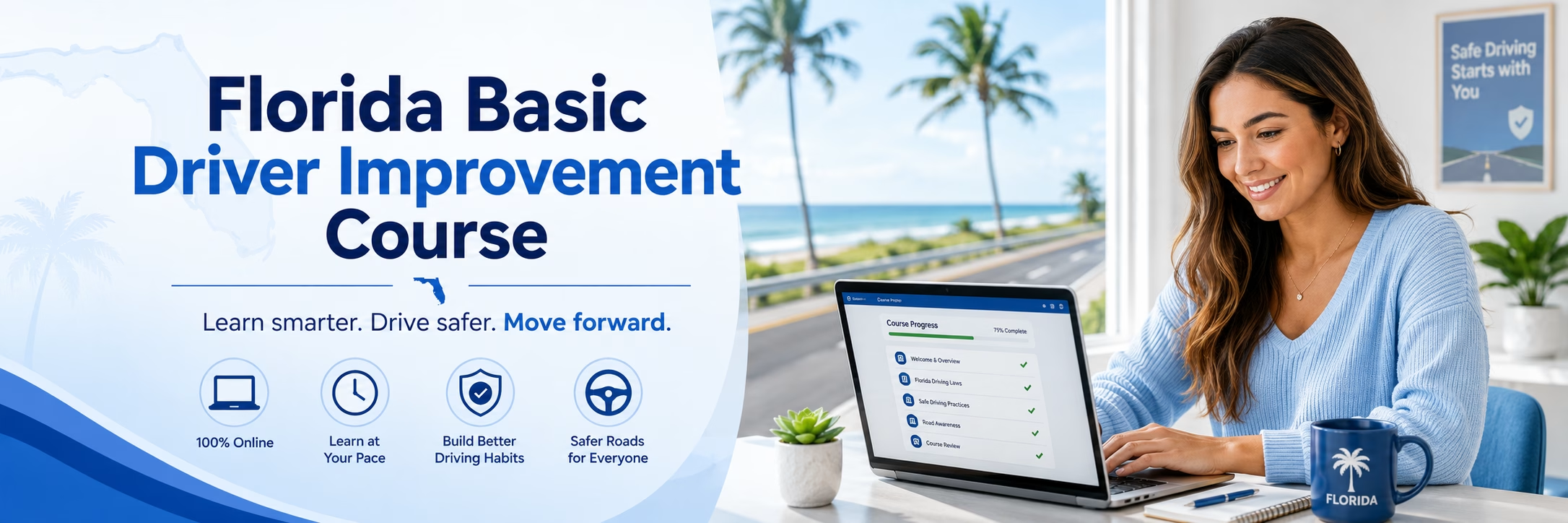
A defensive driving course won’t erase your ticket, but it stops points from hitting your driving record-and that’s what matters most. When you elect a Florida-approved Basic Driver Improvement course within 30 days of your citation, you choose a court-recognized path to avoid the consequences of a conviction. The 4-hour BDI course, approved by all Florida courts and the Florida Department of Highway Safety and Motor Vehicles, addresses the violation through education rather than punishment.
How the BDI Process Works
Completion must happen within your court’s specified timeframe, and you’ll still pay your citation fines and fees within 30 days. The payoff is significant: no points, no insurance rate increase, and no permanent mark on your driving record. Courts across Florida counties including Palm Beach, Broward, Martin, and Dade accept BDI credits, and many cases resolve this way without you appearing in court. The course covers Florida traffic laws, defensive driving techniques, safe following distances, and how attitude affects decision-making behind the wheel-practical content designed to make you a safer driver, not just check a box.
Who Can Use BDI and Who Cannot
Eligibility carries real limits that disqualify many drivers from this straightforward path. You can use BDI only once per 12 months and a maximum of eight times in your lifetime, meaning repeat offenders exhaust this option quickly. Certain violations trigger mandatory Advanced Driver Improvement instead of BDI (these include convictions listed in Florida Statutes 322.0261, 322.24, and 322.44), which carry a 90-day completion deadline or your driving privileges get canceled.
When Advanced Driver Improvement Applies Instead
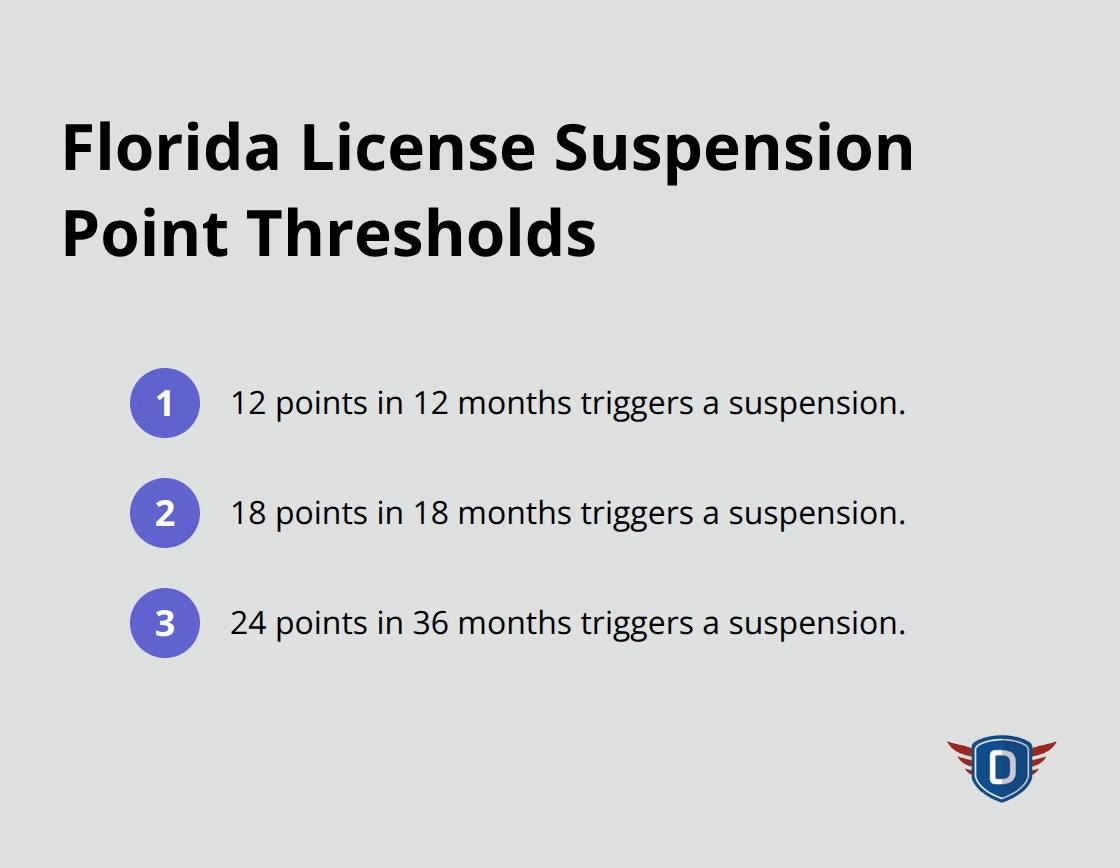
If you’ve had three crashes within 36 months, you must complete Advanced Driver Improvement. Accumulating 12 points in 12 months, 18 points in 18 months, or 24 points in 36 months triggers license suspension, and you’ll need Advanced Driver Improvement to reinstate your license. Missing the 30-day window to elect BDI after your citation means points attach to your record automatically and your license can suspend-timeliness is non-negotiable.
How Your Completion Gets Reported
The electronic reporting system sends your completion directly to FLHSMV, so there’s no paper certificate needed. Verification happens automatically only if you complete on time and through an approved provider. Understanding these boundaries helps you decide whether BDI fits your situation or whether you need to explore legal defense strategies instead.
When a Defensive Driving Course Isn’t Enough
Once you miss the 30-day window to elect Basic Driver Improvement or you’ve exhausted your BDI eligibility, defensive driving alone won’t resolve your citation. At that point, you need to understand what happens in traffic court and whether hiring an attorney makes financial sense. Contesting your citation directly challenges the officer’s evidence and the charges themselves, which is fundamentally different from taking a course. When you contest, you argue that the stop was unlawful, the radar was miscalibrated, or the officer lacked probable cause-not accepting the violation and mitigating its consequences.
How Traffic Court Works in Florida
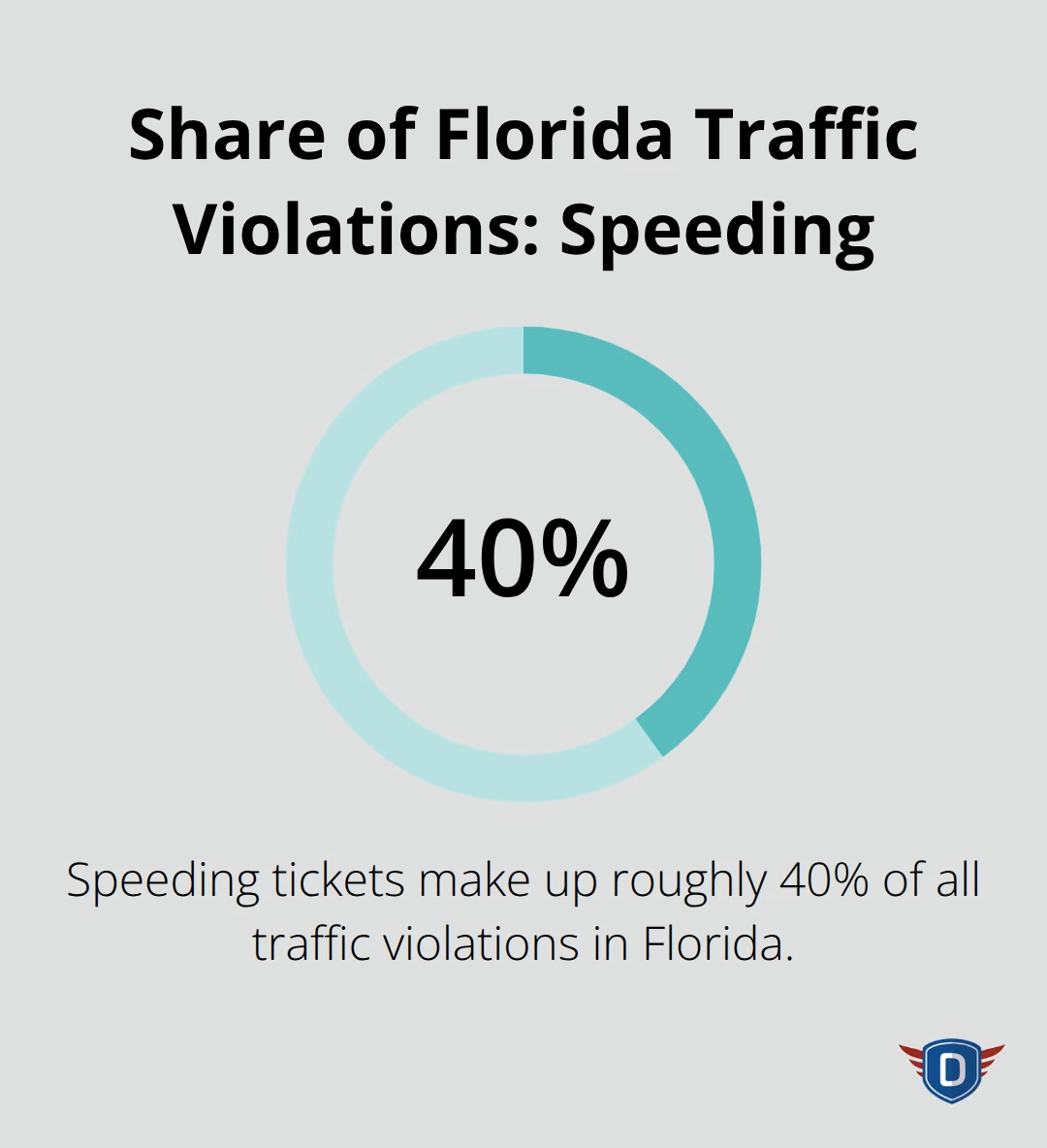
Florida traffic courts handle thousands of citations annually, and outcomes depend heavily on how well you present your case or how effectively your attorney challenges the state’s evidence. Speeding tickets account for roughly 40% of all traffic violations in Florida, yet many officers issue them based on radar or laser readings that haven’t been properly maintained or certified.
If the officer cannot produce calibration records for their speed-detection device or cannot testify about the equipment’s condition on the day of your stop, the ticket faces dismissal. Red light camera violations follow a different path-the citation relies on photographic or video evidence rather than officer testimony, which means contesting requires examining whether the camera was properly installed, maintained, and whether the yellow light duration met Florida’s minimum standards of three seconds.
Why Self-Representation Puts You at a Disadvantage
Representing yourself in traffic court puts you at a disadvantage because you likely don’t know Florida’s Rules of Evidence or the specific procedures your court follows. The prosecutor handles citations daily and knows exactly which questions expose weaknesses in the state’s case; you don’t. Officers testify regularly and understand how to frame their observations convincingly. When you cross-examine an officer without preparation, you often ask questions that reinforce their testimony rather than challenge it.
An attorney knows which discovery documents to request before trial-dash cam footage, dispatch records, maintenance logs for speed-detection equipment, and the officer’s training certifications. Many citations get dismissed not because the stop was invalid but because the state fails to produce these documents or the officer doesn’t appear. In Broward, Palm Beach, and Miami-Dade counties, officer no-show rates vary between 15% and 25% depending on the court, meaning your case could be dismissed simply because the prosecution cannot proceed without the citing officer.
The Cost-Benefit Analysis of Hiring an Attorney
Hiring an attorney costs between $150 and $500 depending on the violation and your location, but avoiding three to four points on your record saves you $500 to $1,500 annually in insurance increases over three years. Some traffic defense firms advertise flat fees starting around $49, though these typically apply only to minor violations in specific courts. The financial math favors legal representation for most violations beyond minor infractions.
How Prosecutors Negotiate Plea Deals
Plea bargaining in traffic court rarely eliminates the charge entirely, but it can reduce the points assessed or lower the fine. A prosecutor might agree to reduce a speeding ticket from 30+ mph over the limit (which carries $356 in penalties and four points) down to a 15-19 mph violation (which carries $181 and three points). That one-point reduction saves you roughly $150 to $300 in insurance costs over three years.
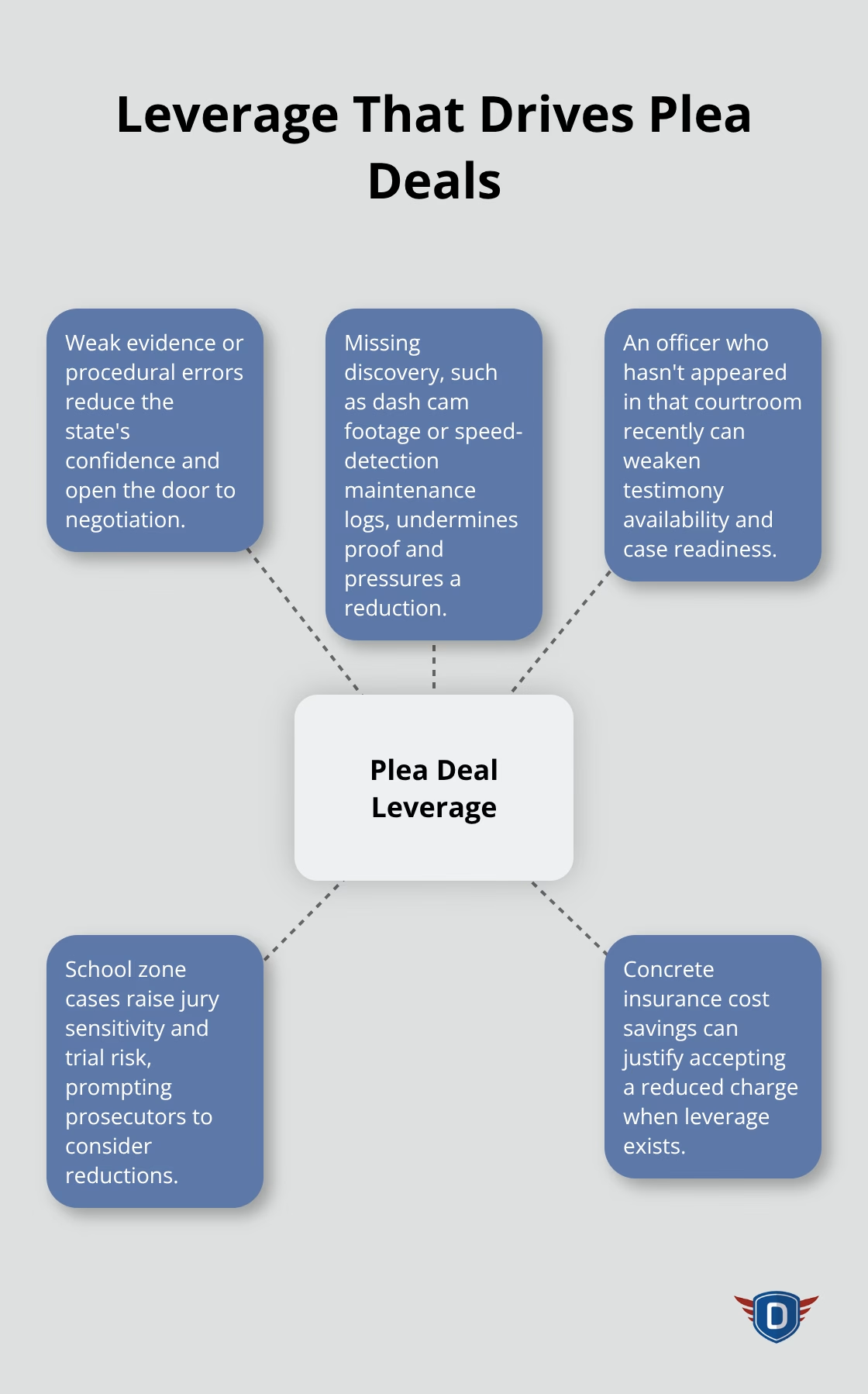
The negotiation happens before trial and depends on whether your attorney can credibly argue that the state’s evidence is weak or that procedural errors occurred. Prosecutors are more willing to negotiate when the officer hasn’t testified in that courtroom recently, when discovery documents are missing, or when the violation occurred in a school zone where higher penalties apply-because juries take school zone cases seriously and prosecutors want to avoid the risk of an acquittal. Never attempt to negotiate directly with the prosecutor yourself; they won’t take you seriously and any statement you make can be used against you.
An experienced traffic attorney knows which prosecutors in your jurisdiction are willing to negotiate and which cases they prioritize for trial. The court’s timeline matters too-Florida law requires trials to occur within 90 days of your arraignment for misdemeanors and within 60 days for traffic violations if you demand a trial. If the court cannot meet these deadlines, your case may be dismissed under the Speedy Trial Rule, which is another reason why prosecution delays can work in your favor. Understanding these procedural advantages helps you evaluate whether contesting your citation makes sense for your specific situation.
How Plea Deals Actually Work in Traffic Court
What Prosecutors Need to Negotiate
Plea bargaining in Florida traffic court is straightforward negotiation, and your attorney’s experience determines whether you receive a favorable outcome. The prosecutor won’t reduce or dismiss charges without leverage, which comes from weaknesses in their case or procedural advantages you can credibly claim. If the officer who cited you hasn’t appeared in that courtroom recently, if discovery documents like dash cam footage or speed-detection maintenance records are missing, or if the violation occurred in a school zone where juries take cases seriously, prosecutors become willing to negotiate.
A one-point reduction on a speeding ticket saves you $150 to $300 in insurance costs over three years, and that math matters when you decide whether to accept a plea deal.
Why Direct Negotiation Fails
Never approach a prosecutor directly-they won’t engage with you seriously, and anything you say can be used against you in trial. Your attorney knows which prosecutors in your jurisdiction prioritize settlement and which will fight every violation. An experienced traffic attorney understands the specific prosecutor’s settlement history and the court’s conviction rate for similar violations. This knowledge shapes whether negotiation makes sense for your case.
How Court Timelines Create Pressure
The timeline pressures prosecutors significantly. Florida law requires traffic violation trials to occur within 60 days of your arraignment if you demand one, and misdemeanor trials within 90 days. When courts can’t meet these Speedy Trial Rule deadlines, your case gets dismissed under Florida’s speedy trial procedures. Experienced attorneys in busy courthouses like Broward, Palm Beach, and Miami-Dade counties know which judges consistently fall behind schedule and which cases get dismissed before trial even happens.
Understanding Plea Reduction Examples
A speeding ticket of 30+ mph over the limit carries $356 in penalties and four points, but a prosecutor might reduce it to 15-19 mph over, which carries $181 and three points. That negotiation requires knowing the specific prosecutor’s settlement history and the court’s conviction rate for similar violations. The plea deal window matters as well-plea deals happen before trial preparation begins, so prosecutors want to resolve weak cases quickly rather than risk an acquittal.
When Contesting Makes Financial Sense
If you’ve already missed the 30-day window to elect Basic Driver Improvement, contesting your citation or negotiating becomes your only path forward, and the cost-benefit calculation shifts significantly. Hiring an attorney between $150 and $500 for most violations makes financial sense when you face four points and the corresponding insurance increases that follow.
Final Thoughts
Your traffic citation dismissal options break into three paths with different timelines and costs. Basic Driver Improvement works fastest if you act within 30 days, costs between $50 and $150, and eliminates points entirely, while legal defense through traffic court takes longer and costs $150 to $500 but can result in dismissal or reduced charges. Plea bargaining sits between these approaches, requiring an attorney but often delivering a one-point reduction that saves you $150 to $300 in insurance costs over three years.
Paying your ticket outright means accepting three to four points, automatic conviction, and a permanent record that insurers see for years-those points trigger rate increases of $500 to $1,500 annually. After your citation resolves, verify that FLHSMV received your completion electronically if you took Basic Driver Improvement, request a certified copy of the court order if you negotiated a plea deal, or obtain dismissal documentation from the clerk’s office if your case was dismissed. Staying violation-free after resolution protects your driving record long-term, since one violation affects your insurance for three years or longer.
We at DriverEducators.com help drivers understand their responsibilities after citations resolve through Florida-approved traffic school courses that teach defensive driving techniques and safe decision-making. Whether you need Basic Driver Improvement to avoid points or want to refresh your knowledge of Florida traffic laws, our self-paced online courses fit your schedule and protect your record.