Teen drivers in Florida face real dangers on the road. According to the National Highway Traffic Safety Administration, drivers aged 16-19 have crash rates three times higher than drivers aged 20 and older.
Florida law requires structured driver education for teens under 18, and for good reason. We at DriverEducators.com believe proper training transforms how young drivers handle the road’s unpredictability.
Why Florida Teens Face Higher Crash Risk
In 2024, 2,320 people aged 15–18 died in crashes involving a teen driver according to the National Highway Traffic Safety Administration. Per mile driven, 16–19-year-olds have a fatal crash rate roughly three times higher than drivers aged 20 and older. Teen drivers lack experience navigating unpredictable road situations, and their brains are still developing the judgment needed to assess risk. Florida sees this risk play out repeatedly, which is why the state now requires all teens under 18 to complete a state-approved driver education course before obtaining a learner’s license.
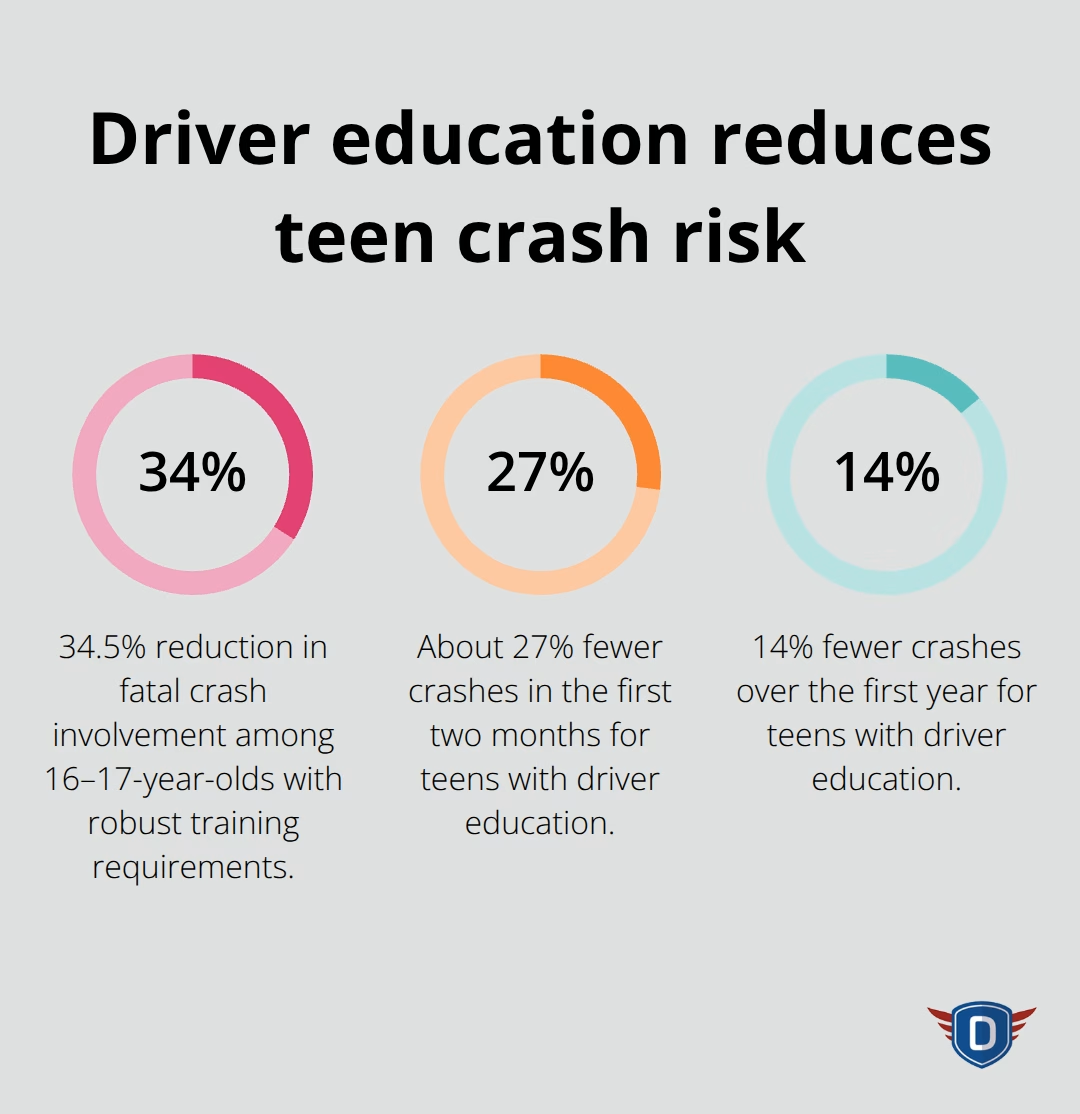
Effective August 1, 2025, teens must complete a 6-hour Driver Education Traffic Safety course approved by the Florida Department of Highway Safety and Motor Vehicles. This requirement replaced the older TLSAE-only system. The evidence supporting this change is overwhelming-structured education works. The University of Nebraska tracked roughly 150,000 teen drivers and found that teens who did not take driver education were 75% more likely to receive a ticket in their first year. Those same teens were 24% more likely to be involved in a crash causing injury or death and 18.3% more likely to receive moving violations. A separate analysis from the University of Pennsylvania examining Ohio’s licensing system showed 16–17-year-olds with driver education had about 27% fewer crashes in the first two months of independent driving and 14% fewer crashes over the entire first year.
Distraction and Passengers Multiply Teen Crash Risk
Distracted driving causes teen crashes to spike rapidly after licensure. About one in three teens who text admit to texting while driving, which increases crash risk by 23 times according to NHTSA. Taking your eyes off the road for five seconds to adjust the radio or eat creates enough time for a crash to happen. Teen passengers amplify this problem significantly. With one teen passenger in the car, risky driving behaviors increase; with multiple teen passengers, that number increases further.
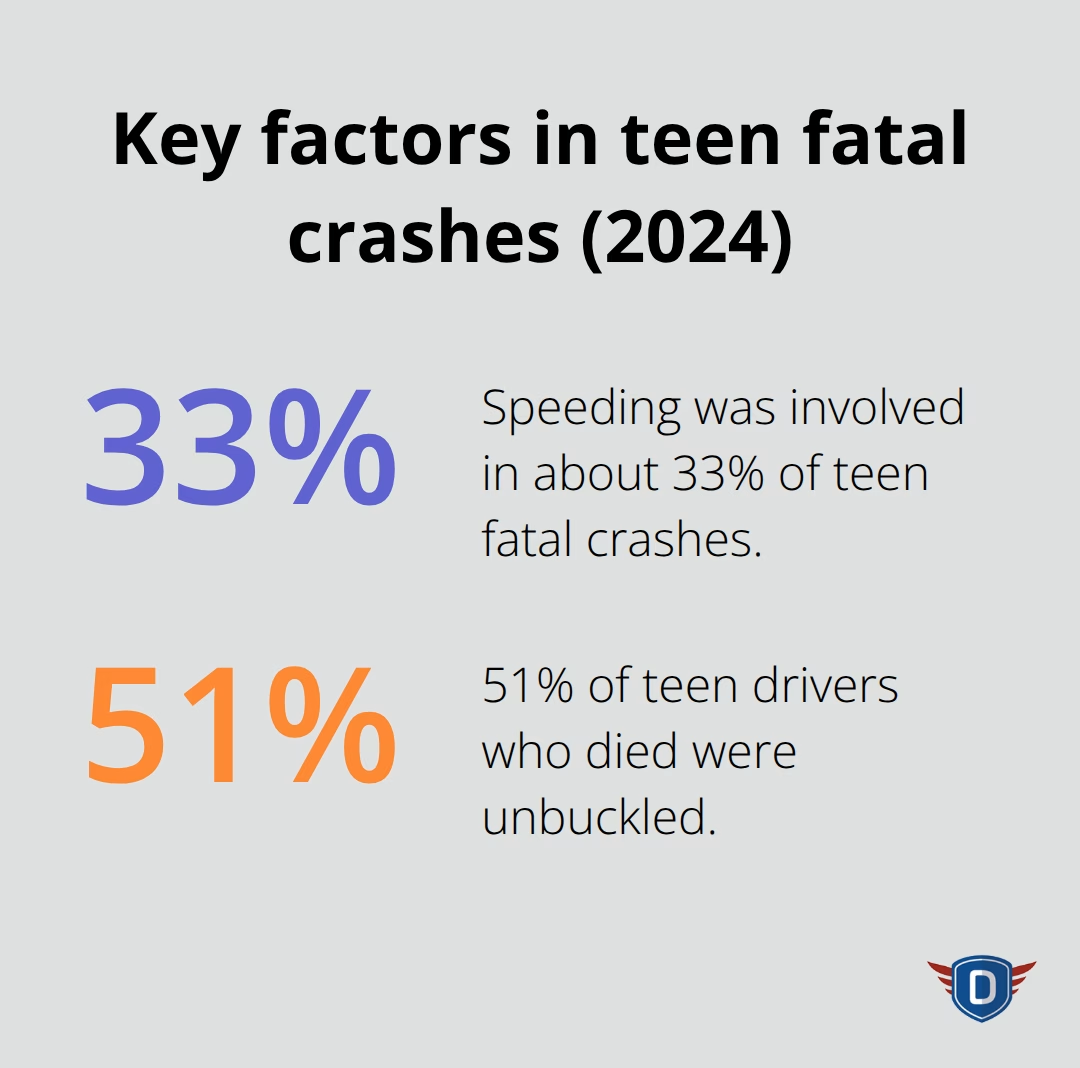
Speeding compounds these dangers-in 2024, speeding involved about 33% of teen fatal crashes. Drowsy driving also kills: 644 fatalities resulted from drowsy driving in 2024, with teens aged 17–23 facing higher risk, particularly on rural roads during late-night hours. Seat belt usage remains critically low among teen fatalities; 51% of teen drivers who died in 2024 were unbuckled, and when a driver was unbuckled, about 9 in 10 passengers were also unbuckled.
Quality Education Addresses These Specific Risks
Quality driver education teaches hazard perception and defensive techniques that address these specific dangers. The Insurance Institute for Highway Safety and the Governors Highway Safety Association link comprehensive driver education with a 34.5% reduction in fatal crash involvement among 16–17-year-olds in states with robust training requirements. When teens learn to recognize hazards early, manage distractions, and understand the consequences of speeding or drowsy driving, they make measurably safer decisions.
Florida’s new 6-hour DETS requirement ensures all teens receive consistent, state-aligned instruction covering essential safety topics. Approved providers offer both in-person and online options, giving families flexibility while maintaining educational standards. The first year of independent driving is especially perilous-a 16-year-old’s crash rate per mile is about 1.5 times higher than that of an 18–19-year-old-which is why starting with proper education before that first solo drive matters enormously.
Parental Involvement Strengthens Safety Outcomes
Parental involvement strengthens these gains further. Strong parental limits, role-modeling safe driving, and using tools like a parent-teen driving contract recommended by the CDC all reduce teen risk substantially beyond what education alone achieves. Parents who set clear ground rules about passengers, nighttime driving, and phone use create accountability that extends the benefits of formal driver education. This combination of structured training and consistent parental oversight transforms how teens approach the road.
FAQ
What is DETS and why is it required in Florida?
DETS (Driver Education Traffic Safety) is a 6-hour state-approved course required for all Florida teens under 18 seeking a learner’s license as of August 1, 2025. It ensures consistent, standardized education aligned with Florida Department of Education standards.
How much does driver education reduce teen crash risk?
Studies show teens with driver education have 14–27% fewer crashes in their first year compared to untrained teens, with some research indicating reductions up to 34.5% in states with comprehensive requirements.
Can my teen take DETS online?
Yes. Many FLHSMV-approved providers offer online, self-paced options alongside in-person classes. Check the FLHSMV list of authorized providers for your county.
What topics does DETS cover?
DETS covers teen crash facts, defensive driving, traffic laws, hazard recognition, distracted driving dangers, impaired driving prevention, seat belt safety, and decision-making skills specific to teen drivers.
Does completing DETS guarantee my teen won’t crash?
No. Education reduces risk significantly but does not eliminate it. Ongoing parental supervision, graduated licensing stages, and consistent safe driving habits are equally important.
What Skills Matter Most for Teen Drivers in Florida
Defensive Driving Starts With Hazard Recognition
Defensive driving means actively predicting what other drivers will do before they do it-not timid driving, but alert driving. Florida teen drivers must learn to scan intersections for red-light runners, anticipate that a parked car door might swing open, and assume that a driver texting at a stoplight will not accelerate when the light changes. The University of Pennsylvania study on Ohio teen drivers found that those trained in hazard recognition had 27% fewer crashes in their first two months of independent driving.
This skill directly translates to survival. When a teen driver spots a hazard three to five seconds before it becomes a problem, they have time to brake, steer, or adjust speed instead of reacting in panic. Florida highways present specific hazards: sudden rain on I-95 that drops visibility to near zero, construction zones where speeds drop from 70 to 45 miles per hour with minimal warning, and aggressive drivers weaving through traffic on congested routes near Miami, Tampa, and Jacksonville. Teens must practice identifying these situations during supervised driving with a parent or instructor, not encounter them alone on their first unsupervised trip.
Weather and Highway Driving Require Hands-On Practice
Heavy rain in Florida occurs suddenly, and hydroplaning happens faster than most teens expect; tires lose grip at speeds as low as 35 miles per hour on wet pavement. Teens should practice emergency braking on wet roads under supervision, learning how their specific vehicle responds and how much braking distance increases. Highway driving introduces merging, which terrifies many teen drivers because they must judge closing speeds and gaps accurately.
Merging too slowly causes rear-end crashes; merging too aggressively causes sideswipe collisions. The solution is not avoiding highways but practicing them with an experienced driver during lower-traffic hours, building confidence gradually. Teens who develop these skills through repeated, supervised practice handle real highway conditions with competence rather than fear.
Florida Traffic Laws Contain Specific Rules That Trip Up New Drivers
Right turns on red are legal after a complete stop, but many teens hesitate or fail to yield to pedestrians. Unprotected left turns at traffic lights require the driver to yield to oncoming traffic-a judgment call that confuses teens who expect the light itself to protect them. Understanding that a green light means go only when the intersection is clear, not that you have the right to enter it, changes how teens approach intersections.
These distinctions matter because intersection crashes account for a significant portion of teen collisions. Teens who understand Florida-specific traffic patterns, road signage, and right-of-way rules make split-second decisions correctly when they matter most. Practicing these specific scenarios repeatedly during supervised driving sessions builds the automatic responses that keep teens safe.
FAQ
What is hazard recognition and why do teen drivers struggle with it?
Hazard recognition means spotting potential dangers before they become emergencies. Teen brains are still developing, making it harder to process multiple road threats simultaneously; supervised practice with feedback matters more than experience alone.
How should my teen practice highway driving?
Start on quieter highway sections during off-peak hours with an experienced driver providing feedback. Build up to busier times and more complex merging situations gradually over several weeks.
What Florida traffic rules confuse teen drivers most?
Right turns on red, unprotected left turns, and yield-right-of-way rules cause frequent errors. Practice these specific situations repeatedly during supervised driving sessions.
Does weather training reduce teen crash risk in Florida?
Yes. Teens who practice emergency braking and steering on wet pavement under supervision develop muscle memory and confidence, reducing panic reactions during actual rain or hydroplaning events.
Where can my teen get structured practice in these specific skills?
Many Florida-approved driver education providers offer both classroom instruction and supervised behind-the-wheel training that targets these exact hazards and traffic situations specific to Florida roads.
Why Florida Teens Need More Than Just Online Courses
Florida’s new DETS requirement ensures every teen receives baseline education, but baseline education does not produce confident, safety-focused drivers. The University of Nebraska study tracking 150,000 teen drivers found that structured driver education reduced first-year crash risk by 24 percent, yet this protective effect depends entirely on program quality. Teens completing generic online modules often pass tests without developing the decision-making skills that prevent crashes when they actually drive.
The difference between passing a course and becoming a genuinely safer driver comes down to instruction quality, personalized feedback, and practice that addresses the specific hazards Florida teens face. Many approved DETS providers offer only the minimum six hours, checking a compliance box rather than building real competence. That approach leaves teens unprepared for the specific dangers they will encounter on Florida roads: sudden rain on I-95, aggressive drivers in Miami traffic, construction zone speed drops, and the split-second judgments required at unprotected left turns.
Behind-the-Wheel Training Transforms Online Learning Into Real Skills
Online learning establishes foundational knowledge, but behind-the-wheel instruction builds the muscle memory and confidence that online courses cannot provide. Research from the University of Pennsylvania examining Ohio teen drivers showed that 16-year-olds receiving professional instruction had 27 percent fewer crashes in their first two months of independent driving. A teen can pass an online test about right turns on red without understanding how to scan for pedestrians, judge their speed, and execute the turn safely.
Effective instruction breaks these complex skills into practice sequences, with instructors observing and correcting technique repeatedly until it becomes automatic. Weather training exemplifies this difference; a video explaining hydroplaning differs fundamentally from a teen actually experiencing how their specific vehicle responds during emergency braking on wet pavement with an instructor present to guide them. Programs offering only online content cannot provide this tactile, immediate feedback that builds genuine confidence.
Personalized Instruction Addresses Individual Teen Weaknesses
Teens vary dramatically in their starting confidence and specific skill gaps. One teen may struggle with highway merging while another fears night driving; generic instruction cannot address these individual weaknesses effectively. Certified instructors assess each teen’s actual performance during driving sessions and provide targeted practice on their specific problem areas.
A teen terrified of left turns practices that specific maneuver repeatedly in controlled traffic situations, building muscle memory and confidence before encountering heavy traffic. Instructors also notice behavioral patterns that online courses cannot detect; if a teen tends to accelerate aggressively or become distracted by passengers, the instructor can address these tendencies directly rather than hoping the teen applies generic safety principles. Personalized feedback improves both safety and technical skill development.
What Separates Effective Programs From Compliance Checkboxes
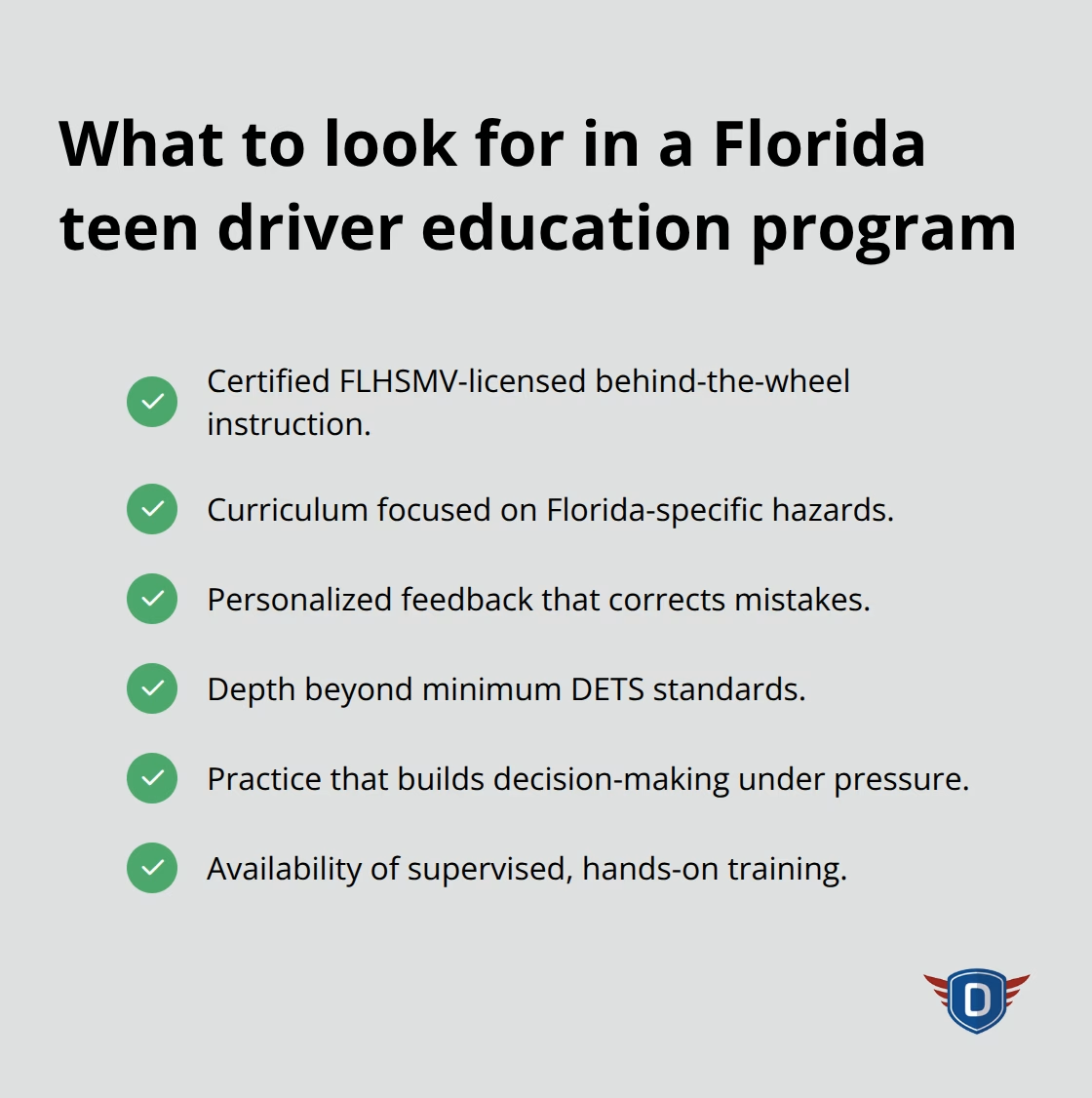
Insurance companies recognize the distinction between comprehensive programs and minimal compliance; many offer discounts specifically for teens completing programs that include certified behind-the-wheel instruction, not just online courses. Families choosing a DETS provider should verify that the program includes professional driving instruction with FLHSMV-licensed instructors, not merely online modules.
Quality programs structure content around decision-making under pressure, not just rule memorization. They incorporate Florida-specific hazards into every lesson and provide feedback that corrects mistakes before those mistakes become crashes. The depth of curriculum, the certification level of instructors, and the availability of behind-the-wheel training separate programs that genuinely reduce teen crash risk from those that simply satisfy legal requirements.
FAQ
Does my teen really need behind-the-wheel instruction if they take DETS online?
DETS satisfies the legal requirement, but research shows teens receiving professional driving instruction have 24–27 percent fewer crashes in their first year; online courses alone do not provide the feedback needed to develop genuine safety skills.
What should I look for in a driver education program beyond DETS compliance?
Choose programs offering certified instructor-led behind-the-wheel training, practice focused on Florida-specific hazards like sudden rain and aggressive traffic, and personalized feedback on your teen’s individual weaknesses.
How many behind-the-wheel lessons does my teen need?
Most research suggests 50–100 hours of supervised practice produces measurable safety improvements; try combining professional instruction with significant parent-supervised practice rather than minimal lessons.
Do insurance companies offer discounts for teens completing driver education?
Yes, many insurers offer discounts specifically for programs including certified behind-the-wheel instruction; verify your insurer’s requirements before enrolling.
What makes one DETS provider better than another if they all meet state requirements?
Program quality varies based on instructor certification, curriculum depth beyond minimum standards, behind-the-wheel training availability, and focus on Florida-specific driving hazards rather than generic content.
Final Thoughts
Florida teen drivers who complete quality driver education programs gain measurable safety advantages that persist far beyond their first year on the road. Research shows teens receiving comprehensive instruction have 24 to 27 percent fewer crashes during their critical first months of independent driving, with some studies showing reductions up to 34.5 percent in states with robust training requirements. These are not marginal improvements but substantial differences that translate directly into lives protected.
Teen driver education in Florida now requires a state-approved 6-hour DETS course, yet meeting the legal minimum differs fundamentally from building genuine competence. Programs combining online instruction with certified behind-the-wheel training produce drivers who recognize hazards before they become emergencies, execute complex maneuvers like highway merging with confidence, and make split-second decisions that keep themselves and their passengers safe. The habits teens develop during their first 50 to 100 hours of supervised practice shape their driving behavior for decades (and parental involvement amplifies these benefits significantly through clear ground rules about passengers and phone use).
Choose a driver education program that goes beyond compliance and focuses on Florida-specific hazards rather than just online modules that satisfy legal requirements. DriverEducators.com provides comprehensive programs designed to help teens develop the decision-making skills and confidence that reduce crash risk substantially. Start the enrollment process today and give your teen the foundation for a lifetime of safer driving.