
Driving under the influence of alcohol or drugs remains one of the leading causes of traffic accidents and fatalities in Florida. Understanding substance education and traffic laws isn’t optional-it’s something every driver needs to know to stay safe and avoid serious legal consequences.
At DriverEducators.com, we’ve created this guide to break down Florida’s impaired driving laws, explain how substances affect your ability to drive, and show you practical ways to make safer choices on the road.
What Are Florida’s Laws on Driving Under the Influence?
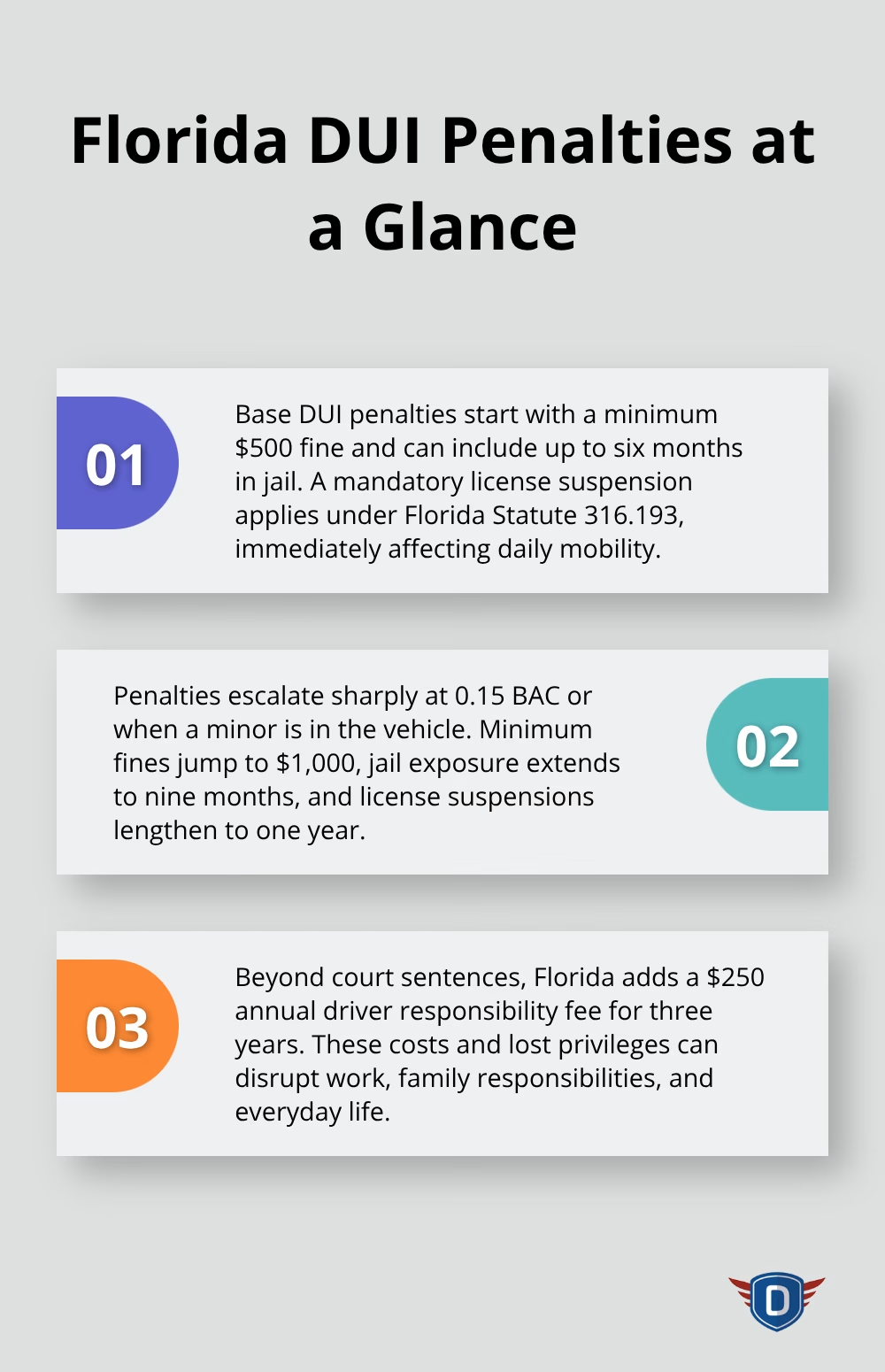
Florida treats impaired driving with serious legal consequences that escalate quickly. A first DUI conviction carries a minimum fine of $500, up to six months in jail, and a mandatory license suspension under Florida Statute 316.193. If your blood alcohol content (BAC) reaches 0.15 or higher, or if a minor sits in your vehicle, penalties jump significantly-fines hit $1,000 minimum, jail time extends to nine months, and your license suspension stretches to one year. The state also applies a $250 annual driver responsibility fee for three years following conviction. These penalties represent real financial hardship and lost driving privileges that directly impact employment, family obligations, and daily life.
Understanding BAC Limits Across Driver Categories
Florida law defines impairment at different thresholds depending on who operates the vehicle. Drivers 21 and older face charges at a BAC of 0.08, while drivers under 21 trigger impairment charges at just 0.02 (a single drink can exceed this limit). Commercial drivers operate under stricter standards at 0.04 BAC. Prescription medications and over-the-counter drugs impair you just as severely as alcohol-law enforcement does not distinguish between substances when determining impairment, only whether your driving ability is compromised.
How Police Identify Impaired Drivers
Officers use field sobriety tests like the horizontal gaze nystagmus test, the one-leg stand, and the walk-and-turn exercise to establish probable cause. Medical conditions, fatigue, and even footwear can affect these results, though they remain standardized across the state. Breathalyzers measure BAC at the roadside, but accuracy depends on proper calibration and administration-a critical detail if you ever need to challenge results in court. Blood tests provide the most accurate measurement and prosecutors often request them in serious cases. Dashboard and body camera footage documents officer observations of speech, coordination, and behavior, creating evidence used in legal proceedings. Once an officer suspects impairment, the testing process begins immediately, and your responses during these initial moments form the foundation of the prosecution’s case.
The Evidence That Builds Your Case
Officers document everything from the moment they initiate a traffic stop. Video footage captures your performance on field sobriety tests, your speech patterns, and your physical coordination. Breathalyzer readings produce numerical results that prosecutors present as objective evidence. Blood test results carry significant weight in court because they measure actual BAC levels with laboratory precision.
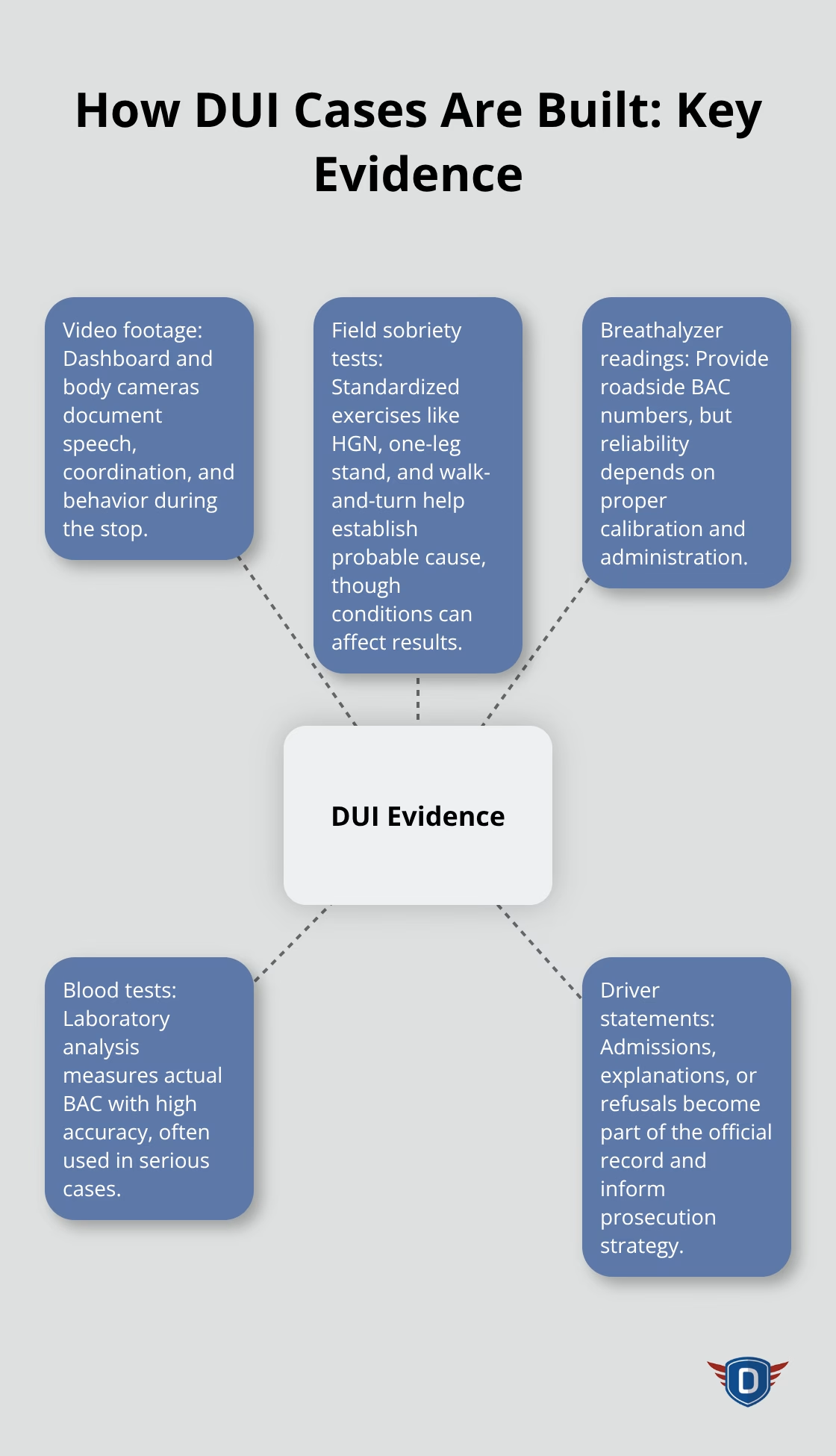
Your statements during the stop-admissions about drinking, explanations for your behavior, or refusals to take tests-all become part of the official record. This documentation creates a comprehensive case file that prosecutors use to build their argument against you.
What Happens Next
Understanding that these tests exist and knowing your rights during traffic stops can protect you, but the safest choice remains never driving when impaired. The consequences extend far beyond fines and jail time-they affect your employment prospects, insurance rates, and personal relationships. Your next decision point arrives when you recognize the signs that substances have impaired your ability to drive safely.
How Substances Impair Your Driving Right Now
Alcohol’s Immediate Impact on Your Abilities
Alcohol and drugs attack your central nervous system and the damage to your driving ability starts immediately. At 0.08 BAC, crash risk increases exponentially, and it’s illegal in all 50 states. At 0.05 BAC, you struggle with steering control and reduced concentration on the driving task. Your muscle coordination deteriorates at 0.08 BAC, your vision narrows, and you cannot judge speed or distance accurately. These are not theoretical concerns-they directly translate to missed stop signs, delayed responses to sudden traffic changes, and inability to correct steering errors.
Medications Create Hidden Impairment
Prescription and over-the-counter medications create the same impairment risk without the social cues that warn you about alcohol. Common medications like antihistamines, pain relievers containing opioids, muscle relaxants, and even some allergy medications cause drowsiness, blurred vision, and slower reaction times. Mixing alcohol with medications can lead to serious consequences including gastrointestinal bleeding, liver damage, falls, traffic accidents, and overdose deaths.
Law enforcement does not distinguish between alcohol and drug-impaired driving-Florida Statute 316.193 charges you identically whether your impairment comes from a beer or a prescription painkiller. Your medication bottle may carry a warning label, but that label does not protect you from criminal charges if you operate a vehicle while impaired.
Long-Term Consequences Reshape Your Life
A conviction damages your employment prospects because many employers conduct background checks and reject candidates with DUI records. Insurance companies raise your rates dramatically or drop coverage entirely, forcing you to purchase high-risk policies that cost hundreds more annually. If your impaired driving causes injury or death, you face felony charges, years of incarceration, and civil lawsuits from victims seeking damages (settlements often exceed $100,000 in serious injury cases).
These cascading effects reshape your financial stability and freedom for years. Your next critical decision arrives when you recognize the signs that substances have impaired your ability to drive safely and choose alternative transportation instead.
How to Stop Impaired Driving Before It Happens
Plan Your Transportation Before Consuming Alcohol or Medications
The only reliable strategy to avoid substance-related traffic violations is simple: do not drive when impaired. This means planning your transportation before you consume alcohol or medications, recognizing the exact moment when driving becomes unsafe, and accepting that alternative options always exist. Designate a non-drinking driver before the night starts, not halfway through it.
Call a rideshare service like Uber or Lyft the moment you decide to drink; the $15 to $40 cost vanishes compared to a DUI conviction that costs $10,000 to $25,000 in fines, legal fees, and increased insurance premiums. Florida taxi services and local rideshare options operate 24/7 in most areas, making excuses about transportation availability invalid. Public transportation in major Florida cities like Miami, Tampa, and Orlando runs late enough to accommodate evening activities.
Recognize Medication Warnings Before You Drive
If you take prescription medications, read the warning label before driving and contact your pharmacist if you question whether the drug impairs your ability to operate a vehicle safely. Many pharmacists will explicitly tell you not to drive after taking certain medications, which removes the guesswork entirely. The National Institute on Alcohol Abuse and Alcoholism reports that mixing alcohol with medications amplifies impairment risks, meaning a medication that causes drowsiness becomes genuinely dangerous when combined with even modest alcohol consumption.
Accept That Your Brain Cannot Judge Its Own Impairment
Most drivers who face DUI charges believed they were fine to drive, which reveals the core problem-impairment clouds your judgment about impairment itself. Your brain cannot accurately assess its own dysfunction, so external safeguards matter far more than personal judgment. If you have consumed alcohol or taken medications that carry drowsiness warnings, assume you are impaired and do not drive.
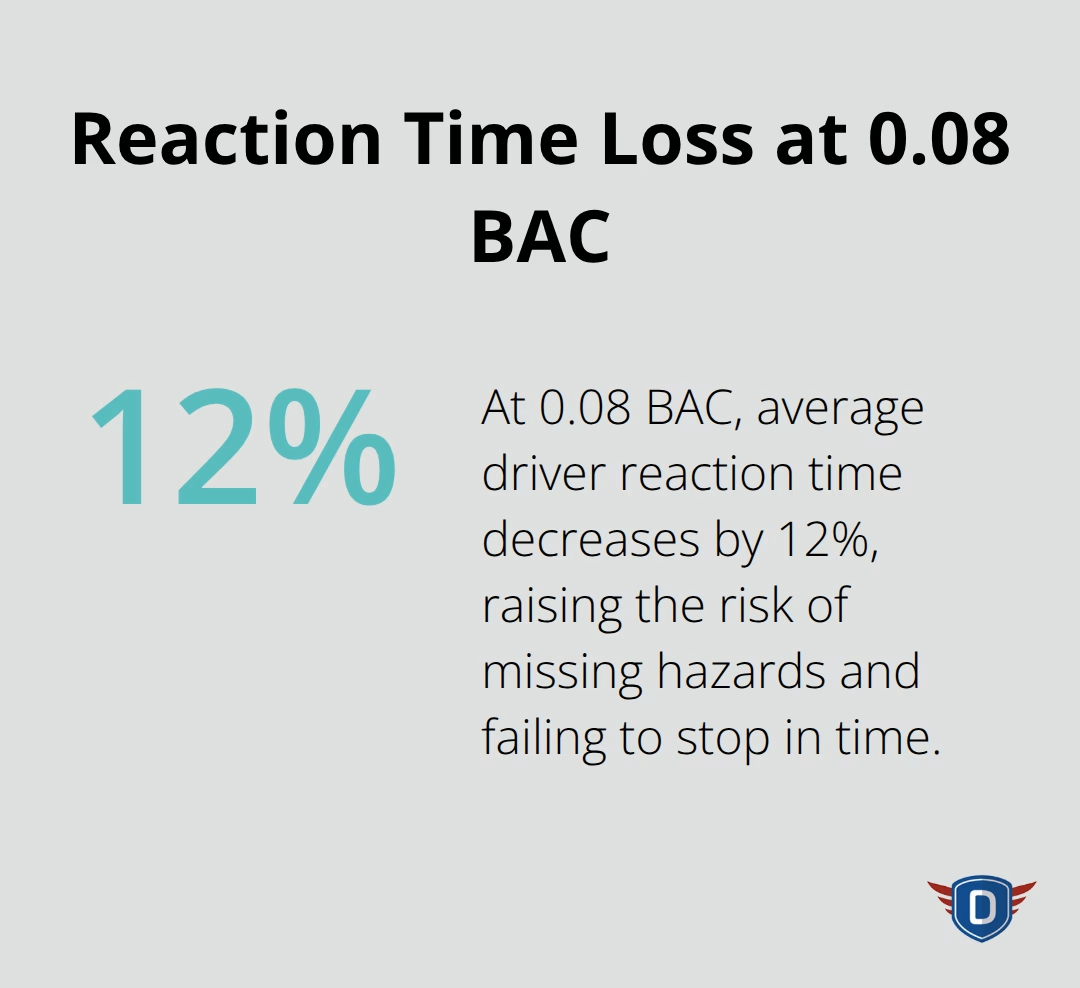
Do not attempt to prove you are fine by driving carefully or taking a shorter route. Your reaction time at 0.08 BAC decreases by 12 percent, which means you will miss hazards that sober drivers catch easily. Friends who suggest you are okay to drive are not reliable judges either-they may be impaired themselves or reluctant to inconvenience you.
Make the Responsible Choice When Doubt Exists
Accept that calling for alternative transportation feels inconvenient in the moment but represents the only responsible choice. Florida’s implied consent law means that refusing a breathalyzer test carries the same license suspension as failing it, so testing positive offers no advantage over declining to drive in the first place. Your responsibility as a driver extends beyond following traffic laws to making decisions that protect yourself and every other person on the road. Choosing alternative transportation demonstrates that responsibility far more clearly than any defensive driving course ever could.
Final Thoughts
Florida’s substance education traffic laws exist because impaired driving kills. The penalties hit hard-fines reaching $1,000, jail time up to nine months, license suspensions lasting a year, and annual driver responsibility fees that drain your wallet for three years. A DUI conviction damages your employment prospects, forces insurance companies to drop you or charge triple rates, and creates a permanent criminal record that follows you for decades.
The core message stands simple: plan your transportation before consuming alcohol or medications, recognize that impairment clouds your own judgment about impairment, and choose rideshare services or designated drivers instead of risking everything. Your reaction time at 0.08 BAC decreases by 12 percent-that gap between sober and impaired driving is the difference between stopping safely and crashing into a family.
We at DriverEducators.com built our traffic school courses specifically to address these topics with real information and practical strategies.
Our curriculum covers Florida traffic laws, impaired driving prevention, and the behavioral choices that separate safe drivers from those facing criminal charges. When you complete one of our FLHSMV-approved programs, you receive a certificate reported directly to the state and gain knowledge that protects your freedom and everyone sharing the road with you. Visit DriverEducators.com to explore our traffic school options and take the first step toward protecting your driving record and your future.