
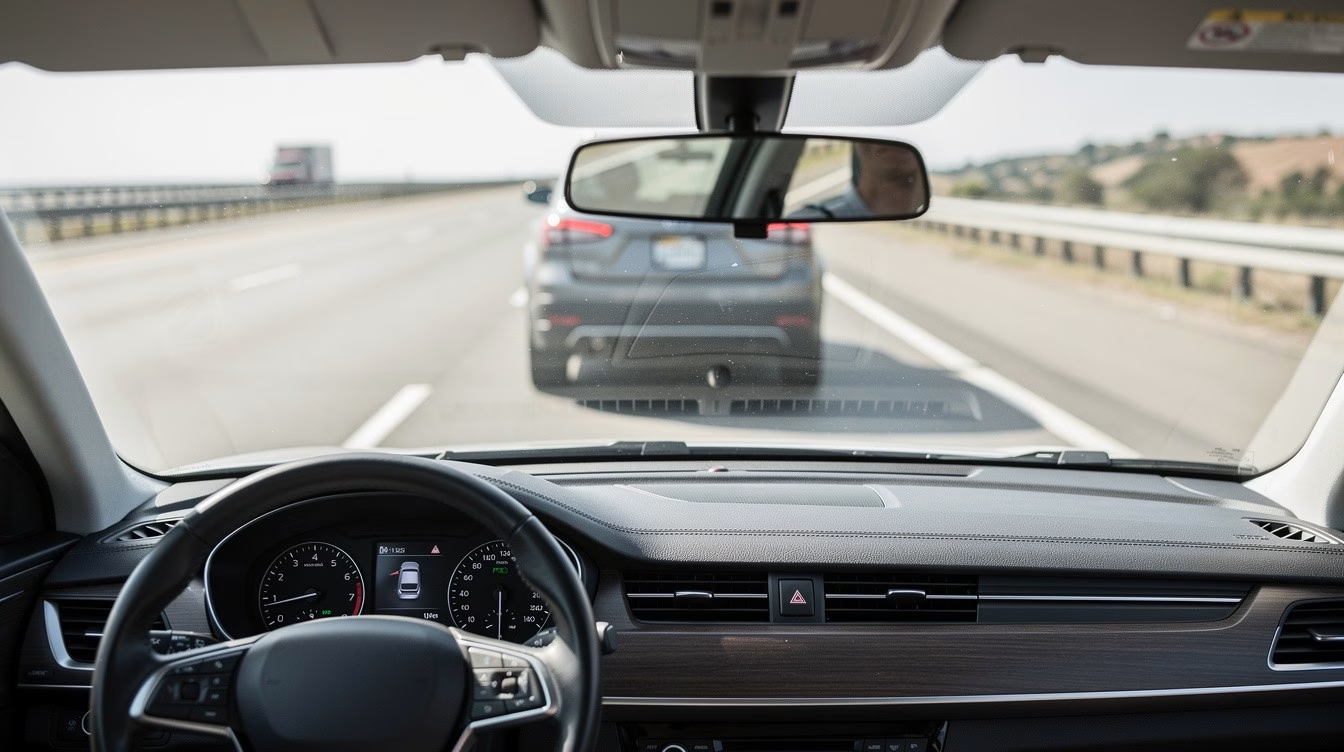
Following distance is the gap between your vehicle and the one ahead-and it’s the difference between a close call and a collision. Most drivers underestimate how much space they actually need, especially at higher speeds or in poor conditions.
We at DriverEducators.com know that safe following distance tips aren’t just about avoiding accidents. They’re about protecting your driving record, reducing insurance claims, and getting home safely every single day.
How Much Space Do You Really Need Behind Another Vehicle?
The Two-Second Rule Works at Any Speed
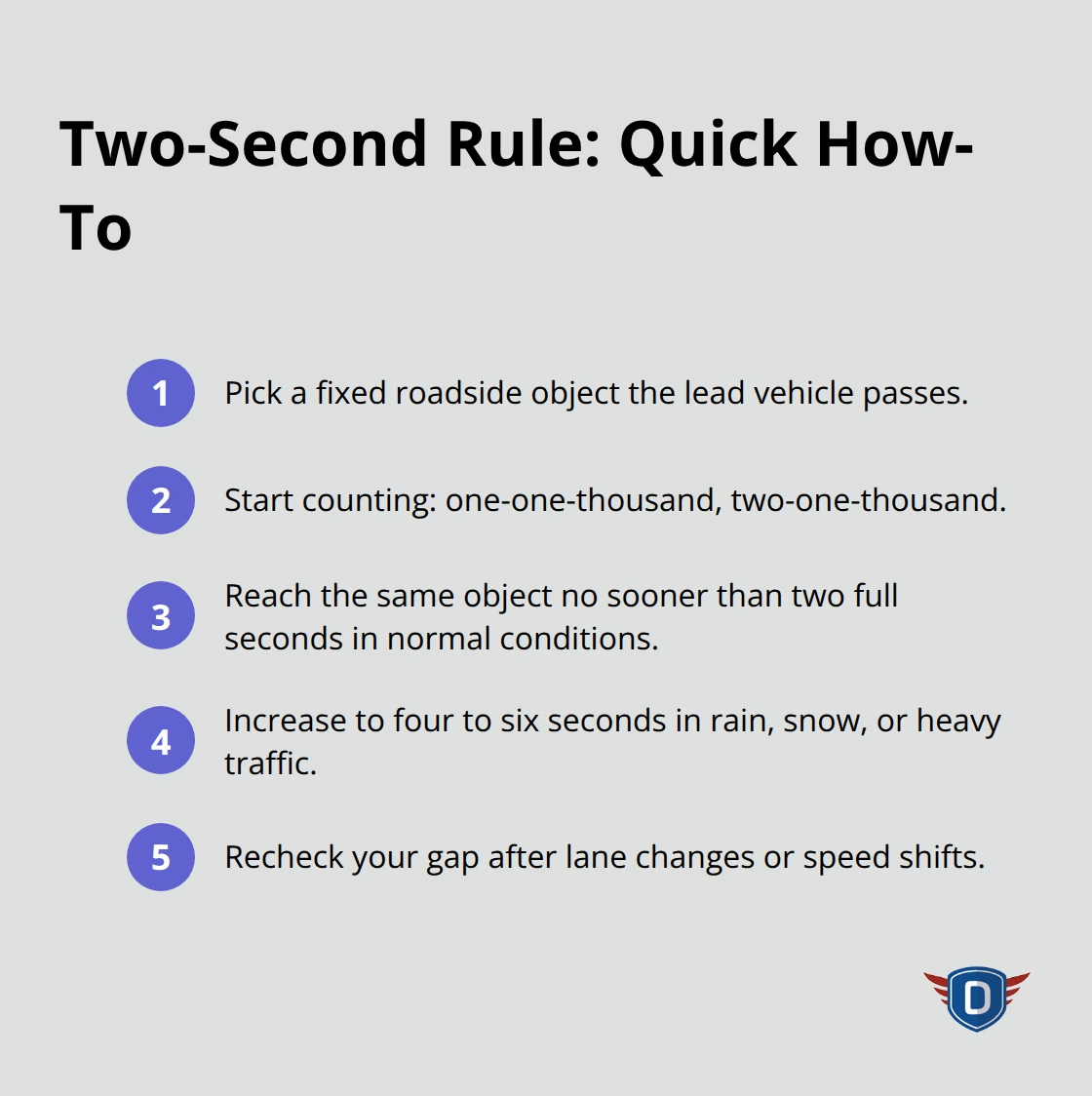
The two-second rule is the baseline standard that works at any speed. Pick a fixed object like a road sign or tree, watch when the rear bumper of the vehicle ahead passes it, then count the seconds until your front bumper reaches that same spot. If you count two full seconds or more, you have adequate space in normal conditions. Most drivers who test this method discover they’re tailgating without realizing it.
At 55 mph, two seconds translates to roughly 161 feet of space-far more than the single car length many drivers leave. The Insurance Institute for Highway Safety tested front crash prevention systems at speeds of 31, 37, and 43 mph with both passenger vehicles and motorcycles as targets. At highway-like speeds with a motorcycle target, some automatic emergency braking systems still failed to prevent collision, which means your following distance becomes the real safety net.
Why Technology Can’t Replace Space
Even good-rated AEB systems depend on sufficient space to react and brake smoothly. The IIHS found that good-rated AEB systems delivered timely warnings and brought vehicles to a complete stop before impact in passenger-car tests, but this protective value only works if you’ve already left adequate space. Acceptable-rated AEB systems performed poorly at higher speeds, especially with motorcycles, reinforcing that extra space is your most reliable defense when technology falters.
Vehicles like the BMW X5, Toyota Camry, and Genesis GV80 earned good ratings for front crash prevention, but even these vehicles can’t overcome a following distance that’s too short. Florida Statute 316.0895 requires drivers to maintain a safe distance behind other vehicles, with no specific number mandated in law, which means the responsibility falls entirely on you to judge what’s safe for current conditions.
How Stopping Distance Changes with Conditions
Following distance directly controls your ability to stop without hitting the vehicle ahead. When a car brakes suddenly, you need time to perceive the danger, process it, and apply your own brakes-that’s why seconds matter more than car lengths. In rain, snow, or heavy traffic, increase your following distance to four or six seconds because your tires have less grip and your stopping distance stretches.
Tailgating also damages your driving record because it signals aggressive driving to other motorists and law enforcement. Safe spacing protects your insurance rates, keeps you out of at-fault collisions, and reduces the likelihood of citations that compound driving violations. The next section covers practical methods to calculate and adjust your distance while driving, ensuring you maintain the right gap for whatever conditions you face.
Factors That Affect Your Following Distance
Weather Strips Away Your Safety Margin
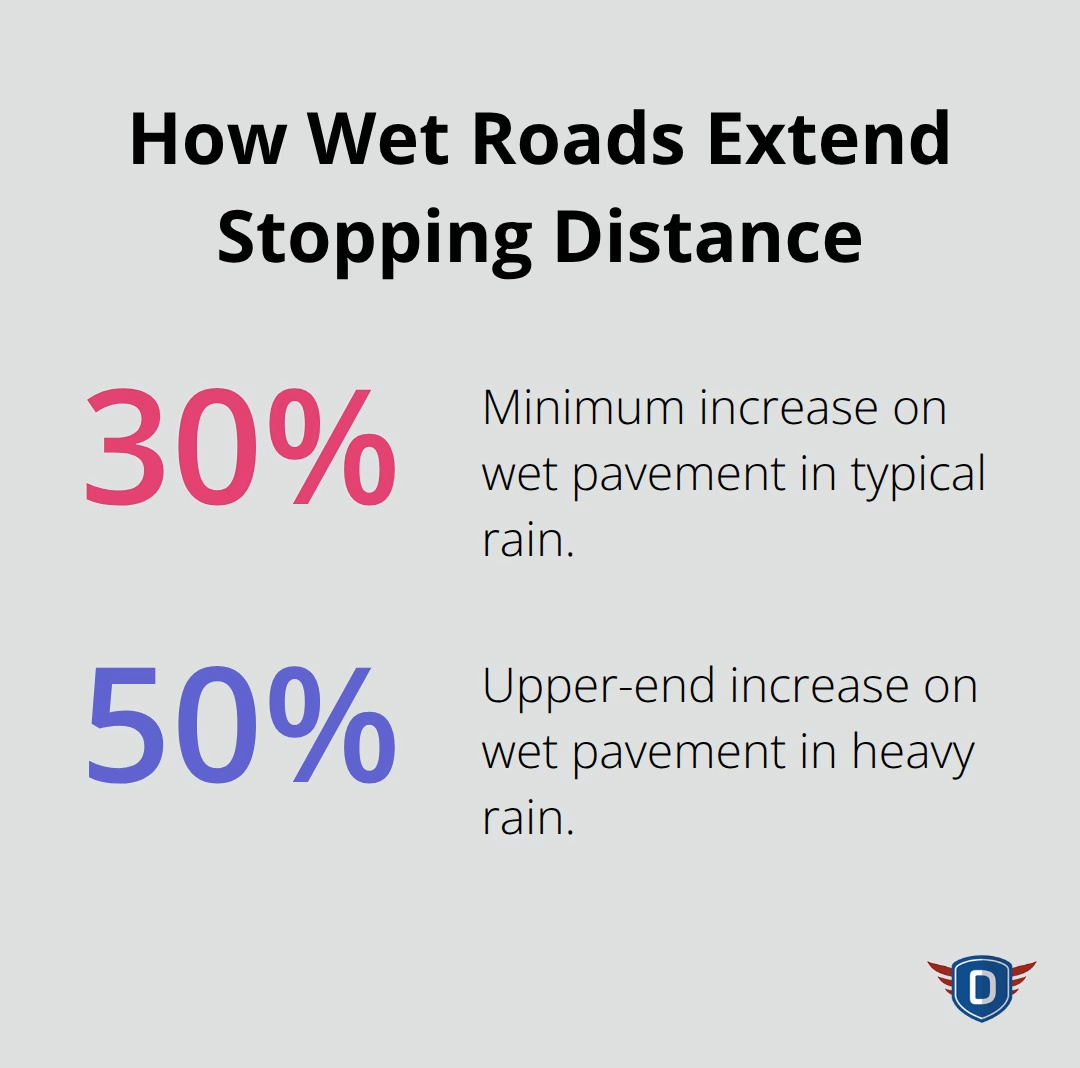
Rain, snow, and wet pavement cut tire grip dramatically, which means your stopping distance increases even if your speed stays the same. On wet roads, wet pavement increases your stopping distance by 30% to 50%, making the normal three-second following distance insufficient. Heavy rain requires at least four seconds, and snow or ice demands six seconds or more. Increase your gap the moment conditions worsen, because your brakes cannot overcome physics.
Vehicle Weight and Braking Power Matter
Your vehicle’s weight, tire quality, and braking system directly affect how quickly you can stop, so heavier vehicles and older cars need longer following distances than lighter, newer ones. A loaded truck stops much slower than an empty sedan, which is why leaving space behind semitrailers matters so much-more than 400 people are killed annually in rear-end crashes involving semitrailers, according to the Insurance Institute for Highway Safety. Motorcycle riders account for about 200 deaths per year, and they stop faster than cars, but at highway speeds some automatic emergency braking systems still fail to detect them, making your distance the only reliable safety margin.
Speed Multiplies Your Stopping Distance Exponentially
Speed multiplies stopping distance exponentially, not linearly-small speed increases can drastically affect your stopping distance, so highway driving demands significantly more space than city streets. The Insurance Institute for Highway Safety tested front crash prevention at various speeds and found that acceptable-rated systems performed poorly at higher speeds, especially with motorcycles, reinforcing that your following distance becomes the real safety net when technology falters.
Traffic Density Creates Hidden Risks
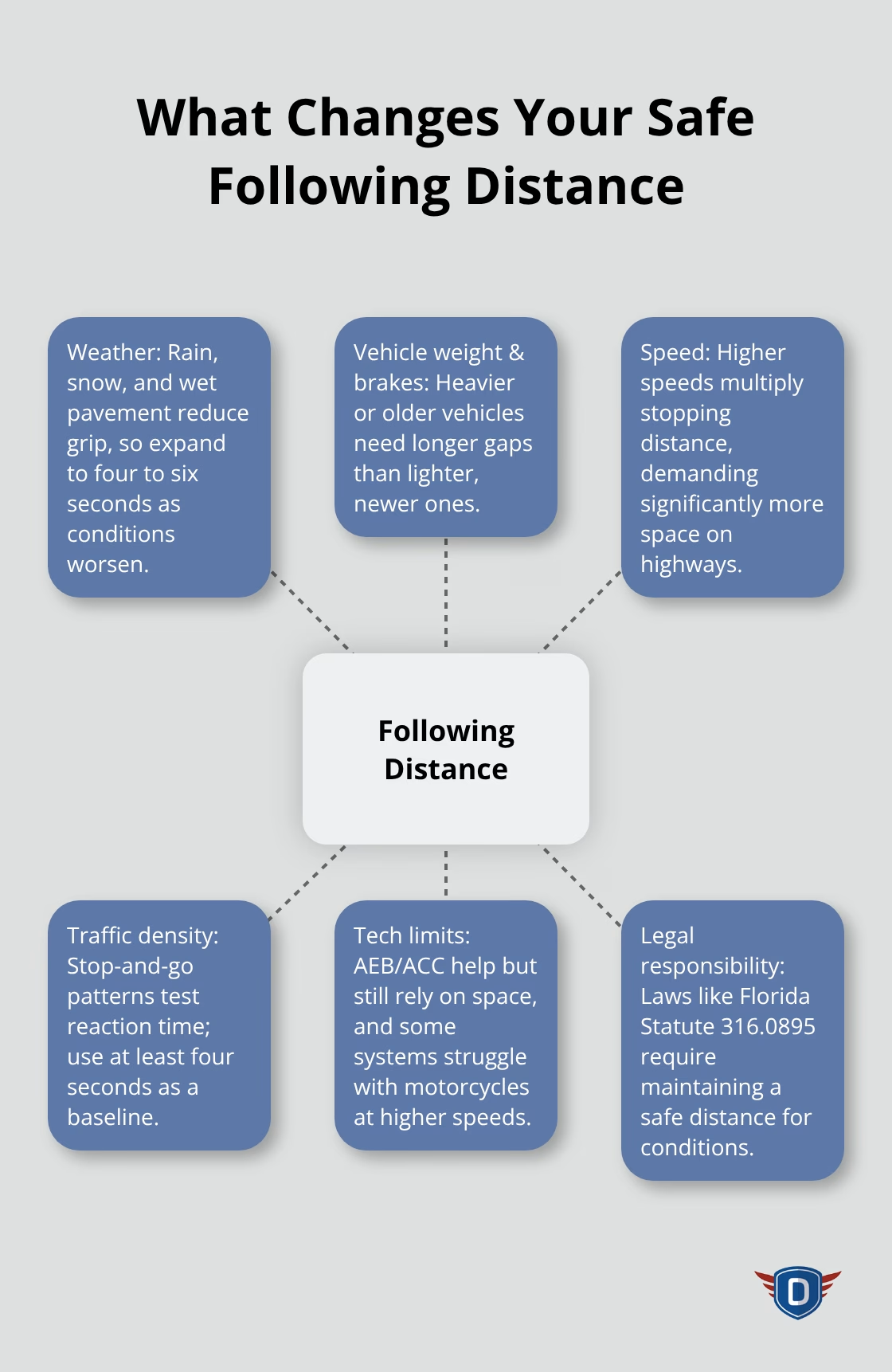
In heavy traffic with constant acceleration and braking, maintain at least four seconds as your baseline because stop-and-go patterns test your reaction time constantly. Slow traffic feels safer but creates rear-end collision risk because drivers drop their guard, while highway speeds demand conscious discipline to maintain adequate space. You control your following distance and speed, making these your most powerful tools for avoiding crashes. Understanding how these factors interact helps you adjust your spacing strategy before you face an emergency braking event.
How to Count Seconds and Adjust for Real Conditions
The Two-Second Count in Practice
Pick a stationary object ahead-a road sign, utility pole, or painted road mark-and watch when the rear bumper of the vehicle in front passes it. Start counting: one-one-thousand, two-one-thousand. If your front bumper hasn’t reached that same object by the time you finish counting two full seconds, you’re too close. Most drivers discover they’re counting less than one second, which explains why rear-end collisions remain the most common crash type on American roads. Defensive driving courses train drivers to recognize hazards and respond to real-life scenarios because this method builds spacing decisions into muscle memory rather than requiring conscious calculation each time.
Wet Roads Demand Immediate Distance Increases
In rain or snow, extend your count to 3 or 4 seconds depending on severity-don’t try to recalculate on the fly. Wet pavement increases stopping distance significantly, so the moment your tires lose grip, increase your gap immediately. On highways at 65 mph or higher, many experienced drivers count five or six seconds as their baseline because speed multiplies stopping distance exponentially. Your distance becomes the only margin that matters when conditions turn dangerous.
Technology Supports Your Spacing Strategy
Adaptive cruise control systems like VW Group Travel Assist, BMW Symbiotic Drive, and Mercedes Distronic maintain distance automatically on supported roads, but they still require you to monitor conditions and take over when needed. These systems smooth deceleration and maintain steady spacing, reducing mental load on long drives while you retain full control to override whenever traffic or road conditions demand it. Trusting technology completely is dangerous-use it as support while you stay alert and ready to adjust distance manually whenever visibility drops, traffic density increases, or road surface changes.
Final Thoughts
Safe following distance tips work because they give you time to react when the unexpected happens. The two-second rule scales with speed, weather conditions demand immediate adjustments, and your spacing strategy becomes your most reliable defense when technology falters. Every extra second of distance reduces your stopping distance risk and keeps you in control of your vehicle, regardless of what other drivers do around you.
Your driving record depends on the habits you build today. Tailgating signals aggressive driving to law enforcement and other motorists, inviting citations that raise insurance costs and complicate your driving history. Safe spacing protects your record by keeping you out of rear-end collisions, reducing at-fault accidents, and demonstrating responsible vehicle operation.
We at DriverEducators.com help you apply these principles through defensive driving courses that teach safe spacing decisions using real-life scenarios and hazard recognition exercises. Our Florida-approved programs guide you through the knowledge and habits that protect your safety and your record, whether you’re completing a Basic Driver Improvement course or refreshing your skills with our Mature Driver Course.