A traffic ticket, court order, or insurance requirement usually turns one simple question into an urgent one: online traffic school vs classroom – which option actually makes sense for your situation? The right answer depends on more than convenience. It also depends on approval rules, your deadline, your learning style, and how much disruption you can afford in your schedule.
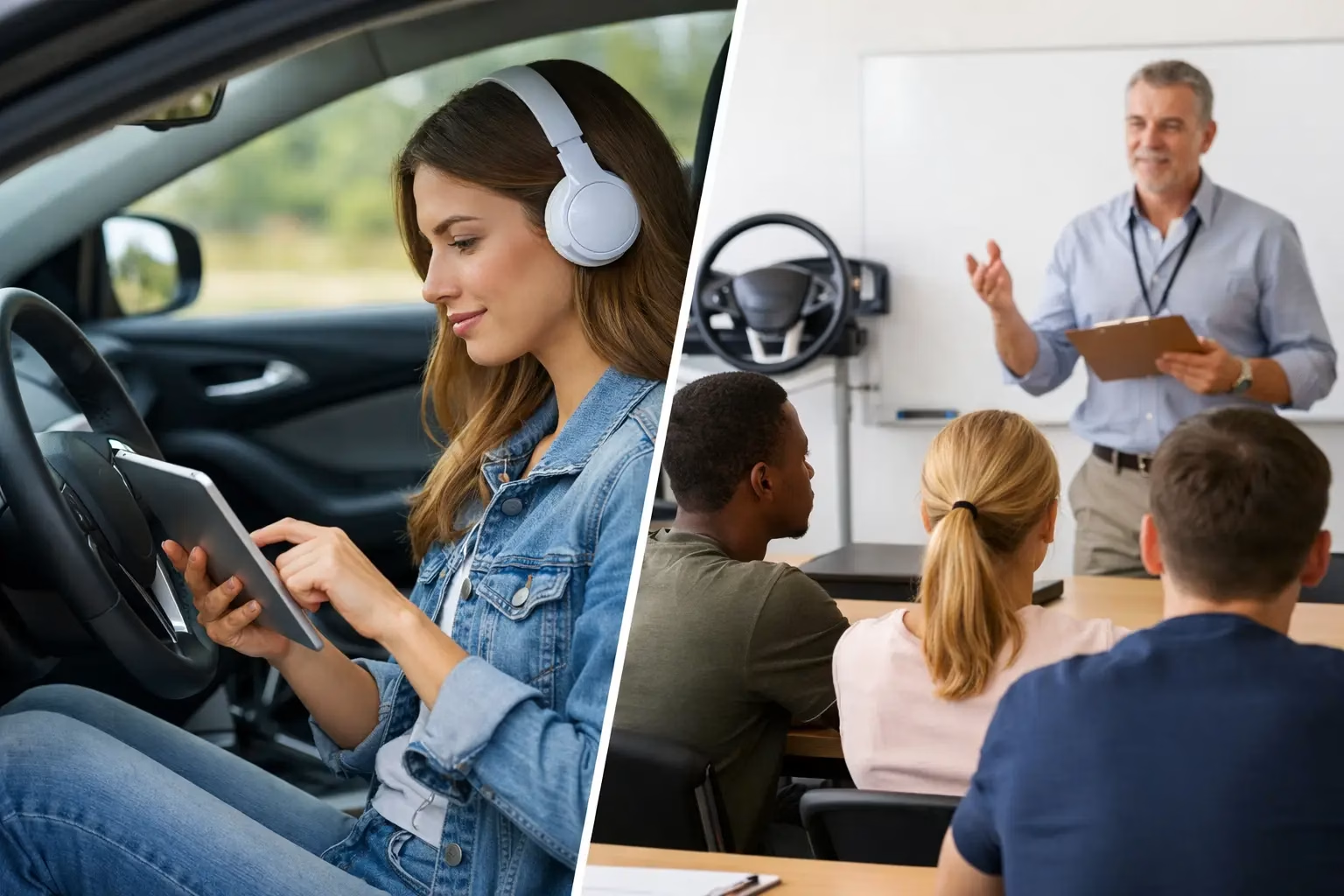
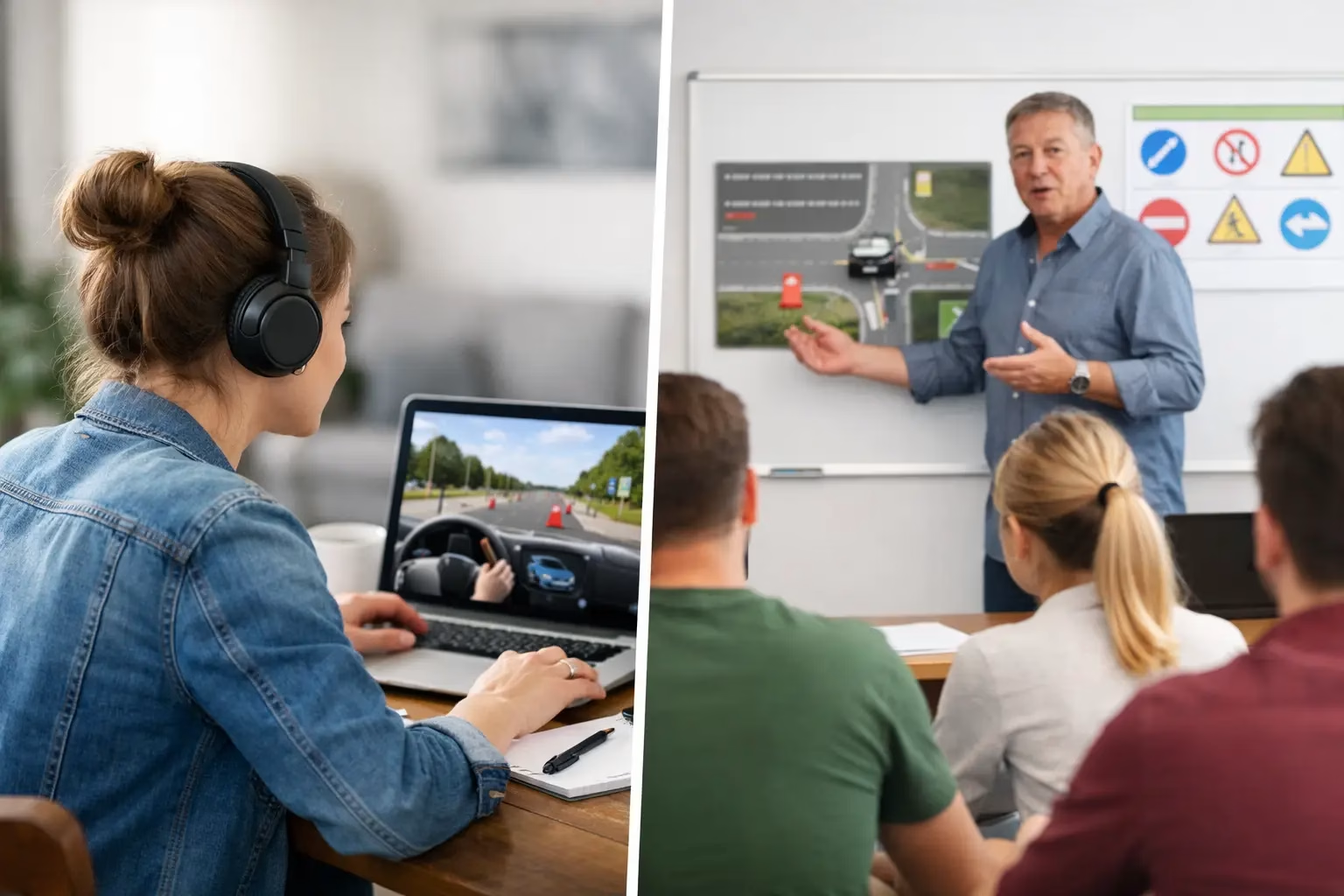
For many drivers, the biggest difference is control. An online course usually lets you start when you want, stop when you need to, and complete the material from your phone, tablet, or computer. A classroom course is more structured, but that structure can help if you focus better with a live instructor and a set schedule.
Online Traffic School vs Classroom: The Core Difference
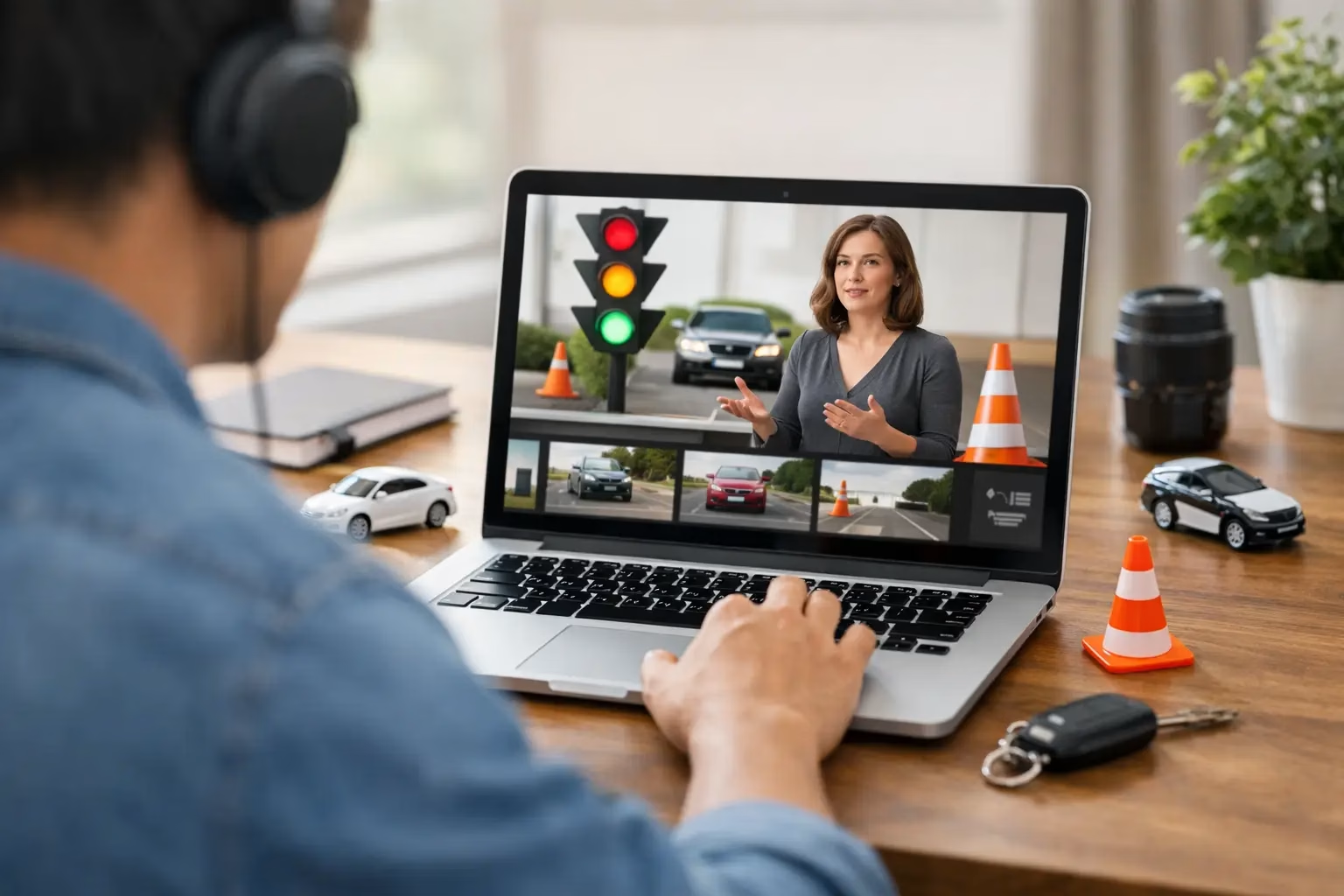
Online traffic school is a state-approved or court-approved course delivered digitally. You log in, complete lessons at your own pace unless a timer is required by law, and finish quizzes or assessments based on the program rules.
A classroom traffic school course happens in person at a scheduled location. You attend at assigned times, complete the required hours on site, and follow the instructor’s pace rather than your own.
Neither format is automatically better in every case. The better choice is the one that satisfies your requirement and fits how you realistically learn and complete tasks.
When Online Traffic School Makes More Sense
Online traffic school is usually the better fit for busy adults, parents, shift workers, and anyone trying to resolve a requirement without rearranging an entire week. If you need flexibility, online delivery solves the biggest problem first: finding time.
You can usually work around your life instead of planning your life around the course. That matters if you are dealing with court deadlines, commuting, childcare, or inconsistent work hours. Many drivers also prefer the privacy of completing the course at home instead of sitting in a room with strangers for several hours.
Cost can also favor online learning. In-person classes may involve travel, fuel, parking, and time away from work in addition to tuition. An online option often removes those extra costs. If the provider is transparent about pricing, that can make the decision even easier.
Another advantage is pacing. Some people learn better when they can reread a section, pause, and come back later. That is especially useful in defensive driving and driver improvement content, where the goal is not just completion but retention.
When a Classroom Course May Be Better
A classroom setting can still be the right choice for some drivers. If you struggle to stay focused online, procrastinate easily, or prefer direct instruction, an in-person class can provide accountability that a self-paced course does not.
Some students also like being able to ask questions in real time. That can be useful if the material covers legal obligations, traffic law updates, or safety concepts that feel unfamiliar. A live instructor can clarify confusing points on the spot.
In rare cases, a classroom course may be required by a court, agency, or local rule. That is why approval status matters more than format preference. Before choosing convenience, make sure the course type is accepted for your specific requirement.
Approval Matters More Than Format
This is where many drivers make avoidable mistakes. They assume any traffic school will count as long as they finish it. That is not always true.
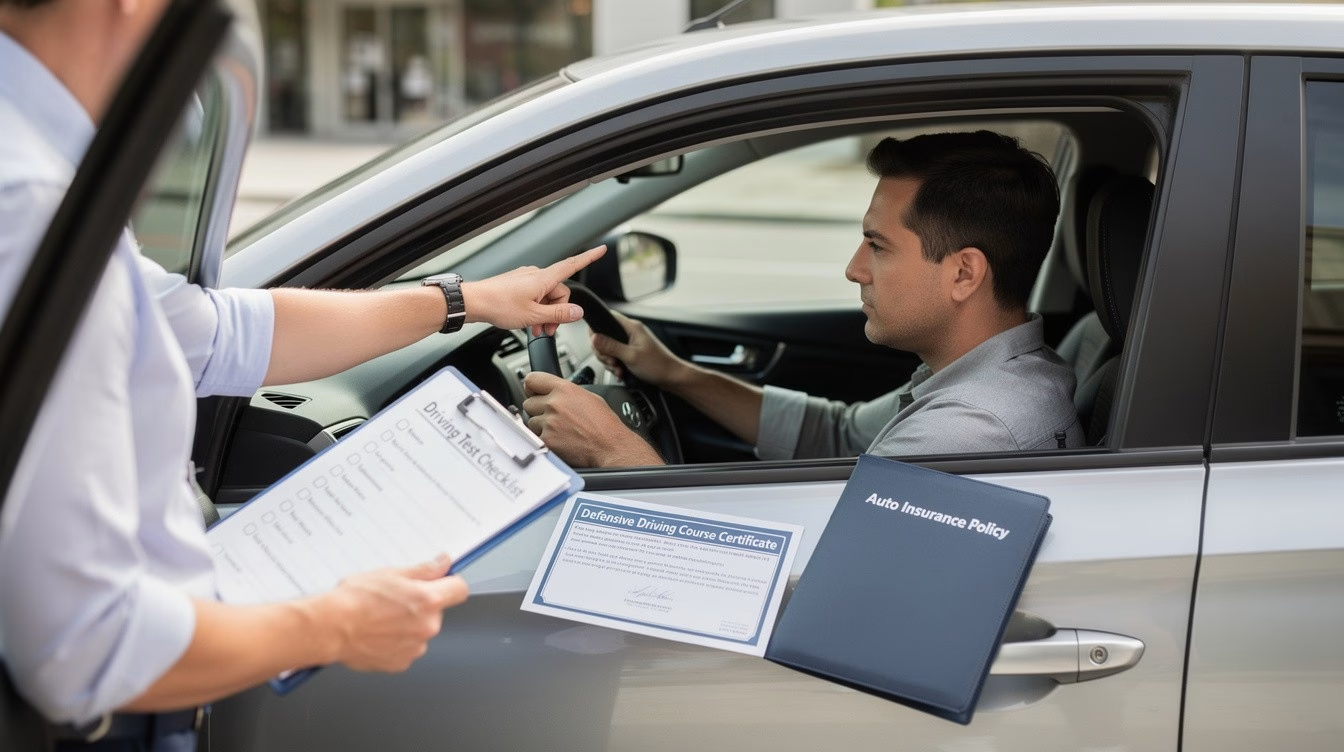
Some requirements are state-specific. Others are court-specific. The course may need to be approved for ticket dismissal, point reduction, license reinstatement, insurance discount purposes, or first-time driver education. The same term, traffic school, can refer to different programs with different legal outcomes.
If you are comparing online traffic school vs classroom, first verify three things: who ordered or recommended the course, what exact course type is required, and whether online completion is accepted. If the answer is yes, online is often the more practical route. If the answer is no, a classroom course is not optional.
A dependable provider should make approval information clear and easy to verify. That clarity matters because the real risk is not choosing online or in person. The real risk is completing a course that does not satisfy the requirement.
Convenience vs Structure
Most people hear online and think easy. That is only partly true. Online traffic school is more convenient, but convenience still requires follow-through.
If you are self-directed, online learning can be efficient and less stressful. You can complete a section on lunch break, another after dinner, and finish the rest over the weekend. That kind of flexibility is hard to match in a classroom format.
But if you tend to delay tasks until the deadline is too close, a classroom can protect you from your own habits. Once you register, the schedule is fixed. You show up, stay for the required time, and complete it in one sequence.
So the trade-off is simple. Online gives you freedom. Classroom gives you external structure. The best option depends on which one helps you actually finish.
Learning Experience and Retention
Traffic school is often treated like a box to check, but the content still matters. Safe following distance, distracted driving, impairment, right-of-way rules, and crash prevention are not abstract topics. They affect real driving behavior.
Online courses often present this material in short modules with built-in reviews and quizzes. That format can improve retention for people who prefer reading in smaller segments. It also lets you revisit sections before moving on.
Classroom learning can be stronger for discussion-based learners. If hearing examples and asking follow-up questions helps information stick, an in-person course may feel more effective. The downside is that if the class moves past a topic quickly, you may not get the chance to absorb it at your own pace.
For many drivers, the practical question is not which method is theoretically best. It is which one they are most likely to complete carefully and on time.
Cost, Time, and Hidden Friction
Price is never just the listed course fee. Time has a cost too.
An in-person class may require driving to a location, arriving early, sitting through fixed hours, and adjusting work or family commitments. That can turn a low-cost class into the more expensive option overall. Online traffic school usually reduces that friction because the course comes to you.
That said, not all online courses are equal. Some are easier to use, more mobile-friendly, more clearly priced, or better supported than others. If you choose online, look for straightforward enrollment, device compatibility, and customer support in case you need help with completion records or reporting.
Providers such as DriverEducators.com appeal to many drivers for exactly that reason. The value is not just digital access. It is approved training, flexible scheduling, transparent pricing, and a process that feels manageable when you need a requirement completed correctly.
How to Choose the Right Option
Start with the rule, not the format. Check whether your court, DMV, or insurance provider accepts online completion for your specific need. Then consider your deadline, schedule, budget, and study habits.
If online is approved and you want maximum flexibility, it is usually the better fit. If your requirement is strict, your focus is better in person, or you want live instruction, classroom may be worth the extra time.
The key is to choose the course you will complete successfully, not the one that only sounds best at first.
FAQ
Is online traffic school easier than classroom traffic school?
Usually yes for scheduling, not always for focus. Online traffic school is easier to fit into a busy life, but classroom instruction can be easier for people who need structure.
Does online traffic school count the same as classroom traffic school?
Sometimes. It counts only if your state, court, DMV, or insurance provider accepts the online format for your exact requirement.
Is online traffic school faster?
Often yes in practical terms. You avoid travel time and can start sooner, but some courses still have minimum time requirements set by law.
Who should choose a classroom course?
Drivers who want live instruction, fixed scheduling, or extra accountability may do better in a classroom. It can also be the right choice when in-person attendance is required.
What should I verify before enrolling?
Confirm approval first. Make sure the course type, provider, and delivery format match what your court, state, or insurer requires.
A good traffic school choice should reduce stress, not add to it. If the course is approved, accessible, and realistic for your schedule, you are much more likely to finish on time and move forward with confidence.