A learner’s permit is usually the first official step toward driving independently, but the paperwork can feel less straightforward than the driving itself. If you are searching for how to get permit certificate information, start with one key fact: states do not use one national permit process. Your state DMV, licensing agency, or motor vehicle department sets the age rules, documents, tests, fees, and course requirements.
A permit certificate may refer to the document showing you completed a required driver education course, passed a knowledge exam, or were issued a learner’s permit. Knowing which certificate your state or school is requesting prevents delays at the licensing office.
What a permit certificate usually means
In driver licensing, a permit certificate is not always the permit itself. It can be a completion certificate from an approved driver education, traffic law, or substance abuse course that must be submitted before you can apply for a learner’s permit.
For example, some states require new drivers to complete classroom instruction before a permit is issued. Others let applicants take the written test first and require driver education later, before a provisional or full license. Your age can also change the requirements.
Before enrolling in a course or scheduling an appointment, read the instructions from your state licensing agency carefully. Look for the exact name of the document requested, such as a driver education completion certificate, proof of enrollment, parental consent form, or knowledge test result.
How to get a permit certificate step by step
The process is manageable when you complete each requirement in the right order. Most applicants will need to confirm eligibility, gather identity documents, complete any required education, pass a vision and knowledge test, and pay the application fee.
Confirm your state’s age and residency rules
Each state sets a minimum age for a learner’s permit. Many allow teens to apply around age 15 or 16, while some states offer permits earlier or later. If you are under 18, a parent or legal guardian may need to sign the application and accept responsibility for your driving practice.
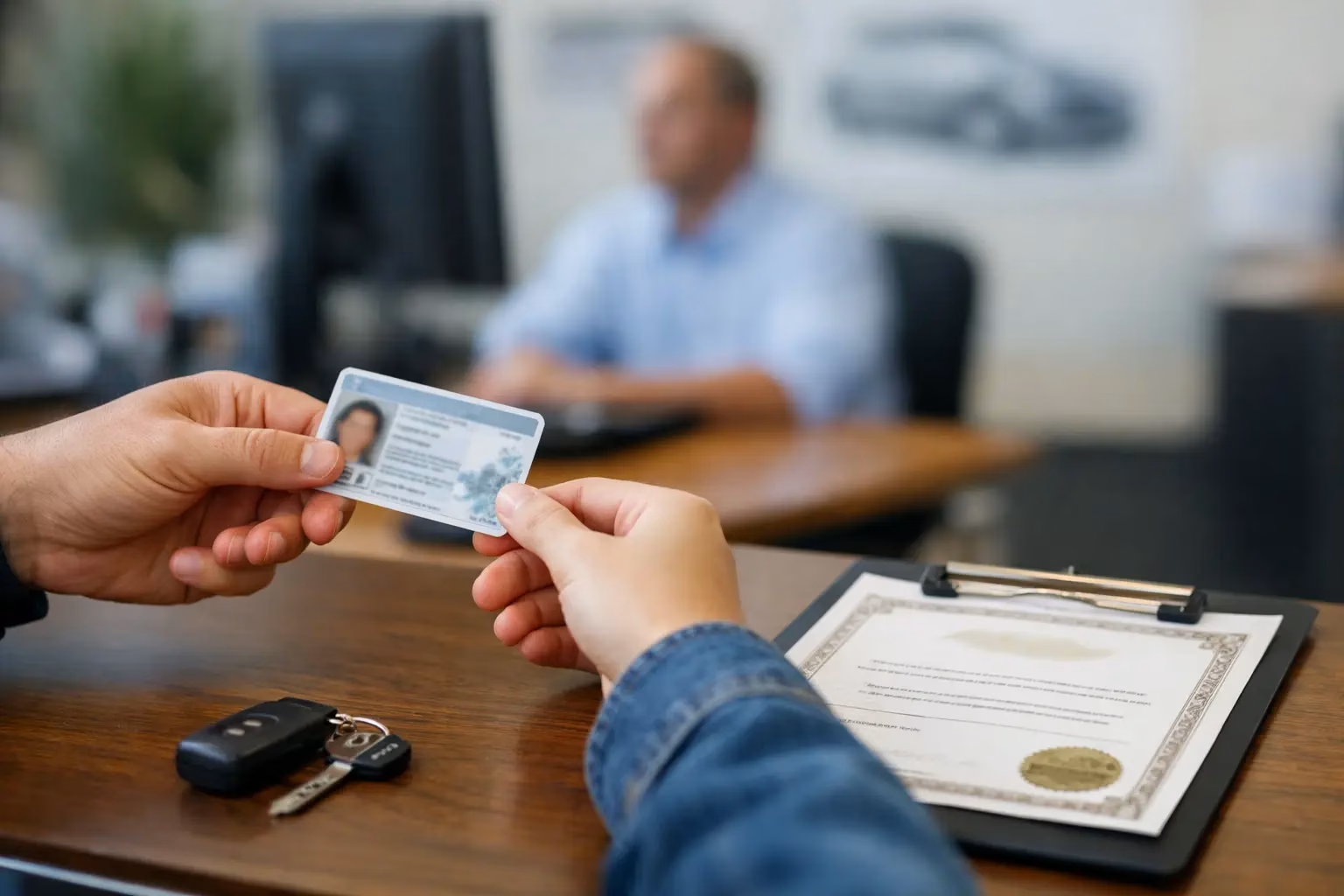
You will generally need to prove your identity, date of birth, and state residency. Common documents include a certified birth certificate or passport, Social Security number or acceptable verification, and school or residency records. Licensing offices may require original documents rather than copies.
Names must match across your documents. If your name has changed, bring the legal paperwork that explains the difference, such as a marriage certificate or court order.
Determine whether a course is required first
Some applicants need an approved education certificate before the DMV will issue a permit. This is particularly common for teen drivers and first-time applicants in states that require a traffic law, substance abuse, or driver education program.
An approved online course can be a practical option when your state accepts it. You can study on a phone, tablet, or computer when your schedule allows, rather than arranging transportation to a classroom. However, approval matters more than convenience. Choose a course that is approved for your state and your specific purpose.
After you finish the course, keep your completion certificate accessible. In some states, the provider reports completion electronically to the DMV. In others, you must download, print, or present the certificate yourself. Ask how completion is transmitted before you need it, not at the licensing counter.
Prepare for the knowledge and vision tests
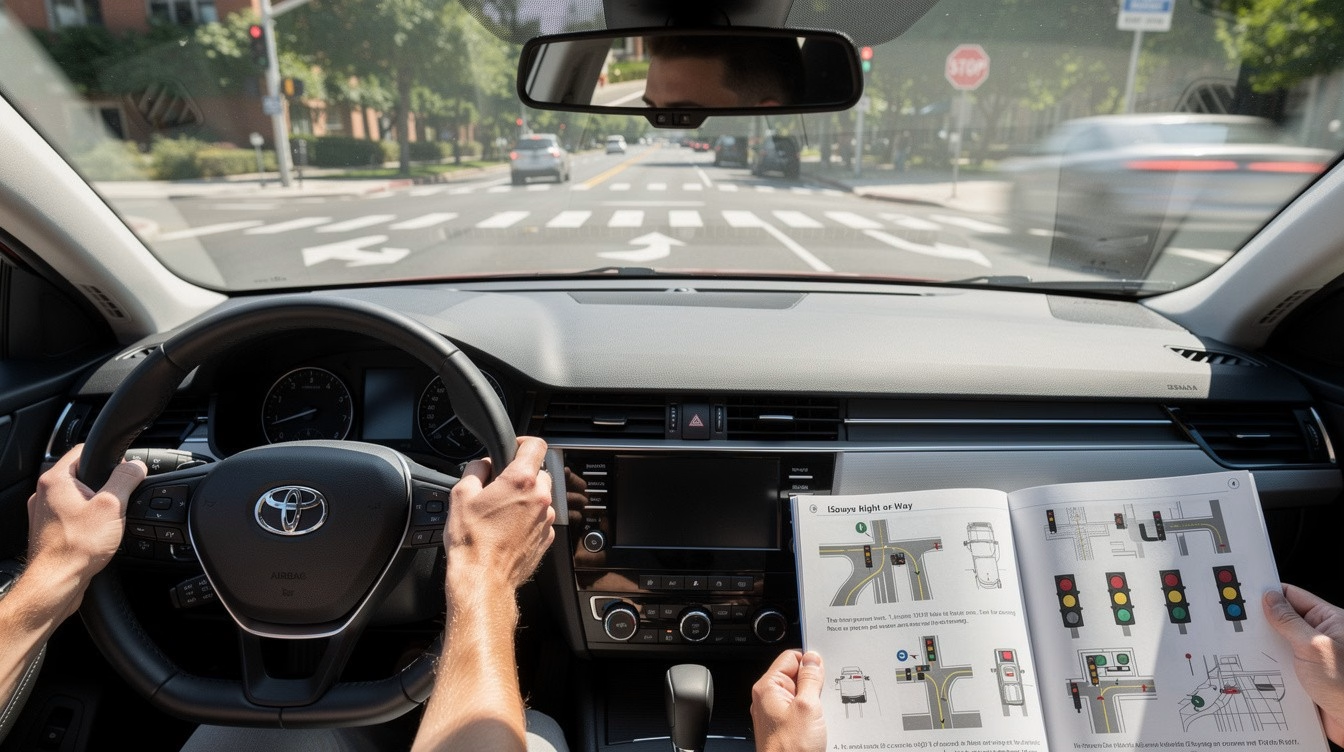
A learner’s permit knowledge test measures your understanding of traffic signs, right-of-way rules, safe driving practices, parking laws, impaired driving rules, and state-specific requirements. The best study source is your state’s current driver handbook.
Do not rely only on general driving advice or social media test tips. Road rules vary by state, and the DMV test is based on the laws where you are applying. Practice questions can help identify weak areas, but they should supplement the official handbook.
You will also take a vision screening. Bring corrective lenses if you use them for distance vision. If you do not meet the standard, the licensing agency may require an eye exam or a restriction on your permit.
Schedule your licensing appointment and bring the right records
Many DMVs require appointments for permit applications, especially during busy seasons. Check whether your state allows walk-ins, online testing, or a hybrid process where you complete part of the application online and finish identity verification in person.
Bring every required document listed by your state. A missing parent signature, residency record, or completion certificate can mean rescheduling your appointment. It is wise to place documents in one folder and review them the day before you go.
At the appointment, you may have your photo taken, submit your application, pass the vision and knowledge tests, and pay the permit fee. Fees vary by location and may not include the cost of a required course or retesting.
Receive the permit and follow its restrictions
Once approved, you will receive a physical permit, temporary paper permit, or confirmation that your credential will arrive by mail. Read the restrictions before driving. A learner’s permit commonly requires a licensed adult to sit in the front passenger seat and may limit nighttime driving or the number of young passengers.
A permit gives you permission to practice, not permission to drive alone. Violations can delay your license eligibility, lead to citations, or affect your family’s insurance costs.
Common delays and how to avoid them
The most common delay is bringing the wrong documents. Requirements can differ for citizens, permanent residents, applicants with name changes, and people who recently moved. Use your state’s current checklist rather than an old checklist from a school, family member, or search result.
Another problem is taking a course that does not meet the correct requirement. A basic driver improvement course, for example, may be useful for a traffic citation but may not satisfy a first-time permit education requirement. Match the course title, state approval, and purpose to the notice or DMV instruction you received.
Applicants also sometimes assume that finishing a course means they automatically have a permit. Course completion and permit issuance are separate steps unless your state clearly says otherwise. You may still need to pass the required tests and provide identification in person.
After you get your certificate or permit
Keep a digital and printed copy of your course certificate until you hold your full license. A school, court, insurer, or licensing agency may ask for it later, especially if electronic reporting is delayed or a record needs correction.
Then create a realistic supervised practice schedule. Practice should include daytime and nighttime driving, intersections, parking, lane changes, highway entry, rain when conditions are safe, and distraction-free driving habits. Follow your state’s required practice-hour rules, including any nighttime-hour requirement.
Driver education is most useful when it carries into each supervised drive. Discuss decisions as they happen: where to scan, when to slow down, how much space to leave, and why a particular right-of-way rule applies. That preparation helps make the road test less stressful and builds safer habits before independent driving.
Frequently asked questions
Is a permit certificate the same as a learner’s permit?
Not always. A permit certificate often proves you completed a required course, while a learner’s permit is the credential that lets you practice driving under supervision.
Do I need driver education before getting a permit?
It depends on your state and age. Some states require an approved course before application, while others require it before a provisional or full license.
Can I take a required permit course online?
Yes, if your state accepts online instruction and the provider is approved for your required course. Confirm approval and certificate reporting before enrolling.
What happens if I fail the permit knowledge test?
You can usually retake it after waiting the period set by your state. Review the official driver handbook and ask about any retest fee before scheduling another attempt.
Can I drive alone after receiving a learner’s permit?
No. A learner’s permit generally requires supervision by a qualified licensed driver and may include passenger or nighttime restrictions.
Getting a permit certificate is less about finding one universal form and more about completing your state’s exact sequence. Take the process one requirement at a time, keep your documents organized, and use supervised practice to turn permit eligibility into real driving readiness.