
If you need a driver safety certificate online, you usually do not have time for guesswork. You may be trying to meet a court deadline, satisfy a DMV or licensing requirement, qualify for an insurance discount, or complete a first-time driver education step. In each case, the real question is not just where to take a course. It is whether the course will be accepted for your specific situation.
That distinction matters because “driver safety certificate” is a broad term. Some people use it to describe a traffic school completion certificate. Others mean a teen driver education certificate, a mature driver discount certificate, or proof of completion for a court-ordered driver improvement program. The format can be online, but the approval rules depend on the state, the agency, and the reason you need it.
What a driver safety certificate online usually means
A driver safety certificate online is proof that you completed an approved internet-based driver safety course. The course itself may cover defensive driving, traffic laws, substance abuse education, crash prevention, distracted driving, or driver improvement. The certificate is the document that shows you met the course requirement.
What counts as valid depends on the purpose. A course accepted for insurance savings may not satisfy a court order. A pre-licensing class for a teen may not count as a ticket dismissal course for an adult driver. That is why the safest approach is to start with the requirement first and the course second.
Who may need a driver safety certificate online
The most common users fall into a few groups. First-time drivers may need an education certificate before taking the next licensing step. Drivers with citations may need a state-approved or court-approved course to comply with a case requirement. Mature drivers may take a safety course to qualify for an insurance discount. Some employers or fleet programs also request proof of safety training.
The benefit of taking the course online is straightforward. You can complete it on your schedule, avoid classroom travel, and often work from a phone, tablet, or computer. But convenience only helps if the certificate is recognized by the party asking for it.
How to tell if an online certificate will be accepted
Approval is the first thing to verify. You want to know who approves the course, whether that approval applies in your state, and whether it matches your exact need. A state agency, court system, DMV, or insurance carrier may each have different standards.
Look for clear language about acceptance, not broad promises. If a provider says the course is approved, the page should make it easy to identify the state and the course type. If your requirement came from a judge, clerk, hearing officer, DMV notice, or insurer, compare the wording on that notice with the course description before you enroll.
It also helps to confirm how the certificate is issued. Some programs provide instant downloadable proof after completion. Others process completion records first and then send the certificate or report it directly to the state. Neither method is automatically better, but the timing matters if you are close to a deadline.
Driver safety certificate online courses are not all the same
This is where many drivers get tripped up. Two online courses can look similar on the surface and serve completely different compliance goals. One may be built for point reduction or ticket dismissal. Another may be for substance abuse education required before licensing. Another may focus on senior driver safety for insurance purposes.
Course length can vary too. Some are just a few hours. Others are longer because state law sets a minimum time. The best option is not always the shortest one. It is the one that meets the exact requirement without creating problems later.
There are also differences in how the course is delivered. Some providers save your place automatically, offer audio support, or allow mobile access. These features do not change approval status, but they can make completion faster and less stressful, especially if you are balancing work, family, or a court deadline.
What to look for before you enroll
Start with course approval and matching requirement. Then check practical details that affect whether you can finish smoothly. Transparent pricing matters because low advertised prices sometimes exclude certificate delivery or reporting fees. A clear refund policy matters too, especially if you are still confirming eligibility.
Customer support is another sign of a reliable provider. If your due date is close, you should be able to get a direct answer about state acceptance, reporting timelines, and technical access. A course that is available 24/7 is useful, but support still matters when something is unclear.
You should also review device compatibility. Most drivers expect an online course to work on mobile, but not every platform performs the same way across browsers or screen sizes. If you plan to complete most of the course on a phone, make sure that is supported before you pay.
Common situations where approval gets confusing
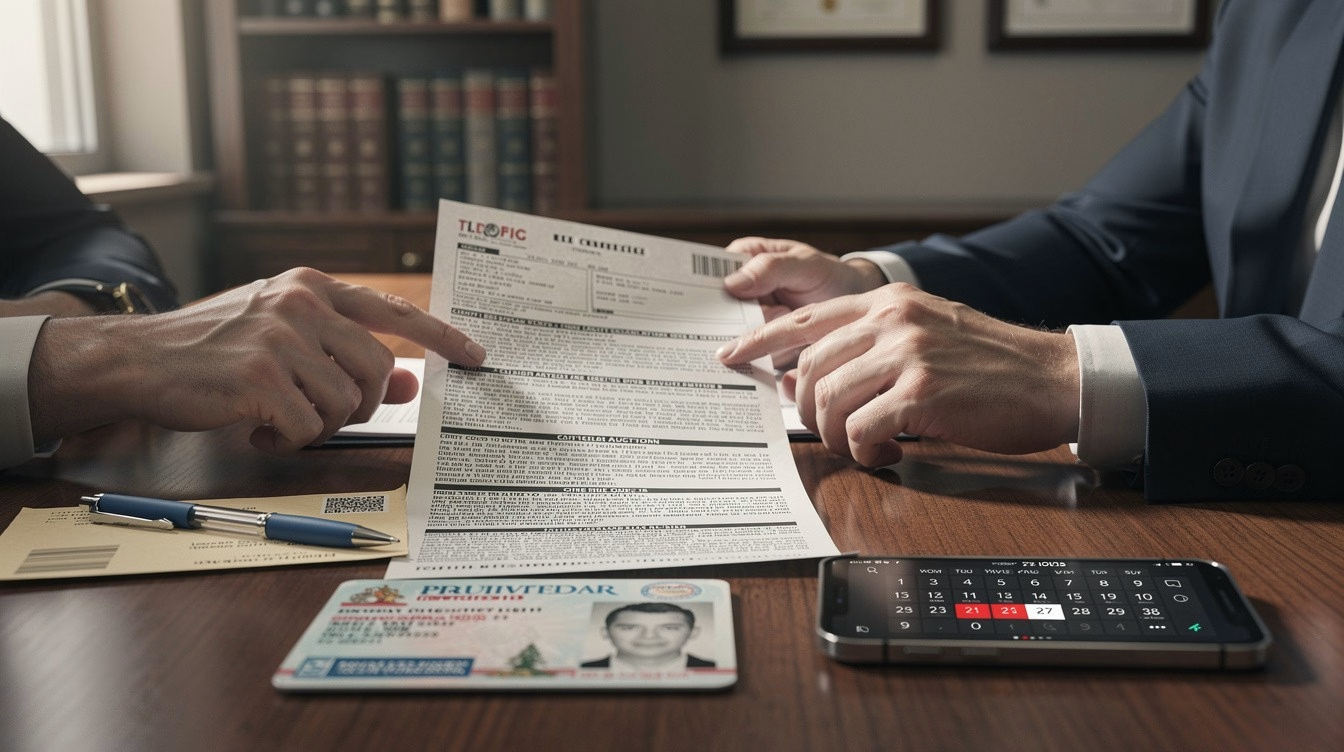
Court requirements are one example. A judge or clerk may say you need traffic school, defensive driving, or a driver improvement course, but those terms are not interchangeable everywhere. If your paperwork includes a case number, county, or specific statute, use that information to confirm the exact course type.
First-time licensing is another area where wording varies. Some states require a named course such as traffic law and substance abuse education or driver education traffic safety. Calling it a general safety certificate may be understandable in conversation, but the official requirement is usually more specific.
Insurance discounts can be less urgent but still worth checking. Insurers may accept a mature driver or defensive driving completion certificate, but the age rules, renewal periods, and discount details differ by state and company. A certificate alone does not guarantee a discount unless your insurer recognizes that course.
Why online courses work well for busy drivers
The main advantage is flexibility. You can complete a section before work, during a lunch break, or at night without rearranging your week around a classroom schedule. For many drivers, that is the difference between finishing on time and missing a requirement.
Online courses also tend to reduce friction. Enrollment is faster, progress is often saved automatically, and certificate access can be quicker than waiting for an in-person class to meet. For drivers who need a recognized solution rather than a traditional school setting, that convenience is practical, not just nice to have.
That said, self-paced learning is not ideal for everyone. If you know you struggle to stay focused without a classroom structure, choose a provider with simple navigation, clear progress tracking, and support options. The easier the course is to complete, the less likely you are to stall halfway through.
Choosing a provider with confidence
A trustworthy provider makes the compliance path easy to understand. You should be able to identify the course purpose, the state or approval area, the price, the certificate process, and the support options without hunting through fine print.
This is where established online schools can make a difference. A provider such as DriverEducators.com focuses on approved digital driver education and safety courses designed for real licensing, court, and insurance needs, not vague general training. That kind of specialization tends to reduce mistakes at enrollment.
A good provider also avoids overselling. No legitimate school should imply that one certificate solves every driver problem in every state. Clear boundaries are a sign of credibility. If the answer is “it depends on your state or court,” that is often the most honest answer.
FAQ about driver safety certificate online
What is a driver safety certificate online?
It is proof that you completed an approved online driver safety course. The exact course type depends on your state and why you need it.
Is an online driver safety certificate valid?
Yes, if the course is approved for your specific requirement. Validity depends on the state, court, DMV, or insurance company involved.
Can I use any online course for court?
No. Court acceptance is not automatic. You need a course that matches the court or state requirement on your paperwork.
How fast can I get my certificate?
It depends on the provider and the course rules. Some issue certificates right away, while others first report completion to the state or process records.
Will a driver safety certificate online lower my insurance?
Sometimes. Some insurers offer discounts for approved safety courses, especially for mature drivers, but eligibility and savings vary.
Do I need to finish the course in one sitting?
Usually no. Most online courses are self-paced and save your progress, but you should confirm that feature before enrolling.
What if I choose the wrong course?
That can delay your compliance. Check your notice, state requirement, or insurer rule first, and review the provider’s refund policy before purchase.
The best driver safety certificate online is not the one with the biggest promise. It is the one that fits your exact requirement, is clearly approved, and gets you from enrollment to completion without added stress. When the course matches the rule, the whole process becomes much simpler.