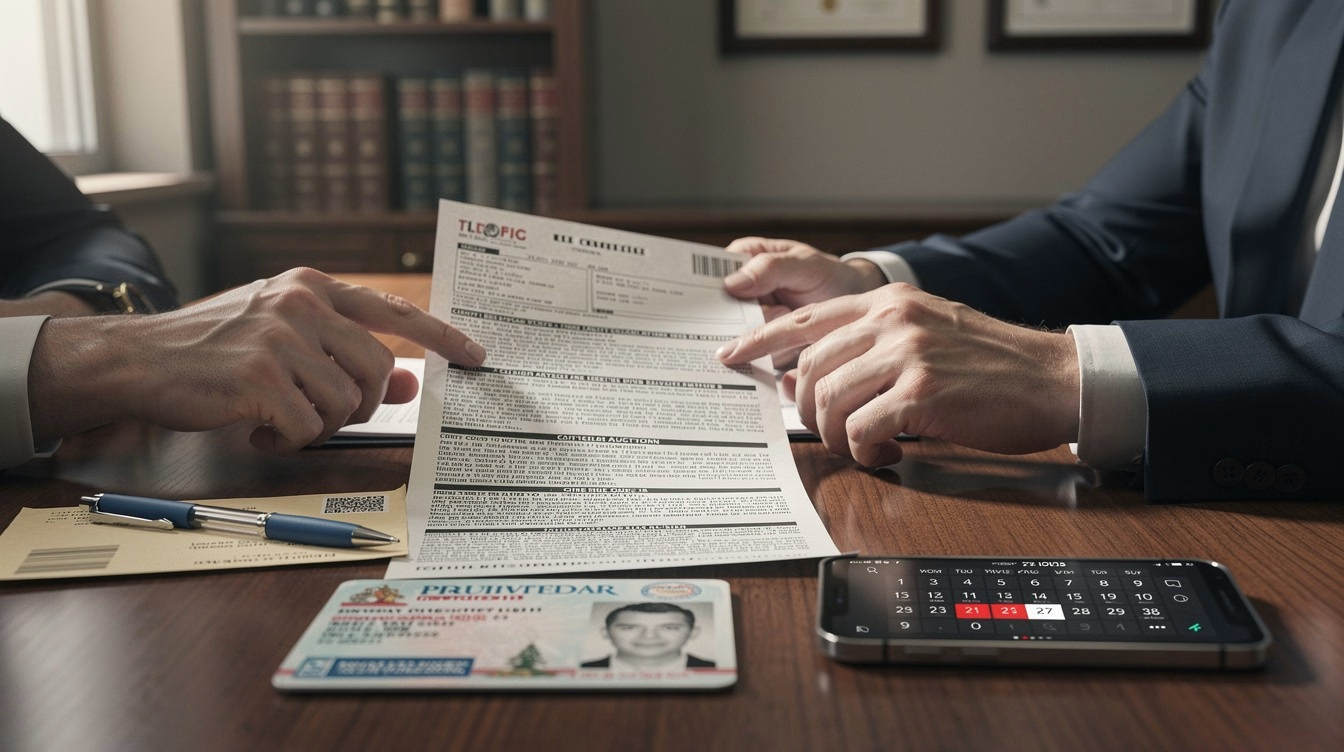

You got a ticket, the court mentioned traffic school, and now the big question is simple: does online traffic school really count? Sometimes yes, sometimes no – and the difference usually comes down to approval, state rules, and why you are taking the course in the first place.
That is the part many drivers miss. Online traffic school is not automatically valid just because a website says it is. For a course to count, it usually has to be approved by the court, DMV, state agency, or insurance company tied to your requirement. If the provider is approved for your specific situation, an online course can count the same as an in-person class.
When does online traffic school really count?
Online traffic school really counts when the agency requiring the course accepts that format and the provider is approved in your state. Approval is the key issue, not whether the class happens online or in a classroom.
For example, a court may allow online traffic school for a moving violation, but only from providers on its approved list. A DMV may accept an online driver improvement course to satisfy a point reduction or reinstatement requirement, but only if the course matches the exact program required. An insurance company may honor a mature driver discount course, but only if state law and insurer rules recognize that course.
In other words, online delivery itself is usually not the problem. The real question is whether the course is approved for your purpose.
Why people assume online traffic school does not count
A lot of confusion comes from outdated assumptions. Years ago, some states and courts limited online education or treated it as less formal than classroom instruction. That has changed in many places.
Today, online driver education and traffic safety courses are widely accepted across the United States for many needs, including ticket dismissal, driver improvement, insurance discounts, and licensing requirements. But acceptance is still regulated at the state and program level, which is why one person’s approved course may not work for someone in a different county or state.
That is also why generic promises can be risky. A provider may offer a legitimate online course, but if it is not approved for your exact requirement, it may not help you at all.
The 4 things that decide whether it counts
First, check who is requiring the course. A court order, DMV notice, employer requirement, and insurance discount request are all different. Each may have different approval standards.
Second, check your state. Traffic school rules are not nationally uniform. What works in Florida may not work in California, Texas, or New York.
Third, check the provider’s approval status. A legitimate provider should clearly state which course is approved, in which state, and for what purpose. Vague claims are a warning sign.
Fourth, check completion reporting. Some courses report directly to the court or DMV. Others issue a certificate you must submit yourself. If you miss that step, an approved course can still fail to count because the paperwork never gets where it needs to go.
Does online traffic school really count for a ticket?
Often, yes. Many courts allow drivers to complete traffic school online to satisfy a citation requirement, reduce points, or keep a ticket from affecting their record.
But eligibility is not automatic. Some courts only allow traffic school for certain violations. Some limit how often you can use it. Some require that you ask for permission before you enroll. If you sign up first and verify later, you can waste both time and money.
The safest approach is to confirm three things before you start: that you are eligible, that online courses are accepted, and that the provider is approved for your court or state requirement.
Does it count for DMV or license requirements?
It can. DMV-related courses are often used for driver improvement, point reduction, reinstatement steps, or state-required education programs.
This is where the course name matters. “Traffic school” is often used as a catchall phrase, but the actual requirement may be Basic Driver Improvement, TLSAE, DETS, an aggressive driver course, or another state-specific program. If you take the wrong type of class, it may be a real course but still not satisfy your requirement.
That is why precise matching matters more than broad marketing language. The approved course has to line up with the notice you received.
Does it count for insurance discounts?
Sometimes. Many states allow insurance discounts for approved mature driver or defensive driving courses, and online options are commonly available.
Still, the discount is not universal. Your age, state, insurer, and course type can all affect eligibility. Before enrolling, confirm that your insurer recognizes the specific course you plan to take and ask what documentation you need.
What approval really means
Approval means a government agency, court system, or other recognized authority has accepted that course for a defined purpose. It does not just mean the website looks professional or that the course has good reviews.
A course can be fully legitimate and still not be approved for your situation. That distinction matters. You are not just buying information. You are trying to satisfy a legal, administrative, or insurance requirement.
A dependable provider should make approval details easy to find. You should be able to identify the state, course purpose, and any limits before you pay.
Signs an online traffic school may not count
If a provider says its course is accepted “everywhere,” be careful. Approval rarely works that way.
If the site does not explain which states or agencies approve the course, that is another concern. The same goes for unclear reporting procedures, hidden fees, or no customer support. Drivers usually need certainty, not broad promises.
A stronger option is a provider that explains course approvals clearly, shows pricing upfront, offers support, and describes how completion is handled. That is especially important when deadlines are involved.
How to make sure your course will count
Start with the notice you received. Read it closely for the exact course name, deadline, and agency involved.
Then verify whether online completion is allowed. If the notice is unclear, contact the court, DMV, or insurer before enrolling.
After that, confirm the provider is approved for your exact requirement. This is where trusted providers such as DriverEducators.com can make the process easier because approval details and course purpose should be clearly explained.
Finally, keep proof of completion and follow any submission instructions. If the provider reports electronically, confirm when reporting happens. If you must send a certificate yourself, do not wait until the deadline.
FAQ
Does online traffic school really count the same as in-person classes?
Yes, if it is approved for your requirement. The format matters less than the approval status.
How do I know if my online traffic school is approved?
Check the provider’s course approval details and match them to your court, DMV, or insurance requirement. If anything is unclear, verify with the agency before enrolling.
Can I take any online traffic school for a ticket?
No. You usually must take a course that is accepted by the court or state handling your citation.
What happens if I take the wrong course?
It may not satisfy the requirement. You could lose time, miss a deadline, and still need to complete a different course.
Do online traffic schools report completion automatically?
Sometimes. Some providers report directly, while others give you a certificate to submit yourself.
Are online traffic school courses easier than classroom courses?
They are usually more convenient, not necessarily easier. You still need to complete the required material and meet any state or court standards.
Can online traffic school remove points from my license?
Sometimes. Point reduction depends on your state’s rules, your eligibility, and the exact course approved for that purpose.
Is online traffic school legitimate?
Yes, many online traffic schools are legitimate. Legitimacy depends on provider credibility and official approval, not just the online format.
If you are asking whether online traffic school is worth your time, the honest answer is this: it counts when it is the right course for the right requirement. A few extra minutes spent confirming approval can save you from bigger problems later, and it can turn a stressful requirement into one more task checked off your list.