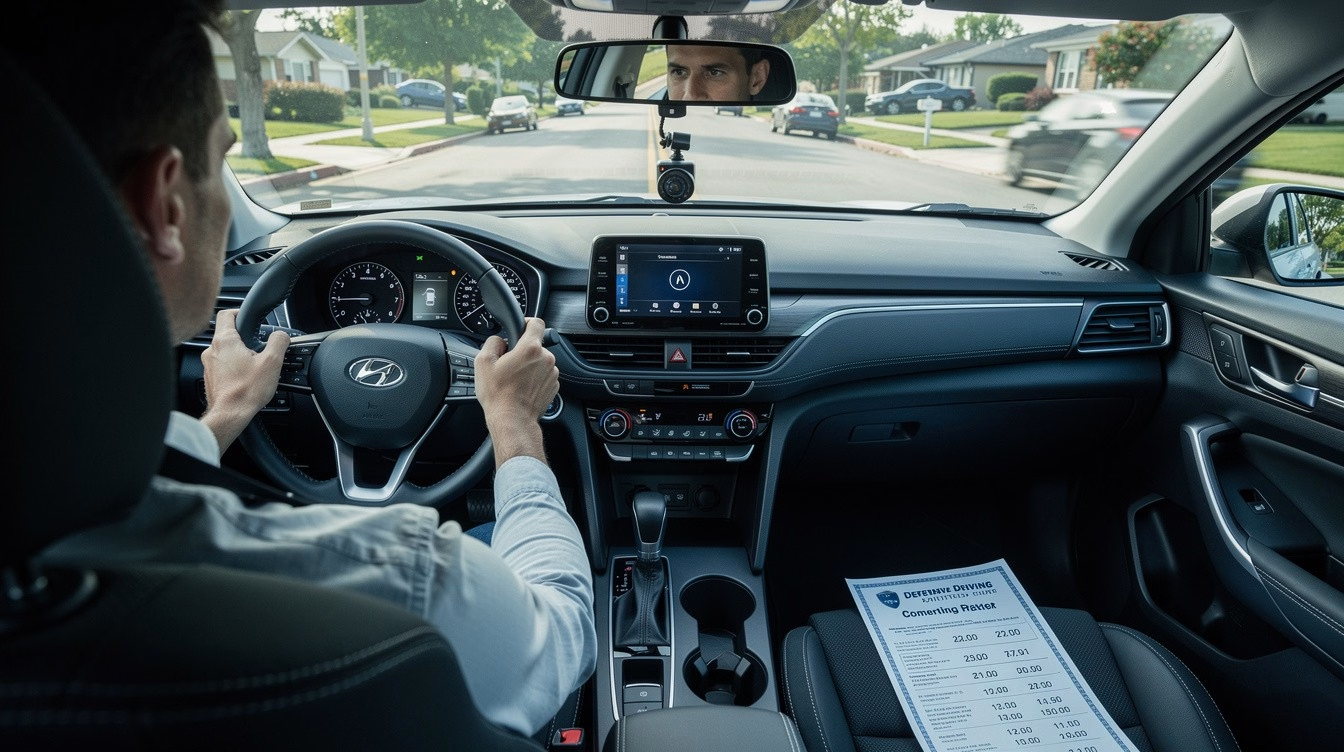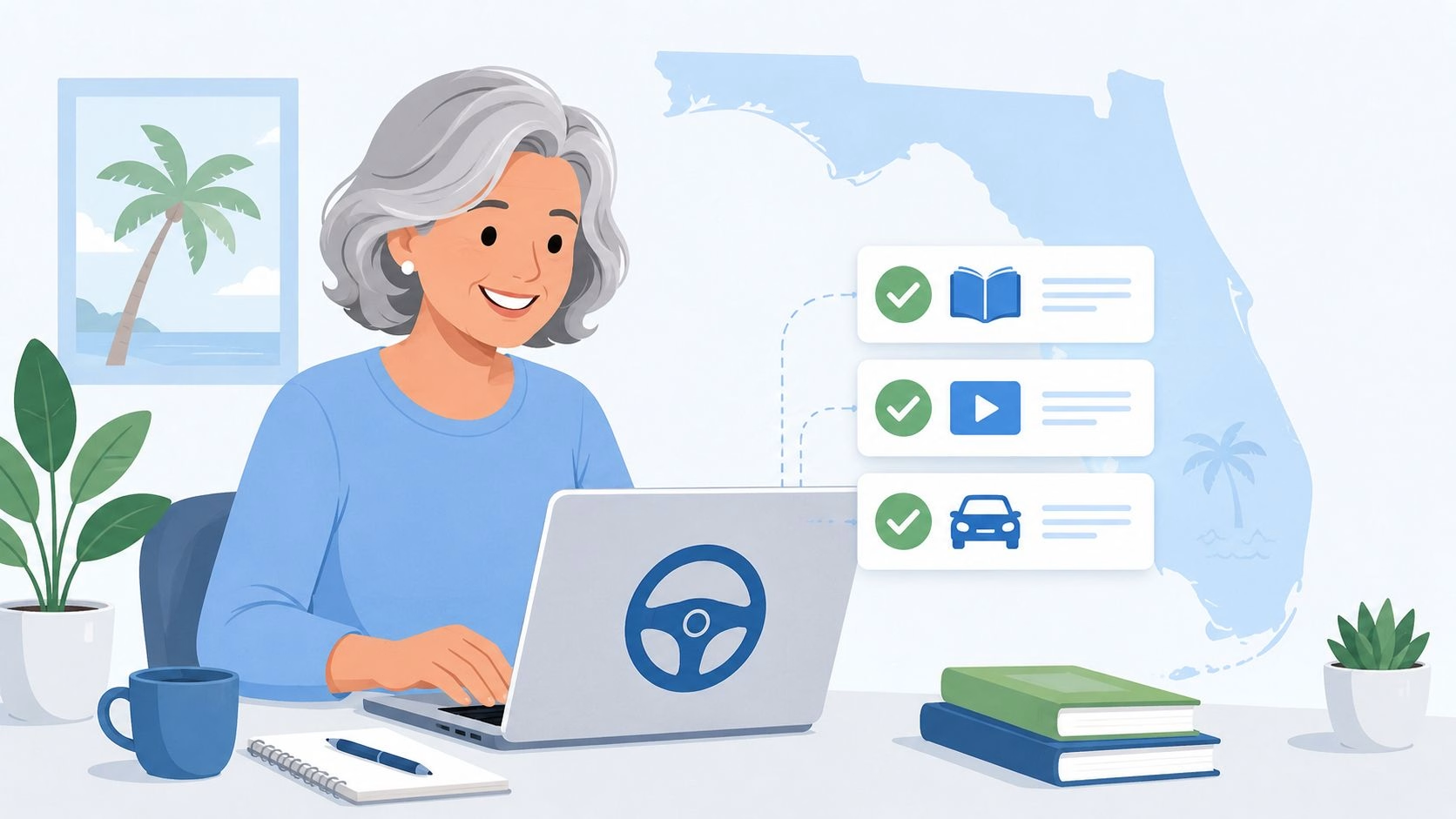

A deadline from the court, a notice from your insurer, or a state requirement for driver improvement usually sends people looking for a defensive driving course online fast. The right course can help you meet that requirement without rearranging your week, but only if it is approved for your specific situation and state. That is where many drivers get stuck.
An online course sounds simple until you realize the details matter. Some programs are accepted for ticket dismissal, some are built for insurance discounts, and some are designed for license-related or court-ordered requirements. A course can be well made and still be the wrong one for your case. The safest approach is to match the course to the exact reason you need it.
Why drivers choose a defensive driving course online
For most people, convenience is the starting point. Online delivery lets you complete the work on your own schedule, from home, on a lunch break, or in shorter sessions across several days. That matters when the alternative is missing work, finding transportation, or sitting in a classroom at a fixed time.
There is also a compliance advantage. A reputable online provider clearly identifies which courses are state-approved, court-accepted, or insurance-eligible. That transparency helps reduce a common risk – paying for a class that does not satisfy the requirement you were given.
The format itself can be easier to manage than in-person instruction. Self-paced modules, simple navigation, mobile access, and immediate enrollment remove friction. If you need to start quickly, an online course is often the fastest path from registration to completion.
What a defensive driving course online usually covers
The exact curriculum depends on the state and course type, but the core subject matter is fairly consistent. Defensive driving is practical by design. It focuses on how to identify risks early, make safer decisions, and reduce the chance of a crash even when other drivers make mistakes.
Most courses cover hazard recognition, following distance, speed management, impaired and distracted driving, right-of-way rules, weather conditions, and safe responses to aggressive driving. Many also include sections on state traffic laws and the real-world consequences of violations. The goal is not only to satisfy a requirement, but to reinforce habits that lower risk every time you drive.
Some drivers expect a defensive driving course to feel like test prep. In reality, it is usually broader than that. It connects traffic laws to everyday judgment, which is why these courses are often used for both compliance and driver improvement.
When an online course makes sense – and when details matter
A defensive driving course online can be a strong fit if you need flexibility, want to work at your own pace, or need to complete a requirement quickly. It is especially useful for adults balancing work and family schedules, teens and parents managing pre-licensing steps, and drivers trying to resolve a citation without an in-person class.
Still, approval is not universal. A course accepted in one state may not count in another. A court may require a specific course length, provider, or completion deadline. An insurer may offer a discount only for a qualifying mature driver or accident prevention program. Those are not small details. They determine whether your certificate will actually be accepted.
That is why the first question is never just, “Is this course online?” It should be, “Is this approved for my reason and my state?”
How to choose the right defensive driving course online
Start with the requirement. If you have a court notice, ticket information, DMV instruction, or insurance request, read the language carefully. Look for the course name, approved hours, filing deadline, and whether the provider must be state-licensed or court-approved.
Next, confirm the provider presents approval information clearly. You should be able to identify the state, the course purpose, and any eligibility conditions before you enroll. If the site is vague about approval status, that is a problem.
Usability matters too. A good course should work on common devices, save your progress automatically, and let you complete lessons in multiple sessions if your state allows it. Pricing should be transparent. Hidden processing fees or surprise certificate charges create the kind of frustration drivers are trying to avoid in the first place.
Support is another factor people overlook until they need it. If your deadline is close or your court paperwork is confusing, responsive customer service matters. DriverEducators.com is one example of the type of provider drivers often look for – approved courses, mobile access, straightforward pricing, and support built around compliance needs.
Common trade-offs to understand before you enroll
Online is convenient, but it is not identical to every classroom experience. Some drivers prefer in-person instruction because they can ask live questions in the moment. Others find online easier because they can move at their own pace and review material without pressure. Neither option is automatically better. It depends on how you learn and what your requirement allows.
Course length is another trade-off. Shorter sounds better, but only if it meets the official requirement. If your court ordered a four-hour course, a shorter class will not help. If your insurer requires a state-specific mature driver program, a general defensive driving course may not qualify for a discount.
Speed also has limits. Many approved programs include identity checks, timers, chapter requirements, or test standards. That is normal. These measures exist because courts, DMVs, and insurers want legitimate completion records, not just quick clicks through the material.
What to expect during the course
Most online defensive driving courses follow a straightforward structure. You register, confirm eligibility, complete the lessons, pass any required quizzes or final exam, and receive proof of completion. Depending on the state and provider, that proof may be sent electronically, mailed, or both.
The material is typically written in plain language and divided into manageable sections. That helps drivers who are taking the course to satisfy a legal or administrative requirement rather than for academic interest. A well-designed program keeps the process clear and reduces the chance of confusion about what to do next.
Completion timelines vary. Some people finish in one sitting, while others spread the course across several sessions. If you are working against a deadline, do not wait until the last day. Give yourself enough time for completion, reporting, and any certificate delivery requirement.
Defensive driving course online FAQs
What is a defensive driving course online?
It is a driver safety course completed over the internet. It teaches techniques for reducing risk, avoiding crashes, and meeting certain court, DMV, or insurance requirements.
Is an online defensive driving course accepted everywhere?
No. Acceptance depends on your state, the reason you need the course, and the provider’s approval status.
Can I take the course on my phone?
Usually, yes. Many providers offer mobile-friendly access, but you should still confirm device compatibility before enrolling.
Will this remove points from my license?
Maybe. Point reduction rules vary by state, and not every course is approved for that purpose.
Can I use it for an insurance discount?
Sometimes. Insurance discounts depend on state rules, your insurer, and whether the course qualifies under that insurer’s requirements.
How long does a defensive driving course online take?
It depends. Some are as short as a few hours, while others must meet state-mandated time requirements.
Do I get a certificate after finishing?
Yes, in most cases. The provider usually issues a certificate or reports completion based on state rules.
What if I choose the wrong course?
That can delay compliance. Always verify the course purpose, state approval, and eligibility before you pay.
The best online course is not simply the cheapest or fastest one. It is the one that clearly matches your requirement, fits your schedule, and makes completion straightforward from start to finish. If you take a few extra minutes to verify approval before enrolling, you are much more likely to finish once, submit what is needed, and move on with confidence.