You see flashing lights in your mirror, pull onto the shoulder, and a few minutes later you’re holding a Florida ticket you didn’t plan for. Most drivers feel the same three things right away: stress, confusion, and one big question. What do I do now?
If that’s you, take a breath. In many situations, a defensive driver course is the practical next step. It can help you deal with a ticket, protect your driving record, and in some cases support an insurance discount if your insurer allows it.
A lot of people get stuck because they search “traffic school” and find too many choices. Some need a course for a moving violation. Some need one because a judge ordered it. Some just want to lower costs and become a safer driver. The right answer depends on your exact situation, not just the word “defensive driving.”
Your Solution After a Florida Traffic Ticket
One of my students called the day after getting a ticket on I-95. He wasn’t arguing about whether he was distracted for a moment. He just wanted to know what would happen next. Would points go on his record? Would his insurance go up? Did he need to go to court?
That’s the moment when a defensive driver course stops being an abstract idea and becomes a solution.
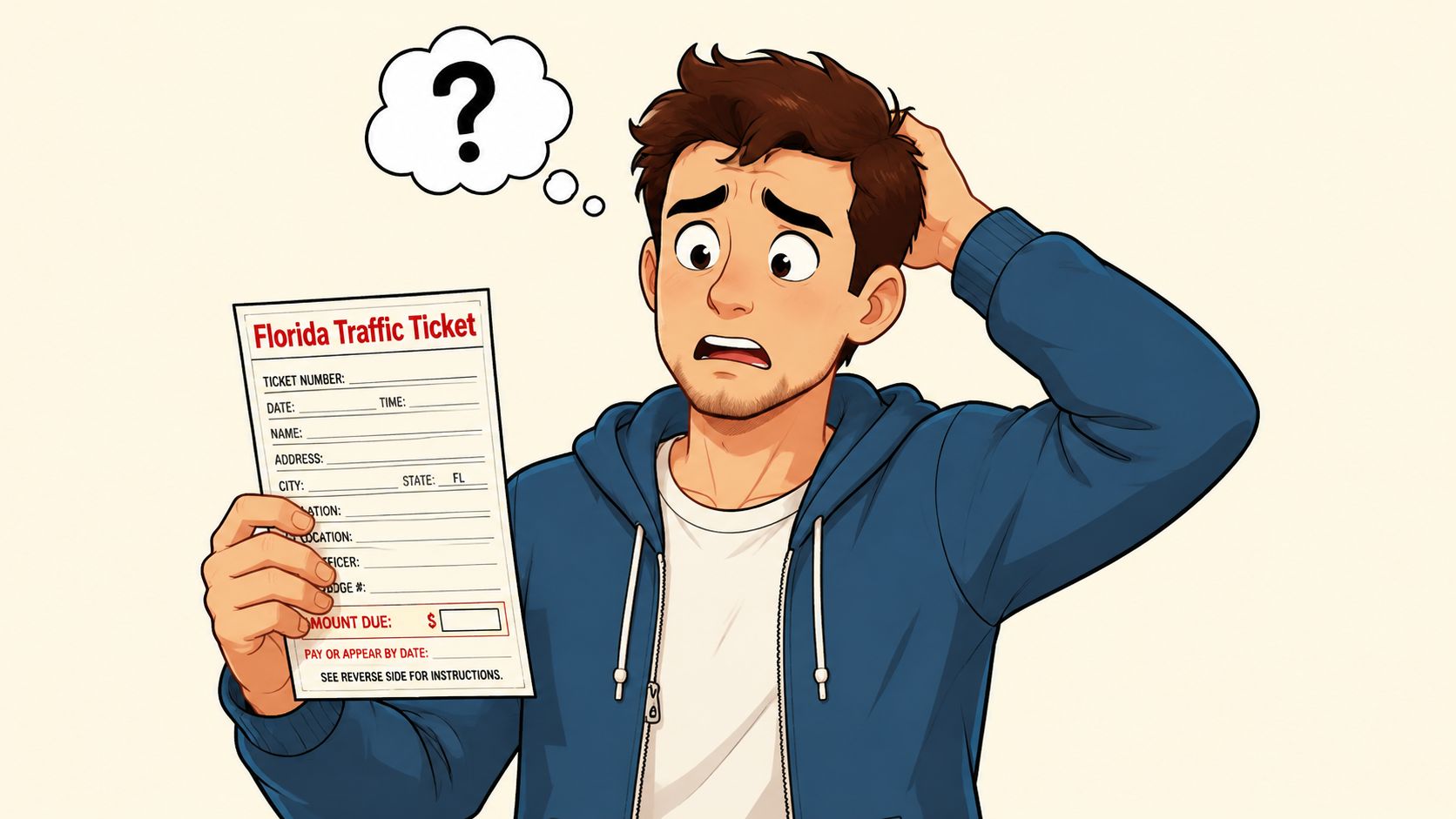
In Florida, drivers often hear a few different terms used almost interchangeably. Traffic school. Basic Driver Improvement. Defensive driving. That language can be confusing when you’re already worried. What matters first is your goal. If you’re trying to respond to a ticket, start by reviewing a clear guide on Florida traffic ticket options.
What most ticketed drivers want
Usually, the goal is one of these:
- Keep points off your license: Many drivers want to avoid the long-term effect a ticket can have on their record.
- Reduce insurance trouble: People worry that one citation will follow them into higher premiums.
- Satisfy a court or clerk requirement: Sometimes the course isn’t optional. It’s part of what you’re ordered or allowed to do.
Practical rule: Don’t sign up for a course until you know what problem you’re solving. The right course for ticket election isn’t always the same one used for a court order or insurance discount.
Some drivers also need legal guidance, especially if the issue is more serious or they’re trying to avoid points without traffic school.
The first calm step
Your first job isn’t to memorize course names. It’s to confirm your status. Look at the citation, any court paperwork, and any deadline. If the paperwork says you may elect a course, that’s very different from being ordered to complete a specific class.
Once you know your goal, the path gets simpler. You choose the correct Florida-approved course, complete it on time, and make sure the completion is properly reported. That’s manageable, even if it doesn’t feel that way on day one.
What Defensive Driving Actually Means
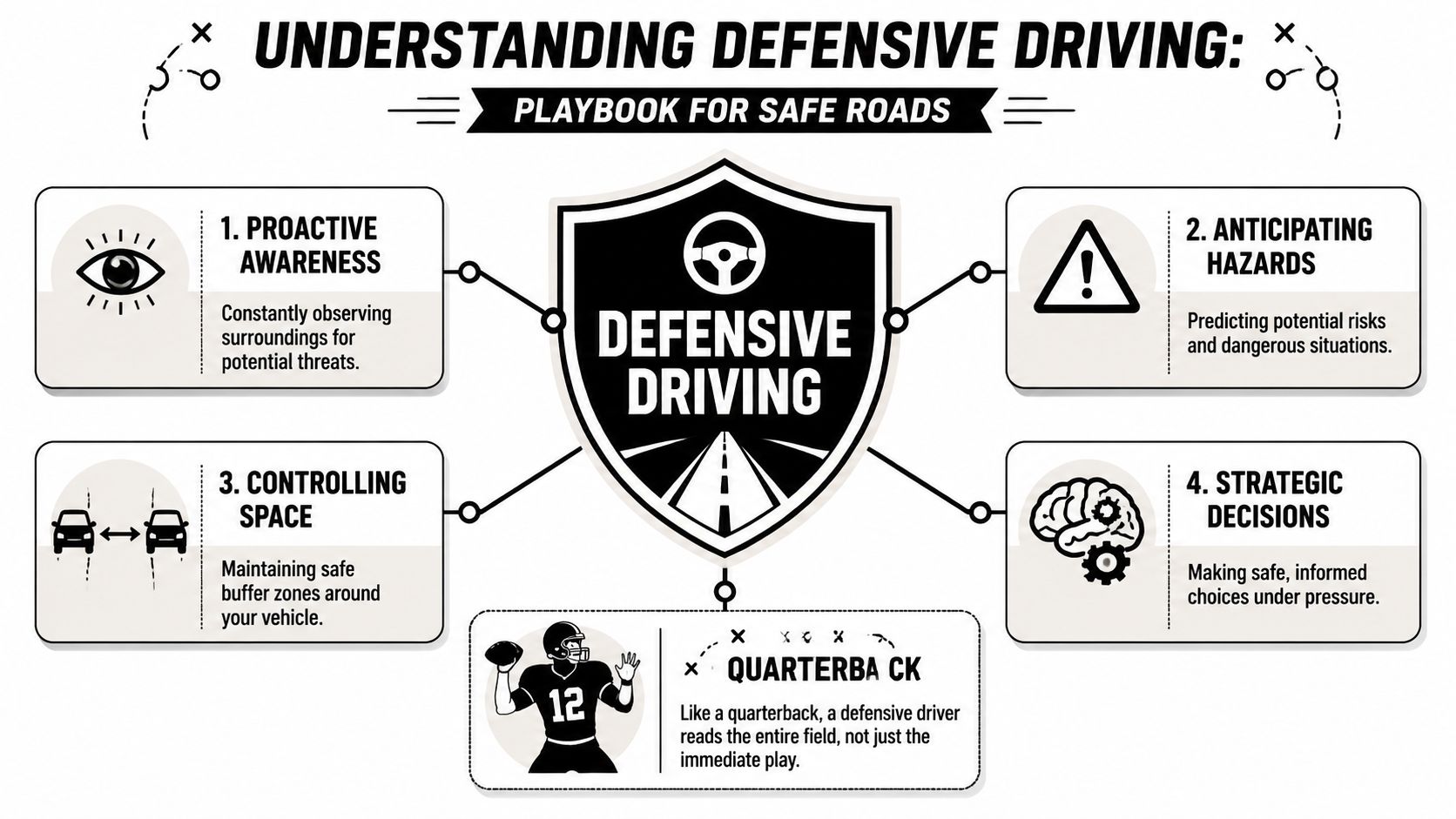
Defensive driving means staying alert early enough to make calm, safe choices before a problem turns into a close call. For a Florida driver, that matters every day. One car cuts across three lanes for an exit, a brake light flashes in heavy rain, or a tourist slows suddenly because they missed a turn. The skill is not just reacting. It is noticing clues soon enough to give yourself time and space.
Read the road early
A good course teaches you to treat driving as a pattern-recognition task. You are watching traffic, road signs, brake lights, lane position, weather, and the behavior of the drivers around you. That may sound like a lot at first, but it becomes manageable once you break it into habits.
The core habits are simple:
- Scan ahead: Look well down the road so you catch problems before they reach your lane.
- Check mirrors regularly: Know what is beside you and behind you before you need to brake or change lanes.
- Keep space around your car: Extra room gives you time to steer, slow down, or stop smoothly.
- Choose early, not late: Gradual braking and planned lane changes are safer than sudden moves.
That is why defensive driving courses spend so much time on awareness. A new student sometimes thinks safe driving is mostly about quick reflexes. In practice, it is more like giving yourself extra seconds to think.
A closer visual example helps most students:
The space cushion matters
Following distance is one of the clearest examples. If you drive too close, you borrow time from yourself. If traffic changes fast, you have fewer good options left.
A defensively driven vehicle keeps a longer gap when roads are wet, visibility drops, or traffic is unpredictable. The exact number can vary by conditions and by the training standard being used, but the principle stays the same. More space gives you more time to see, decide, and brake without panic.
A defensive driver leaves room for other people’s mistakes.
That idea helps many stressed students. You are not trying to control every driver around you. You are building a buffer so another person’s bad decision does not force you into one.
Defensive driving in Florida traffic
Florida adds its own set of challenges. Sudden afternoon rain, dense tourist traffic, work zones, motorcycles, and frequent lane changes all reward drivers who stay calm and observant. Emergency vehicles are another common point of confusion, so reviewing essential move over law information is a smart step.
If you want plain-language examples of how these habits look on the road, this guide to defensive driving techniques for everyday Florida drivers gives you a practical follow-up.
Top Benefits of a Defensive Driver Course
You open a ticket, read a court notice, or hear from your insurance company, and the same question hits you fast. What does this course do for me?
For Florida drivers, the benefit depends on the reason you are taking it. A defensive driver course is not one single outcome. It works more like the right tool for a specific job. One driver uses it to deal with a ticket. Another uses it to qualify for an insurance discount. Another needs it because the court ordered a class and wants proof completed the right way.
Protecting your driving record after a ticket
This is the benefit stressed drivers usually care about first.
If Florida lets you elect traffic school for a moving violation, the course may help you avoid points on your driving record. That matters because points can follow you long after the fine is paid. The ticket feels like the immediate problem, but the record is often the part that causes longer-term trouble.
A lot of students assume the course is just extra homework. It is more practical than that. In the right situation, it can be part of the fix.
The key is eligibility. The course only helps if your ticket and your timing fit Florida’s rules. If you are not sure which class lines up with your situation, this guide to the best online traffic school options for Florida drivers can help you compare the common paths before you enroll.
Possible insurance savings
Some drivers take a course by choice because they want to lower insurance costs. That can be a smart reason to enroll, especially if you have a clean record and want every discount you can get.
But this part confuses people, so let’s make it simple. A defensive driving course does not lower every policy automatically. Insurance discounts depend on your insurer, your age, your state eligibility rules, and the type of approved course completed. GEICO explains that defensive driving discounts are available in some states through its defensive driver discount details.
Ask before you buy the course. Call your insurer and ask two direct questions: Does this course qualify, and what proof do you need from me?
A course can help you save money, but only if your insurer recognizes the course for that purpose.
Meeting a court requirement the right way
Sometimes the benefit is straightforward. You are taking the course because the court told you to.
In that case, the value is compliance. You are choosing a course that matches the order, gets completed on time, and produces the proof the court expects. Students get into trouble when they focus on convenience first and course approval second. A fast class is not useful if it is the wrong class.
Read your paperwork carefully. If it lists a course length, course type, deadline, or provider requirement, follow that document over any general advice you see online.
What to remember before you enroll
- Match the course to your reason: Ticket dismissal, insurance savings, and court compliance may call for different Florida courses.
- Check approval and acceptance first: The right course is the one your court, clerk, or insurer will recognize.
- Save your completion records: Even if reporting is electronic, keep your certificate and confirmation for your own file.
Choosing the Right Florida Driving Course
A common point of confusion exists. People search for “defensive driver course” and assume any online class will work. In reality, the right course depends on why you’re taking it.
Florida drivers usually run into four common course types. The easiest way to sort them out is by purpose, not by title alone.
Florida course comparison
| Course Type | Duration | Primary Purpose | Who It’s For |
|---|---|---|---|
| Basic Driver Improvement (BDI) | 4-hour | Commonly used for a moving violation election and defensive driving review | Drivers handling a standard ticket situation |
| Intermediate Driver Improvement (IDI) | 8-hour | Court-related or deeper corrective instruction | Drivers ordered into a longer course |
| Aggressive Driver Course | 8-hour | Behavior-focused course for serious driving conduct concerns | Drivers directed to complete an aggressive driving program |
| Mature Driver Course | 6-hour | Refresher training often connected to insurance-related goals | Drivers age 55 and older seeking updated safety review |
How to choose based on your situation
If you got a regular moving violation and were told you can elect traffic school, the 4-hour BDI course is often the one drivers look at first. It’s built for the common Florida ticket scenario.
If a judge, clerk, or court document specifies a longer course, pay attention to that wording. An 8-hour IDI course is usually a better fit for a court-ordered requirement than a standard BDI class.
The Aggressive Driver Course is more specialized. That course is aimed at drivers whose violation history or incident type triggered a behavioral intervention, not just a basic refresher.
The 6-hour Mature Driver Course is different from ticket courses. It’s generally for older drivers who want a refresher and may be looking into insurance eligibility tied to age and approved training.
The course name matters less than the approval and the purpose. Start with your paperwork, then match the class.
Why approval and duration matter
In regulated systems, course length and approval status are not small details. They’re often the exact reason a course is accepted or rejected. State examples outside Florida make that clear. Texas requires a defensive driving course for ticket dismissal to be at least 6 hours, and Georgia’s Driver Improvement Program is also 6 hours, according to California’s state training reference page on defensive driver training requirements.
That doesn’t mean Florida uses those same hour rules for every purpose. It does mean the principle is the same. Pick the course your jurisdiction accepts.
A simple decision checklist
Before you enroll, answer these questions:
- Why am I taking the course? Ticket election, court order, or insurance.
- What does my paperwork say? Look for a named course or required duration.
- Is the provider Florida-approved? If not, don’t assume it will count.
- Will online delivery work for my situation? Usually yes, but confirm first.
If you’re comparing online options, this guide to the best online traffic school choices can help you evaluate course format and fit.
Enrolling and Completing Your Online Course
You finally choose a Florida course, then a new worry pops up. What happens after you click enroll, and how do you make sure it counts?
For stressed drivers, this part often feels harder than it is. The online process is usually straightforward if you treat it like matching forms at the DMV. Your name, your driver details, and your reason for taking the course all need to line up.
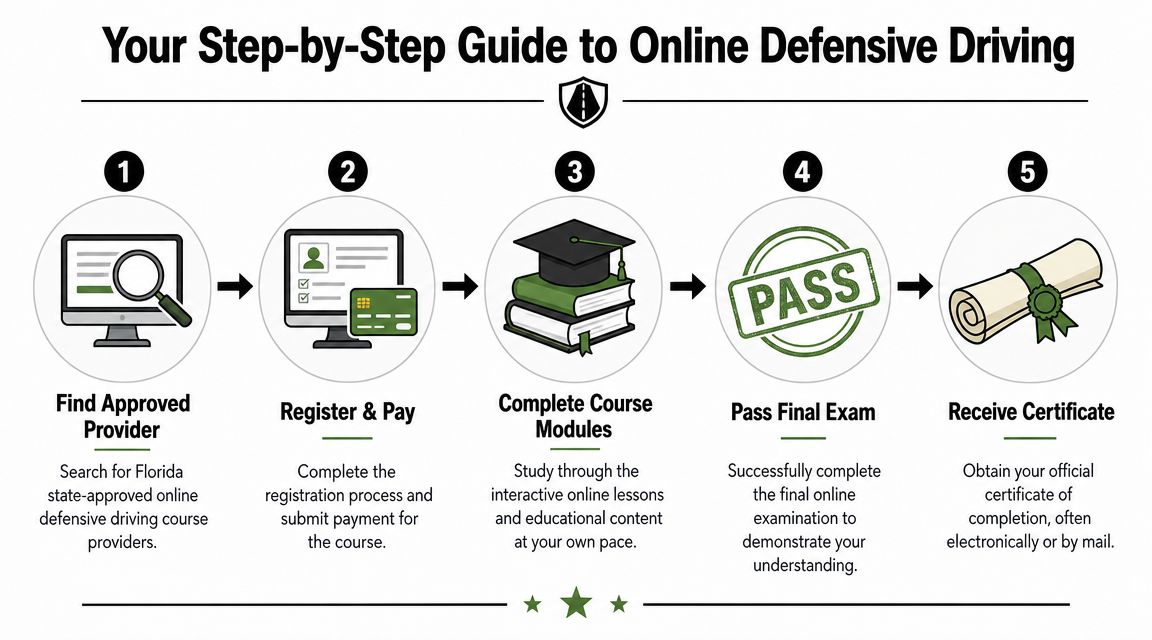
The five-step path
-
Confirm the course fits your Florida reason for taking it
Before you pay, pause and check the purpose one more time. A course for a ticket, a court requirement, or an insurance discount may not be handled the same way. The safest approach is simple. Match the course to your paperwork.
-
Register using the exact information on your license and notice
Use your full legal name, date of birth, and any case or citation details exactly as they appear. A small mismatch can slow down reporting and create extra calls later.
-
Work through the lessons at a steady pace
Online study helps because you can stop and start around work, kids, or errands. Many Florida students complete lessons on a phone, tablet, or computer. Go slowly enough to absorb the material. This course is not just a box to check. It teaches safer habits you will use on I-95, local roads, and crowded parking lots.
-
Complete quizzes or any final course step carefully
Some providers include short knowledge checks along the way. Treat them like road signs. They make sure you are following the route and not missing a turn.
-
Save your proof of completion and confirm reporting
Keep your certificate, confirmation email, receipt, and any final screen that shows you finished. Even if the school reports completion electronically, your own records give you backup if a court clerk, insurer, or agency asks for proof.
Finish early if you can
Deadlines cause more trouble than the course itself.
Drivers often postpone traffic school because the ticket is frustrating and the process feels unfamiliar. That reaction is normal. Still, waiting until the last day creates unnecessary risk. If your notice gives you a deadline, treat it like a court date. Put it on your calendar, enroll early, and leave time to fix any login or reporting issue.
What students usually ask during this step
One of the biggest questions is whether you have to send in your certificate yourself. Sometimes yes, sometimes no. Some approved schools handle electronic reporting as part of the process, but you should never assume that means you can forget about it. Check the instructions you receive after finishing.
If you need to return to your account, your Florida defensive driving course login page should make it easy to pick up where you left off and review your course status.
A good rule is to keep every document until your case, discount, or court requirement is fully cleared. That includes your registration email, payment receipt, completion confirmation, and certificate copy.
If your deadline is close, enroll the same day you decide on the course and confirm the reporting steps before you log out. That one habit prevents a lot of last-minute stress.
Common Questions About Defensive Driving Courses
Does a defensive driver course actually make you a better driver
Yes, it can. A solid course teaches hazard recognition, space management, and safer decision-making, not just rule memorization. Whether that improvement sticks depends on whether you use the habits after the course ends.
Does taking a course guarantee lower insurance
No. The National Safety Council notes that while its defensive driving course has been used by more than 80 million drivers worldwide, the effect on insurance or points depends on your state’s rules and your insurer’s policy. You need to verify eligibility before counting on a discount or record benefit.
Is an online course valid for court or ticket purposes
Sometimes yes. What matters is whether the course is approved for your specific Florida need. Online format alone doesn’t make it valid or invalid. Approval does.
What happens after I finish the course
Usually, the provider issues proof of completion and may report it electronically if that’s part of the approved process. You should still keep your own records and confirm that all requirements tied to your ticket or court notice have been satisfied.
Which Florida course should I take for a normal ticket
Usually, drivers in a standard moving-violation situation look at the 4-hour BDI option first. But don’t guess. Check your citation instructions and any court guidance before enrolling.
Which course is for insurance instead of a ticket
That depends on your insurer’s rules and your age or eligibility. A mature driver course may be relevant for some older drivers, while other voluntary defensive driving programs may be accepted by some insurers. Ask before you pay.
Can I just take any cheap course I find online
No. A course can be inexpensive and still be the wrong one. If it isn’t the correct Florida-approved class for your situation, it may not help you with points, court compliance, or insurance documentation.
What if I’m overwhelmed and don’t know where to start
Start with the paperwork in your hand. Find out whether you’re electing traffic school, responding to a court order, or asking about insurance. Once you know that, the right course becomes much easier to identify.
If you need a Florida-approved online option, BDISchool offers traffic school courses for common situations such as ticket-related Basic Driver Improvement, court-directed programs, and mature driver refresher training. Start by matching your reason for taking the class to the correct course, then complete it promptly and keep your records.