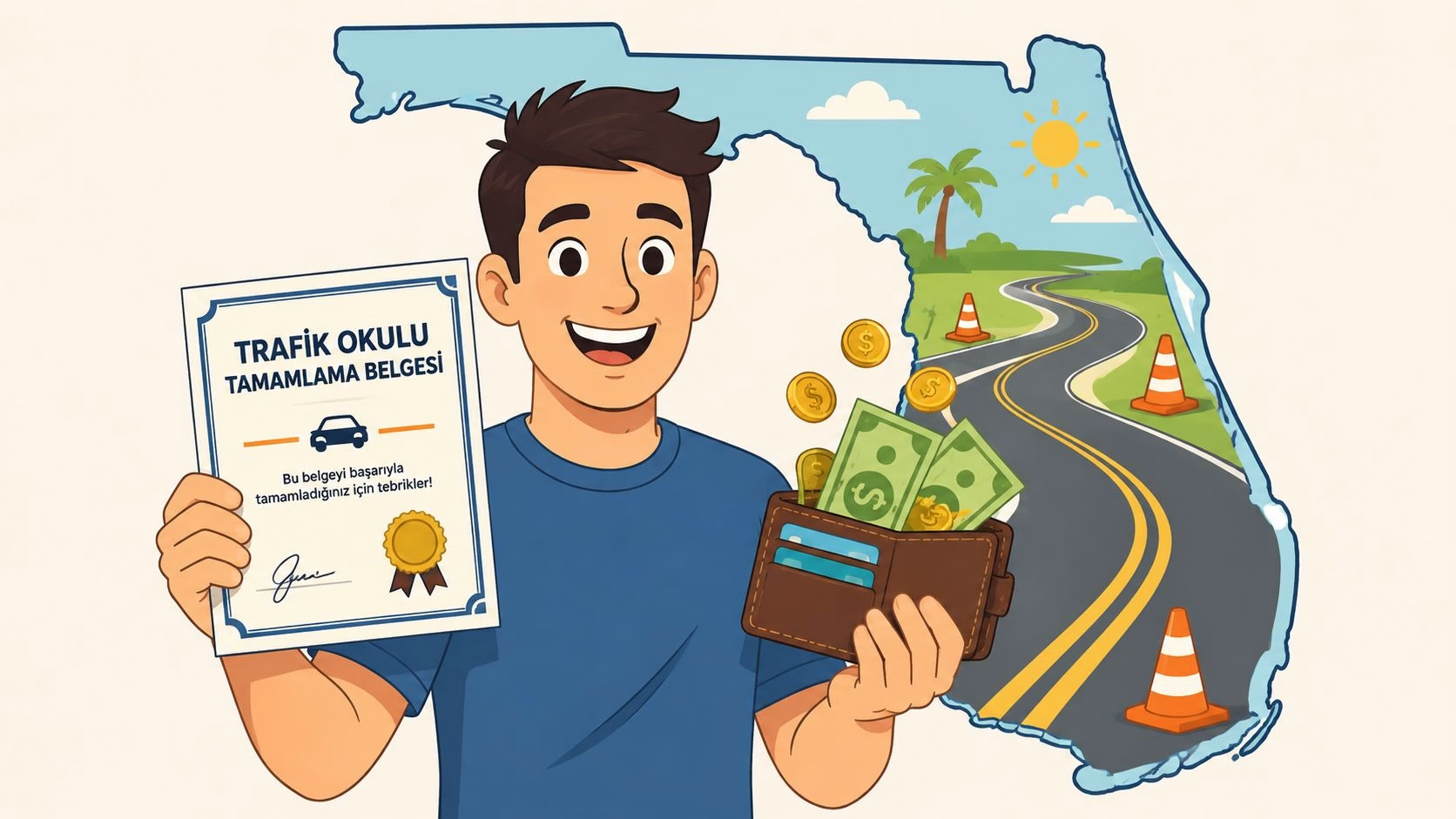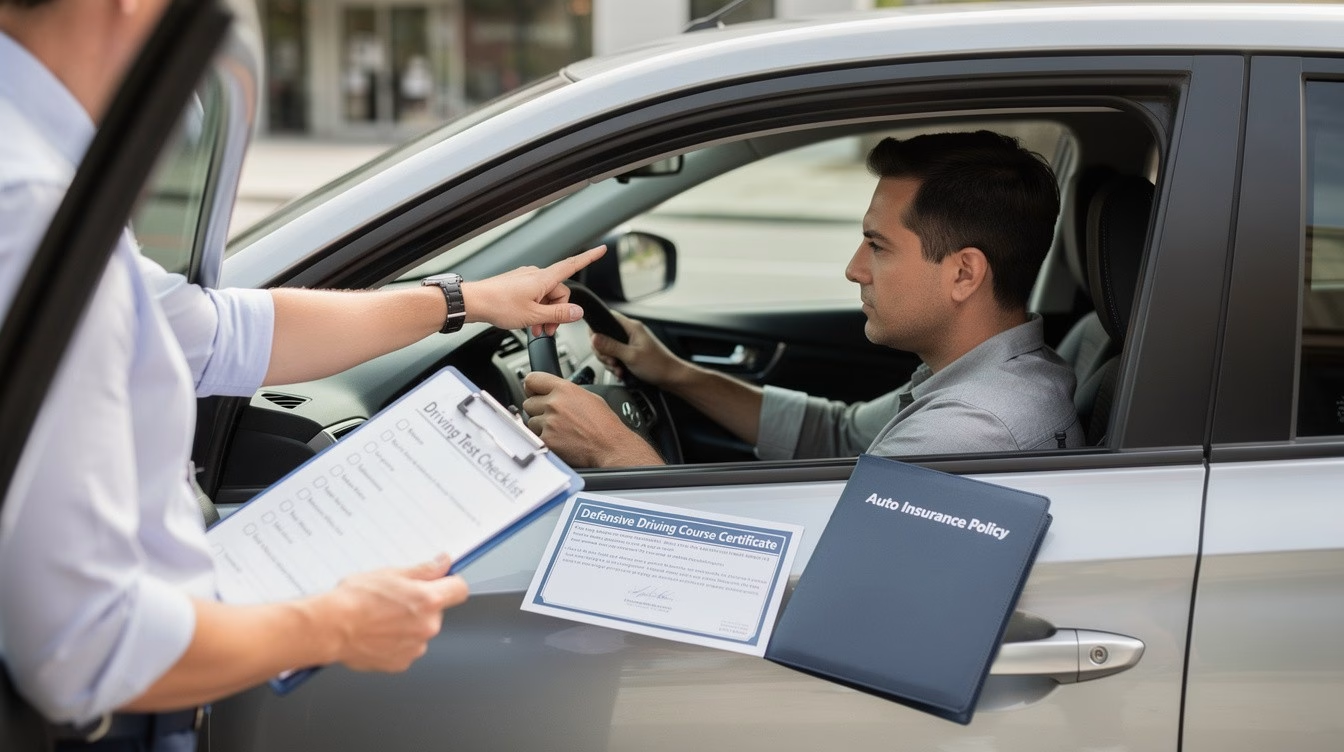

If you were told to complete a driving course after a ticket, the wording matters more than most drivers expect. When comparing a BDI course vs defensive driving, the right choice depends on why you need the course, which state issued the requirement, and whether the goal is court compliance, point reduction, ticket dismissal, or an insurance benefit.
These terms are often used as if they mean the same thing. Sometimes they overlap. Sometimes choosing the wrong one means you finish a course that does not satisfy the court, DMV, or insurance company. That is why it helps to understand what each course is designed to do before you enroll.
BDI course vs defensive driving: what is the difference?
A BDI course is a Basic Driver Improvement course. It is usually a specific state-approved program used to satisfy a legal or administrative requirement, most commonly after a traffic citation or as part of a driver improvement process.
Defensive driving is a broader term. It usually refers to a driver safety course that teaches hazard awareness, crash prevention, safe following distance, speed management, impaired driving awareness, and other accident-avoidance skills. In some states, a BDI course is essentially the state’s version of a defensive driving course. In other states, they are treated as separate course categories with different approval standards and different outcomes.
That is the core difference. BDI is often a formal compliance label. Defensive driving is often a functional or educational label. Whether they count as the same course depends on the state and the purpose.
When a BDI course is the right choice
A BDI course is usually the better fit when a court notice, clerk, hearing officer, or state agency specifically names Basic Driver Improvement. If your paperwork says BDI, do not assume that any generic defensive driving class will be accepted.
This matters most in states like Florida, where BDI has a defined role in traffic school and driver improvement. A driver may take an approved BDI course for reasons such as electing traffic school after receiving an eligible ticket, meeting a court order, or completing a required improvement program tied to license status.
In those situations, approval status is everything. The course must match the state’s standards, not just cover similar safe-driving topics. A well-written course completion certificate is not enough if the provider or course type is not approved for your specific requirement.
A BDI course may also be the stronger choice when you are trying to protect your driving record from the consequences of a citation, subject to state rules. Some states allow eligible drivers to complete a state-approved course to avoid points, reduce penalties, or satisfy a court disposition. Those benefits depend on the exact program approved in that state.
When defensive driving makes more sense
Defensive driving may be the better option when your need is broader than a formal driver improvement requirement. For example, some drivers take defensive driving voluntarily to refresh their skills, meet an employer’s safety expectations, or qualify for an insurance discount where permitted.
It can also be the right course when a court, insurer, or state specifically uses the phrase defensive driving. In some states, that phrase is the official course label used for ticket dismissal or point reduction. In others, insurers may recognize defensive driving for premium savings while never mentioning BDI at all.
This is where many drivers get tripped up. They search for the course topic they recognize, not the course category their situation requires. If your goal is insurance savings, a BDI course may or may not qualify. If your goal is ticket resolution, a defensive driving class may or may not qualify. The name alone does not answer the compliance question.
The biggest factor is not the curriculum
Most BDI and defensive driving courses cover similar safety concepts. You can expect lessons on traffic laws, common crash causes, distracted driving, alcohol and drug risks, sharing the road, and choices that reduce collision risk.
The bigger issue is administrative acceptance. Courts, DMVs, and insurers care about whether the course is approved for the specific purpose you need. That is why two courses with nearly identical educational content can produce very different results for the same driver.
If you are deciding between a BDI course vs defensive driving, ask a simple question first: who needs to accept the certificate? Once you know whether it is a court, DMV, employer, or insurance company, the right course becomes much easier to identify.
How to choose the correct course
Start with your notice or requirement. If a court order, citation instructions, or DMV letter names a specific course type, use that exact label as your guide. Do not substitute based on a provider’s marketing description.
Next, confirm the state. Driver education rules are state-specific, and a course accepted in one state may not satisfy requirements in another. That is especially true for driver improvement programs tied to traffic violations.
Then check the purpose. Are you trying to dismiss a ticket, avoid points, reinstate privileges, meet a probationary condition, or lower insurance costs? A course approved for one of those goals may not be approved for the others.
Finally, verify provider approval and completion handling. A legitimate online provider should clearly state whether the course is state-approved, court-accepted where applicable, mobile-friendly, and designed for your exact use case. That clarity saves time and prevents paying twice.
Common situations where drivers confuse the two
One common scenario is a driver who receives a citation and assumes any online safety course will satisfy the ticket. That can lead to a rejected certificate if the court required a specific state-approved BDI program.
Another example is a mature driver looking for an insurance discount and enrolling in a BDI course because it sounds official. If the insurer only recognizes an approved defensive driving or mature driver discount course, the driver may complete the wrong training for the benefit they wanted.
There is also confusion among first-time or occasional traffic-school users who see both terms on search results and assume one is just a newer name for the other. Sometimes it is. Just as often, the distinction affects whether the course counts.
Cost, convenience, and online access
For most drivers, online delivery is now the most practical option. Self-paced access, mobile compatibility, and 24/7 availability make it easier to complete a required course around work and family schedules.
But convenience should come after approval, not before it. The fastest course is not useful if it does not satisfy your requirement. Look for transparent pricing, clear approval information, and straightforward support in case you need help confirming eligibility.
Providers like DriverEducators.com focus on that balance – approved courses, simple enrollment, flexible online access, and a clear process for drivers who need to meet a requirement without adding more stress.
FAQ
Is a BDI course the same as defensive driving?
Not always. A BDI course is Basic Driver Improvement, while defensive driving is a broader driver safety category.
In some states, they overlap. In others, they are separate course types with different approval rules.
Which is better for a ticket, BDI or defensive driving?
It depends on what your state or court requires. If your notice says BDI, take an approved BDI course.
If it says defensive driving, use a course accepted for that purpose. The exact label matters.
Can a defensive driving course remove points from my license?
Sometimes. Point reduction rules vary by state and program.
A defensive driving course may help in one state, while a BDI course is the approved option in another.
Will a BDI course lower my insurance?
Maybe, but not automatically. Insurance discounts depend on your insurer and the type of course they recognize.
Ask your carrier before enrolling if insurance savings are your main goal.
How do I know which course I need?
Check the document that created the requirement. That may be a ticket, court order, DMV letter, or insurance notice.
Then verify that the provider offers a course approved for that exact state and purpose.
Can I take the course online?
Usually, yes. Many approved BDI and defensive driving courses are available online.
Make sure the online course is accepted in your state and for your specific requirement.
The safest choice is the one that matches your paperwork, your state, and your reason for taking the course. A few extra minutes spent verifying that now can save you from delays, rejected certificates, and the frustration of having to do the course all over again.