A single traffic point might seem minor, but it’s the start of a costly spiral. Points accumulate on your driving record, affecting everything from your insurance premiums to your employment prospects.
The insurance points system determines how much you’ll pay for coverage, and one ticket can increase your rates for years. At DriverEducators.com, we’ve seen drivers lose thousands in extra insurance costs because they didn’t act quickly enough.
How Your Record Gets Points and Stays Marked
Points Remain on Your Driving Record for Years
Traffic points attach to your driving record the moment a court enters a conviction. Florida law keeps most moving violations on your record for at least five years from the conviction date, though serious offenses like DUI stay for seven years or longer. A single ticket from 2024 could still damage your insurance rates in 2029.
Insurance companies pull your driving history regularly and specifically search for points because points indicate risk. A driver with three points pays significantly more than a driver with zero points, even if both have otherwise clean records.
Insurance Companies Calculate Premiums Based on Points
Insurance underwriters don’t treat all points equally. A speeding ticket worth three points carries less weight than a reckless driving conviction worth four points, but both trigger rate hikes. While insurers don’t directly factor points into your rate, accumulating points means more violations on your record, which can lead to higher premiums.
Some insurers use a tiered system where every point increases your premium by a fixed percentage, while others apply different multipliers based on the violation type. Accumulating points works against you because each new violation stacks on top of existing ones, multiplying your insurance costs over time.
License Suspension Happens at Specific Point Thresholds
Once you hit four points within twelve months, Florida’s Department of Highway Safety and Motor Vehicles issues a warning letter. Reach twelve points within twelve months, and your license faces suspension for thirty days. Fifteen points within twenty-four months results in a three-month suspension, and eighteen points within thirty-six months brings a mandatory six-month suspension.
This escalation means that ignoring early violations leads directly to losing your driving privileges entirely. A Florida-approved traffic school course can reduce points before they stack up and trigger these serious consequences, which is why addressing violations quickly matters far more than most drivers realize.
What Happens When Traffic Points Stack Up
Accumulating traffic points transforms your finances in ways most drivers underestimate. Each point signals increased risk to insurance companies, and they respond by raising your premiums substantially.
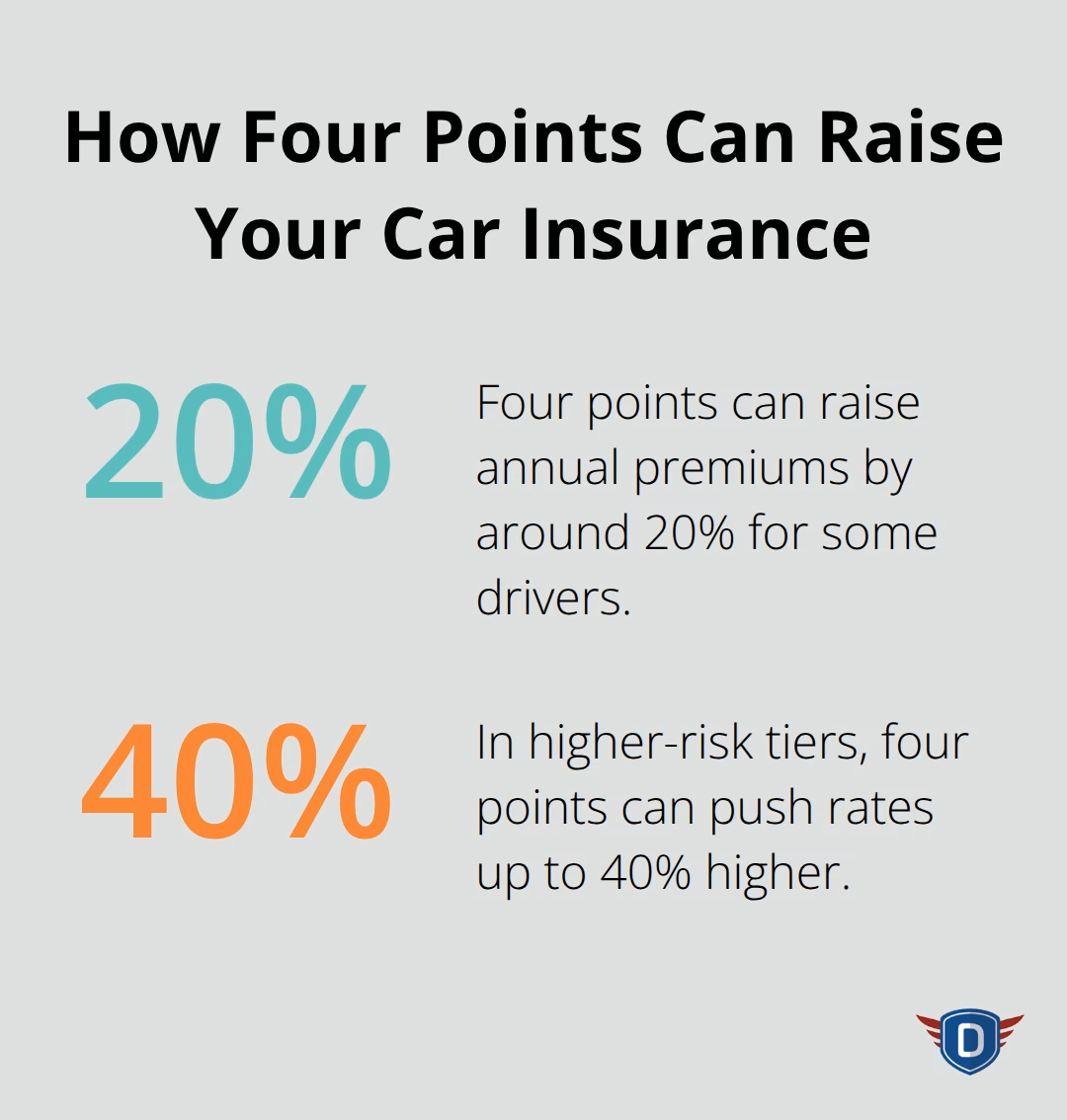
A driver with four points pays 20-40% more annually than a driver with a clean record.
Over five years, that single ticket costs thousands in excess premiums. The damage extends beyond insurance costs to your employment prospects and professional standing.
Insurance Premiums Spike Quickly
Employers who conduct background checks, particularly those in transportation, security, or positions requiring a commercial driver’s license, view multiple points as a red flag. Companies like UPS and FedEx explicitly screen driving records during hiring, and accumulating points can disqualify you from employment opportunities that offer six-figure salaries.
Even if your current employer doesn’t monitor your record, future job changes become complicated when violations appear during background screening. Insurance companies also use points to determine whether they’ll continue coverage at all.
License Suspension Arrives on a Strict Timeline
Florida’s point system operates on strict escalation schedules that most drivers don’t understand until it’s too late. Twelve points within twelve months triggers a thirty-day suspension. Eighteen points within eighteen months brings a three-month suspension that prevents you from driving to work, managing daily responsibilities, or maintaining employment.
Twenty-four points within thirty-six months results in a one-year suspension, effectively destroying your ability to function in most jobs. Suspension means you cannot legally drive at all, not even to attend a Florida-approved traffic school course that could have prevented the suspension in the first place.
Professional Licenses Face Jeopardy
Certain professions face stricter scrutiny regarding traffic points than others. Teachers, nurses, and healthcare professionals with multiple points risk losing professional licenses or facing disciplinary hearings. Commercial driver’s license holders face even steeper consequences because a single violation worth points can result in losing their commercial privileges entirely.
If your job depends on a clean driving record, points become career-threatening. Multiple violations within short timeframes can result in insurance cancellation, forcing you to seek coverage from high-risk insurers at premium rates that double or triple standard prices.
Taking Action Immediately Protects Your Future
The financial damage from points persists for years after violations appear on your record. A Florida-approved traffic school course reduces points before they trigger mandatory suspensions, protecting your license and livelihood far better than waiting to see if points accumulate. Taking action within days of receiving a ticket matters far more than hoping the points won’t add up.
How to Actually Reduce Traffic Points
Florida-Approved Traffic School Courses Strip Points Fast
Florida-approved traffic school courses stand as the fastest and most reliable way to remove points from your record before they trigger license suspension. A Basic Driver Improvement course reduces up to four points within days of completion, and the FLHSMV reports your certificate directly to insurance companies and the court system. The four-hour course costs between $30 and $70 depending on the provider, compared to thousands in excess insurance premiums over five years-the math favors action immediately. You must take the course within 12 months of your conviction date, and you can only use this option once every 12 months, so timing matters. Courts accept completion certificates immediately, and most insurance companies apply the reduction to your next renewal period.
Contesting Your Ticket in Court Carries High Risk and Cost
Contesting your ticket in court works when you have legitimate grounds, though most drivers lack the evidence or legal knowledge to succeed without an attorney. Traffic ticket dismissal rates range from 20-50% depending on violation type, evidence quality, and legal representation, which means hiring a traffic attorney typically costs $500 to $2,500 but dramatically increases your odds of dismissal or reduction to a non-moving violation. Non-moving violations don’t add points to your record, so a skilled attorney might negotiate your speeding ticket down to an unsafe equipment violation that carries zero points. However, this approach takes months, requires court appearances or attorney representation, and only works if the officer made procedural errors or if your case has genuine weaknesses. Most drivers should exhaust the traffic school option first since it guarantees point reduction, whereas court contests carry significant uncertainty and expense.
Local Point Reduction Programs Offer Limited Availability
Some jurisdictions offer point reduction programs through their local traffic safety boards, though availability varies by county and typically requires attending additional classes or paying administrative fees beyond your initial fine. These programs rarely match the speed or affordability of Florida-approved traffic school courses, and eligibility restrictions often exclude drivers with multiple violations or serious offenses. Your county’s traffic safety board website lists available programs, but most drivers find that a Basic Driver Improvement course provides faster results at lower cost.
Final Thoughts
Traffic points damage your finances, employment prospects, and driving privileges far more severely than most drivers realize. A single violation costs thousands in excess insurance premiums over five years, and the insurance points system compounds this damage as violations stack up on your record. License suspension arrives quickly once you hit twelve points within twelve months, and suspension destroys your ability to work and manage daily life.
The good news is that action taken within days of a ticket prevents most of this damage. A Florida-approved traffic school course reduces points before they trigger suspension, costs far less than excess insurance premiums, and protects your employment prospects. Contesting your ticket in court works only if you have legitimate grounds and can afford legal representation, making it a riskier option than traffic school.
We at DriverEducators.com offer Florida-approved traffic school courses that reduce points quickly and affordably. Our Basic Driver Improvement course takes four hours, costs between thirty and seventy dollars, and reduces up to four points from your record. The certificate reports directly to the FLHSMV and insurance companies, so the reduction applies to your next renewal period, and you can complete the course online at your own pace from any device.