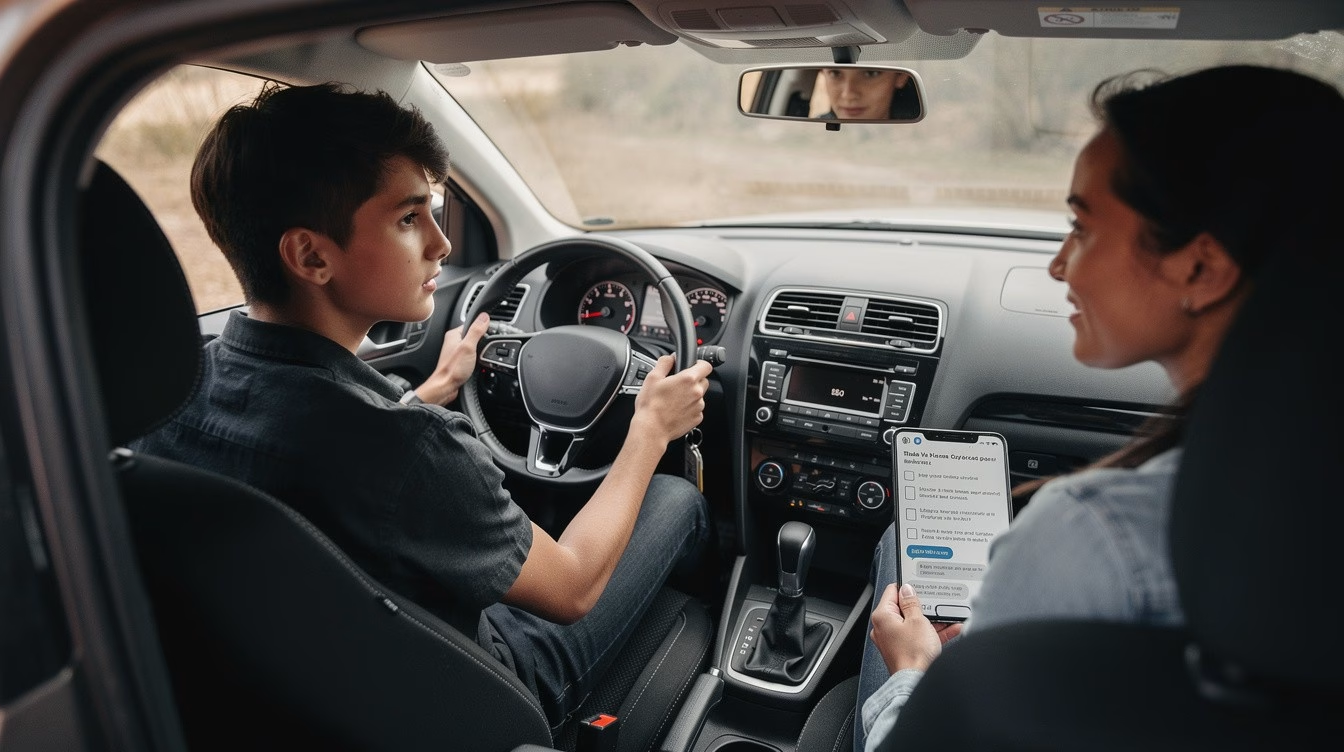
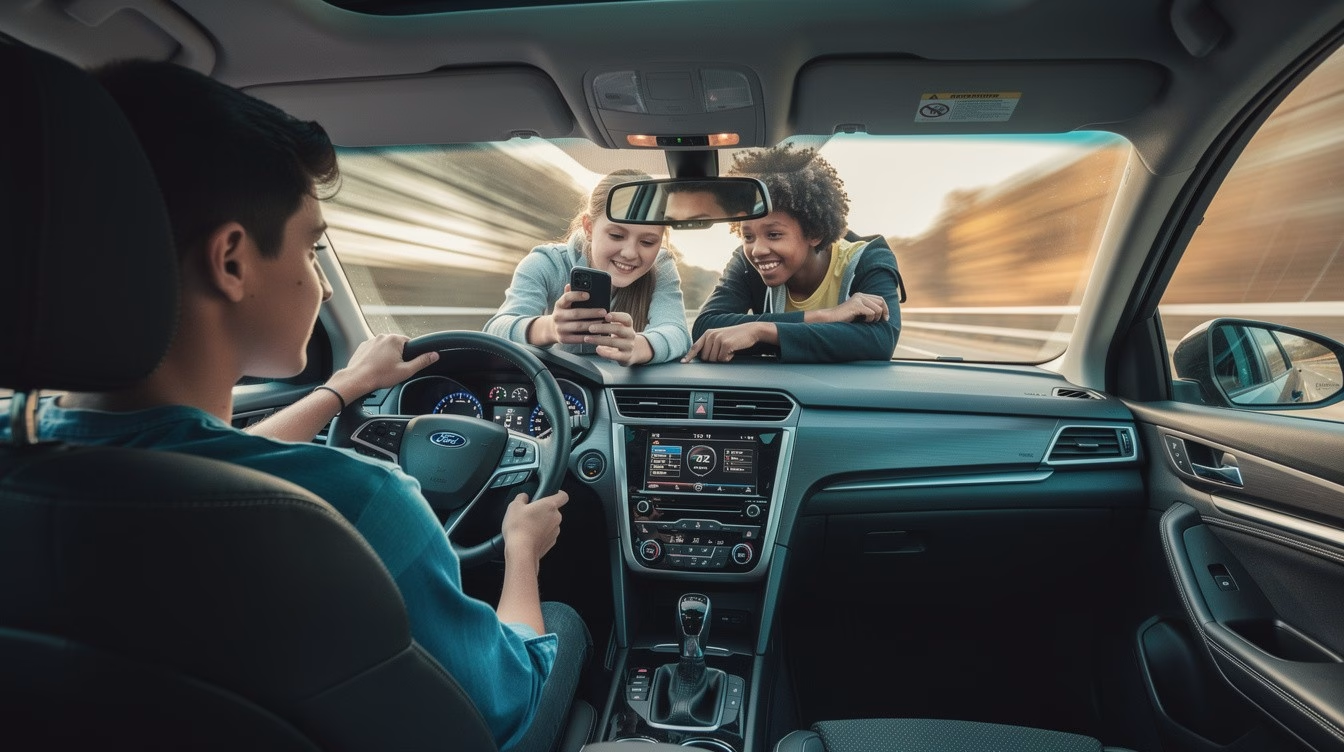
Teen distraction risks spike dramatically when passengers ride along. Research shows that teen drivers with multiple passengers in the car face significantly higher accident rates than those driving alone.
We at DriverEducators.com know that peer presence fundamentally changes how young drivers behave behind the wheel. Understanding this danger is the first step toward keeping teens safer on the road.
How Passengers Rewire Teen Driver Behavior
The Neurobiology of Peer Presence
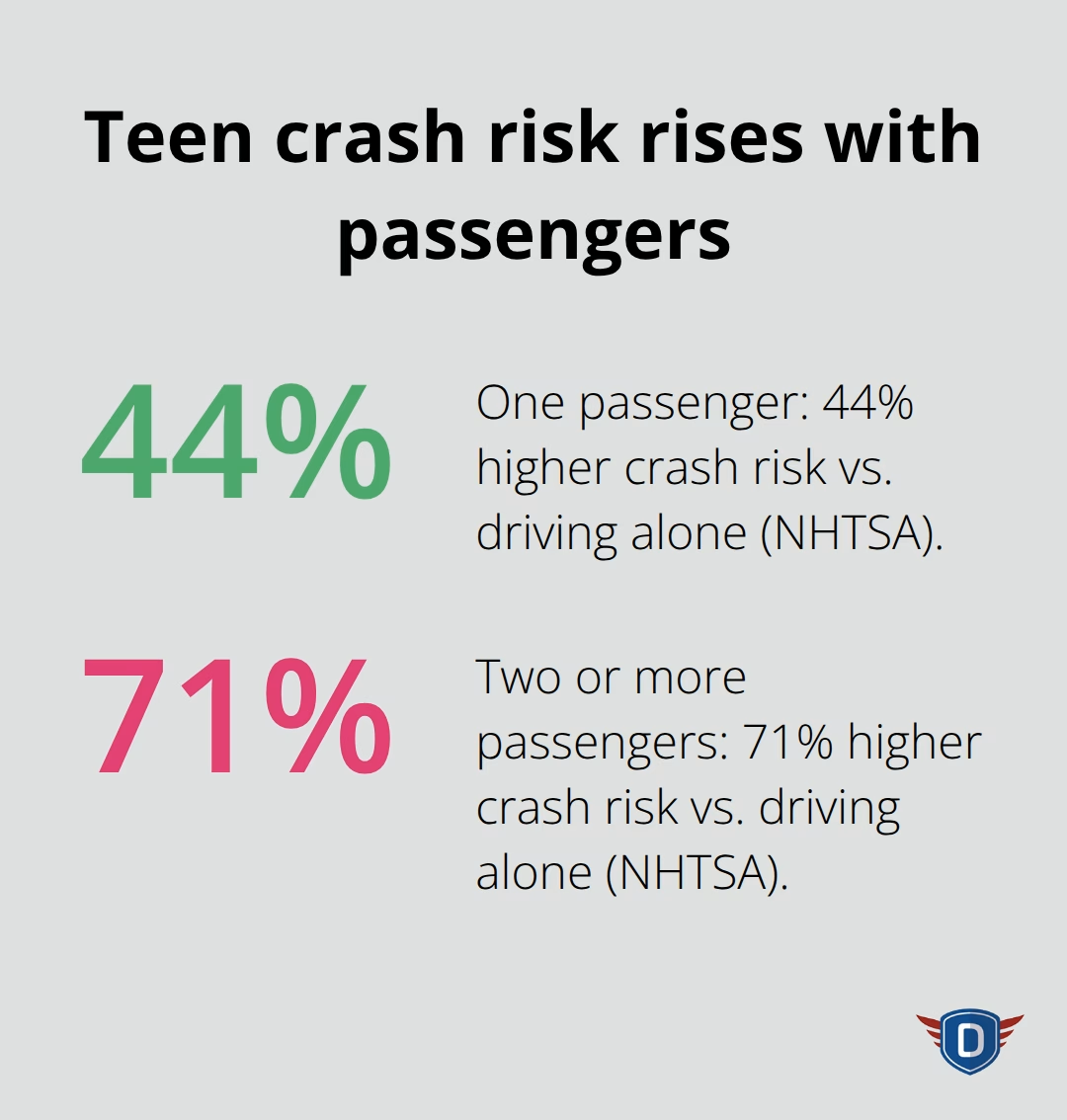
Peer passengers don’t just sit quietly in a car-they fundamentally alter how a teen’s brain processes driving decisions. The National Highway Traffic Safety Administration reports that teen drivers with one passenger face a 44 percent higher crash risk compared to driving alone, and that risk jumps to 71 percent with two or more passengers. When a peer occupies the vehicle, the adolescent brain’s reward center activates more intensely, making risky driving choices feel more appealing.
This isn’t about character flaws-it’s neurobiology. The prefrontal cortex, which handles judgment and impulse control, continues developing through the mid-20s. Add social pressure from passengers, and that developing brain prioritizes peer approval over safety.
How Conversation Slows Reaction Time
Conversation and cabin noise directly impact reaction time, which matters enormously in emergency situations. Studies show that complex conversations while driving slow a teen’s response to hazards by 0.5 to 1 second-enough time to transform a near-miss into a collision. Speeding increases when passengers are present because teens interpret their friends’ presence as social validation for aggressive driving.
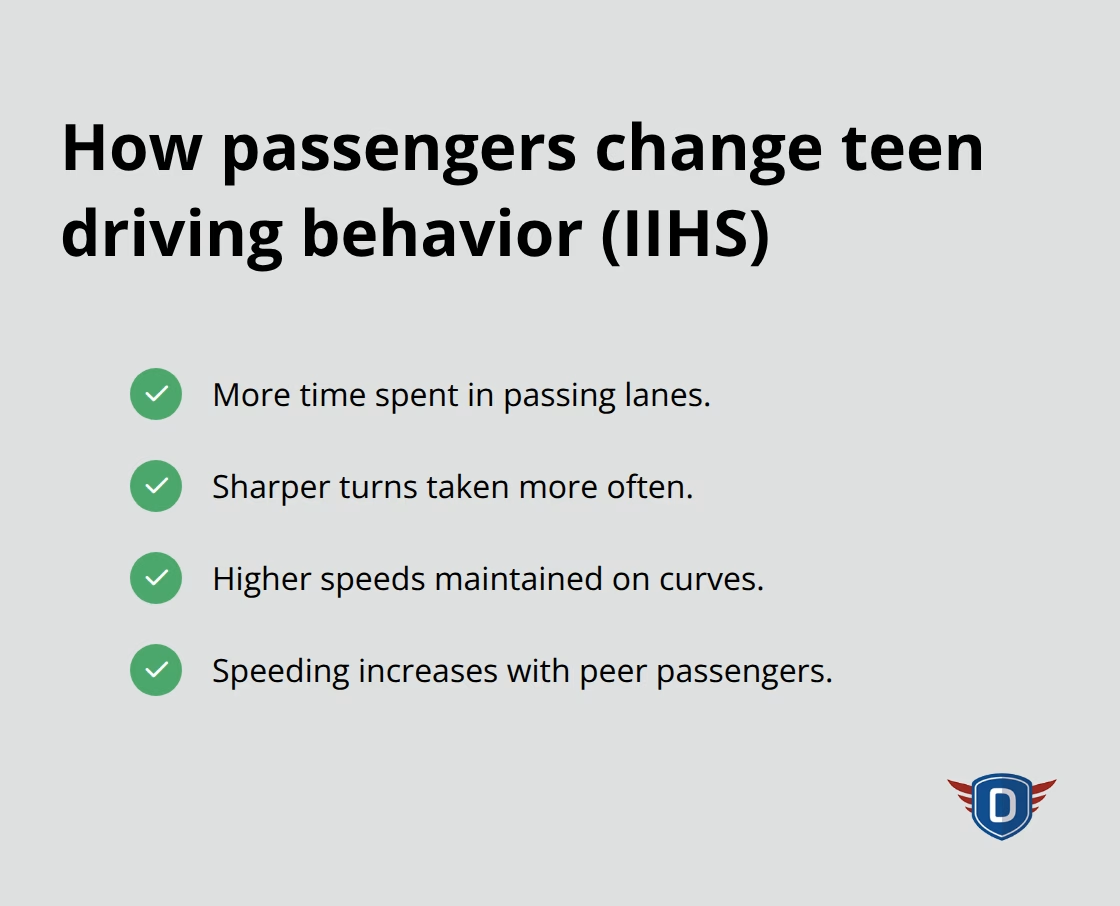
The Insurance Institute for Highway Safety documented that teen drivers with peer passengers spend more time in the passing lane, take sharper turns, and maintain higher speeds on curves. These aren’t minor variations-they represent measurable shifts in driving behavior that compound crash risk.
Passenger Restrictions That Actually Work
Limiting passengers during the first months of independent driving isn’t punishment-it’s protection. Graduated driver licensing laws in many states restrict passenger numbers for teens under 18, and these restrictions work. States with strict passenger limitations see measurable reductions in teen crash fatality rates.
Parents who establish clear, written agreements about passenger policies before teens obtain their license face far less resistance than those who impose rules reactively after crashes occur. This proactive approach transforms a potential conflict into a shared safety plan that teens help create.
Why Passenger Presence Rewires Teen Crash Risk
The Neurobiology of Peer Observation
The adolescent brain under peer observation makes measurably worse driving decisions, and the data proves it. When a teen driver has one passenger in the car, crash risk increases compared to driving alone. With two or more passengers present, that risk increases further-a fundamental shift in how teens operate vehicles.
The prefrontal cortex, which controls judgment and impulse control, doesn’t fully develop until the mid-20s. Peer presence hijacks whatever judgment teens do possess. The reward center of a teen’s brain activates more intensely when peers watch, making risky driving feel socially rewarding rather than dangerous.
How Passengers Change Driving Behavior
Research from the Insurance Institute for Highway Safety shows that teens with passengers spend significantly more time in passing lanes, take sharper turns, and maintain higher speeds on curves. These aren’t random variations-they represent concrete behavioral changes that directly translate to higher collision rates. Speeding increases measurably when passengers are present because teens interpret their friends’ presence as social validation for aggressive acceleration and lane changes.
Conversation and Reaction Time
Conversation and cabin noise slow reaction time in ways that matter during emergencies. Studies show that complex conversations reduce a teen driver’s response to hazards by 0.5 to 1 second-a gap that transforms near-misses into actual crashes. The noise and distraction from passenger interaction occupies cognitive resources that should focus on road hazards, traffic patterns, and vehicle control.
Passenger Restrictions Produce Real Results
States with passenger limitation laws built into their graduated driver licensing programs work to reduce teen crash fatality rates, proving that restricting passenger numbers during early driving months produces real safety outcomes. Parents who establish written passenger agreements before their teen obtains a license face far less resistance than those who impose rules after crashes occur. This approach transforms a potential conflict into a shared safety plan that teens help create rather than resent, setting the foundation for the practical strategies that address this risk head-on.
How to Actually Stop Teen Passengers from Causing Crashes
Graduated Driver Licensing Laws Set Hard Boundaries
Graduated driver licensing laws work because they establish firm restrictions at the moment teens gain independence. States that enforce strict passenger limitations during the learner’s permit and early license phases see measurable reductions in teen crash fatality rates-research shows an 8 to 14% decrease in the proportion of 16- and 17-year-old drivers involved in fatal crashes. This isn’t bureaucratic overreach-it’s evidence-based policy that directly addresses the neurological vulnerability documented in earlier sections.
The effectiveness comes from timing: restrictions applied before bad habits form prevent dangerous behavior patterns from developing in the first place, rather than attempting to correct them after crashes occur. Early intervention stops risky driving before it becomes routine.
Parent-Teen Agreements Create Real Accountability
Parent-teen agreements written before licensure create accountability without resentment. Teens who participate in crafting passenger policies report higher compliance rates than those subjected to rules imposed after violations happen. A practical agreement should specify exactly which passengers are permitted, under what circumstances, and what consequences follow breaches.
The agreement functions best when it includes specific scenarios: Can a sibling ride during school runs? What about carpooling to work? Are passengers allowed on highways? Teens need clarity, not vague restrictions. Parents who review these agreements quarterly and adjust them based on demonstrated responsibility find teens respond with genuine buy-in.
The key difference between effective and ineffective agreements lies in teen input during creation. Teens who help establish rules treat them as their own commitments rather than parental impositions. This collaborative approach transforms potential conflict into shared ownership of safety.
Practical Distraction Management Through Supervised Practice
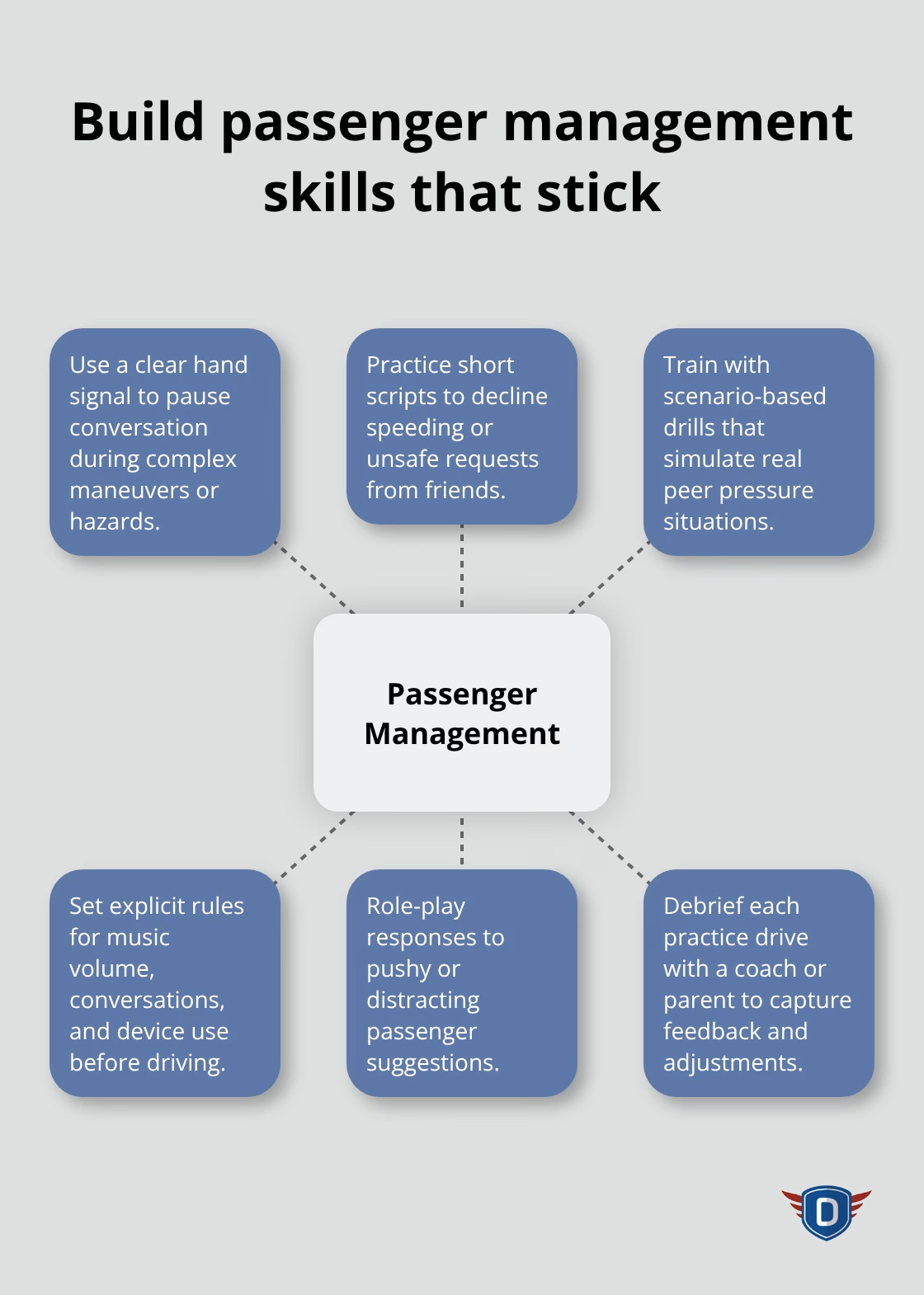
Distraction management requires practical, repeated practice, not one-time lectures. Teens need supervised exposure to managing passenger interaction while maintaining focus on driving tasks. Instructors at defensive driving programs teach specific techniques: establishing a hand signal system with passengers for when conversation must stop, practicing responses to passenger requests for unsafe actions, and developing scripts for declining to speed or take risks when passengers encourage it.
The most effective training involves scenario-based practice where a teen driver navigates realistic situations (a friend asking to skip a stop sign, passengers requesting louder music, or multiple conversations happening simultaneously). Real reaction time improvements come from repetition under controlled conditions before passengers become regular fixtures. Passenger management skills develop the same way all driving skills do: through deliberate, supervised practice with feedback, not through rules alone.
Final Thoughts
The evidence proves that passengers fundamentally increase crash risk for teen drivers through measurable changes in brain function and driving behavior. Graduated driver licensing laws that restrict passengers during early driving months produce real results, cutting fatal crash rates by 8 to 14 percent for 16- and 17-year-olds. Parent-teen agreements established before licensure create accountability without resentment, especially when teens participate in crafting the rules themselves.
Driver education programs address teen distraction risks through practical, scenario-based training that transforms abstract safety concepts into concrete driving competencies. Teens learn specific techniques for managing peer pressure, establishing boundaries with passengers, and maintaining focus on driving tasks. Supervised practice with realistic situations builds the reaction time and decision-making skills needed to handle passenger interaction safely.
Parents who establish written passenger agreements before their teen obtains a license, combined with graduated licensing restrictions, create the strongest foundation for safe driving. DriverEducators.com provides comprehensive driver education programs that equip teens with the knowledge and skills to navigate these challenges confidently. When families implement these strategies together, teen crash rates drop measurably, proving that passenger-related accidents are not inevitable but preventable.