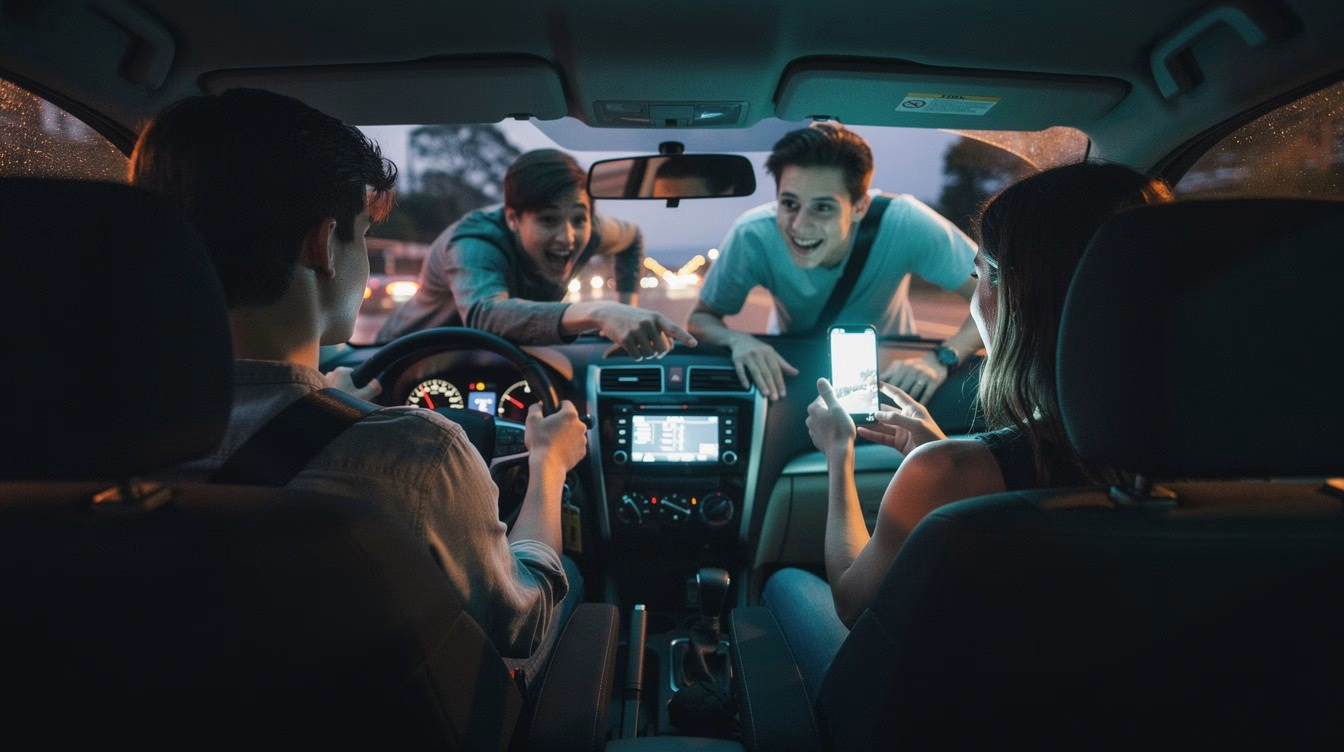
Teen peer pressure transforms the car into a dangerous environment. When friends ride along, teen drivers make riskier choices-speeding, aggressive maneuvers, and poor decisions that statistics show dramatically increase crash likelihood.
We at DriverEducators.com know that passenger presence isn’t just a distraction. It fundamentally changes how young drivers behave behind the wheel, and understanding this connection is the first step toward safer roads.
How Friends in the Car Change Teen Driver Behavior
The Psychological Shift When Passengers Arrive
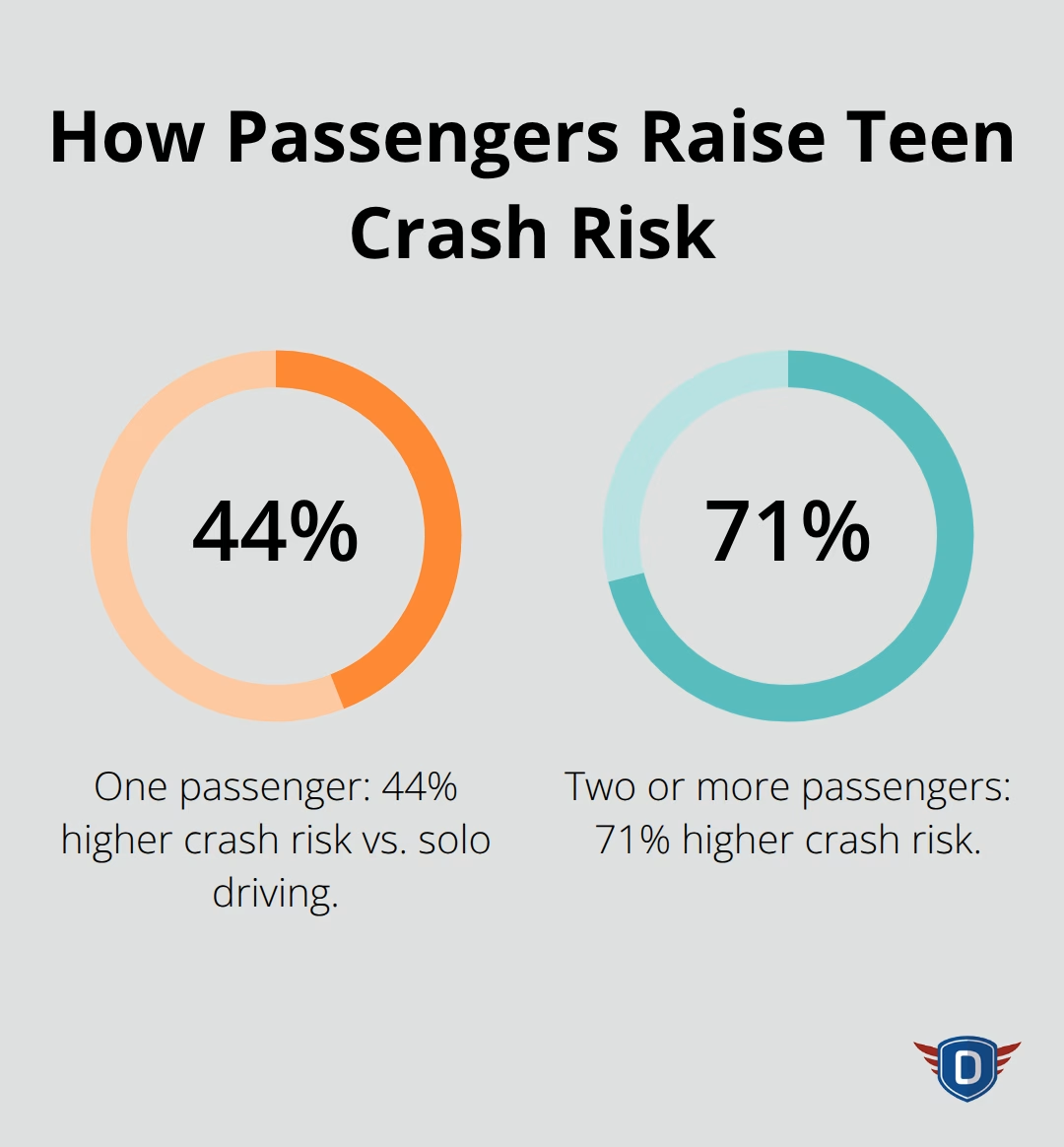
Passenger presence occupies physical space in the vehicle, but its real impact operates through psychological mechanisms that override a teen’s safer instincts. Research from the Insurance Institute for Highway Safety found that teen drivers with one passenger have a 44% higher crash risk than solo drivers, and that risk jumps to 71% with two or more passengers. The presence of peers activates social approval-seeking behavior that neuroscience shows persists through the teenage years due to ongoing brain development in the prefrontal cortex (the region responsible for impulse control and risk assessment).
When friends occupy the seats beside and behind a teen driver, that young person experiences measurable changes in attention allocation-their focus fragments between the road and social interaction, reducing reaction time to hazards.
How Attention Breaks Down Behind the Wheel
This isn’t distraction in the traditional sense where a phone diverts attention for a few seconds; passenger presence creates sustained cognitive load that makes split-second decisions slower and poorer. A study published in the Journal of Adolescent Health documented that teens with passengers spent less time monitoring mirrors, checked blind spots less frequently, and took longer to respond to brake lights from vehicles ahead. The road demands constant attention, yet passengers pull that focus away repeatedly throughout each trip. Teen drivers cannot maintain the same level of situational awareness when social interaction competes for their mental resources.
The Performance Stage Effect
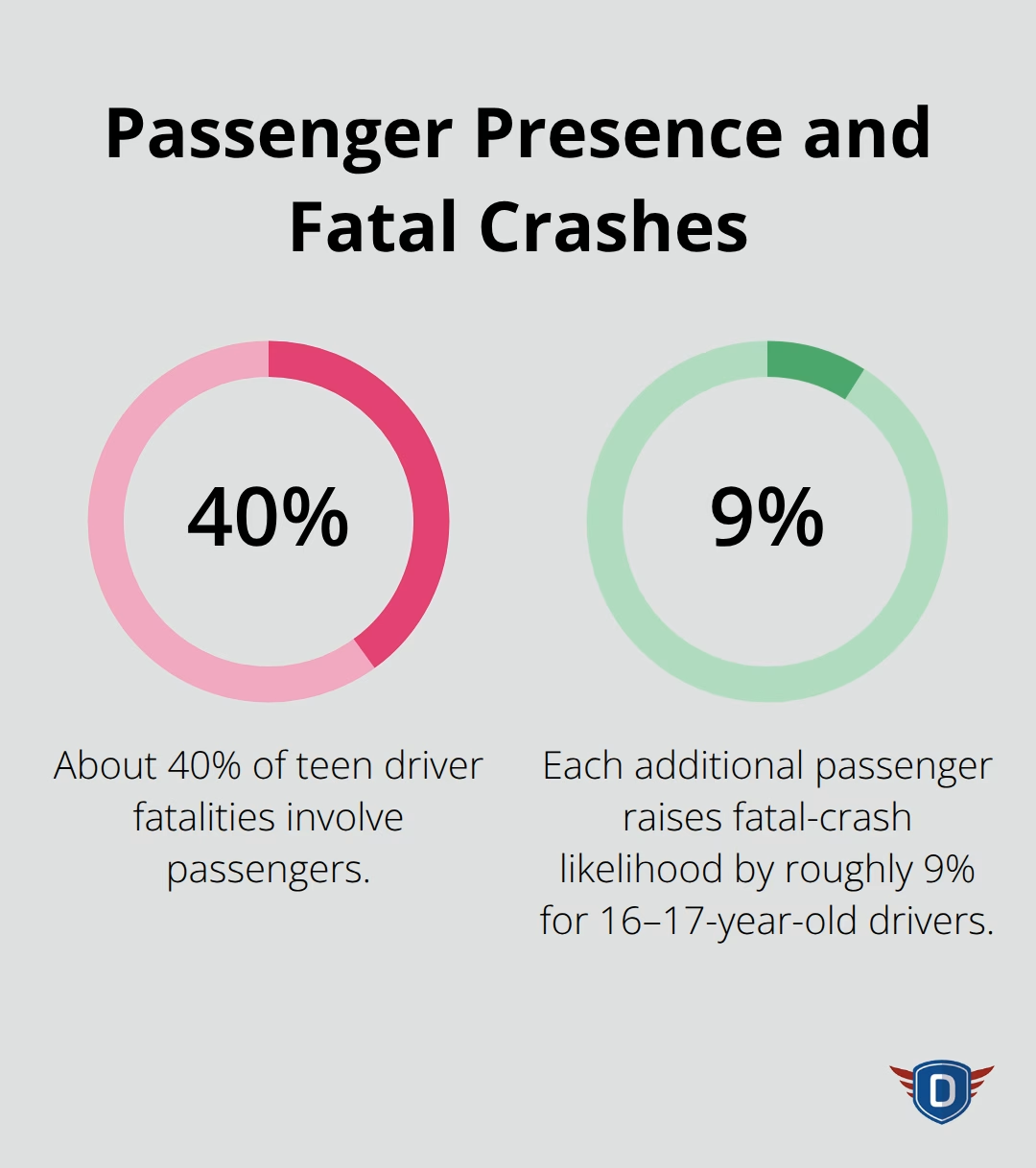
The social dynamics inside the car operate as a performance stage where teens modify their driving to match perceived expectations from their peers. Passengers directly encourage risky behavior through comments, laughter at close calls, and visible reactions to speed or aggressive maneuvers, creating real-time reinforcement for dangerous choices. Teen drivers with passengers exceed speed limits more often, follow other vehicles more closely, and engage in illegal passing maneuvers at significantly higher rates than when driving alone. The National Highway Traffic Safety Administration reported that approximately 40% of teen driver fatalities involve passengers, and the severity of crashes increases proportionally with passenger count.
Why Peer Influence Overrides Personal Judgment
Peers rarely say “drive faster” or “take that gap,” but their presence alone shifts a teen’s internal calculus about acceptable risk-what feels cautious when solo feels boring or uncool when friends are watching. This peer-influenced decision-making happens rapidly and mostly outside conscious awareness, making it resistant to standard safety lectures. A teen driver’s judgment becomes temporarily borrowed from their peer group rather than grounded in their own risk assessment (a phenomenon that intensifies with close friends versus casual acquaintances in the vehicle). The practical reality is that this shift in behavior occurs automatically, without deliberate thought.
Understanding how passengers transform teen driving behavior reveals why simple warnings fail. The next section examines the hard data on crash rates and passenger involvement, showing exactly how much risk increases with each additional person in the vehicle.
How Much More Dangerous Is Driving with Passengers
The Crash Risk Numbers That Matter
Teen drivers with a single passenger face a 44% higher crash risk than solo drivers, according to the Insurance Institute for Highway Safety. That risk jumps to 71% with two or more passengers in the vehicle. These aren’t theoretical projections-they represent actual crash data collected across thousands of incidents involving teen drivers.
The National Highway Traffic Safety Administration found that approximately 40% of teen driver fatalities involve passengers, meaning peer presence directly contributes to deaths on American roads. A study in Pediatrics examined crash records from 2007 to 2013 and determined that each additional passenger increased the likelihood of a fatal crash by roughly 9% for 16 and 17-year-old drivers.
How Male and Female Teen Drivers Respond Differently
Male teen drivers show higher crash risk with passengers than female teens, suggesting that social approval-seeking operates more intensely in male peer groups. This difference matters because it reveals that passenger influence doesn’t affect all teens equally-gender shapes how strongly peers influence driving decisions.
The gap widens further when researchers isolate specific driving behaviors. Male teens with passengers exceed speed limits more frequently and follow other vehicles more closely than their female counterparts in identical situations.
Why Crashes With Passengers Cause More Damage
Teen drivers with passengers experience more severe collisions because the risky behaviors that passengers encourage-speeding, tailgating, improper passing-create higher-impact scenarios when accidents occur. Insurance claim data shows that crashes involving teen drivers with multiple passengers result in more extensive vehicle damage and higher medical costs than comparable solo-driver incidents.
The relationship between passenger count and accident severity extends beyond frequency into the nature of crashes themselves. Each additional person in the vehicle correlates with crashes that inflict greater harm.
Graduated Licensing Laws Deliver Real Results
States that implemented strict graduated licensing laws limiting teen passengers during early driving stages saw reductions in teen crash rates ranging from 8% to 14%, according to research from the Journal of Safety Research. These aren’t marginal improvements-they represent prevented injuries and saved lives among the age group most statistically vulnerable behind the wheel.
The practical implication is direct: restricting passenger presence during the critical first months and years of independent driving delivers measurable safety gains. This evidence forms the foundation for understanding which strategies actually work to protect teen drivers.
Understanding the severity of passenger-related crashes reveals why some interventions succeed while others fail. The next section examines the specific strategies that parents, educators, and policymakers can implement to reduce these risks.
What Actually Works to Stop Teen Passenger Crashes
Graduated Licensing Laws Deliver Measurable Results
Graduated driver licensing laws with passenger restrictions represent the only intervention with proven measurable results. States implementing these laws saw teen crash reductions between 8% and 14% according to the Journal of Safety Research, which means restricting passengers during the critical first months of independent driving prevents actual injuries and deaths. Florida’s graduated licensing system limits passengers for 16-year-old drivers during the first six months, and this restriction directly correlates with lower crash rates in that age group. The mechanism is straightforward: fewer passengers mean fewer distractions and less peer pressure to take risks.
Many states weaken these restrictions too early or allow exemptions that undermine their effectiveness. Parents need to understand that these legal restrictions exist specifically because passenger presence creates measurable danger, not because legislators wanted to inconvenience teenagers.
Parent-Teen Driving Agreements That Actually Work
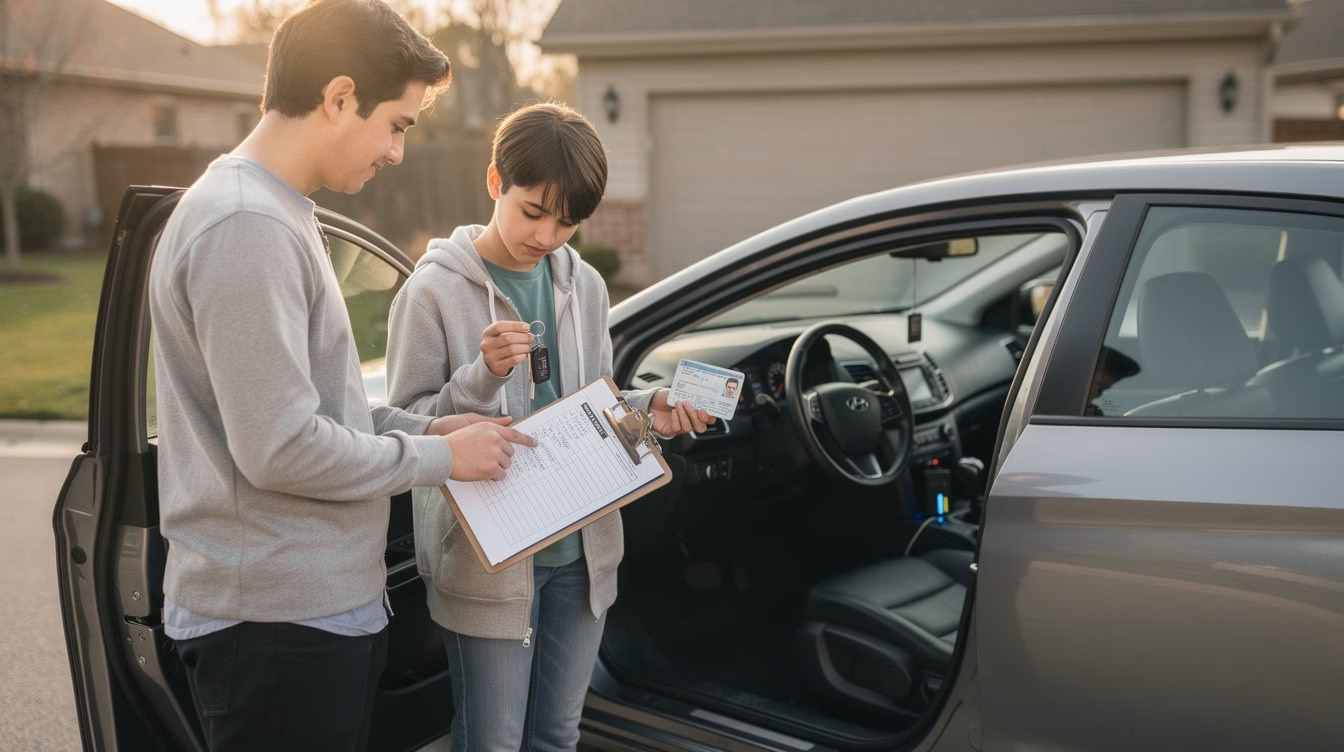
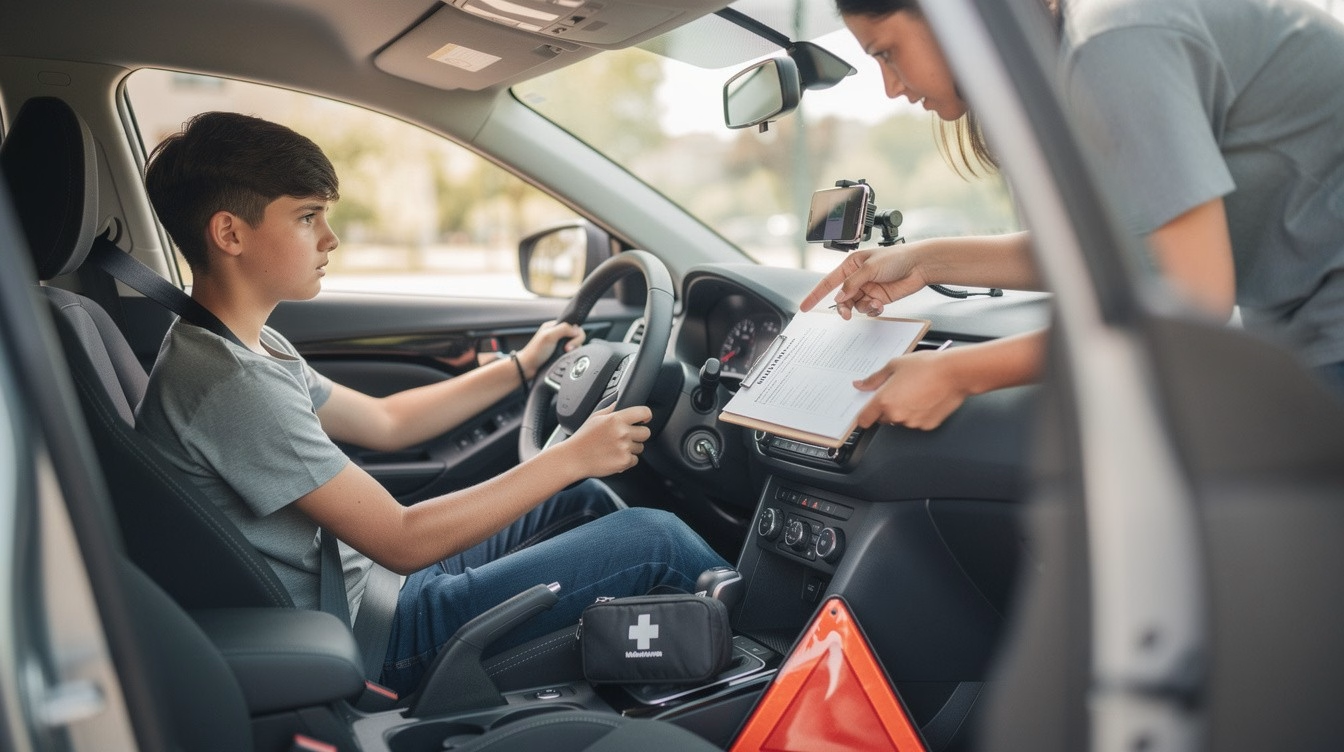
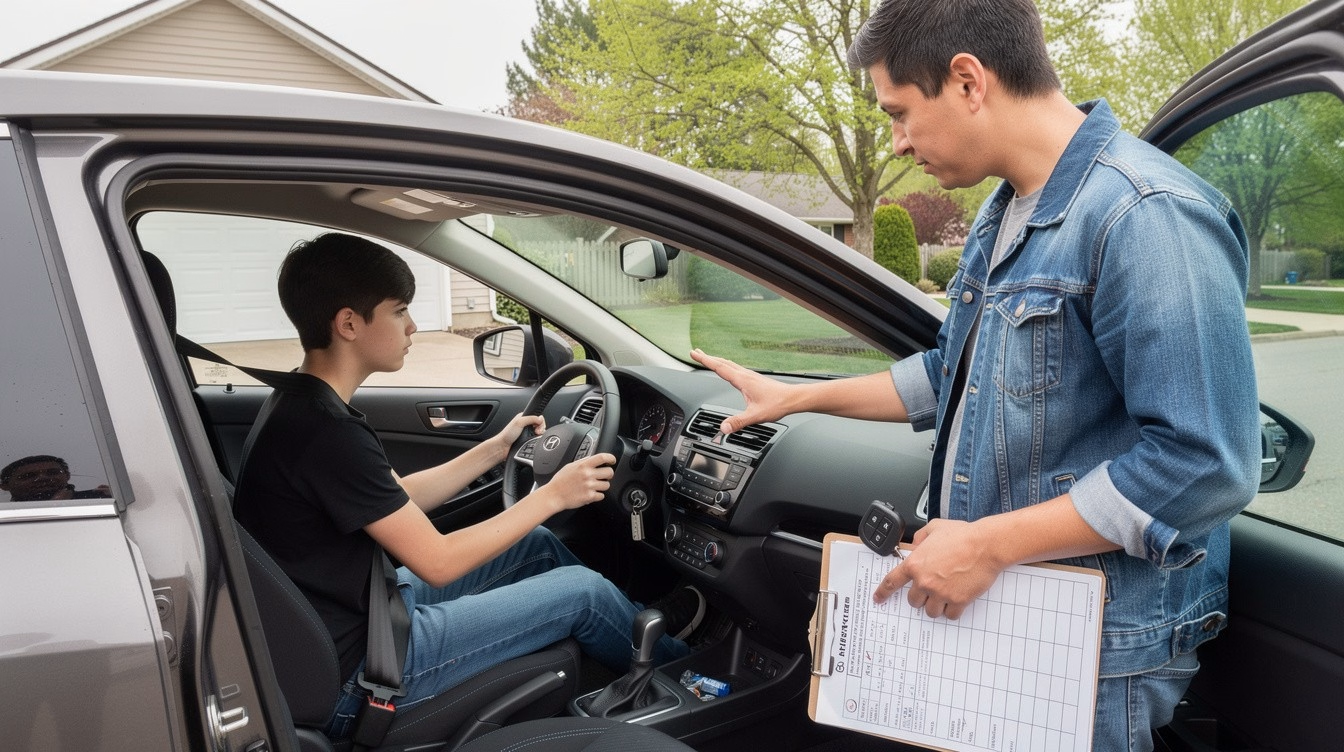
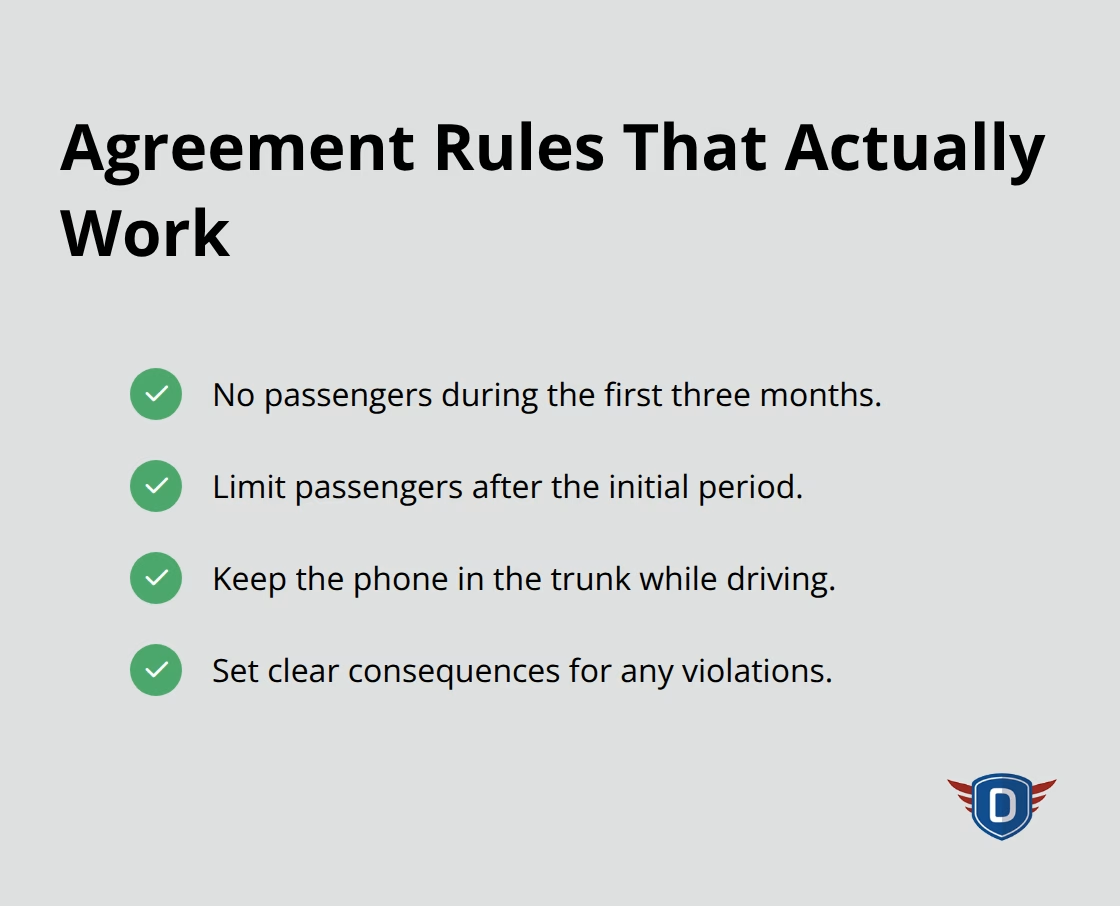
Parent-teen driving agreements work only when they address the specific behaviors that passengers encourage. A generic agreement stating “drive safely” accomplishes nothing because it ignores the psychological mechanisms that make passengers dangerous. Instead, agreements should establish concrete rules: no passengers during the first three months, limited passengers after that, phone stays in the trunk, and specific consequences for violations.
Research from the Pediatrics journal showed that parental monitoring combined with clear behavioral expectations reduced risky driving in teen drivers with passengers. The critical factor is enforcement-parents must follow through on consequences consistently, which means knowing where their teen drives and with whom.
Education Programs That Address Peer Pressure
Education programs addressing peer pressure fail when they lecture about statistics; teens already know that crashes happen, but they believe it happens to other people. Effective programs use peer-led discussions and realistic scenarios that show how specific passenger comments influence driving decisions in real time.
The Community Preventive Services Task Force identified that interventions combining parental involvement with skill-building in resisting peer pressure showed the strongest outcomes. Willpower alone cannot overcome the neurological changes that passenger presence triggers in a teen brain, which is why structural solutions like passenger restrictions work better than motivational approaches.
Final Thoughts
Passenger presence fundamentally changes how teen drivers behave behind the wheel, and the data proves it. A 44% increase in crash risk with one passenger and 71% with multiple passengers represents a direct threat to your teen’s safety. Teen peer pressure operates through psychological mechanisms that override a young driver’s judgment, making standard lectures ineffective against the real forces at work inside the vehicle.
Three concrete actions actually reduce crashes. Graduated licensing laws with passenger restrictions deliver 8% to 14% reductions in teen crash rates because they remove the source of the problem during critical early months of driving, parent-teen driving agreements work when they establish specific behavioral rules and enforce them consistently, and education programs succeed only when they address peer pressure directly through realistic scenarios rather than statistics that teens dismiss. Your involvement as a parent matters more than your teen’s good intentions-monitoring where your teen drives, knowing who rides along, and following through on consequences creates the structure that willpower alone cannot provide.
Early safe driving habits established during the first months of independent driving create patterns that persist for years. Teens who develop driving skills without passengers learn to focus on the road, make decisions based on their own judgment, and build confidence in their abilities. We at DriverEducators.com help teens develop the skills and judgment needed to navigate teen peer pressure and make safer decisions behind the wheel.