Your insurance premium factors depend heavily on your driving habits. A single speeding ticket can raise your rates by 10–15%, while a DUI conviction might increase them by 28% or more.
At DriverEducators.com, we’ve seen firsthand how specific behaviors trigger the biggest premium hikes. This post breaks down exactly which driving mistakes cost you the most money.
How Speed Violations Tank Your Insurance Rates
The Immediate Financial Hit
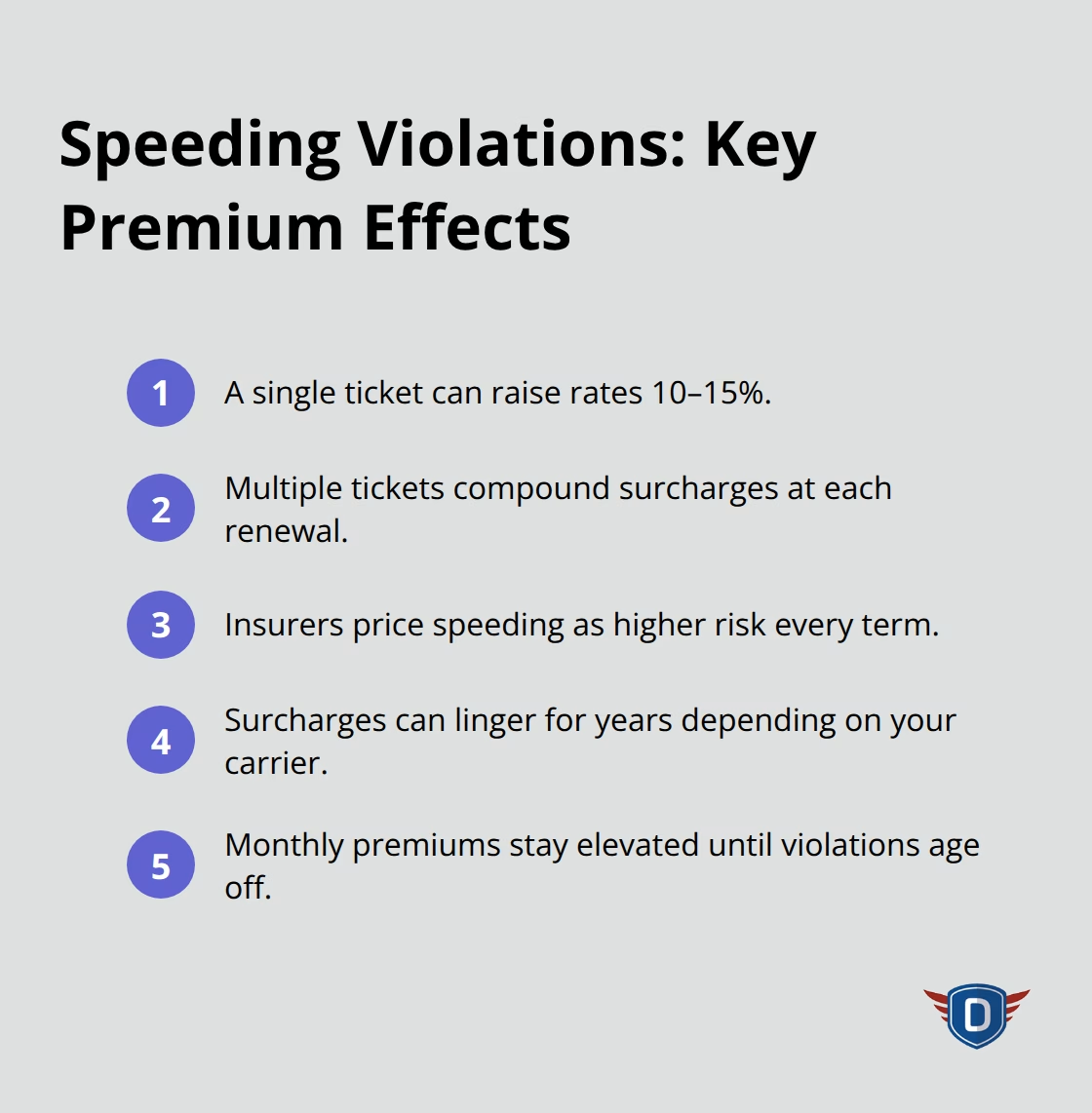
Speeding tickets rank among the fastest ways to watch your insurance premium jump. A single speeding violation typically raises rates by 10–15%, but the real damage compounds when you receive multiple tickets. Insurers view speed violations as a direct signal that you take unnecessary risks on the road, and they price that behavior into every renewal.
The impact sticks around far longer than you’d expect. If you receive a ticket for going 15 miles per hour over the limit, your insurer applies a surcharge that remains on your record for three years. Some carriers extend this even longer, meaning you pay more every single month for years after a brief moment of speeding.
How Long Violations Stay on Your Record
The financial hit varies significantly by state and insurer. A driver in Michigan paying around $550 annually could see rates jump to $1,400 after a single at-fault incident. Speed violations create a permanent paper trail-most minor violations like speeding tickets remain on your MVR for 2 to 3 years, and when your insurance company pulls that record at renewal time, they see exactly what happened and when.
Your state determines how aggressively insurers can penalize you. Some states cap rate increases after violations, while others allow massive jumps. Reckless driving charges carry far heavier penalties than standard speeding tickets. A reckless driving conviction can increase your premium significantly, sometimes making you ineligible for standard coverage altogether.
License Points and Insurance Classification
Traffic courts assign points to your driver’s license, separate from insurance points. Accumulating too many points leads to license suspension or revocation, which then forces you into high-risk insurance pools with dramatically higher costs. Check your state’s point system and understand exactly how many points each violation carries.
If you’ve already received a ticket, don’t ignore it-get a copy of your driving record from your state’s DMV and verify what the insurance company sees. Shopping around after a violation often reveals substantial savings; some drivers find that switching insurers saves them $500 to $900 annually compared to their current carrier’s rate increase.
What Happens Next
Your next renewal notice arrives about a month before the rate takes effect. You’ll see the new premium and the reason for the increase listed on your renewal documents. At this point, you have options: you can accept the increase, shop for better rates elsewhere, or cancel your policy to switch carriers (though some insurers charge small cancellation fees).
The behavior that triggered your speeding ticket-and the financial consequences that follow-sets the stage for how insurers evaluate your next violation. Whether that violation involves distracted driving, impaired operation, or another risky behavior, your existing record influences how severely the new incident affects your rates.
Distracted Driving and Impaired Operation
The Premium Impact of Dangerous Behaviors
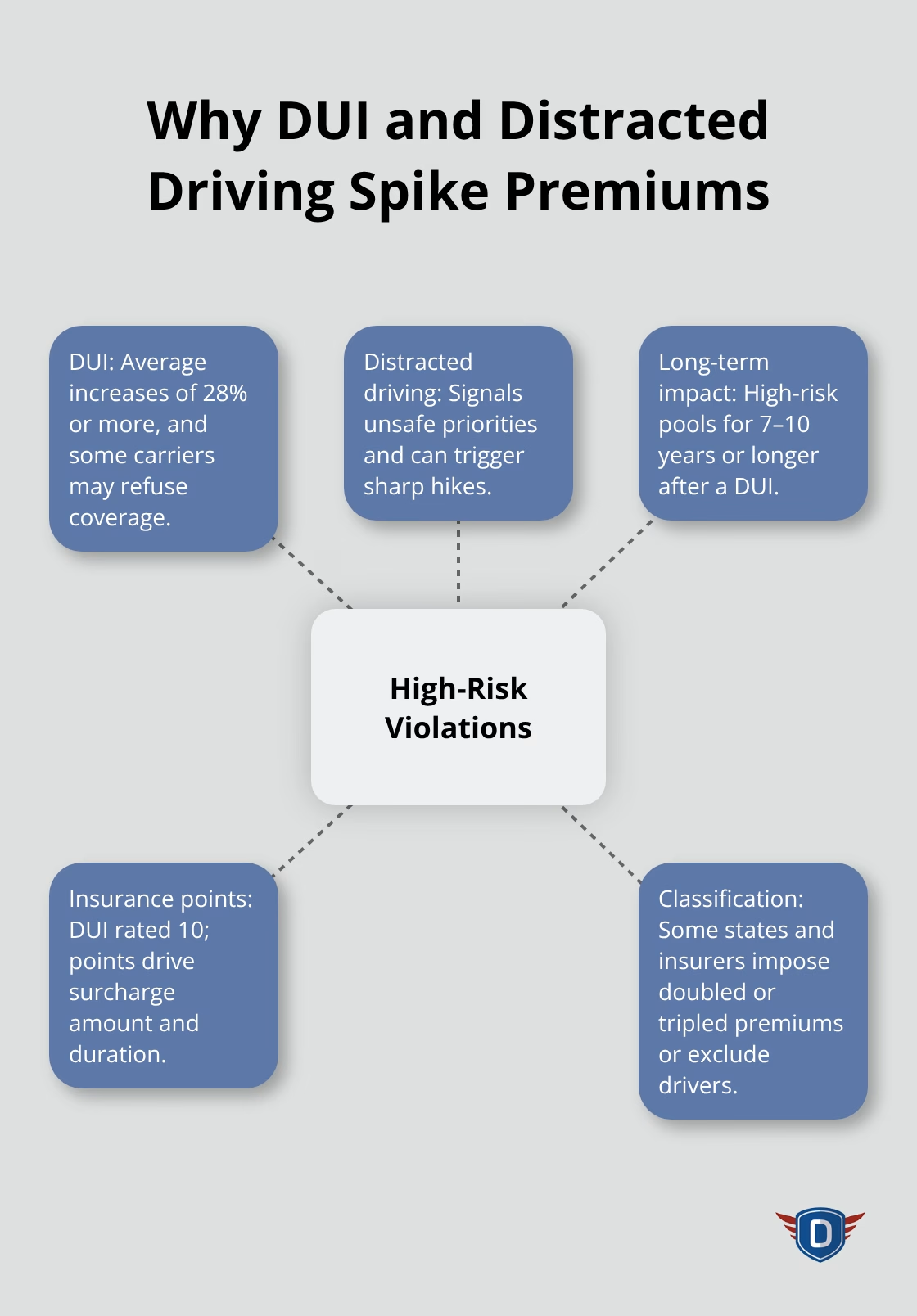
Distracted driving and impaired operation represent two of the most dangerous-and most expensive-behaviors an insurer can see on your record. A DUI conviction increases your premium by 28% or more, and some carriers simply refuse to cover you at all after an impaired driving incident. When you text or use your phone behind the wheel, you signal to insurers that you prioritize distractions over safety, and they respond with rate increases that rival or exceed those from speeding tickets.
The difference lies in how insurers treat these violations. Distracted driving and impaired operation carry heavier long-term consequences because insurers view them as indicators of reckless judgment rather than momentary lapses. A single DUI conviction can keep you in high-risk insurance pools for 7 to 10 years or longer, forcing you to either accept substantially higher premiums or search for specialized carriers willing to insure drivers with serious violations.
How Insurers Classify High-Risk Drivers
Your state’s classification system plays a major role in your final premium. Drivers categorized as high-risk due to impaired driving records often face premiums double or triple their previous rates, and some insurers exclude them entirely from standard coverage. Insurance companies track risky behavior through multiple data sources that go far beyond what appears on your driving record.
When you receive a ticket for distracted driving or impaired operation, that violation lands in your Motor Vehicle Report, which insurers pull at every renewal. Some states allow officers to cite distracted driving separately, while others bundle phone use into reckless driving charges that carry steeper penalties.
Insurance Points and Surcharge Duration
Insurers assign insurance points on a scale of 1 to 10-with DUI rated as 10, the maximum severity-and these points determine your surcharge amount and duration. After an impaired driving conviction, most carriers keep you flagged for three to five years, though some extend surveillance longer depending on your state’s laws and the insurer’s underwriting standards.
The critical point is that these points directly translate to dollars. A driver with a DUI on their record pays substantially more at every renewal until the violation ages off their Motor Vehicle Report.
Taking Action After a Violation
If you’ve been cited for distracted driving or impaired operation, pull your Motor Vehicle Report immediately from your state’s DMV to confirm what insurers will see. Then shop for quotes from multiple carriers, because some specialize in high-risk coverage and price more competitively than your current insurer.
High-risk specialists often provide more affordable options than standard carriers after serious violations, and switching can save hundreds annually even with a compromised driving record. The General and similar providers focus specifically on drivers whom standard insurers reject, making them worth comparing during your quote process.
Moving Forward With Your Driving Record
Your history of distracted driving or impaired operation violations shapes how insurers evaluate your next incident. Whether that incident involves another traffic violation, an accident, or another risky behavior, your existing record influences how severely the new violation affects your rates. Understanding this pattern helps explain why your next driving mistake carries even steeper consequences than your first one.
Accident History and At-Fault Claims
The Immediate Cost of Your First At-Fault Accident
Your first at-fault accident hits your wallet harder than you’d expect. Insurance companies view at-fault accidents as proof that you failed to prevent a collision, which means you’re statistically more likely to have another one. A single at-fault accident can affect your car insurance rates for three to five years on average, though some carriers extend it longer depending on your state and claim severity. The dollar impact is substantial: a driver paying $550 annually might see rates jump to $1,400 after an at-fault incident. That’s an $850 annual increase that compounds across three years, totaling over $2,500 in additional premiums directly caused by one mistake.
When Your Insurer Applies the Surcharge
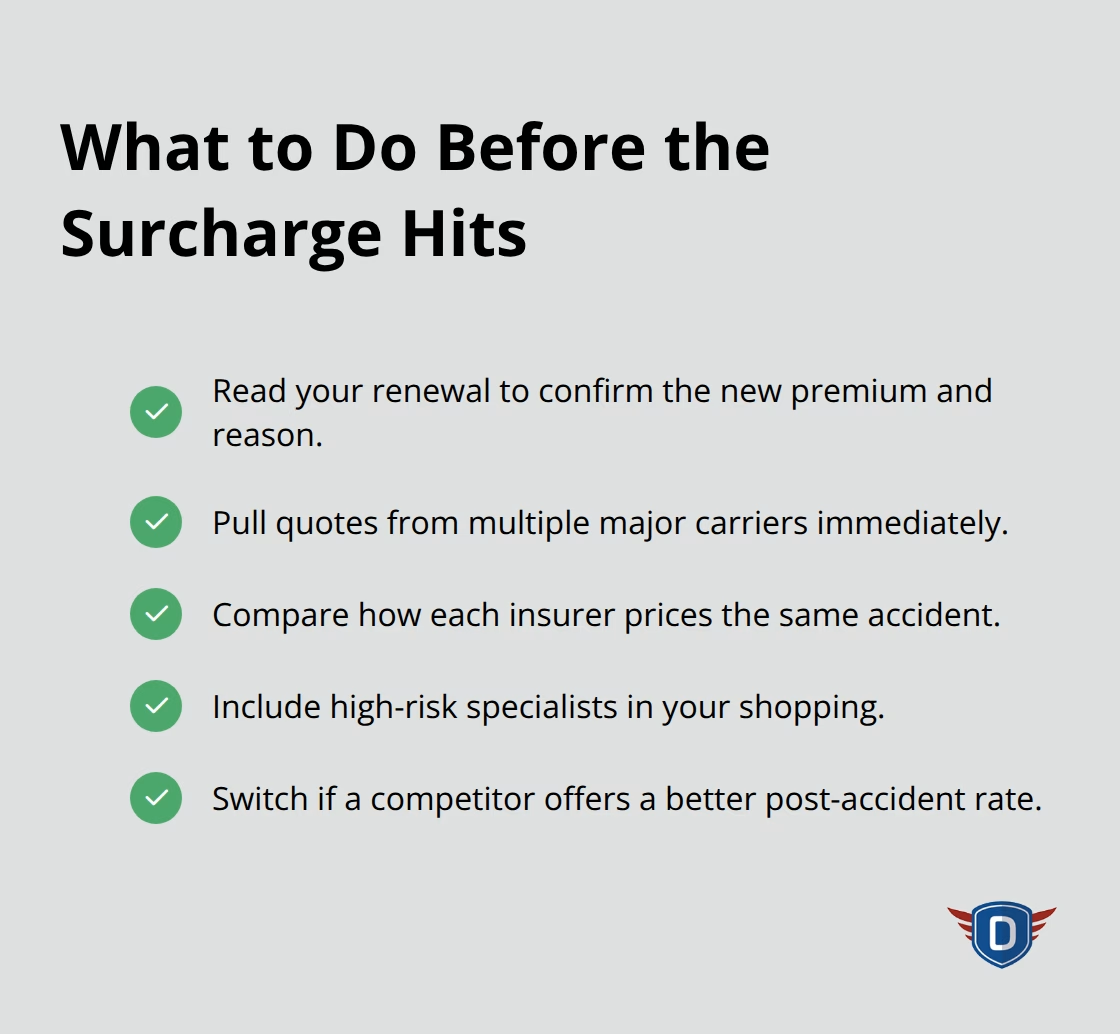
The timing matters because your insurer applies the surcharge at your next renewal, not immediately after the accident. You’ll receive renewal documents about a month before the rate takes effect, and that’s when you’ll see the new premium and the stated reason for the increase. This is your window to act: pull quotes from multiple major carriers immediately, because switching insurers after an at-fault accident often saves hundreds annually. Some drivers discover that competitors price the same accident far more leniently than their current carrier, making a policy switch financially worthwhile despite the inconvenience. High-risk specialists sometimes offer competitive rates for drivers with accident histories, so include them in your comparison.
Multiple Accidents Create Cancellation Risk
Multiple at-fault accidents within a few years create a different problem entirely. Insurance companies begin viewing you as a persistent risk rather than someone who had bad luck once, and some carriers simply cancel your policy outright rather than continue covering you. Non-renewal becomes a real possibility after two or three at-fault accidents, forcing you into high-risk insurance pools where premiums skyrocket even further. At this point, your options narrow significantly: you’re limited to carriers that specialize in high-risk drivers, and you’ll pay substantially more regardless of which company you choose.
Collision Claims vs. Comprehensive Claims
The type of claim matters less than fault status. A collision claim (damage from hitting another vehicle or object) and a comprehensive claim (damage from weather, theft, or vandalism) both appear on your record, but only at-fault collisions trigger rate increases. A comprehensive claim for hail damage doesn’t suggest risky driving behavior, so insurers don’t surcharge you for it. However, an at-fault collision proves you made a driving error, and that’s precisely what insurers price into future premiums. This distinction means you should always clarify fault status with your insurer after any accident, because the difference between at-fault and not-at-fault determines whether your rates spike or remain stable. If the police report doesn’t assign fault to you but your insurer does anyway, that’s worth contesting or at least discussing with an agent, because the impact on your premiums is substantial.
Final Thoughts
Speeding tickets, DUI convictions, and at-fault accidents represent the three biggest threats to your insurance premium. A single speeding violation raises rates by 10–15%, while a DUI increases them by 28% or more, and at-fault accidents stick around for three to five years, sometimes longer. These insurance premium factors compound over time, meaning your second violation costs more than your first one because insurers view repeat offenders as persistent risks rather than unlucky drivers.
Most violations age off your Motor Vehicle Report after three years, and your rates gradually decrease as your record improves. Pull your driving record from your state’s DMV to confirm what insurers see, then shop quotes from multiple carriers because switching often saves hundreds annually. High-risk specialists sometimes price violations more competitively than standard insurers, so include them in your comparison.
The most effective way to lower your premiums is to stop accumulating violations. We at DriverEducators.com offer traffic school courses designed to teach you exactly how to avoid the behaviors that trigger rate increases, and many insurers offer discounts for completing approved courses. Your next three years of clean driving will lower your rates far more than any other action you can take.