

A traffic citation can feel overwhelming, but you have more options than you might think. We at DriverEducators.com know that understanding your traffic citation dismissal options is the first step toward resolving your case effectively.
Whether you’re facing a moving violation, a fine, or something more serious, the right strategy can make a real difference. This guide walks you through your actual options and how to choose the best path forward.
What Counts as a Traffic Citation and How It Affects You
Moving violations add points and raise your insurance costs
Not all traffic tickets carry the same weight. Moving violations like speeding, running a red light, or improper lane changes add points to your driving record in most states. A single speeding ticket adds 3 to 6 points depending on how far over the limit you were driving. Accumulate 12 points in Florida within 12 months, and your license gets suspended automatically.
That suspension stays in place until you complete a Basic Driver Improvement course. The real cost of a moving violation extends far beyond the fine itself. Moving violations raise your insurance premiums by more than $2,000 per year, according to recent data.
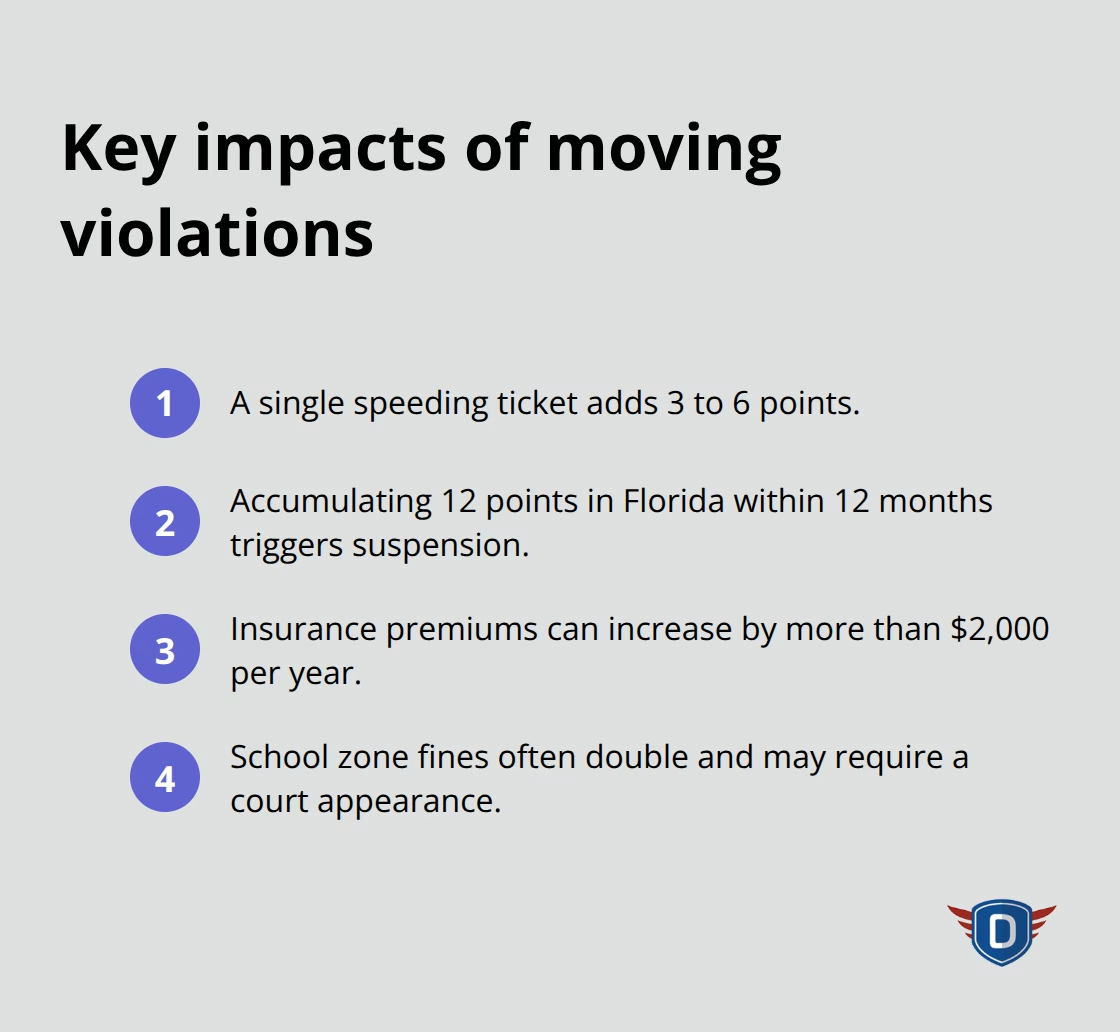
School zone speeding violations carry harsher penalties. Fines often double, and you face mandatory court appearance in many jurisdictions. The fastest way to protect yourself is taking action immediately after receiving the ticket rather than waiting for your court date.
Non-moving violations require proof of correction
Citations for expired registration, broken taillights, or missing inspection stickers are non-moving violations. These offenses don’t add points to your license in Florida, but they come with fines ranging from $50 to $200 depending on the specific violation.
You can often dismiss a non-moving violation by fixing the problem and providing proof to the court. Many courts accept a certificate of correction submitted by mail or through online portals, eliminating the need for a court appearance. Ignoring a non-moving violation creates real problems-the court issues a failure-to-appear charge, which triggers a $100 civil assessment and potential license suspension after 40 days.
Prosecutors cannot provide legal advice about your options, so contact the court directly or consult an attorney to understand your jurisdiction’s specific procedures for dismissal.
Misdemeanor charges require immediate legal representation
Misdemeanor traffic charges like DWI, reckless driving, or hit-and-run are fundamentally different from standard tickets. These offenses carry potential jail time, substantial fines exceeding $500, and mandatory license suspension regardless of prior points.
You have the right to hire an attorney, and if you cannot afford one and face potential incarceration, you may qualify for a court-appointed attorney. District Court handles most traffic misdemeanors, but jury trials are not available at that level. If you’re charged as a misdemeanor, you can appeal to Superior Court for either a jury trial or a bench trial with a judge.
A conviction for reckless driving results in a mandatory 60-day license suspension, while a DWI conviction triggers automatic suspension and requires completion of an approved substance abuse program before license reinstatement. Understanding which category your citation falls into determines your next steps and available resolution strategies.
Your Real Options to Dismiss or Reduce Your Citation
Defensive driving courses eliminate points and protect your insurance rates
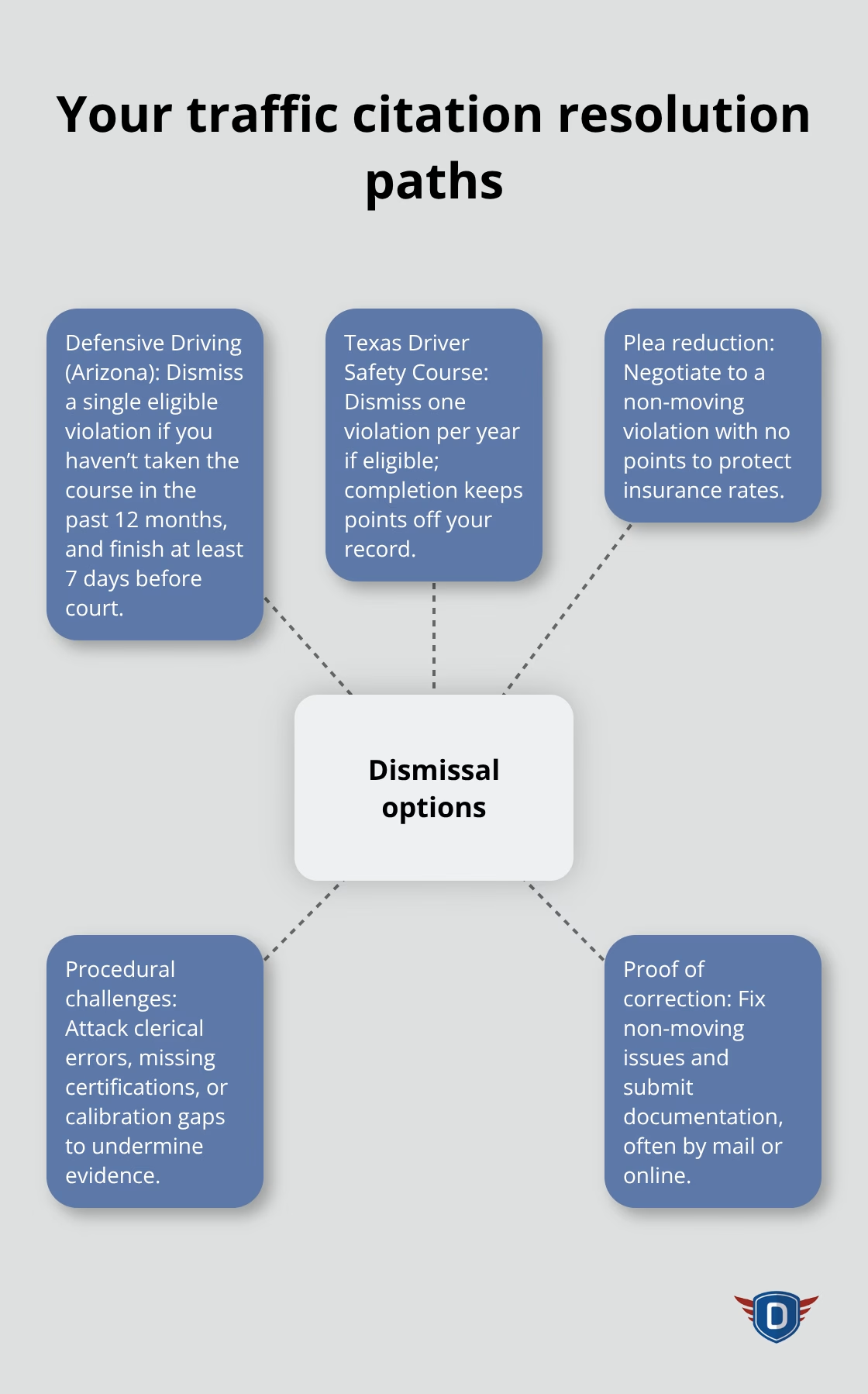
Defensive driving courses offer the most straightforward path to dismissal for eligible violations. In Arizona, you can have a single traffic violation dismissed by completing an Arizona-certified Defensive Driving Course if you haven’t attended one for an eligible citation within the past 12 months. The course must finish no later than 7 days before your court date, and you can take it online or in person depending on court requirements.
Arizona’s online eligibility tool lets you verify whether your specific violation qualifies by entering your court date, then search for certified classes by ZIP code and preferred time. The Arizona Supreme Court maintains the list of eligible violations, so confirm your citation qualifies before registering. If your court date approaches too closely, the system may block scheduling-which is why acting immediately after receiving your ticket prevents this problem.
Texas drivers can dismiss a single violation annually by completing a Texas-approved Driver Safety Course if they meet eligibility requirements. An experienced traffic attorney should confirm your qualification first. Completion prevents points from being added to your record, protecting your insurance rates and avoiding the premium increase that moving violations typically trigger.
Plea negotiations reduce charges to non-moving violations
Negotiating with prosecutors allows you to reduce charges to less serious offenses. Many jurisdictions permit plea reductions to non-moving violations that carry no points instead of accepting a moving violation conviction. This strategy protects your insurance rates and prevents the accumulation of points on your driving record.
The prosecutor handles these negotiations, and an attorney can advocate on your behalf during discussions. Courts vary significantly in how they handle plea agreements, so consulting with a traffic attorney about your specific jurisdiction’s procedures and success rates makes sense before deciding whether to pursue this route yourself or hire representation.
Procedural challenges attack weak evidence and clerical errors
Examine your ticket carefully for clerical errors such as incorrect license plate, vehicle description, date, or time, since material errors can be valid grounds for dismissal in many states. For automated enforcement tickets like red light cameras, request the device’s maintenance certificates and calibration records to challenge improper calibration or insufficient signage as dismissal grounds.
If the ticket involves radar or laser enforcement, verify the operator’s certification and the device’s maintenance records; noncompliance gives you grounds to challenge the evidence. Filing a motion to dismiss based on procedural errors requires submitting written statements and supporting documentation to the court. Some jurisdictions allow trial by written declaration without requiring your in-person appearance, making this option accessible even if you cannot attend court in person.
Understanding your jurisdiction’s specific rules determines your strategy
Each state and county maintains different procedures for dismissal and reduction. Some jurisdictions offer deferral programs or “Probation Before Judgment” style options that let you avoid a conviction if you meet conditions and pay fees. Automated enforcement tickets follow different rules than police-issued citations, and the governing agency determines which dismissal options apply to your case.
Prosecutors cannot provide legal advice about your options, so contact the court directly or consult an attorney to understand your jurisdiction’s specific procedures. Gathering concrete evidence before your court date strengthens your position-dashcam footage, witness statements, calibration certificates, and maintenance records all support your defense. The choice between pursuing dismissal yourself or hiring representation depends on your citation’s severity, your jurisdiction’s complexity, and how much time you can invest in the process.
Matching Your Citation to the Right Resolution Path
Severity determines which options work for your case
Your citation’s severity determines which resolution options actually work for you, and acting within specific timeframes prevents doors from closing permanently. A speeding ticket in a school zone carries different consequences than a broken taillight, and your jurisdiction’s court system offers different paths depending on the violation type. Start by confirming whether your citation qualifies for defensive driving dismissal in your state-Arizona requires checking the court’s eligibility list before registering for a course, and Texas limits driver safety course dismissals to once per year, so missing these windows means losing that option entirely.
Non-moving violations like expired registration typically allow dismissal through proof of correction submitted within 30 days. Moving violations require either completing an approved course, negotiating a plea reduction, or challenging procedural errors through written motions. The specific deadline varies by jurisdiction, but most courts impose 10 to 30 day response windows before failure-to-appear penalties kick in and add $100 civil assessments to your case.
Court timelines and procedural rules vary significantly
Understanding your court’s actual timeline prevents costly mistakes that trap you in worse outcomes. Some jurisdictions permit trial by written declaration without requiring your appearance, while others demand in-person hearings where the officer must testify-knowing which applies to your case determines whether hiring an attorney makes financial sense or whether you can resolve it yourself.
If your citation involves automated enforcement like red light cameras, the primary goal is to enforce traffic regulations and correct driver behavior. Requesting documentation often takes 15 to 20 business days, so filing motions immediately after receiving your ticket prevents missing court deadlines.
Attorney consultation protects your financial interests
Consulting a traffic attorney before deciding your strategy typically costs $100 to $300 for a case review and costs far less than paying increased insurance premiums from a moving violation conviction. Any major or minor moving violation that appears on your driving record can increase your car insurance rate depending on how your state and insurer treat the violation.
Attorneys in your jurisdiction know which prosecutors routinely accept plea reductions to non-moving violations, which judges grant continuances to allow time for defensive driving completion, and whether your specific court offers deferral programs that eliminate convictions entirely if you meet conditions. This information dramatically improves your negotiating position and prevents wasting time on strategies that never work in your particular court.
Final Thoughts
You now understand your traffic citation dismissal options and how each strategy works in practice. Defensive driving courses eliminate points and protect your insurance rates when you act before your court deadline. Plea negotiations reduce charges to non-moving violations that carry no points. Procedural challenges attack weak evidence and clerical errors in your ticket. The path forward depends entirely on your citation’s severity, your jurisdiction’s specific rules, and how quickly you move.
Speed matters more than you might realize. Missing your court date triggers a $100 civil assessment and potential license suspension after 40 days. Defensive driving course deadlines close 7 days before your court appearance, so waiting eliminates that option permanently. Non-moving violations typically allow 30 days for proof of correction before failure-to-appear penalties activate.
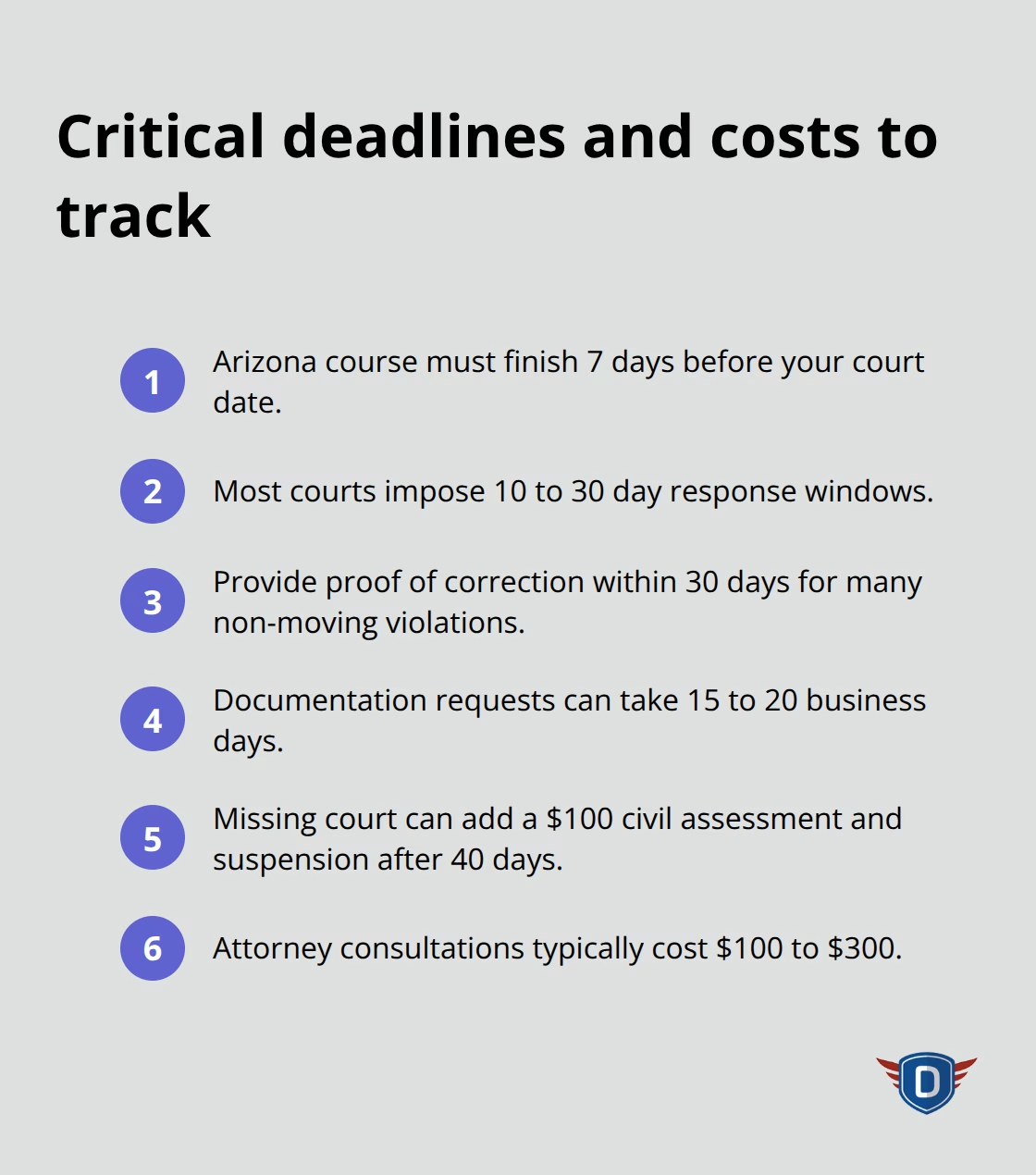
Consulting a traffic attorney costs $100 to $300 for a case review and typically saves far more than that in avoided insurance increases and court costs.
Contact your court directly to confirm your citation’s response deadline and available dismissal options in your jurisdiction. Gather supporting evidence immediately: dashcam footage, witness statements, calibration certificates, and maintenance records all strengthen your position. If your citation qualifies for defensive driving dismissal, register for a course right away rather than waiting. We at DriverEducators.com help drivers protect their records through Florida-approved traffic school courses designed to reduce points and meet court requirements.