

Teen drivers face real risks on the road. The data shows that motor vehicle crashes remain the leading cause of death for teenagers in the United States, with inexperienced drivers accounting for a significant portion of these incidents.
Parental supervision makes a measurable difference. We at DriverEducators.com have seen how structured teen driving supervision guidelines help parents reduce accident rates and build safer driving habits from day one.
This roadmap walks you through proven strategies to keep your teen safe behind the wheel.
How Parental Supervision Reduces Teen Driving Accidents
Why Teen Crash Risk Stays High in the First Year
Teen drivers aged 16 to 19 have a crash rate roughly three times higher than adult drivers, according to the CDC and NHTSA. The first six months of independent driving represent the most dangerous window. During this period, teens lack the experience to recognize hazards quickly, manage multiple tasks simultaneously, or recover from mistakes.
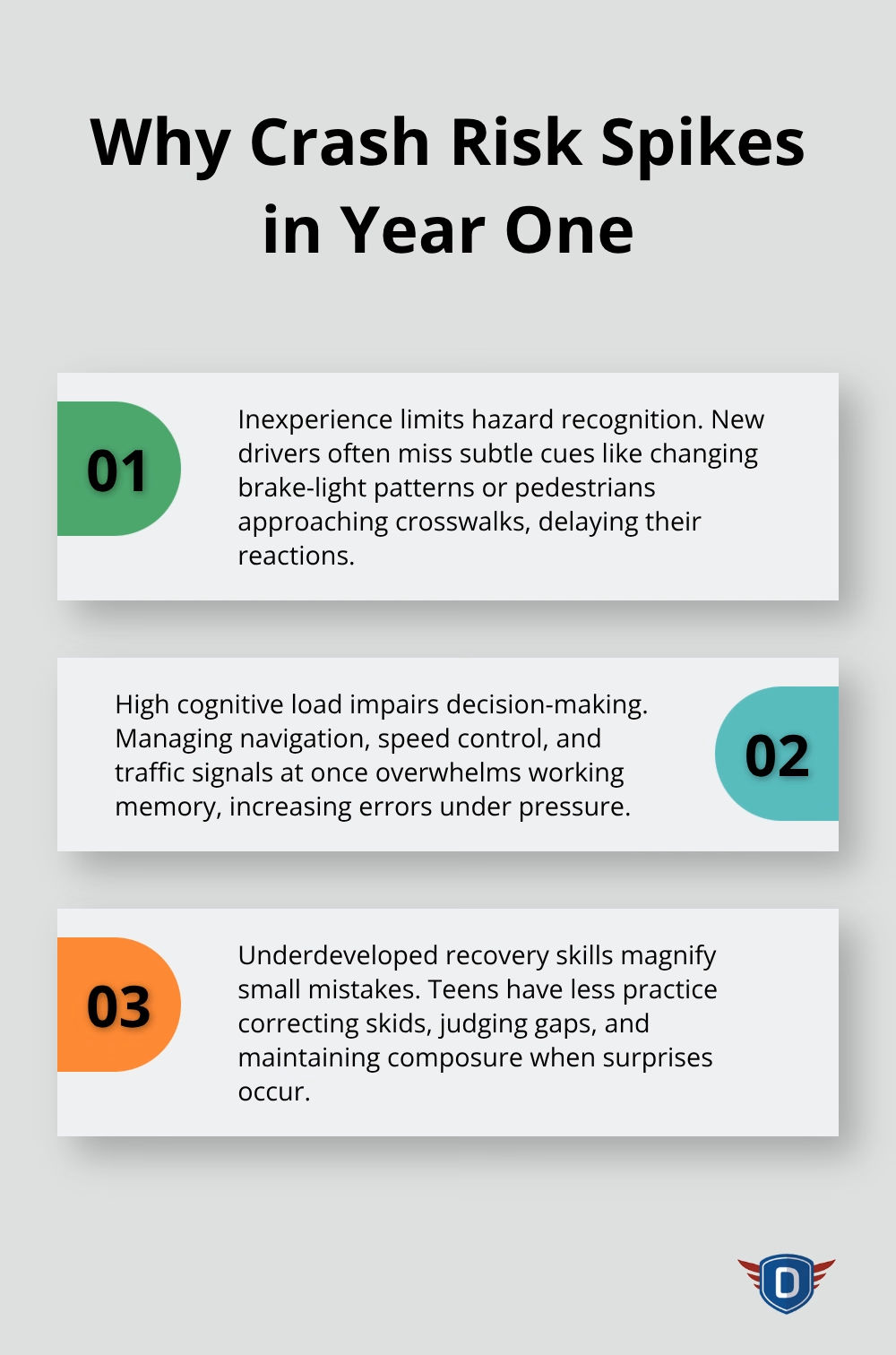
This isn’t about age alone-it’s about the combination of inexperience, impulsive decision-making, and unfamiliarity with how vehicles respond in real-world conditions. Florida’s Graduated Driver Licensing system attempts to address this by requiring a learner’s permit phase followed by a restricted provisional license before full privileges are granted. However, the law’s effectiveness depends entirely on how parents enforce the restrictions and structure the practice experience.
How Structured Practice Changes Outcomes
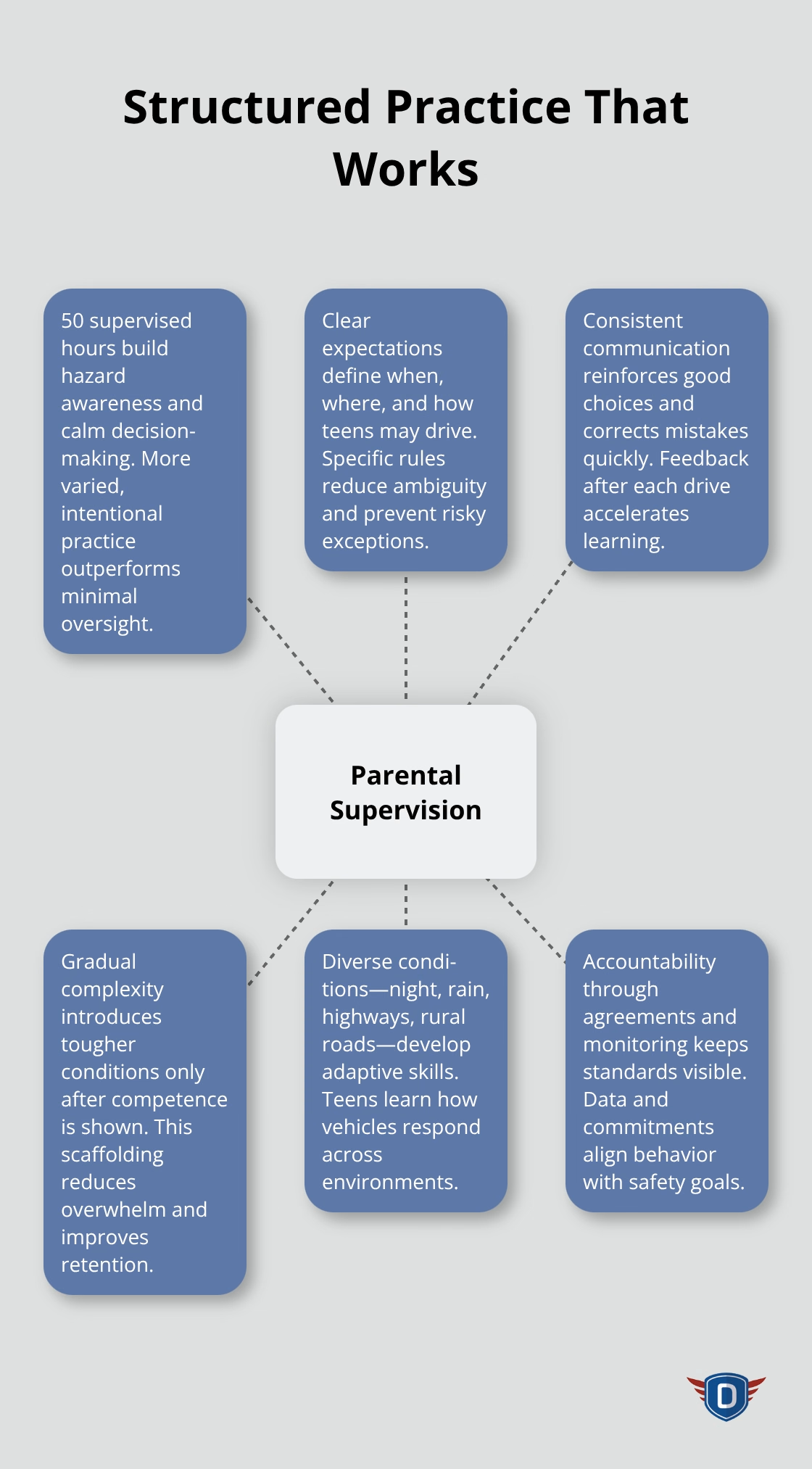
Active parental involvement during these critical months produces measurable results. The AAA Foundation and IIHS research shows that teens who complete 50 hours of supervised practice demonstrate significantly better hazard awareness and decision-making than those with minimal oversight.
Parents who set clear expectations about when and where their teen can drive, maintain consistent communication about driving performance, and gradually increase driving complexity based on demonstrated competence see crash rates drop substantially. The difference between a teen who receives 20 hours of supervised practice and one who completes 50 hours isn’t just technical skill-it’s the development of judgment, the ability to stay calm under pressure, and the habit of scanning ahead for potential dangers.
Nighttime Driving Restrictions Work
Nighttime driving restrictions prove particularly effective at preventing crashes. NHTSA data confirms that enforcing curfews and limiting evening drives during the provisional license phase prevents a notable percentage of fatal crashes among new drivers.
In Florida specifically, the intermediate license stage prohibits driving between 11 p.m. and 6 a.m. for drivers under 18. This restriction only works if parents actually enforce it and don’t allow exceptions for social events or late-night errands. When parents hold the line on curfews, they eliminate one of the highest-risk driving scenarios for inexperienced teens.
What Happens When Parents Stay Involved
Teens who receive consistent parental feedback about their driving performance develop safer habits faster than those left to figure things out alone. Parents who discuss near-misses, praise good decisions, and address risky behaviors create accountability that shapes long-term driving patterns.
The stakes during this first year are real. Every supervised mile your teen drives now builds the neural pathways and muscle memory that will protect them for decades. The question isn’t whether parental supervision matters-the data proves it does. The question is how to structure that supervision effectively, which brings us to the specific rules and expectations that separate safe teen drivers from those who crash.
Setting Clear Rules and Expectations Behind the Wheel
Write Down Your Agreement
Your teen won’t follow rules they don’t understand, and they definitely won’t follow rules that feel arbitrary. The National Safety Council emphasizes that a written parent-teen driving agreement dramatically increases compliance compared to casual verbal expectations. This isn’t about being harsh-it’s about clarity. Specify exactly what phone use looks like in your vehicle: no texting, no social media, no voice calls except emergencies.
Research shows that hands-free conversations degrade driving performance because teens lack the cognitive capacity to manage multiple tasks simultaneously. Your rule shouldn’t be vague. Instead of saying no phone use, state that the phone stays in the glove compartment or backseat during every drive, with zero exceptions for red lights or traffic jams. This removes the gray area where teens convince themselves that checking a notification for two seconds is acceptable.
Make Consequences Real and Specific
The contract itself needs teeth. Write down specific consequences before violations happen-not in anger after they occur. If your teen receives a text while driving and you discover it, what happens? Do they lose driving privileges for a week? Two weeks? Does an insurance cost discussion happen? Does the vehicle get sold and they use public transit instead?
Consistent, predictable consequences work far more effectively than lectures or occasional punishments. Your teen also needs to know what they’re working toward. If they drive safely for three months without violations, what privilege do they earn? Can they drive to a friend’s house? Can they extend their curfew by 30 minutes?
Build Incentives Into Your System
Positive incentives alongside consequences create a system that works, not just a list of rules that breeds resentment. Write this agreement down, have your teen sign it, and post it somewhere visible. This transforms a conversation into a contract that both of you can reference without emotion.
The agreement becomes your shared reference point when discussions about driving performance happen. Your teen knows exactly what behaviors earn trust and what violations trigger consequences. This clarity eliminates arguments about fairness and removes the emotional charge from enforcement.
Move From Rules to Accountability
Once your agreement is in place, the real work begins-monitoring whether your teen actually follows the rules you’ve established. This requires more than occasional check-ins; it demands consistent observation and honest conversations about what you observe behind the wheel.
Practical Supervision Strategies for New Drivers
In-Vehicle Coaching Transforms Hazard Awareness
Sitting in the passenger seat while your teen drives is active coaching, not passive observation. The AAA Foundation research confirms that teens who receive real-time feedback during supervised drives develop hazard awareness faster than those who drive without commentary. Your job during these rides is to narrate what you see happening on the road.
Point out the pedestrian stepping toward the crosswalk three blocks ahead. Comment on the slowing brake lights before your teen needs to react. Ask questions like “What’s your escape route if that car doesn’t stop at the red light?” This forces your teen’s brain to scan ahead instead of reacting to immediate threats. Most parents stay silent during drives, assuming their presence alone provides supervision-it doesn’t.
Your teen needs to hear your thinking process so they can internalize the same pattern. Keep these rides focused on specific skills rather than general driving time. Spend a week practicing highway merges in light traffic. Spend another week on night driving in familiar neighborhoods before advancing to unfamiliar roads. The NHTSA emphasizes that teens require practice across diverse conditions (urban streets, rural roads, rain, snow, and highway speeds) to build adaptive skills. Don’t rush this progression.
Structured Practice Builds Real Competence
A teen who has driven 50 hours in varied conditions handles unexpected situations dramatically better than one with 50 hours of repetitive suburban driving. Each practice session should target a specific skill or environment rather than accumulating random miles. This deliberate approach accelerates the development of judgment and muscle memory.
Weather conditions matter significantly. Practice in rain and reduced visibility teaches your teen how vehicles respond differently when traction decreases. Highway driving at various speeds exposes your teen to merge patterns, lane discipline, and the physics of higher-speed maneuvers. Rural roads present different hazards-gravel shoulders, unmarked intersections, and limited lighting-that suburban streets don’t offer.
Data-Driven Accountability Through Monitoring
Technology offers a concrete way to track what happens when you’re not in the car. Telematics systems and parent monitoring apps record hard data about your teen’s actual driving behavior, not their account of it. These tools show acceleration patterns, braking intensity, speeding incidents, and phone use detection.
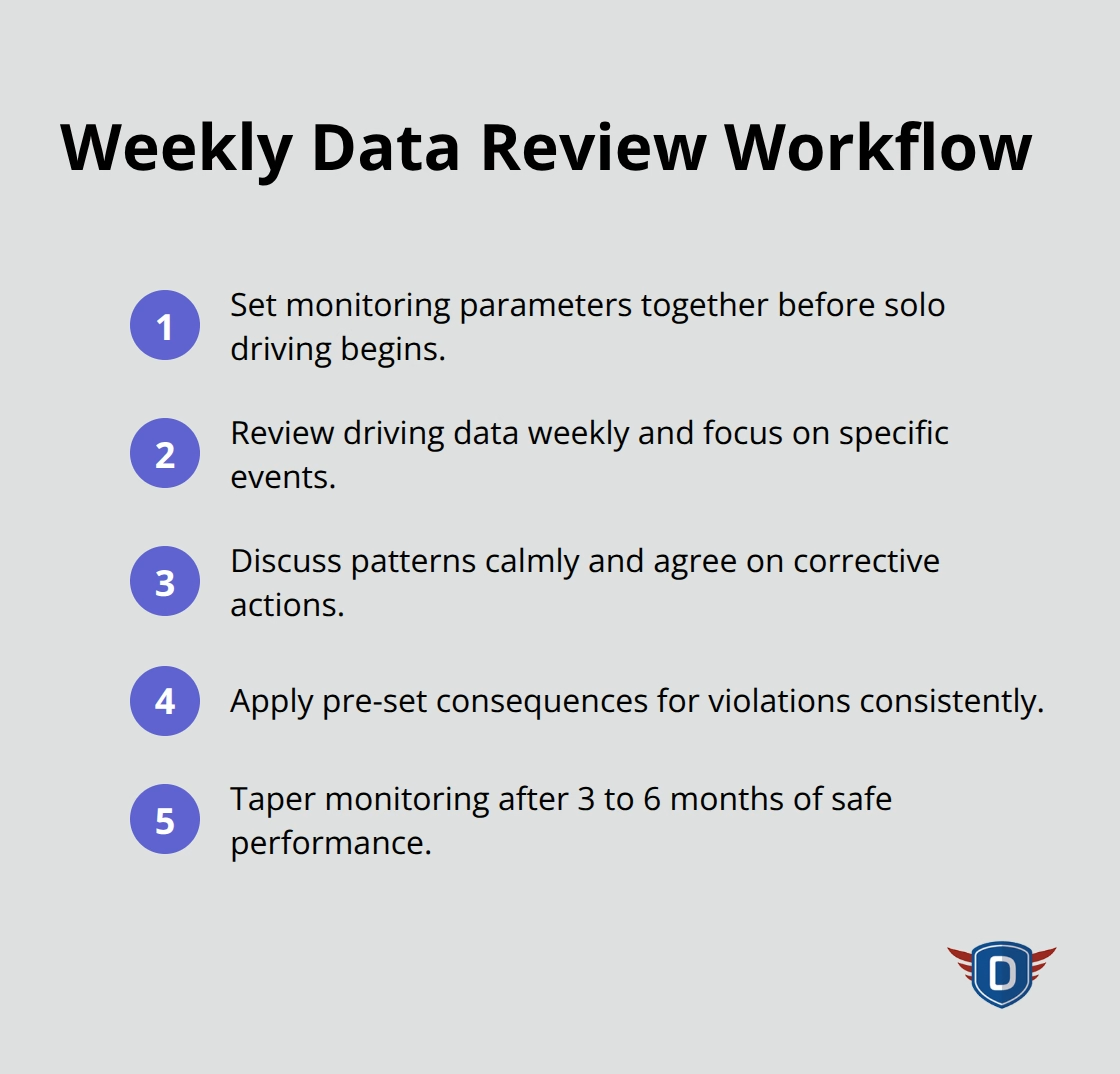
The key is transparency-your teen should know the monitoring exists and what it measures. This isn’t surveillance; it’s accountability. When you review the data together weekly, you’re having conversations grounded in facts rather than accusations. Your teen can’t argue about whether they accelerated aggressively if the data shows exactly when and how aggressively it happened.
Weekly Reviews Create Behavioral Change
Parental monitoring can reduce risky behaviors and result in positive outcomes. Set the monitoring parameters before your teen drives solo. Decide together what speed violations, hard braking events, or rapid acceleration trigger a conversation. Your teen understands the rules upfront, and when violations occur, you’re simply reviewing data together rather than policing behavior.
This approach also builds the habit of self-monitoring-your teen eventually internalizes the same standards the system enforces. After three to six months of consistent safe performance, you can gradually reduce monitoring intensity as trust is earned through demonstrated behavior, not promises.
Final Thoughts
Effective teen driving supervision guidelines work because they combine clear expectations, consistent accountability, and gradual skill-building over months, not weeks. The strategies outlined in this roadmap-written agreements, structured practice sessions, real-time coaching, and data-driven monitoring-address the specific vulnerabilities that make teen drivers crash three times more often than adults. When you implement these practices together, you reduce accident risk during your teen’s first year of driving and build habits that protect them for decades.
Teens who experience consistent parental guidance develop internal safety standards that persist long after supervision ends. They learn to scan ahead, manage distractions, and make deliberate choices about speed and route selection because these habits become automatic through repetition and feedback. Research confirms that parental involvement during the critical first year produces measurable improvements in driving behavior that last well into adulthood.
Continue reviewing your teen driving supervision guidelines as their experience grows and state laws change. Gradually reduce restrictions as demonstrated competence warrants, but maintain ongoing communication about driving performance. For additional support beyond your own coaching, DriverEducators.com offers Florida-approved driver education programs designed to reinforce safe driving habits and provide professional instruction that complements your parental guidance.