A teen’s first few months behind the wheel shape habits that can last for years. The choice between parent taught versus driving school affects more than convenience or cost. It can determine how consistently a new driver practices, whether state licensing requirements are met, and how confidently they handle real traffic.
Neither path is automatically better for every family. The right choice depends on your state’s rules, your teen’s learning needs, the parent instructor’s availability and comfort level, and whether professional behind-the-wheel instruction is required.
Parent Taught Versus Driving School: The Core Difference
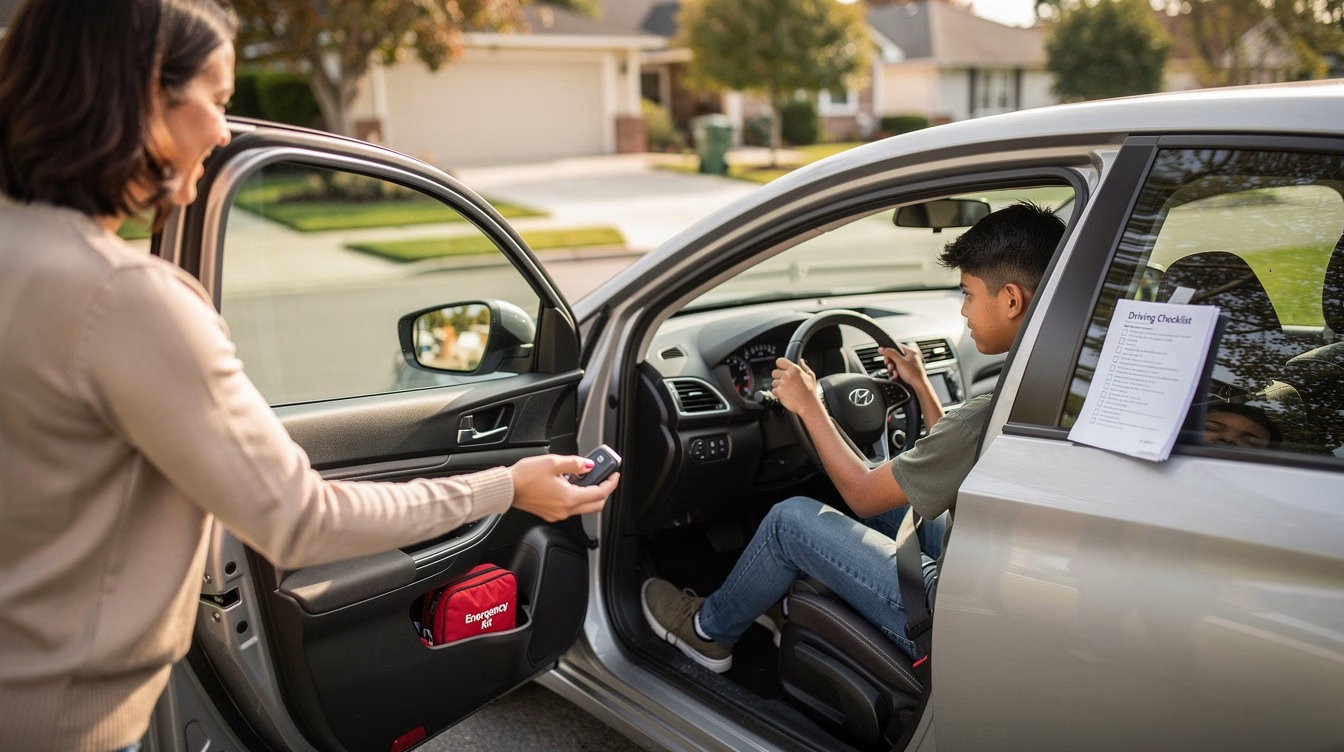
Parent-taught driver education puts a qualified parent, guardian, or other approved adult in charge of most instruction and supervised practice. In states that allow it, families generally follow a state-approved curriculum, track required hours, and submit documentation during the licensing process.
Driving school education places more of the training responsibility with licensed instructors. Programs may include classroom or online coursework, in-car lessons, observation time, and skills assessments. Some schools provide the required instruction and documentation as one organized package.
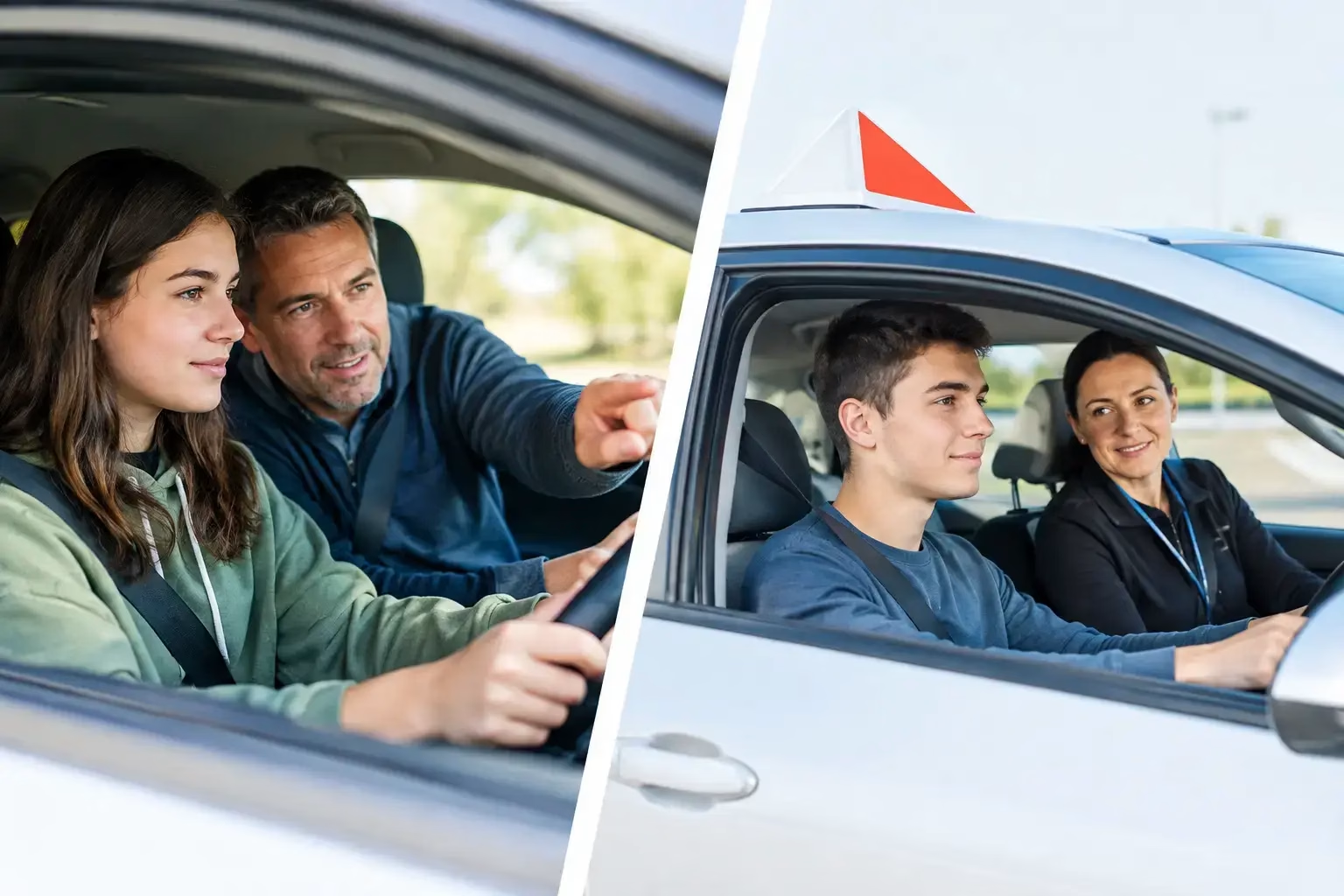
The biggest difference is structure. Parent-taught programs give families greater control over timing and practice conditions. Driving schools provide trained instructors, set lessons, and an outside perspective that can be especially valuable when a teen is nervous, overconfident, or struggling with a specific skill.
Start With Your State’s Licensing Rules
State requirements come first. Driver education rules vary significantly across the United States, especially for teens under 18. Some states permit parent-taught programs. Others require instruction through a licensed school, require a certain number of professional driving hours, or have different rules based on the student’s age.
Before choosing a program, confirm these details with your state licensing agency:
- Whether parent-taught driver education is permitted
- Who may serve as the supervising parent or instructor
- Required classroom, online, driving, and observation hours
- Whether the course provider or curriculum must be state approved
- What completion certificates, logs, permits, and tests are required
A parent-taught option may be more affordable, but it is not a shortcut around state requirements. Families still need to complete the required curriculum, document practice accurately, and meet permit and road-test rules.
When Parent-Taught Driver Education Works Well
Parent-taught instruction can be a strong choice for organized families with a qualified, patient adult who can commit to regular practice. It is often appealing when schedules are crowded with school, sports, work, or family obligations.
A parent can tailor practice to the teen’s pace. A new driver who needs repeated parking practice can spend several sessions in an empty lot before moving to busier streets. A teen who is comfortable with basic vehicle control can focus more time on freeway entrances, lane changes, night driving, or rainy conditions.
It also gives parents direct visibility into their teen’s progress. Rather than asking how a lesson went, they see firsthand whether the teen checks mirrors, keeps a safe following distance, comes to complete stops, and responds calmly to unexpected situations.
The challenge is consistency. Teaching someone to drive can be stressful, especially when the instructor is also a parent. Adults may unintentionally give unclear directions, correct too late, or avoid difficult driving situations because they feel uncomfortable. Teens may also respond more defensively to a parent than to a neutral instructor.
Parent-taught instruction works best when the supervising adult treats each drive like a planned lesson, not simply an errand. Set one or two clear goals per session, choose conditions that match the teen’s current skill level, and end with a brief review of what went well and what needs more practice.
When Driving School Is the Better Choice
A driving school can offer valuable structure for families that need professional guidance, reliable scheduling, or help meeting a state requirement. Licensed instructors work with inexperienced drivers every day. They know common beginner mistakes and can teach correction techniques without the family tension that sometimes develops in the passenger seat.
Professional lessons can be particularly helpful for skills that make parents uneasy, including merging, navigating roundabouts, parallel parking, driving in heavy traffic, and responding to emergency situations. Instructors may also use dual-control vehicles, which provide an extra layer of safety during training.
Driving school can reduce the administrative burden, too. A reputable provider explains completion requirements, schedules lessons, and supplies the documentation students need. That organization matters when a learner is trying to qualify for a permit, meet a court or DMV requirement, or prepare for a road test on a deadline.
The trade-off is cost and scheduling. Professional behind-the-wheel lessons can be more expensive than family instruction, and appointment availability may be limited in some areas. A driving school also cannot replace the value of frequent, low-pressure practice with a trusted adult after each formal lesson.
Online Driver Education Can Support Either Path
For many families, the choice is not entirely parent taught or entirely driving school. Online driver education can handle the required knowledge portion where state rules allow it, while a parent or licensed instructor provides the supervised driving practice.
Self-paced online coursework is useful for teens who need flexibility. They can complete lessons around school and activities using a computer, tablet, or phone, rather than attending a scheduled classroom session. However, an online course does not automatically satisfy every state requirement. Approval status, age rules, and behind-the-wheel requirements still apply.
DriverEducators.com offers online driver education and traffic safety courses designed to help eligible students complete approved education requirements conveniently. Families should always verify that a selected course is approved for their state and situation before enrolling.
A Hybrid Approach Often Produces the Best Results
Many teens benefit from both professional instruction and parent-supervised practice. A driving school can establish safe fundamentals and identify weak areas. Parents can then reinforce those skills through repeated, real-world driving in familiar areas.
For example, a professional instructor might teach the mechanics of parallel parking or freeway merging in one lesson. The parent can schedule several short follow-up sessions so the skill becomes routine rather than something the teen performs only once.
This approach also helps parents become better coaches. After a professional lesson, ask the teen what they practiced and what feedback they received. Keep the conversation specific: Did they signal early enough? Did they scan intersections? Did they leave enough space in traffic? Specific feedback is easier to use than simply saying, “Be more careful.”
How to Choose the Right Option for Your Teen
Choose parent-taught education when your state allows it, an eligible adult can provide calm and consistent supervision, and your family can keep accurate records. It is often a practical fit for teens who learn well at their own pace and need flexible practice times.
Choose driving school when your state requires it, no qualified adult has the time or confidence to teach, or your teen would benefit from neutral professional feedback. It can also be the better option when you need clear scheduling, structured lessons, or help navigating course documentation.
Consider a hybrid plan if budget permits and state rules allow it. Even a limited number of professional driving lessons can help a teen build key skills, while family practice supplies the repetition needed to turn those skills into safer habits.
Frequently Asked Questions
Is parent-taught driver education cheaper than driving school?
Usually, yes. Parent-taught programs may cost less because families provide the vehicle and supervised driving time, but course fees, permit fees, and testing costs may still apply.
Can a parent teach a teen to drive in every state?
No. Parent-taught driver education is allowed only in certain states and may have eligibility rules for the parent instructor. Check your state’s current licensing requirements before choosing this option.
Does online driver education include behind-the-wheel training?
Usually not. Online driver education generally covers traffic laws, safety principles, and licensing knowledge, while behind-the-wheel hours must be completed separately with an eligible adult or licensed instructor.
Is driving school better for anxious teen drivers?
It can be. A trained instructor provides a calm, objective setting and can introduce harder skills gradually, but supportive practice at home remains essential.
How many practice hours does a teen need?
The required number depends on the state. Many states require supervised daytime and nighttime driving hours before a teen can take the road test.
The best driver education plan is the one your family can complete correctly and consistently. Give your teen enough time to practice in varied conditions, follow every state requirement, and treat safe driving as a skill that improves long after the license is issued.