You’re holding a Florida traffic citation, trying to understand what happens next, and the legal language is in English. You’d rather learn in Spanish, but choosing a course is only one part of the process. You also need to elect traffic school with the correct court, meet the deadline, and make sure your completion reaches the right state records.
Online traffic school in Spanish can make the learning portion easier to understand, but it doesn’t replace the court steps attached to your citation. This guide walks you through the course choices, enrollment process, reporting mechanics, and practical checks that help you complete the requirement with confidence.
What Online Traffic School in Spanish Means for Florida Drivers
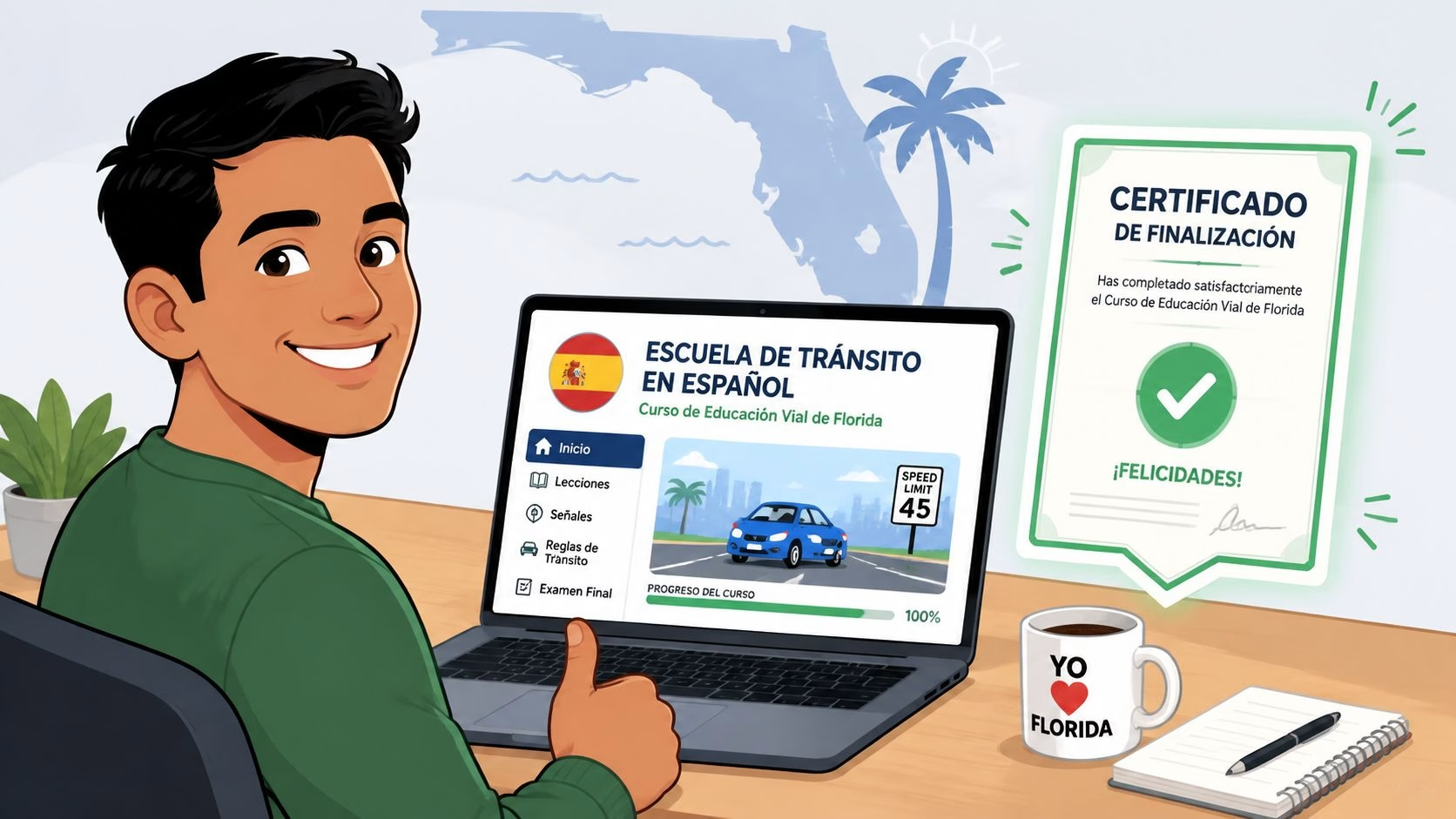
Online traffic school in Spanish is an internet-based driver-improvement course taught in Spanish through a Florida-approved provider. The lessons may include Spanish text, narration, quizzes, and completion documents, while the legal purpose remains the same as an English-language course.
Florida’s approved traffic-school ecosystem includes multiple internet-based providers offering additional languages, and the Florida Safety Council lists both online and Spanish options for traffic-school classes. The state’s approved-provider structure includes at least a dozen internet providers, showing that online access is a normal part of Florida course distribution, not a rare specialty. You can review a Spanish-language option through the Spanish traffic school program.
For a driver handling a qualifying moving violation, the course may support the traffic-school election process under Florida Statute 318.14(9). The important point is that the course itself doesn’t automatically dismiss a citation. You must first follow the county Clerk of Court’s election procedure, then complete the correct approved course within the deadline.
Know which requirement applies
A court-ordered course is connected to a citation, hearing, or other legal requirement. An optional defensive-driving course may instead be taken for driver education or a possible insurance benefit. Those purposes aren’t interchangeable, so read the citation and court instructions before enrolling.
Florida traffic school can be used for qualifying moving violations, but eligibility has limits. One Florida traffic-school guide explains that eligible drivers generally need to elect the option within 30 days of the citation date, and restrictions can apply when a driver has used traffic school recently or was cited for speeding 30 mph or more over the limit. Confirm your specific status with the Clerk of Court before paying for a course. Review Florida traffic-school eligibility guidance.
After completion, the provider sends the required information electronically or automatically, depending on the provider’s process. The court then uses that completion to process the citation under the applicable rules. Think of Spanish delivery as an accessibility feature that helps you understand the material, while the approval, election, deadline, and reporting requirements remain essential.
Florida Course Options and Who Each One Is For
Florida drivers don’t all need the same curriculum. The right choice depends on the citation, the court’s instruction, your driving record, and whether you’re trying to satisfy a legal requirement or pursue a voluntary insurance-related course.
Compare the available course types
The Basic Driver Improvement course, or BDI, is the common option for a qualifying moving violation. Florida Safety Council identifies the BDI course as a 4-hour online Spanish course. It’s designed for drivers who may elect traffic school for a qualifying citation and want to complete the required driver-improvement education. See Florida online driver-education courses.
The Intermediate Driver Improvement course, or IDI, is an 8-hour program used when a court requires additional driver education or when a driver’s circumstances call for a more extensive course. The court or licensing authority should tell you if IDI applies.
The Aggressive Driver Course is also an 8-hour program. It addresses dangerous driving behavior, including aggressive conduct and road-rage prevention, and may be assigned under the relevant Florida traffic-law procedure or by a hearing officer.
The Mature Driver Course lasts 6 hours and is intended for drivers aged 55 and older who want a safety refresher and may seek an insurance-related benefit. It usually isn’t the course you choose to resolve a ticket unless the court specifically directs you to take it.
| Course Type | Hours | Who It’s For | Typical Trigger |
|---|---|---|---|
| Basic Driver Improvement, BDI | 4 | Drivers with a qualifying moving violation | Traffic-school election for an eligible citation |
| Intermediate Driver Improvement, IDI | 8 | Drivers needing expanded improvement instruction | Court order or a more serious driving-history concern |
| Aggressive Driver Course | 8 | Drivers assigned behavior-focused instruction | Aggressive-driving citation or hearing-officer assignment |
| Mature Driver Course | 6 | Drivers aged 55 and older | Voluntary safety refresher or insurance-related purpose |
Practical rule: Don’t select a course by its name alone. Match the course type to the exact instruction from the clerk, court, or licensing authority.
If your citation says BDI, enrolling in IDI or an aggressive-driver program may not satisfy the assigned requirement. If the course is voluntary, ask your insurer which approved curriculum it recognizes before you register.
How to Enroll and Complete the Course Step by Step
The safest workflow starts with the citation, not the course checkout page. A provider can give you access to lessons, but only the court can confirm whether you’ve properly elected traffic school for your case.
Follow the legal sequence
-
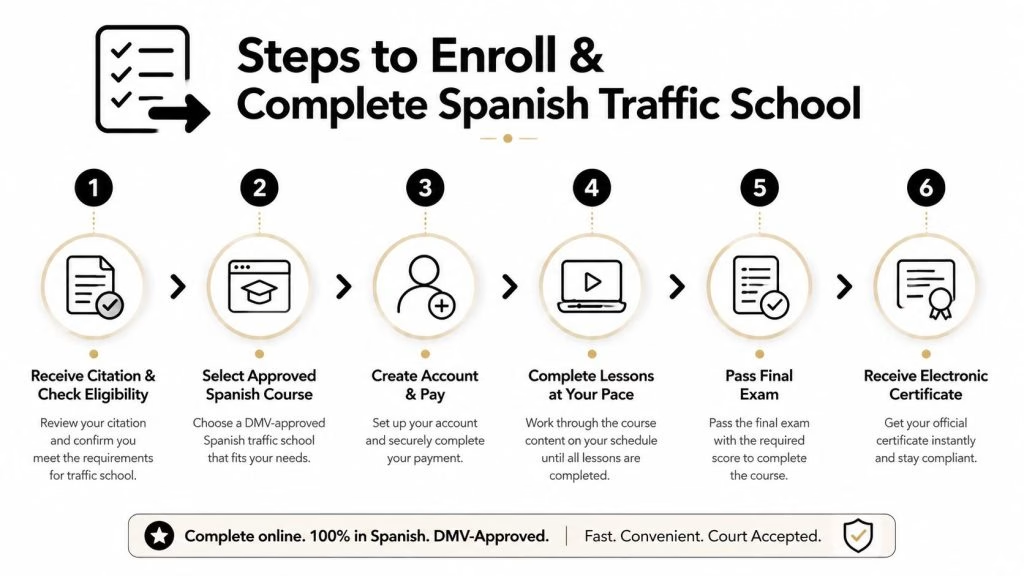
Read the citation carefully. Identify the county, citation number, violation, payment instructions, and any traffic-school election information. Before paying the fine, confirm whether you’re eligible to elect traffic school.
-
Contact the Clerk of Court. Formally elect traffic school with the clerk for the county where the citation was issued. Ask the clerk to state the completion and certificate-submission deadline clearly, and write it down.
-
Choose an approved Spanish course. Confirm that the provider offers the entire course in Spanish, not merely a Spanish registration page. Check the provider against Florida’s approved traffic-school information and make sure the course type matches the court’s direction.
-
Create your account accurately. Enter your name, driver license details, citation information, and contact information exactly as they appear in official records. A mismatch can delay reporting or require a correction.
-
Complete the lessons. Florida’s BDI course is 4 hours, and approved online courses can support flexible study. Many online programs are browser-based, so you can divide your study time into sessions rather than sitting continuously. Learn about online driving certificates.
-
Pass the final assessment. Read each question carefully and use the Spanish lesson material to review concepts such as right-of-way, hazard recognition, and defensive driving. Follow the provider’s rules for the required passing score and any permitted retake.
-
Confirm electronic reporting. Florida-approved providers state that BDI completion information is sent automatically or electronically to the state. Some providers also make a certificate available for immediate download after successful completion. Save your confirmation even when electronic reporting is promised. Review a Spanish provider’s certificate and reporting process.
-
Check the case status. Contact the clerk if you don’t see confirmation that the case was processed. Florida’s Traffic School Completion Check lets drivers verify completion using a driver license number, certificate number, or citation number. Use the official Traffic School Completion Check.
Completing the lessons is important, but it isn’t the entire compliance process. The election, deadline, reporting, and final verification all matter.
Benefits Florida Drivers Can Expect After Completion
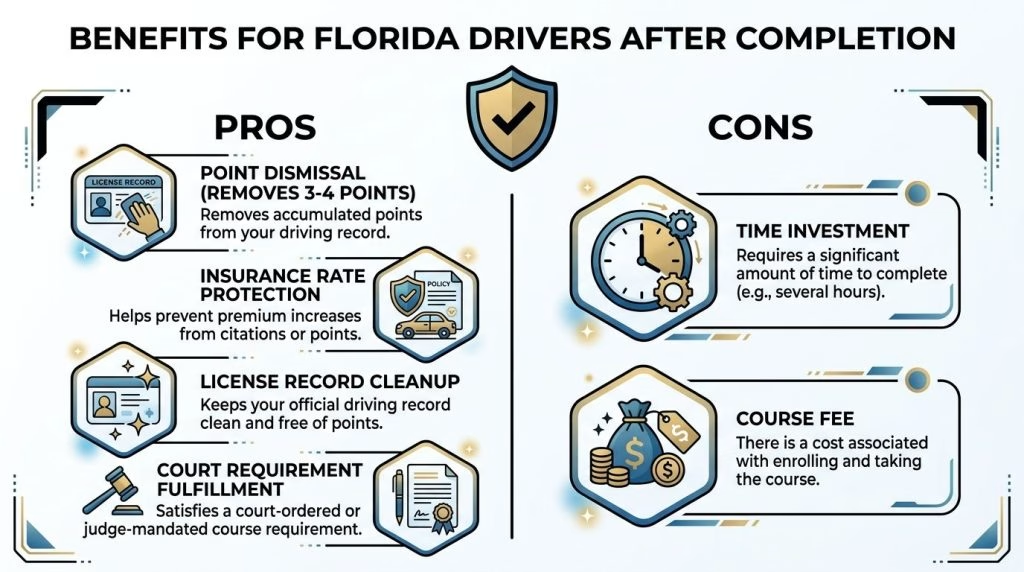
The primary legal advantage of completing an eligible traffic school is preventing the points that come with a qualifying moving violation. The specific outcome depends on the ticket and the court’s approval of your choice, so avoid assuming that just opening a course will alter your driving record.
A completed BDI or court-ordered course can also help satisfy the court’s education requirement. Florida tracks completion electronically, which gives drivers a practical way to confirm that the course record reached the state system rather than relying only on an email or a downloaded document.
Why the format matters
Spanish-language delivery reduces the language-processing burden for drivers who aren’t native English speakers. Lessons work best when they use short modules and frequent knowledge checks, because that structure makes procedural rules easier to absorb. Explore Spanish driver-training instruction.
Online access also helps people who work shifts, care for family members, or can’t attend a fixed classroom session. A browser-based course may let you spread the lessons across sessions, but you still need to set aside enough uninterrupted time to read, listen, and answer questions carefully.
Insurance is a separate issue. Some insurers may offer a discount after a voluntary defensive-driving course, but eligibility, discount amount, policy terms, and documentation requirements vary by insurer. Ask your insurance company before enrolling, and request written instructions about the certificate it wants.
The long-term value is practical. A cleaner compliance record can help you avoid preventable administrative problems, while the course content reinforces safer choices involving following distance, distractions, hazards, and driver attitude.
The course also has costs. You’ll invest time, and you may pay an enrollment fee, so verify the assigned course and reporting procedure before checkout.
The video below can provide another visual introduction to the benefits and considerations connected with Florida driver-improvement courses.
Tips for Non-English Speakers Finishing the Course
Start with the course interface, not the first lesson. Confirm that menus, instructions, narration, quizzes, and final-exam prompts are available in Spanish. A page translated into Spanish doesn’t necessarily mean the complete learning experience is translated.
Prepare your device
A laptop or desktop can be easier than a phone for quizzes, navigation, and reading longer explanations. A phone may still work when the provider supports mobile access, but test the course before committing to a long study session.
Use a current browser such as Chrome or Edge if the provider recommends it. If a lesson repeatedly logs you out, clear the browser cache, restart the browser, and contact support rather than repeatedly submitting incomplete sessions.
Audio matters for learners who understand spoken Spanish more easily than written material. Study somewhere quiet enough to hear narration clearly, and use headphones if other people are nearby. Find Spanish-language driving classes.
You can divide the 4-hour BDI course into manageable sittings, provided the platform permits stop-and-start access. For example, complete one group of lessons when your schedule is calm, then return later and review the material before continuing.
- Save your records: Download the completion confirmation or certificate PDF as soon as it becomes available.
- Check your details: Make sure your name and license information match the citation and court records.
- Ask for help early: Keep a family member available if you need assistance with a browser, email attachment, or document download.
- Use provider support: Reputable schools should explain their Spanish phone or chat support hours and tell you how they handle technical issues.
Don’t wait until the court deadline to discover that your device, browser, or account information needs attention. A short setup check can prevent a stressful interruption later.
Pricing, Verification, and What to Confirm Before You Pay
Course prices vary by provider and course type, so compare the complete checkout cost rather than the headline enrollment price. Florida drivers should also separate the course fee from any court fee, state reporting charge, certificate delivery charge, or examination retake cost.
The most important verification step is approval. Use Florida’s official traffic-school information to confirm that the provider appears in the approved ecosystem, then ask the Clerk of Court whether the course code and course type match your election. An inexpensive course that the court rejects can cost more in lost time and missed deadlines than a clearly verified option.
Use this pre-payment checklist
- Provider approval: Confirm the provider is listed through Florida’s approved traffic-school resources.
- Course match: Make sure the enrollment identifies BDI, IDI, aggressive-driver, or mature-driver instruction as required.
- Record accuracy: Check that the provider will enter your driver license number and citation details correctly.
- Deadline: Write down the court’s completion and certificate-submission deadline before you begin.
- Reporting: Ask whether completion is sent electronically to the state or whether you must submit a document yourself.
- Refund terms: Read the provider’s refund policy before payment.
- Extra charges: Ask about filing fees, retakes, certificate delivery, and expedited processing.
| Course Type | Typical Price | FLHSMV Approved? | Court Filing Fee |
|---|---|---|---|
| BDI | Verify current provider price | Confirm through official approval listing | Ask the Clerk of Court |
| IDI | Verify current provider price | Confirm before enrollment | Ask the Clerk of Court |
| Aggressive Driver Course | Verify current provider price | Confirm before enrollment | Ask the Clerk of Court |
| Mature Driver Course | Verify current provider price | Confirm before enrollment | Ask the Clerk of Court |
This approach protects you from relying on an outdated price or an unclear promise about reporting. The clerk’s instructions control the legal deadline, while the provider controls the platform, lessons, assessment, and certificate process.
Your Next Steps and Common Questions Answered
You can turn the process into a short personal checklist:
- Confirm eligibility with the Clerk of Court before paying the citation or course fee.
- Choose the assigned course type and verify that Spanish is available throughout the course.
- Register before the court deadline using information that matches your citation.
- Complete every lesson and the final assessment through the approved provider.
- Save the certificate or completion confirmation and verify electronic reporting or submit the document as instructed.
- Check the case and state completion status instead of assuming the process finished automatically.
How can I prove that the course is really in Spanish?
Check the provider’s course description and ask whether the interface, lesson content, audio, quizzes, and final assessment are translated. A Spanish-language checkout page alone doesn’t prove that the complete course is delivered in Spanish.
Does Florida accept an out-of-state provider?
Don’t assume it does. Use a provider listed in Florida’s approved traffic-school ecosystem and confirm acceptance with the Clerk of Court before enrolling, especially when the course is offered by a company based outside Florida.
What happens if I miss the deadline?
Contact the Clerk of Court immediately and ask what options remain. The course provider can’t extend a court deadline unless the court authorizes a different arrangement, and completing a course after the deadline may not produce the result you expected.
How do insurance discounts begin after completion?
Insurance discounts are controlled by your insurer, not automatically by the course provider. Ask your insurer whether it accepts the specific course, how you must submit proof, and when the discount can be applied to your policy.
Spanish-language instruction should make the education clearer, not make the legal process feel mysterious. Start with the clerk, verify the course, preserve your completion records, and confirm the final status.
BDISchool offers Florida-approved online driver-improvement courses, including Spanish-language options for drivers working through a citation or court requirement. Visit BDISchool to review the available courses, choose the program that matches your situation, and start your enrollment with greater confidence.