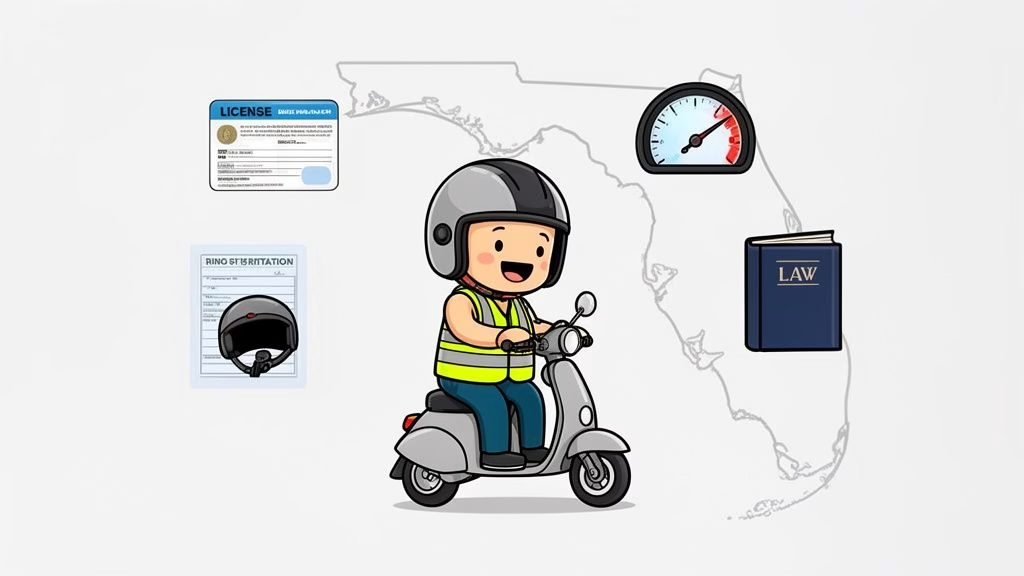
Getting on the road with a moped in Florida should be all about the sun and the breeze, not a bunch of confusing legal red tape. The most important thing to understand about moped laws in Florida is that the rules all hinge on one key detail: your vehicle's engine size.
If your ride has an engine under 50cc, it's legally a moped. Anything 50cc or over is considered a motorcycle, even if it looks like a scooter. This single fact changes everything, from registration requirements to the type of license you need in your wallet.
Your Quick Guide to Florida Moped Regulations
Trying to figure out if you're riding a moped or a scooter isn't just a fun debate with friends—it's the first step to staying on the right side of the law in Florida. The state draws a very clear line, and not knowing which side you're on can quickly lead to fines or other legal troubles. This distinction dictates whether you need a title, what kind of license is required, and more.
Think of it as your legal starting point. Once you know your vehicle's classification, navigating the rest of Florida’s rules becomes much simpler.
Moped vs. Scooter in Florida: What You Need to Know
The best way to get a handle on moped laws in Florida is to see how the requirements stack up side-by-side. This quick comparison table breaks down how the state treats a moped versus a scooter (which is legally a motorcycle) based on that critical engine displacement number.
| Requirement | Moped (Under 50cc) | Motorcycle/Scooter (50cc and Over) |
|---|---|---|
| Engine Size | Cannot exceed 50 cubic centimeters (cc) | 50 cubic centimeters (cc) or more |
| Top Speed | Cannot go over 30 mph on level ground | Capable of speeds over 30 mph |
| Vehicle Title | Not required | Required |
| Registration | Required (must be renewed annually) | Required (must be renewed annually) |
| License Plate | Required | Required |
| License Requirement | Standard Class E driver's license | Motorcycle endorsement on your license |
This handy table makes it easy to see exactly where your vehicle fits and what core rules apply to you. But if you're a visual person, this flowchart makes it even clearer.

As you can see, that 50cc engine size is the first and most important question. Answering it correctly is the key to figuring out all your other legal responsibilities as a rider in the Sunshine State.
Do You Need a License to Ride a Moped in Florida?

Let's tackle one of the most common—and costly—misconceptions about riding a moped in Florida. A lot of people see these smaller, slower vehicles and just assume you don't need a driver's license to operate one. Unfortunately, that assumption is flat-out wrong and can get you into serious trouble.
The reality is simple: you absolutely must have a valid driver's license to legally ride a moped on any public road in the Sunshine State. It's a non-negotiable rule, and pleading ignorance won't get you off the hook. Imagine getting pulled over for a minor traffic infraction, only to find yourself facing fines, a court appearance, and maybe even having your moped impounded—all because you didn't have the right license.
This isn't some rare occurrence; it's a mistake people make all the time. Getting a clear handle on the specific license requirements is the first and most important step toward enjoying your moped legally and safely.
What Type of License Is Required?
For what Florida law defines as a true moped—that is, a vehicle with an engine of 50cc or less and a top speed that can't exceed 30 mph—you don't need a special motorcycle endorsement. You do, however, need at least a standard Class E driver's license. This is the same license most Floridians use to drive their cars.
Now, here’s a crucial distinction. If your two-wheeled vehicle has an engine larger than 50cc, the state no longer sees it as a moped. At that point, it’s legally classified as a motorcycle, which means you’ll need a full motorcycle endorsement on your license to ride it.
To break it down:
- Moped (50cc or less): A regular Class E driver's license is required.
- Scooter/Motorcycle (over 50cc): A Class E license with a motorcycle endorsement is mandatory.
Getting this right isn't just about avoiding a ticket. It's a critical part of ensuring you have the basic knowledge to operate your vehicle safely on the road.
The Dangers of Riding Unlicensed
Riding without a license isn't just a paperwork violation; it's a genuine safety risk. Unlicensed riders are statistically more likely to be unfamiliar with traffic laws and defensive driving habits, putting them in a much more vulnerable position.
The data from a study on Florida accidents is pretty sobering. Between 2002 and 2008, the state recorded 5,660 moped and scooter crashes. A concerning 18% of those crashes resulted in severe or fatal injuries. What’s even more alarming is that among those severely injured, a staggering 31% were unlicensed operators.
This research draws a direct line between being properly licensed and staying safer on the road. It shows that licensed riders are better prepared to anticipate and react to traffic, which dramatically reduces their risk of a serious accident.
In short, getting your license isn't just a hoop to jump through. It's fundamental preparation for staying alive and uninjured.
Age Requirements for Moped Riders
On top of the license rule, Florida also sets a minimum age for moped operators. To obtain the Class E license needed to ride a moped, you have to be at least 16 years old.
This means no one under the age of 16 can legally ride a moped on public roads, sidewalks, or even bike paths. The age limit ensures that every operator has reached a certain level of maturity and has passed the tests required to prove they understand the rules of the road. You can dive deeper into these requirements by checking out our guide on the official https://bdischool.com/florida-drivers-manual/.
Penalties for Non-Compliance
So, what’s the worst that can happen if you get caught riding without the required Class E license? The consequences are far from trivial and can create a major financial and legal headache.
- Fines and Court Costs: You're guaranteed to get a citation, and it won't be cheap.
- Vehicle Impoundment: Police have the authority to tow and impound your moped, leaving you to pay the fees to get it back.
- Criminal Charges: In some situations, riding without a license can be charged as a second-degree misdemeanor.
These penalties make it clear how seriously Florida takes licensing. The effort it takes to get properly licensed is a small price to pay to avoid the significant stress and expense of breaking the law.
Registration, Title, And Insurance Rules Explained
Figuring out the paperwork for a moped in Florida can feel like a headache, but it’s more straightforward than you might think. Getting these details right isn't just about following the rules—it's about protecting yourself and operating your moped legally on the road.
Let's break down exactly what you need for registration, titling, and insurance to stay compliant.
The Registration and Titling Process
First things first, you need to understand the difference between registering and titling your moped. In Florida, it all comes down to one magic number: 50cc.
Mopeds (Under 50cc): You are required to register these with the Florida Department of Highway Safety and Motor Vehicles (FLHSMV). The good news? They do not need a title. Once registered, you’ll get a license plate and a registration sticker to renew each year.
Scooters (50cc and over): Because the state legally considers these to be motorcycles, they must be both titled and registered. The title is your legal proof of ownership, and you can’t register the vehicle without it.
So, how do you get it done? Head over to your local county tax collector's office. You’ll need to bring a few key documents: proof of ownership (like a bill of sale or the Manufacturer's Certificate of Origin), your Florida driver's license, and the money for the fees.
Don't forget that annual registration is a must. It keeps your moped in the state’s system and proves it’s legally yours. Letting it lapse can lead to fines, so mark that renewal date on your calendar! For more details, see our guide on the grace period for expired tags.
Getting caught without a valid registration is a surefire way to get a ticket, a fine, or even have your moped impounded. It’s a simple process that can save you a world of trouble later on.
Florida Moped Insurance Requirements
Now, let's talk about insurance. This is where a lot of people get tripped up. Florida’s no-fault law requires most car drivers to carry Personal Injury Protection (PIP) insurance. However, that law does not apply to mopeds or motorcycles.
This creates a huge financial risk. If you get into an accident on your moped, there’s no automatic PIP coverage to help with your medical bills. This is why having your own insurance policy is such a critical safety net.
Here’s a quick look at the requirements:
- Mopeds (Under 50cc): The state does not require you to carry insurance for a moped.
- Scooters (50cc and over): Since these are legally motorcycles, you must prove you have financial responsibility, which usually means having insurance.
Even if it’s optional for your moped, riding without insurance is a massive gamble. One bad accident could leave you on the hook for thousands of dollars in medical costs and property damage. To fully protect yourself, it's wise to understand what coverages like bodily injury liability coverage can do for you. This specific coverage is designed to pay for injuries you might cause to someone else in a crash.
For total peace of mind, many riders opt for policies that include medical payments, property damage liability, and uninsured motorist protection. As an added bonus, completing a driver safety course often qualifies you for some nice insurance discounts—a direct financial reward for becoming a safer rider.
Florida Moped Helmet Laws And Safety Equipment

When you're out on a moped, your safety gear is the only thing between you and the pavement. And of all the gear you can wear, nothing is more important than a good helmet. Knowing Florida's specific rules isn't just about avoiding a ticket—it's about making a choice that could genuinely save your life.
The state’s approach to helmet laws can be a bit confusing because it's not a one-size-fits-all rule. It all comes down to your age and whether you have a certain type of insurance. Getting this right is a huge part of being a responsible moped rider in the Sunshine State.
The Helmet Rule: Who Needs to Wear One?
In Florida, the helmet requirement is split into two distinct categories based on age. For younger riders, the law is simple and strict.
Riders Under 21: If you're under 21, you absolutely must wear a helmet whenever you're operating or riding on a moped. No exceptions. The helmet also has to be officially approved by the U.S. Department of Transportation (DOT).
Riders 21 and Older: Once you hit 21, the law gives you an option. You can choose to ride without a helmet, but only if you meet a very specific condition: you must be covered by an insurance policy that provides at least $10,000 in medical benefits for crash-related injuries.
Basically, the state lets you accept the physical risk of riding helmet-free, but only if you can prove you have a financial safety net to cover potential medical bills.
The High Stakes of the Helmet Law
This choice for riders over 21 is a relatively recent development. Florida changed its universal helmet law on July 1, 2000, creating the exemption for insured adults. The results of that change are a sobering reminder of what’s at stake.
A detailed analysis after the law was changed showed a shocking 48.6% surge in fatalities among motorcycle and moped occupants. This isn't just a number; it points directly to a real-world connection between the relaxed rule and a tragic increase in deaths.
This isn't just a statistic; it's a life-or-death consequence. The data strongly suggests that while riding without a helmet may be legal under certain conditions, it dramatically increases the risk of a fatal outcome in an accident.
Deciding to wear a DOT-approved helmet, even when it’s not legally required, is one of the smartest safety moves any rider can make.
Your Pre-Ride Safety Checklist
Beyond helmets, Florida law also demands that your moped has specific safety features to be road-legal. It's a great habit to run through a quick check before every ride. This keeps you on the right side of the law and helps you catch any equipment problems before they become dangerous.
Your pre-ride check should always include:
- Headlight: Must be on at all times, day or night.
- Taillight & Brake Light: Make sure they work so people behind you can see you and know you're stopping.
- Brakes: Give both the front and rear brakes a quick squeeze to ensure they're responsive.
- Mirrors: You need at least one functional mirror to keep an eye on traffic.
- Horn: It needs to be loud enough for others to hear you.
- Tires: Check the pressure and look for any obvious wear or damage.
This check takes less than a minute, but it can easily prevent an equipment failure that leads to a serious incident on the road.
Recommended Gear Beyond the Law
While the law sets the minimum requirements, experienced riders know that "legal" isn't the same as "safe." Investing in extra protective gear is a personal choice, but it's one that can make a massive difference if you ever have a crash.
Think about adding these items to your riding gear:
- Eye Protection: A helmet visor or a pair of shatter-resistant glasses will protect your eyes from wind, bugs, and road debris.
- Gloves: In a fall, your hands are usually the first thing to hit the ground. Good gloves protect your skin and also improve your grip on the handlebars.
- Sturdy Jacket: A jacket made from leather or a tough, abrasion-resistant textile can save you from nasty road rash.
- Closed-Toe Shoes: Boots or other sturdy shoes offer far more protection for your feet and ankles than sandals or flimsy sneakers.
Riding a moped safely is about more than just following the rules; it’s about building smart habits. Adopting these proactive safety measures and learning about defensive driving techniques are key to protecting yourself on Florida's busy roads.
Common Moped Violations And Costly Penalties

It’s easy to think a moped ticket is no big deal—just a small fine and you’re on your way. But in Florida, that assumption can be a very expensive mistake. The state takes moped safety seriously, and some violations carry penalties that go way beyond a simple slap on the wrist.
Many of the costliest mistakes are things riders don't even realize are illegal. Getting familiar with these specific, high-penalty violations is the best way to protect your license, your wallet, and yourself out on the road.
The Staggering $1,000 Fine
Let's get right to the most shocking penalty on the books. Certain reckless behaviors on a moped aren't just frowned upon; they’re met with a fine that’s designed to stop you in your tracks.
If you’re caught popping a "wheelie" or using one of those illegal adjustable license plate tags, you're not just getting a standard traffic ticket. Instead, you could be hit with a staggering $1,000 fine. This isn't a typo. This huge penalty shows that the state sees these actions as a serious danger to the public, not just harmless fun.
These offenses are also classified as moving violations, which can add points to your license and make your insurance premiums jump. As the official analysis of Florida traffic law makes clear, you have to keep your moped's wheels on the ground and your tag clearly visible.
Other Common And Costly Infractions
While that $1,000 fine gets all the attention, plenty of other common moped violations can quickly lead to tickets, points, and a whole lot of headaches. These are the mistakes riders often make out of habit or a simple misunderstanding of the rules.
Here are a few of the most frequent violations we see:
- Lane Splitting: Weaving between lanes of slow or stopped traffic is illegal in Florida. It's also extremely dangerous for moped riders and will earn you a moving violation ticket.
- Riding on Sidewalks: Mopeds are motor vehicles and belong on the street, not the sidewalk. This will get you a non-moving violation ticket.
- Improper Passenger Rules: You can't carry a passenger unless your moped is specifically designed for two, meaning it has a dedicated passenger seat and footrests.
- Equipment Violations: Riding without a working headlight, brake light, or horn is a ticketable offense. And remember, your headlight must be on at all times.
- Ignoring Traffic Signals: A moped is not a bicycle. You must obey all traffic laws, including stopping at red lights and stop signs, just like a car.
These infractions might seem minor on their own, but they add up fast. Each ticket comes with a fine, and if it's a moving violation, it also adds points to your driving record.
Think of traffic violations like a game of Jenga. One ticket might not topple your driving record, but each additional one removes another block, making your license and insurance rates increasingly unstable.
How Traffic School Can Be Your Lifesaver
This is where things can get tricky. When you get a ticket for a moving violation, you’re not just facing the fine. You're also looking at points on your license, which almost always leads to your insurance provider raising your rates.
That's where a Basic Driver Improvement (BDI) course comes in. By completing a 4-hour, state-approved traffic school course, you can choose to have the points from your ticket wiped away. This single action prevents your insurance company from jacking up your rates because of that one violation.
But taking a BDI course does more than just fix a ticket. It's a great chance to refresh your knowledge of Florida’s moped laws and learn defensive driving strategies to help you avoid these costly mistakes in the first place. It’s a proactive step that protects your driving record and your bank account, turning a frustrating ticket into a positive learning experience.
How Traffic School Can Keep You Safe and Save You Money
Getting a ticket on your moped feels like a double whammy—first the fine, then the worry about what comes next. Those points on your license aren't just a number; they're a red flag for your insurance company, often triggering rate hikes that cost you big time over the long run.
But here’s a little-known secret: a traffic ticket doesn't have to be a long-term financial headache. Instead of just paying the fine and taking the points, Florida gives you a much smarter choice. For most moving violations, you can choose to take a state-approved traffic school course. This is your ticket to keeping your driving record clean and your insurance rates from going through the roof.
Turn a Ticket Into an Opportunity
The go-to solution for a typical traffic citation is the 4-hour Basic Driver Improvement (BDI) course. Think of it as a reset button for a minor mistake. When you pass the course, the state agrees not to put points on your license for that ticket. No points means no primary reason for your insurer to raise your rates.
A single lapse in judgment doesn't have to haunt your record for years. The course itself is a fantastic refresher on Florida traffic laws and defensive driving skills—things that are absolutely critical when you're on a moped. So, instead of being just a penalty, it becomes an educational experience that makes you a safer, more aware rider. You can see just how easy it is to take care of with a traffic school online course.
A BDI course isn't just about erasing a mistake; it's an investment in your future on the road. It empowers you with knowledge that helps prevent future tickets and, more importantly, keeps you safer during every ride.
More Than Just Point Removal
While the 4-hour BDI course is the standard for most drivers, sometimes a judge needs to see a little more commitment. For more serious situations or if you've had a few tickets before, a court might order you to complete an 8-hour Intermediate Driver Improvement (IDI) course instead. It’s a deeper dive, designed to address specific driving behaviors more thoroughly.
The best part is how these courses fit into your life. The vast majority are offered completely online and are self-paced. You can chip away at the lessons whenever you have a spare moment—on your lunch break, late at night, whenever it works for you.
This incredible convenience means there’s really no excuse not to take control of your driving record. By completing a course, you're doing more than just reacting to a ticket; you're proactively protecting your wallet and investing in your own safety. It's the key to enjoying the freedom of your moped without the stress of a tarnished record or sky-high insurance bills.
Got More Questions About Florida's Moped Laws?
Alright, so we've covered the big stuff—licenses, registration, and safety gear. But out on the road, it's the little "what-if" scenarios that can trip you up. Let's tackle some of the most common questions riders have about Florida's moped laws.
Think of this as a quick reference for those practical, day-to-day situations. We'll clear up the confusion so you can ride with total confidence.
Can I Park My Moped on the Sidewalk?
Absolutely not. It might seem convenient, but parking your moped on a sidewalk is illegal in Florida. When it comes to parking, the state treats mopeds just like any other motor vehicle.
That means you need to find a designated parking space, the same as you would for a car. Blocking a pedestrian path, even for a minute, is a surefire way to get a parking ticket.
What's the Rule for Carrying Passengers?
This one is black and white, and it all comes down to your engine size. The law is very strict here for safety reasons.
- Mopeds (Under 50cc): You can never carry a passenger on a moped. They are strictly designed and legally defined as single-rider vehicles.
- Scooters (50cc and over): You can carry a passenger, but only if your scooter is built for it. It must have a separate passenger seat and dedicated footrests. The driver needs to be at least 16 years old with a full motorcycle endorsement, and any passenger under 16 has to wear a helmet.
Can I Ride in Florida with a License from Another State?
Yes, visitors can definitely enjoy a ride. If you hold a valid, standard driver's license from your home state, you're good to go on a moped (under 50cc) while you're in Florida.
But remember, being a visitor doesn't give you a pass on local laws. All of Florida's traffic rules apply to you, including registration, speed limits, and helmet requirements.
Getting familiar with Florida's moped regulations before you hit the road is the smartest way to ensure your ride is safe and ticket-free.
Even the best riders can get a ticket. If you find yourself in that situation, knowing your options is key. BDISchool offers state-approved online courses designed to help you dismiss points and keep your insurance rates from climbing. Take control of your driving record with our easy, self-paced programs at https://bdischool.com.