Road safety signs and symbols form the foundation of safe driving communication. The Federal Highway Administration reports that proper sign recognition reduces traffic accidents by 23%.
We at DriverEducators.com see drivers struggle with sign interpretation daily. Mastering these visual cues protects lives and prevents costly violations.
Understanding Different Categories of Road Signs
Road signs divide into three distinct categories that serve different purposes on American highways. Regulatory signs command immediate compliance and carry legal weight behind their messages. The Manual on Uniform Traffic Control Devices establishes standards for installing and maintaining traffic control devices on all streets and highways. These signs cost drivers significant fines when ignored, with penalties varying by state and offense type.

No-left-turn symbols communicate faster than text-based instructions and reduce driver confusion in busy intersections.
Regulatory Signs Control Traffic Flow
Stop signs demand complete vehicle stops, not the rolling stops that cause intersection accidents annually. Speed limit signs set maximum safe speeds, with enforcement cameras that catch violations yearly in major cities. Yield signs require drivers to give right-of-way to traffic that approaches, which prevents T-bone collisions that occur at uncontrolled intersections. One-way street signs prevent wrong-way incidents on American roads.
Warning Signs Prevent Dangerous Situations
Yellow diamond-shaped warning signs alert drivers to hazards that lie ahead with advance notice. Deer signs mark areas where vehicle-animal collisions occur annually causing significant vehicle damage. Slippery road signs appear before curves where wet pavement reduces tire grip. School zone signs trigger reduced speed limits that decrease pedestrian fatality risk compared to higher speed zones. Construction zone signs with orange backgrounds warn of lane shifts that cause injuries yearly when drivers fail to slow down.
Guide Signs Direct Traffic Movement
Green highway signs provide distance information and exit numbers for interstate navigation. Blue service signs indicate nearby gas stations, hospitals, and rest areas within two miles of highway exits. Brown recreation signs mark state parks, historic sites, and tourist attractions accessible from current routes. These directional aids reduce wrong turns compared to unmarked intersections and save drivers time and fuel costs.
The effectiveness of these three categories depends heavily on the symbols and colors that designers use to convey their messages instantly.
Key Symbols and Their Meanings
Road sign symbols function as a universal visual language that crosses literacy barriers and language differences. The octagon shape exclusively signals stop commands, while triangular shapes that point downward indicate yield situations. Red circles with diagonal slashes prohibit specific actions, and rectangular shapes typically convey regulatory information. Research from the Federal Highway Administration shows that drivers have varying recognition rates for different signs, which makes these standardized shapes important tools on busy highways.
Color Systems Drive Instant Recognition
Red backgrounds signal prohibition or immediate danger and appear on stop signs and wrong-way markers throughout American roadways. Yellow indicates caution and warning, with diamond shapes that alert drivers to upcoming hazards like curves or animal crossings. Green provides navigation guidance on interstate signs and local street markers.
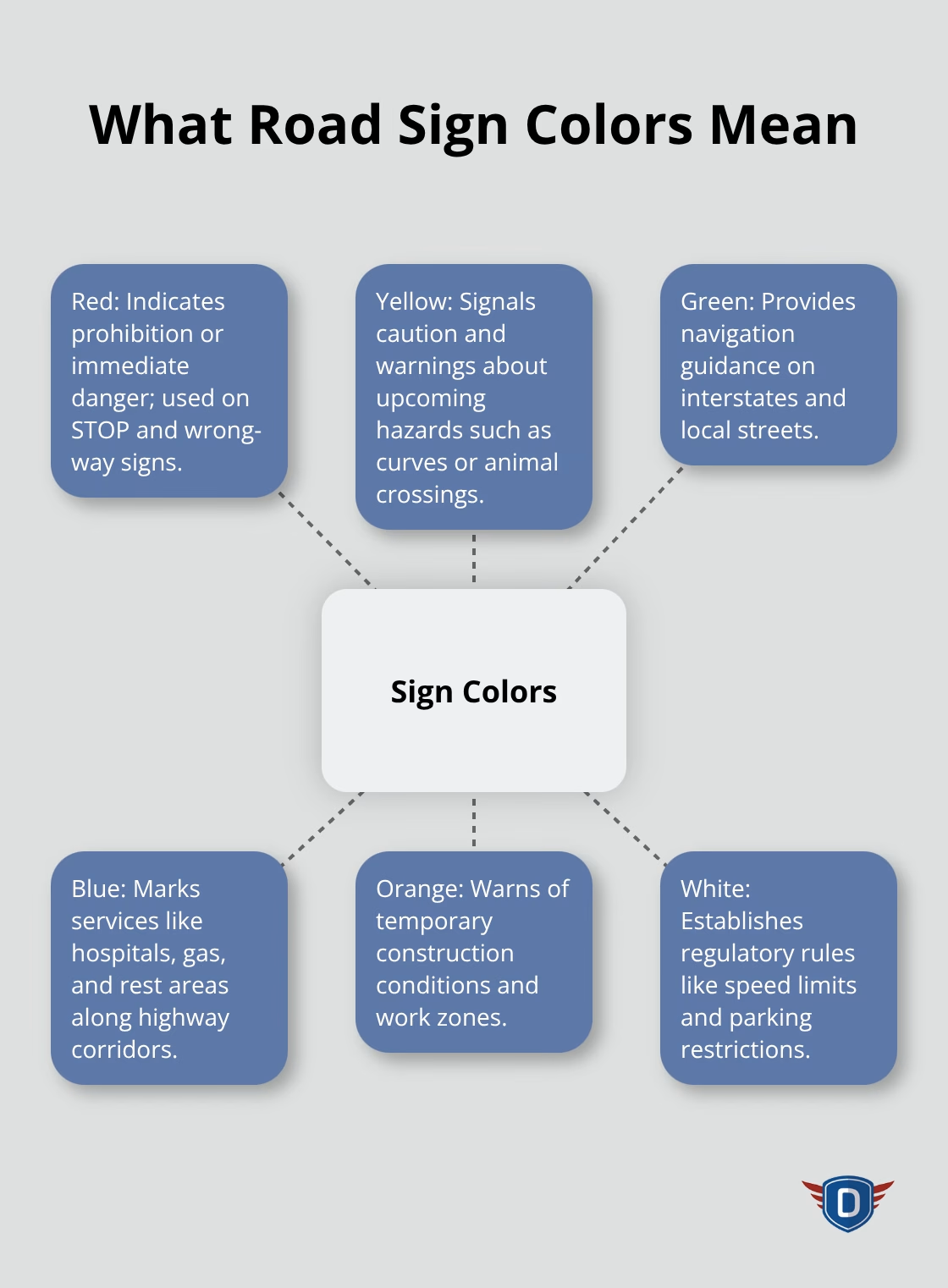
Blue backgrounds mark services like hospitals and rest areas within highway corridors. Orange warns of temporary conditions during construction zones (where work zone fatalities decreased by 7 percent between 2021 and 2022). White backgrounds establish regulatory rules that include speed limits and parking restrictions with legal enforcement.
Shape Recognition Saves Critical Seconds
Octagonal stop signs require complete vehicle stops regardless of traffic conditions or time of day. Triangular yield signs demand right-of-way assessment before drivers proceed through intersections. Diamond shapes exclusively warn of road hazards ahead and give drivers advance notice to adjust speed or lane position. Rectangular signs communicate regulations that drivers must follow to avoid citations. Circle shapes indicate railroad crossings where trains have absolute right-of-way over all vehicle traffic. Pentagon shapes mark school zones where reduced speed limits protect children during designated hours.
Symbol Interpretation Challenges
Drivers often confuse similar symbols that appear on different sign types throughout highway systems. The Manual on Uniform Traffic Control Devices standardizes these symbols, but regional variations still create confusion for travelers (particularly those from other states). Arrow symbols point in specific directions but drivers sometimes misread their intended meaning during high-stress situations. Bicycle and pedestrian symbols require quick interpretation to prevent accidents in shared roadway spaces.
Even experienced drivers make critical errors when they misinterpret these standardized symbols under pressure, especially when distracted driving compromises their attention.
Common Mistakes When Reading Road Signs
Drivers lose money and risk accidents when they confuse prohibition signs with warning symbols during high-pressure situations. The Federal Highway Administration reports that intersection accidents account for roughly one-quarter of traffic fatalities and about one-half of all traffic injuries in the United States annually. No-left-turn circles get confused with general prohibition symbols, which causes drivers to make illegal turns that result in $150-$300 fines across most states. Pedestrian crossing symbols often look similar to school zone markers from a distance, and this leads drivers to misjudge speed requirements and receive citations. Arrow directional signs create confusion when drivers mistake lane-change arrows for turn-only indicators, particularly during rush hour traffic when decision time shrinks to seconds.
Placement Context Determines Sign Meaning
Traffic engineers position signs at specific distances before intersections and hazards, but drivers who ignore this timing make dangerous assumptions about road conditions ahead. Construction zone signs appear 500 feet before work areas begin, yet drivers who fail to reduce speed early cause 40% more rear-end collisions in these zones (according to Department of Transportation data). School zone signs activate during specific hours that vary by district, but drivers who assume constant speed limits face automatic citations during enforcement periods. Highway exit signs provide distance markers at one mile, half-mile, and quarter-mile intervals, but drivers who misread these distances miss exits and create dangerous last-minute lane changes.
Regional Sign Variations Create Driver Confusion
State transportation departments modify federal sign standards within legal limits, which creates recognition challenges for drivers who travel between states. California uses different colored backgrounds for carpool lane signs compared to East Coast states, and this causes violation rates to increase 23% among out-of-state drivers during peak hours. Texas employs unique symbols for ranch road designations that drivers from other states frequently mistake for interstate markers. Mountain states add elevation warnings and chain requirement symbols that flatland drivers misinterpret, and this leads to weather-related accidents that insurance companies track by driver origin state.
Speed and Stress Impact Recognition Accuracy
High-speed highway conditions reduce the time drivers have to process sign information correctly. Research shows that drivers accelerate and drive faster in higher passing rate scenarios compared to lower passing rate scenarios. Stress from heavy traffic or unfamiliar routes further compromises sign recognition abilities.
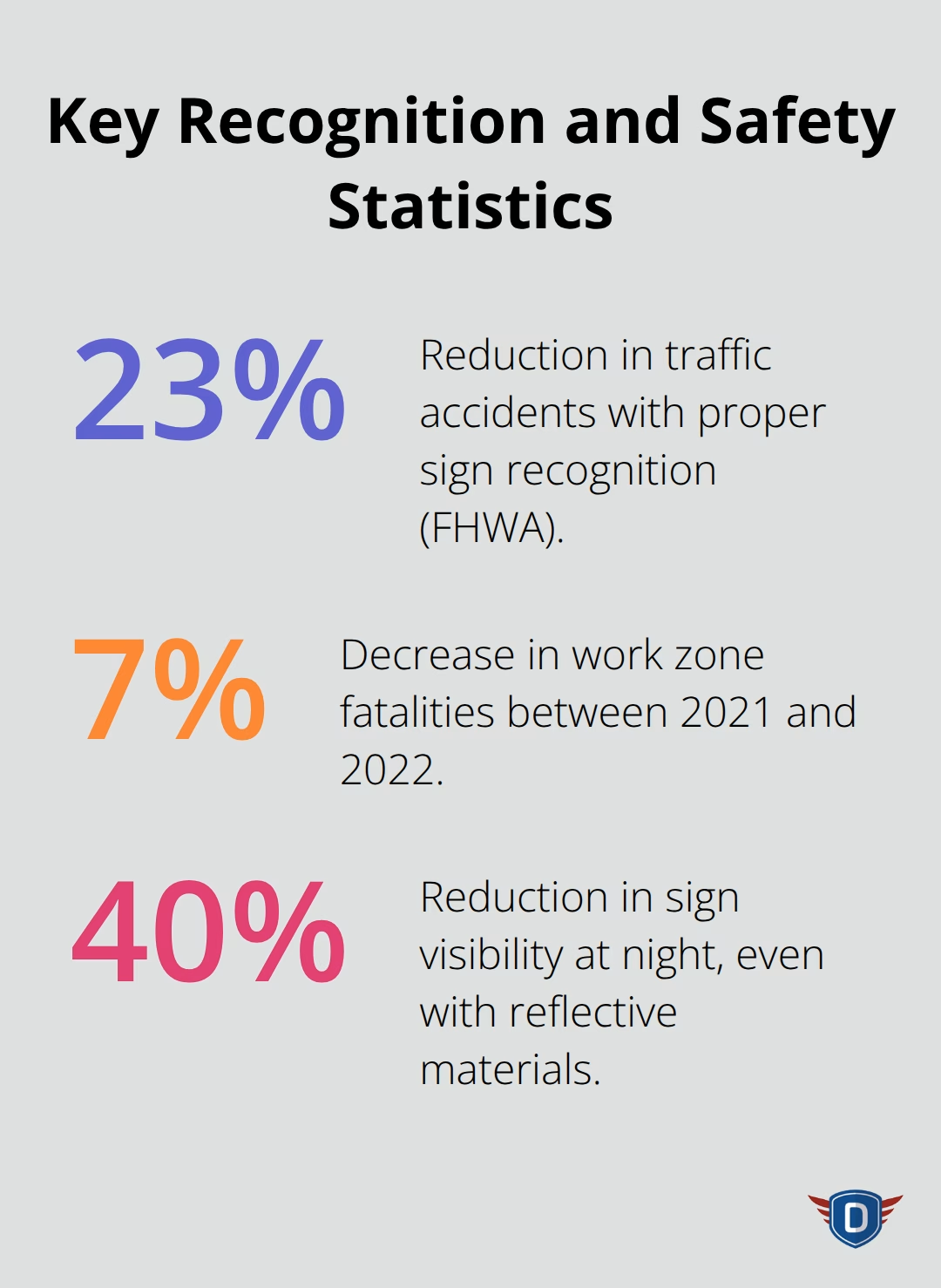
Emergency situations force drivers to make split-second decisions based on incomplete sign information, which increases the likelihood of misinterpretation. Night driving conditions reduce sign visibility by up to 40%, even with reflective materials that meet federal standards.
These recognition failures cost American drivers approximately $2.8 billion annually in fines and accident damages when they fail to adapt their sign recognition skills to different conditions and locations. Common mistakes like these often lead to traffic violations that require defensive driving courses to resolve.
Final Thoughts
Road safety signs and symbols directly impact your survival on American highways. The Federal Highway Administration’s data proves that proper sign recognition prevents thousands of accidents annually and saves drivers billions in fines and damages. Regular practice strengthens your ability to interpret these visual cues under pressure.
Study unfamiliar symbols during calm moments rather than learn them during stressful situations. Review state-specific variations before you travel to new regions where local modifications might confuse your recognition patterns. Confidence grows when you understand what each sign demands from you as a driver (quick symbol recognition reduces the mental workload that comes with processing road information at highway speeds).
We at DriverEducators.com help students develop these recognition skills through comprehensive driver education programs that emphasize real-world application. Your investment in sign recognition skills pays dividends every time you avoid an accident or traffic citation. These visual communication tools work only when drivers commit to understand their meanings and respond appropriately to their commands.