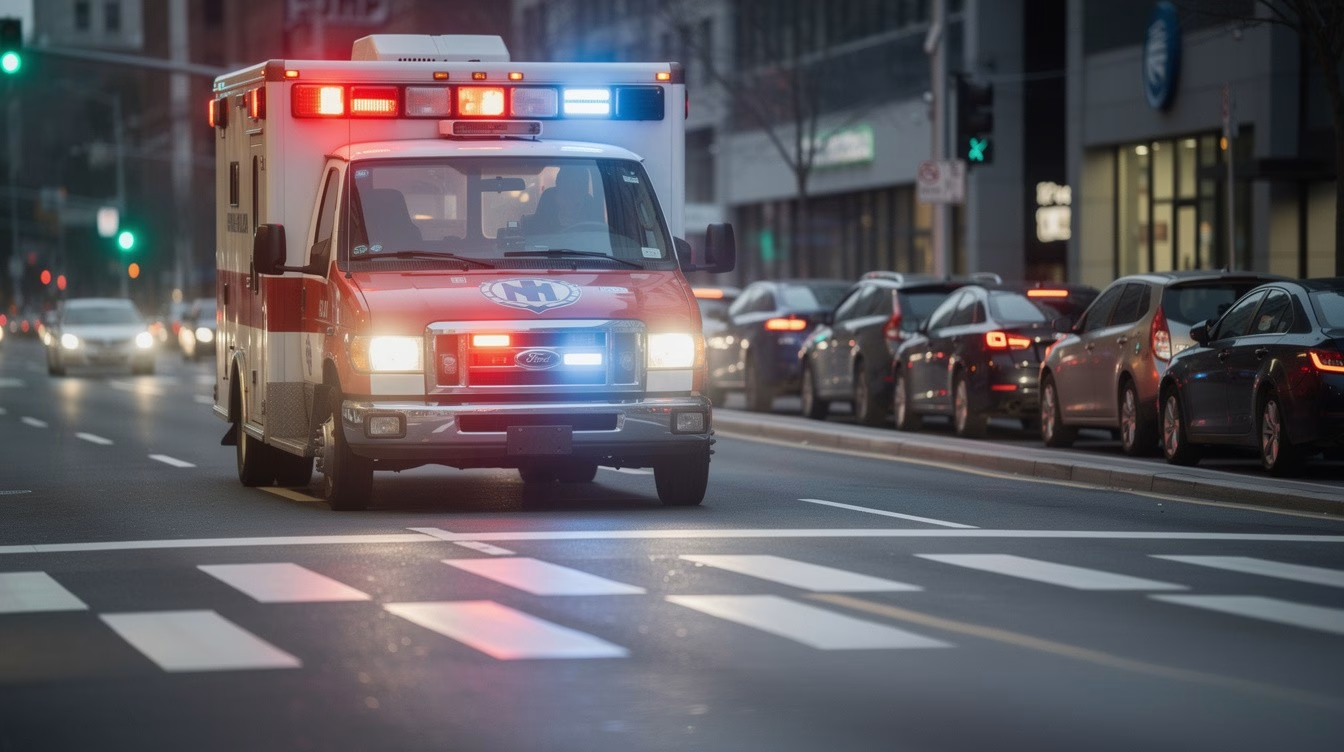
Every day, emergency vehicles navigate traffic to reach people in crisis. Knowing when and how to yield can mean the difference between life and death on the road.
At DriverEducators.com, we’ve created this guide to help you understand emergency vehicle yield rules and master the safe techniques that protect everyone. Whether you’re facing sirens for the first time or need a refresher, this guide covers what you need to know.
When You Must Yield to Emergency Vehicles
What counts as an emergency vehicle
Police cars, fire trucks, and ambulances are the most obvious emergency vehicles you’ll encounter. However, many drivers miss tow trucks, maintenance vehicles, and sanitation trucks parked on highways with hazard lights activated. Florida Statutes 316.126 and Washington’s RCW 46.61.212 both include these vehicles in their Move Over Laws. The key identifier isn’t just the type of vehicle-it’s the audible signal (siren or whistle) or visible signal (blue or red flashing lights). If you see those lights or hear that sound, treat it as an emergency vehicle. Some drivers assume construction vehicles don’t count, but state laws explicitly cover them when they display warning signals.
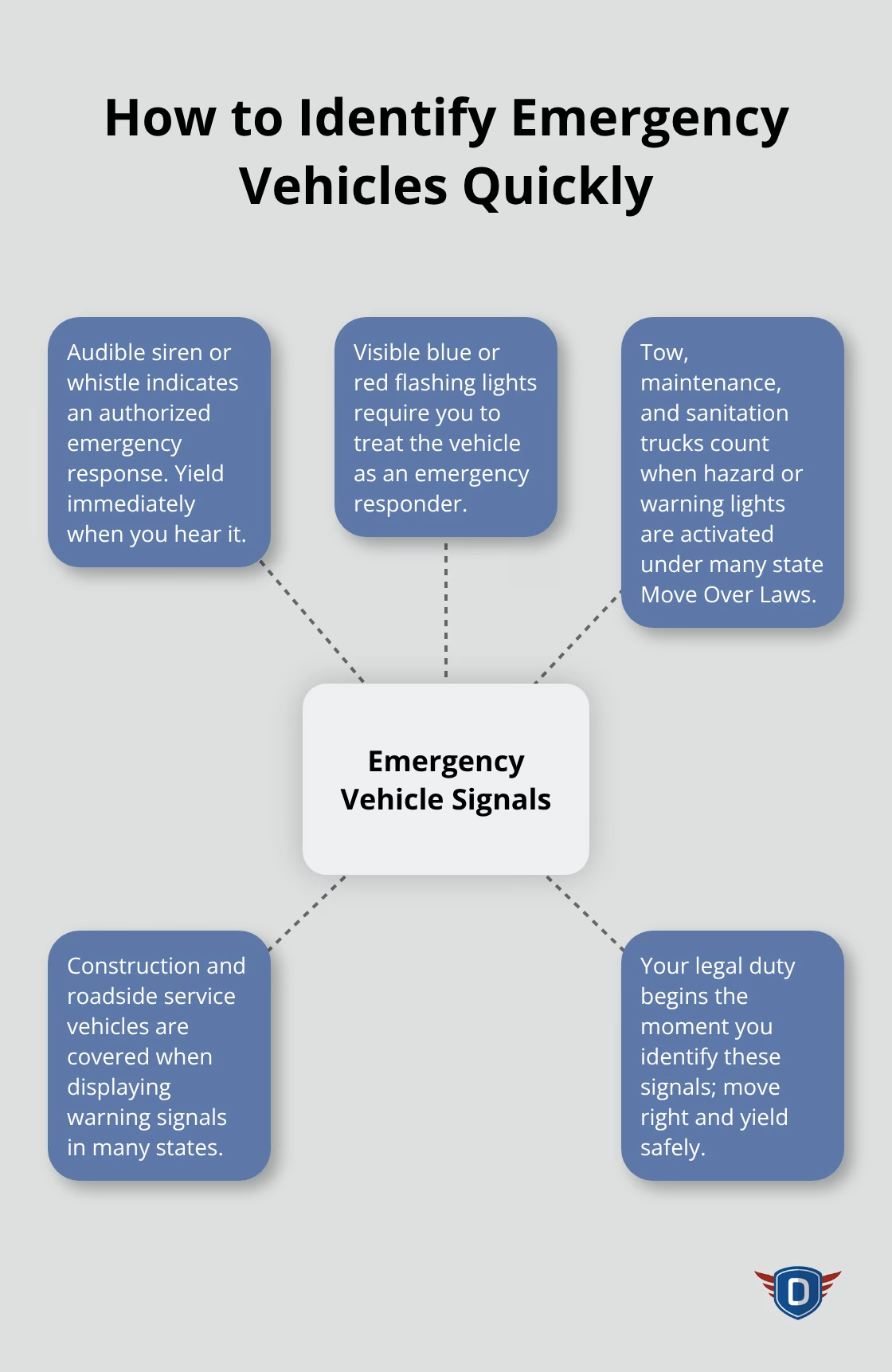
The distinction matters because your legal obligation kicks in the moment you identify these signals.
State laws make yielding mandatory, not optional
Every state has different rules, but all require immediate action. Florida law mandates that you pull to the right edge of the road and yield the right-of-way until the authorized emergency vehicle has passed. Washington takes it further with the Move Over Law: on multi-lane highways, you must change lanes away from the emergency vehicle or, if unsafe, slow to 20 mph below the posted limit. Delaware’s approach mirrors this-move to the right edge parallel to the curb and relinquish right-of-way completely. These aren’t suggestions. Violating these laws carries real consequences that most drivers underestimate.
Penalties hit your wallet and your record
A failure-to-yield ticket in Washington costs approximately $214 as the base fine and counts as a moving violation on your driving record. That single ticket can increase your insurance premiums by 10 to 15 percent annually for three to five years. In Florida, violations are noncriminal traffic infractions but still result in points on your license and mandatory insurance increases. Commercial drivers face even steeper consequences-employers often terminate drivers with moving violations on their records. One moment of hesitation or confusion can cost you thousands of dollars over time. The financial damage extends far beyond the initial ticket; it compounds through insurance rate increases and potential employment consequences.
Why safe yielding matters right now
Understanding these rules protects you legally and financially. The next section shows you exactly how to execute a safe yield when you encounter emergency vehicles on the road.
How to Safely Yield to Emergency Vehicles
Execute the immediate yield
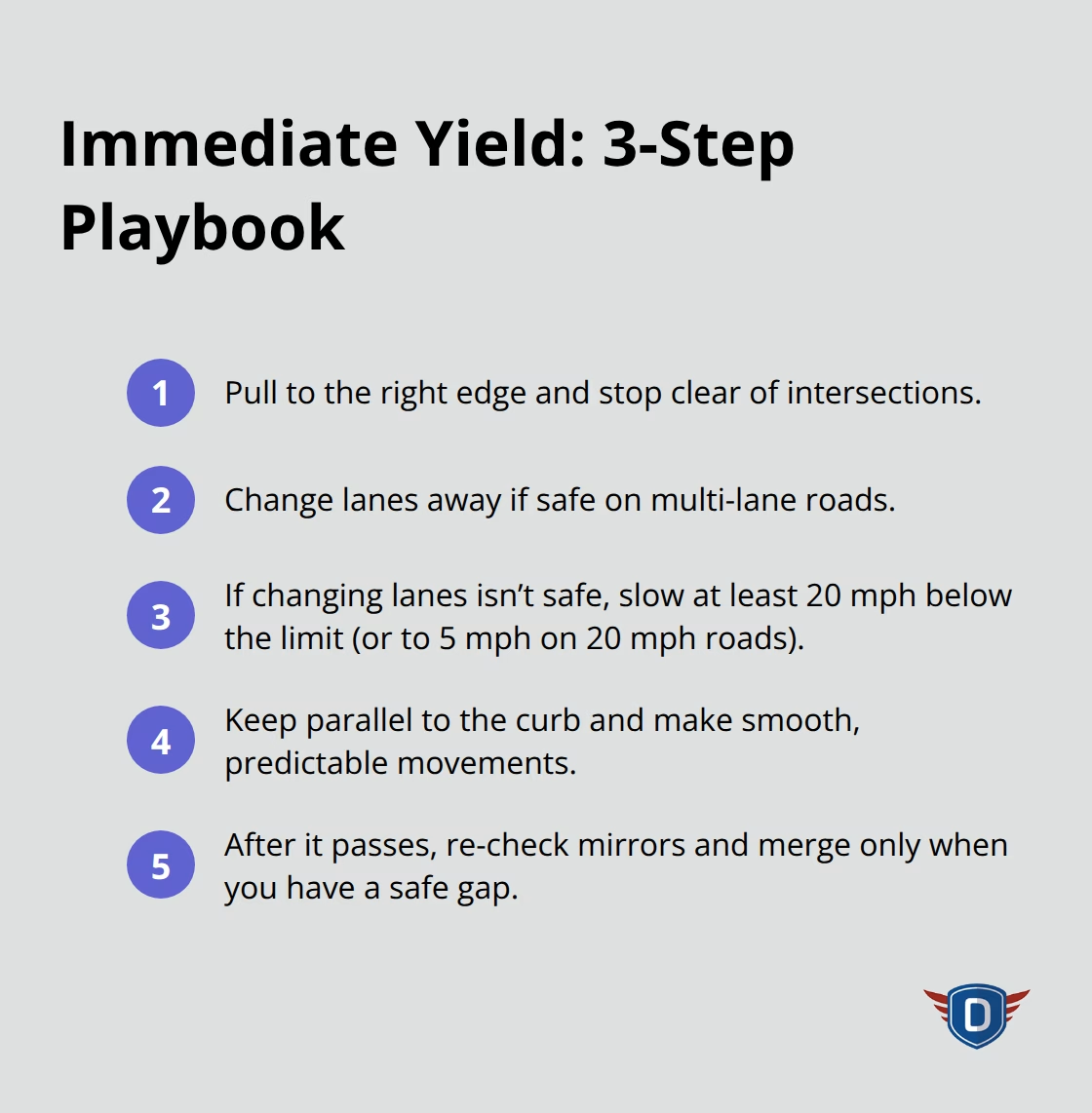
The moment you spot flashing lights or hear a siren, your next 10 seconds determine whether you yield safely or create a dangerous situation. Pull immediately to the right edge of the road and stop, keeping your vehicle parallel to the curb and clear of intersections. On multi-lane highways, Washington law requires you to change lanes away from the emergency vehicle if it is safe to do so. If changing lanes creates risk, slow to at least 20 mph below the posted speed limit on highways, or 5 mph on roads with a 20 mph limit or lower. This deliberate approach gives emergency responders a clear path and prevents the rear-end collisions that frequently occur when drivers brake abruptly or swerve unpredictably.
Move with control, not panic
Florida Statutes 316.126 and Delaware Code Title 21 both emphasize smooth, controlled movements rather than panicked reactions. The goal is not just to move-it is to move in a way that does not create new hazards for other drivers, pedestrians, or the emergency vehicle itself. Signal your intentions clearly before moving, use mirrors to monitor surrounding traffic, and maintain a minimum 300-foot distance behind the emergency vehicle once it passes. After the vehicle clears the scene, check your mirrors again and confirm traffic flow before re-entering your lane.
Avoid the most common mistakes
Most drivers fail because they stop in intersections, block lanes with hesitation, or make sudden lane changes without checking mirrors and blind spots. Never assume the emergency vehicle will avoid you; assume it needs the entire roadway. Stay especially vigilant on major routes like I-5, I-90, and SR 167, where emergency calls cluster and enforcement of move-over violations is active. A single failure-to-yield ticket costs roughly $214 in Washington, but the real expense arrives three months later when your insurance premium jumps 10 to 15 percent annually for years.
Why this matters to your finances and safety
Smooth, predictable actions protect lives and your wallet. One moment of hesitation or confusion can cost you thousands of dollars over time through fines and insurance increases. The financial damage extends far beyond the initial ticket; it compounds through rate increases and potential employment consequences (especially for commercial drivers). Understanding how to execute these maneuvers correctly transforms a stressful moment into a controlled response that benefits everyone on the road.
What happens after the emergency passes
Once the emergency vehicle clears, you face a second critical decision: when to re-enter traffic safely. The next section covers the common mistakes drivers make during this transition and how to avoid them.
Common Mistakes Drivers Make When Encountering Emergency Vehicles
Stopping in the wrong place costs lives
Most drivers fail during emergency vehicle encounters not because they lack courage but because they misread the situation. Stopping dead in an intersection is the most costly mistake. When you hear a siren, your instinct might be to brake hard wherever you are, but stopping in the middle of an intersection traps the emergency vehicle and creates a domino effect of confusion behind you. Florida Statutes 316.126 explicitly requires you to move to the edge of the roadway, clear of intersections. Drivers who panic and freeze in place have caused rear-end collisions that delayed ambulances by critical minutes. The correct action is to pull to the right edge immediately, even if traffic behind you honks.
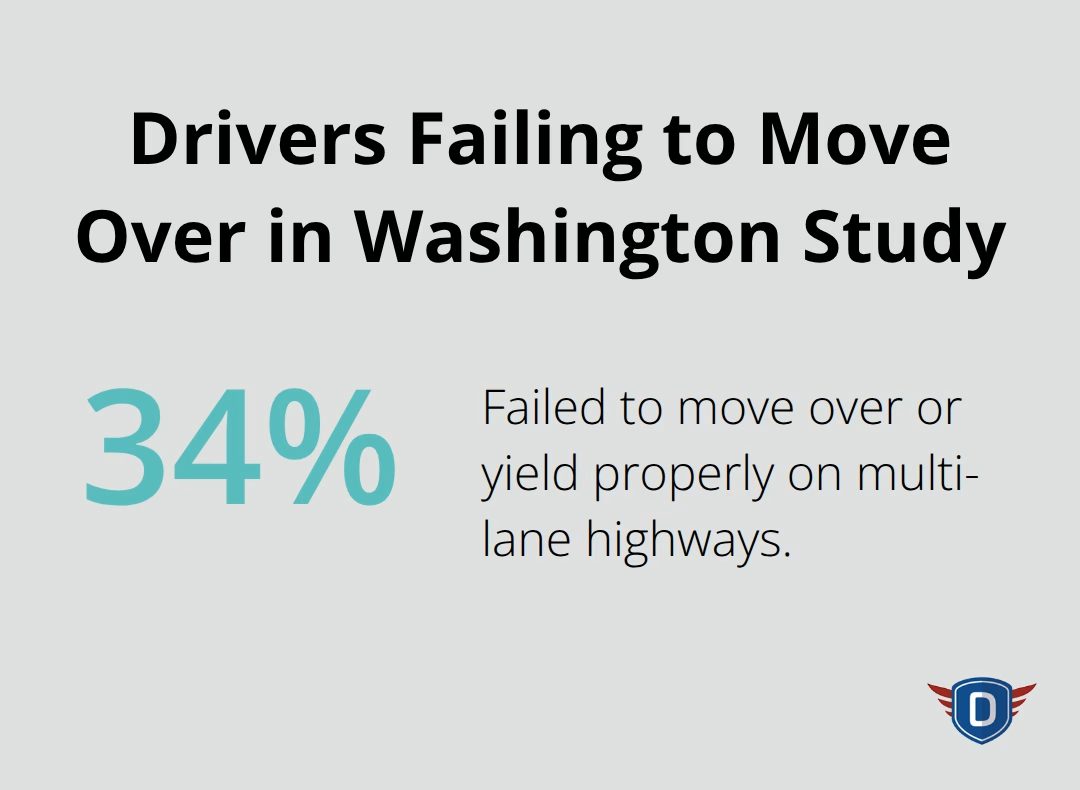
A Washington traffic study found that 34 percent of drivers failed to move over or yield properly on multi-lane highways, often because they waited too long or changed lanes without checking mirrors. This hesitation transforms a manageable situation into a dangerous one.
Sudden movements create new hazards
Making sudden, unpredictable movements ranks as the second major mistake. Slamming on the brakes without signaling, jerking hard to the right, or swerving across lanes without checking blind spots forces other drivers to react defensively and puts pedestrians at risk. Emergency vehicle operators have reported that erratic driver behavior creates more hazards than slow, controlled responses.
Signal your intention to move, check your mirrors and blind spots, and execute smooth lane changes or edge movements. This deliberate approach protects everyone on the road, including the emergency responders who depend on predictable traffic flow.
Assuming the emergency vehicle will avoid you
A third critical error is assuming the emergency vehicle will swerve around you or somehow avoid your vehicle. This false belief costs lives. Emergency vehicles cannot stop on a dime, and their operators are counting on you to create a clear path. Emergency responders have been struck and killed by passing vehicles that failed to yield.
Your job is not to predict the emergency vehicle’s path-it is to remove yourself from every possible path it might take. Do not linger at the roadside once the vehicle passes. After the emergency vehicle clears, check your mirrors again and re-enter traffic only when you have a safe gap and clear visibility.
Why controlled responses matter more than speed
Yielding is not a passive act; it requires active decision-making and controlled execution from the moment you first spot those lights or hear that siren. The difference between a safe yield and a dangerous one often comes down to whether you signal, check mirrors, and move smoothly rather than react with panic. Emergency responders depend on drivers who think clearly under pressure and execute predictable maneuvers that allow safe passage.
Final Thoughts
Yielding to emergency vehicles is not optional-it’s a legal requirement that directly impacts your safety, finances, and the lives of people in crisis. A single failure-to-yield ticket costs around $214 in Washington, but the real damage arrives when your insurance premiums jump 10 to 15 percent annually for years. Commercial drivers face employment consequences that extend far beyond the fine, making one moment of confusion extraordinarily expensive.
Emergency responders depend on drivers who execute predictable, controlled responses when they encounter emergency vehicle yield rules on the road. When you signal, check mirrors, and move smoothly to the right edge, you create a clear path that allows paramedics, firefighters, and police officers to reach people who need them. When you hesitate or make sudden movements, you create new hazards that delay response times and put responders at risk.
We at DriverEducators.com believe that understanding traffic laws transforms drivers into safer road users. Our Florida-approved traffic school programs cover emergency vehicle protocols, defensive driving techniques, and the decision-making skills that protect you and others, so take our comprehensive driver education courses to gain the knowledge and confidence to handle these situations correctly.