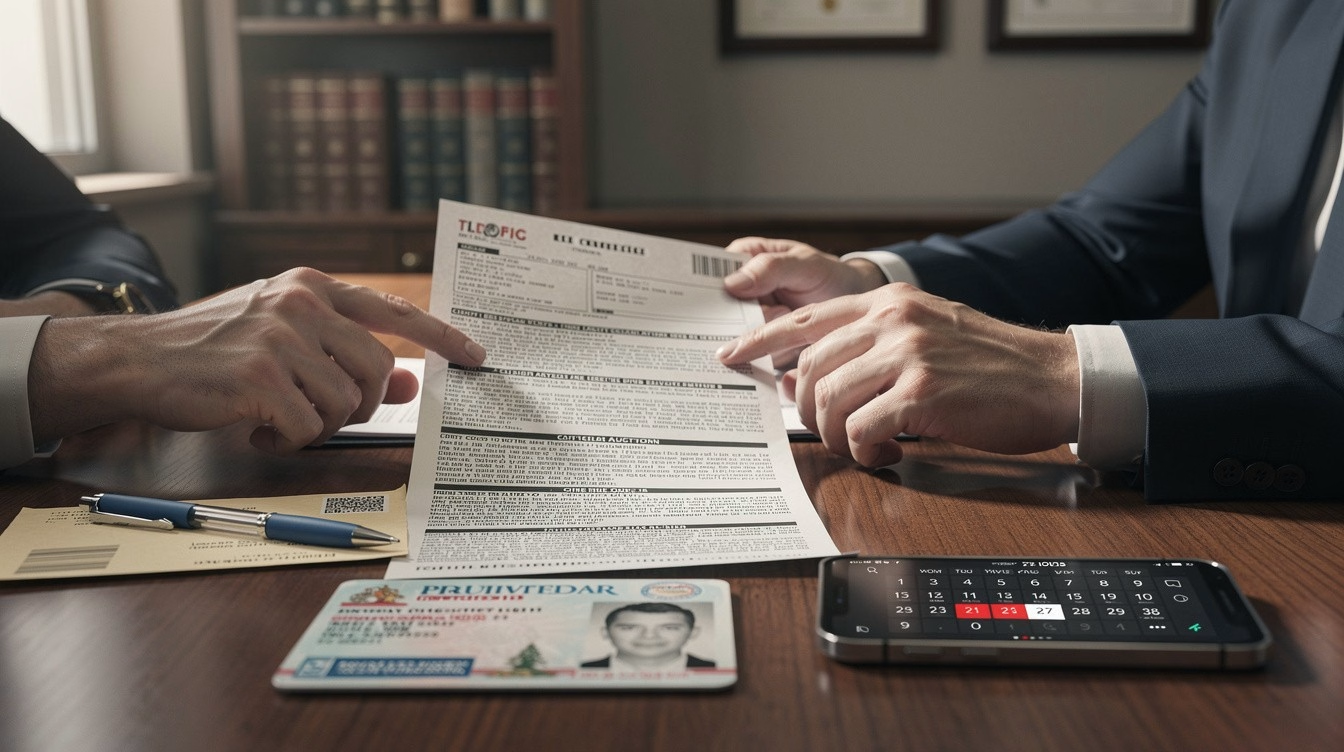

A lot of drivers ask the same question right after getting cited – can traffic school dismiss tickets, or does it just make the consequences less painful? The honest answer is that traffic school can sometimes lead to dismissal or keep a ticket from affecting your record, but it depends on your state, the court, the type of violation, and whether you are actually eligible.
That distinction matters. In some places, traffic school is used as a diversion program. You complete an approved course, pay any required fees, and the court may dismiss the citation or withhold points from your driving record. In other places, the ticket is not dismissed at all. You still have the violation, but the course helps reduce points, satisfy a court order, or protect your insurance rate.
Can traffic school dismiss tickets in every state?
No. Traffic school rules are set at the state and sometimes county or court level.
That means one driver may be allowed to take a course and avoid points, while another driver with a similar ticket in a different state gets no dismissal option at all. Even within the same state, judges and local courts may have different procedures for approving traffic school, deadlines, and filing requirements.
The safest approach is to avoid assumptions based on what happened to a friend or what you remember from an older ticket. Eligibility often changes based on recent violations, commercial license status, construction zone citations, speed over a certain limit, or whether the offense involved an accident.
When traffic school can help dismiss a ticket
Traffic school usually helps in one of three ways. First, it may result in a formal dismissal after course completion. Second, it may keep points from being assessed. Third, it may satisfy a court requirement that helps you avoid harsher penalties.
The first option is what most drivers mean when they ask whether traffic school dismisses tickets. In a true dismissal or diversion setup, the court agrees not to enter a conviction if you complete all conditions on time. Those conditions often include paying the original fine, paying an administrative fee, submitting proof of completion, and avoiding new violations during a set period.
In practical terms, that can be almost as valuable as dismissal even when the court uses different wording. If the ticket stays off your public driving record or no points are added, the result may still protect your license status and reduce the chance of an insurance increase.
When traffic school does not dismiss tickets
There are also many cases where traffic school will not erase the citation.
Serious violations are less likely to qualify. Reckless driving, DUI-related offenses, hit and run, excessive speeding, driving without insurance, and offenses involving injury usually fall outside standard traffic school eligibility. Commercial drivers may also face tighter limits, especially if the violation occurred in a commercial vehicle.
Sometimes the issue is not the violation itself but timing. If you miss the court deadline, fail to request traffic school approval in advance, or take a course that is not accepted by the court or state, you may lose the benefit. A driver can complete a course in good faith and still not receive dismissal if the course was not the right one.
That is why approval status matters more than convenience alone. An online course should fit your schedule, but it also needs to be the correct course for your state and your case.
How to tell if you are eligible
Start with the citation. Many tickets include a section that mentions whether traffic school is allowed, how to notify the court, and the deadline to respond.
If the ticket does not say, check the court notice or contact the court clerk. Ask direct questions: Is traffic school available for this citation? Will it dismiss the ticket, prevent points, or satisfy a court order only? Does the court require a specific provider or approved course list? What is the completion deadline?
You should also confirm whether you have used traffic school recently. Many states limit how often a driver can use a defensive driving or basic driver improvement course for ticket-related benefits. If you already used that option within the restricted period, you may not qualify again yet.
Why the words matter: dismiss, mask, withhold, reduce
Courts and DMVs do not always use the same terminology, and that creates confusion.
Dismiss means the court does not enter the violation as a conviction after you meet the conditions. Mask or conceal usually means the violation does not appear in the same way on your driving record for insurance or point purposes. Withhold means points may not be added even though the citation was processed. Reduce may mean the charge or point value is lowered, not removed.
For drivers, the difference can affect insurance, employment screenings, and future eligibility for traffic school. If the court says a course will help, ask exactly what result to expect.
The real benefit for most drivers
For many people, the biggest benefit is not a technical dismissal. It is preventing a minor mistake from causing longer-term problems.
A single moving violation can lead to points, higher insurance premiums, or closer scrutiny if you receive another ticket later. Completing a court-approved traffic school course may help preserve a cleaner record and demonstrate compliance quickly. That matters for busy adults, younger drivers, and anyone trying to avoid repeat issues.
This is also why online courses have become the practical choice for many drivers. A self-paced program lets you meet the requirement without rearranging work, family, or school schedules. The convenience is helpful, but the main goal is still compliance. You want the course accepted the first time.
What to do before you enroll
Before paying for any course, confirm four things: the course type, approval status, deadline, and reporting process.
Course type is simple but easy to miss. A court may require basic driver improvement, defensive driving, or another state-specific program. Approval status means the course must be recognized by the correct state agency or court. Deadline includes both the enrollment window and the completion date. Reporting process means you need to know whether the provider sends completion electronically or whether you must submit the certificate yourself.
A reliable provider should make these details easy to understand. If the course description is vague about state approval or court acceptance, treat that as a warning sign. Drivers usually want speed and convenience, but accuracy is what prevents a second round of problems.
Can traffic school dismiss tickets for insurance purposes?
Sometimes, but not always.
Insurance companies usually care about what appears on your driving record and how the state reports the violation. If traffic school leads to a dismissal, withheld adjudication, or no-point outcome, the insurance effect may be reduced. But insurers follow their own underwriting rules, and there is no universal promise that a course will stop a rate increase.
This is another reason to focus on official outcomes rather than assumptions. A course can be worthwhile even if the insurance result is uncertain, especially if it helps avoid points or satisfies a court order.
FAQ
Can traffic school dismiss tickets?
Yes, sometimes. It depends on your state, court, violation type, and whether you complete an approved course on time.
Does traffic school remove points from your license?
Sometimes. In some states, traffic school prevents points from being added, while in others it may reduce existing points or satisfy a court requirement.
Is online traffic school accepted by courts?
Yes, if the course is approved where your case is filed. Online format alone is not the issue – approval is.
Do you have to ask the court before taking traffic school?
Often, yes. Many courts require advance permission or election before you enroll.
Can you use traffic school for any ticket?
No. Serious violations, CDL-related cases, repeat offenses, and missed deadlines often do not qualify.
What happens if you take the wrong traffic school course?
The court may reject it. That can mean no dismissal, no point benefit, and possible additional penalties if the deadline passes.
How often can you use traffic school for a ticket?
It varies by state. Some states limit use to once within a set number of months or years.
If you are trying to protect your record after a citation, treat traffic school as a legal option with specific rules, not a guaranteed shortcut. The drivers who get the best result are usually the ones who verify eligibility early, choose an approved course carefully, and finish every step before the deadline.