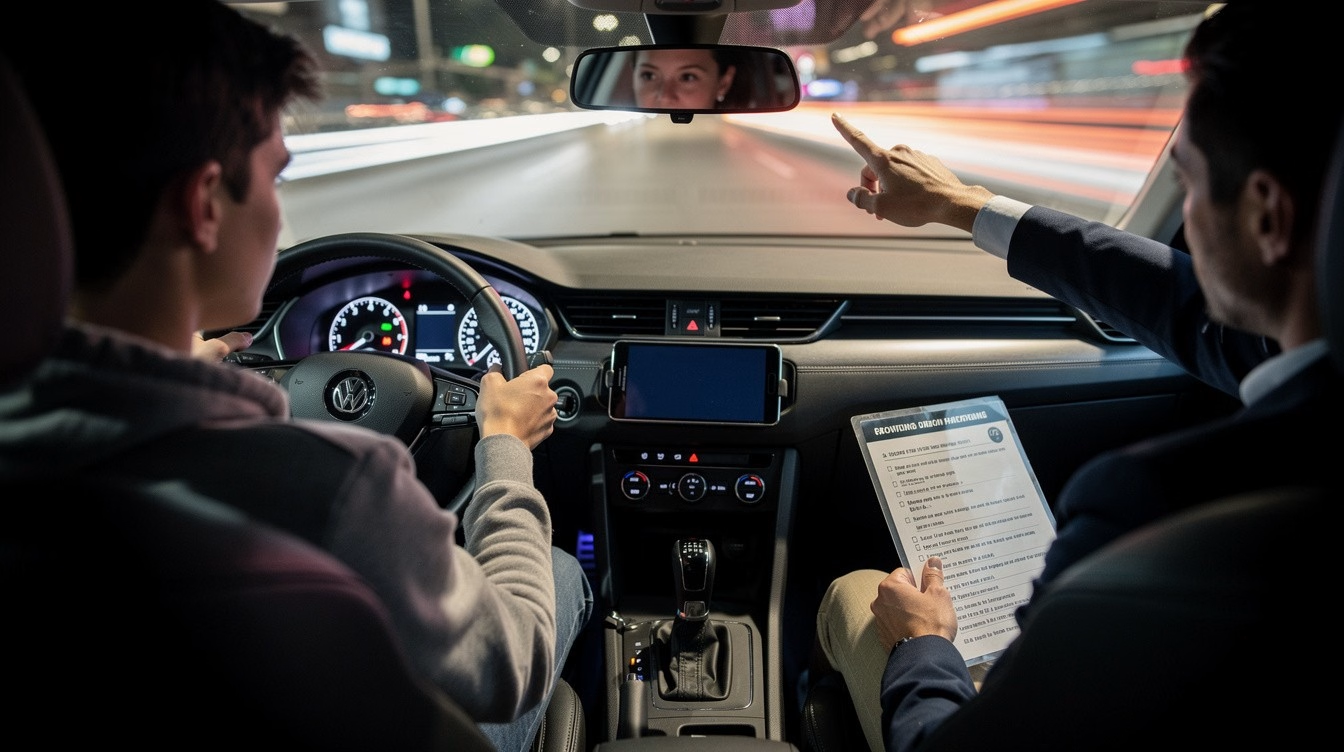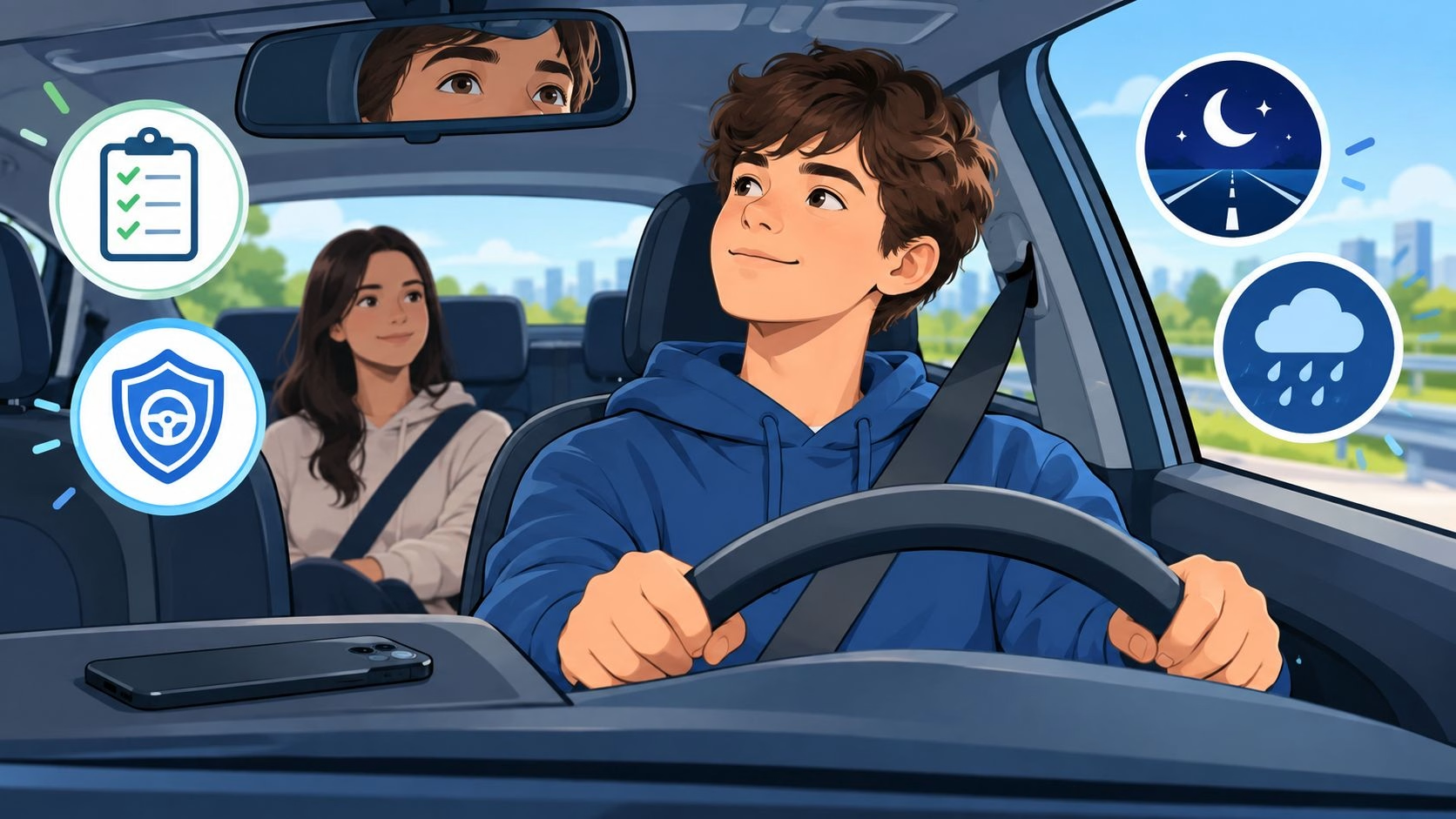
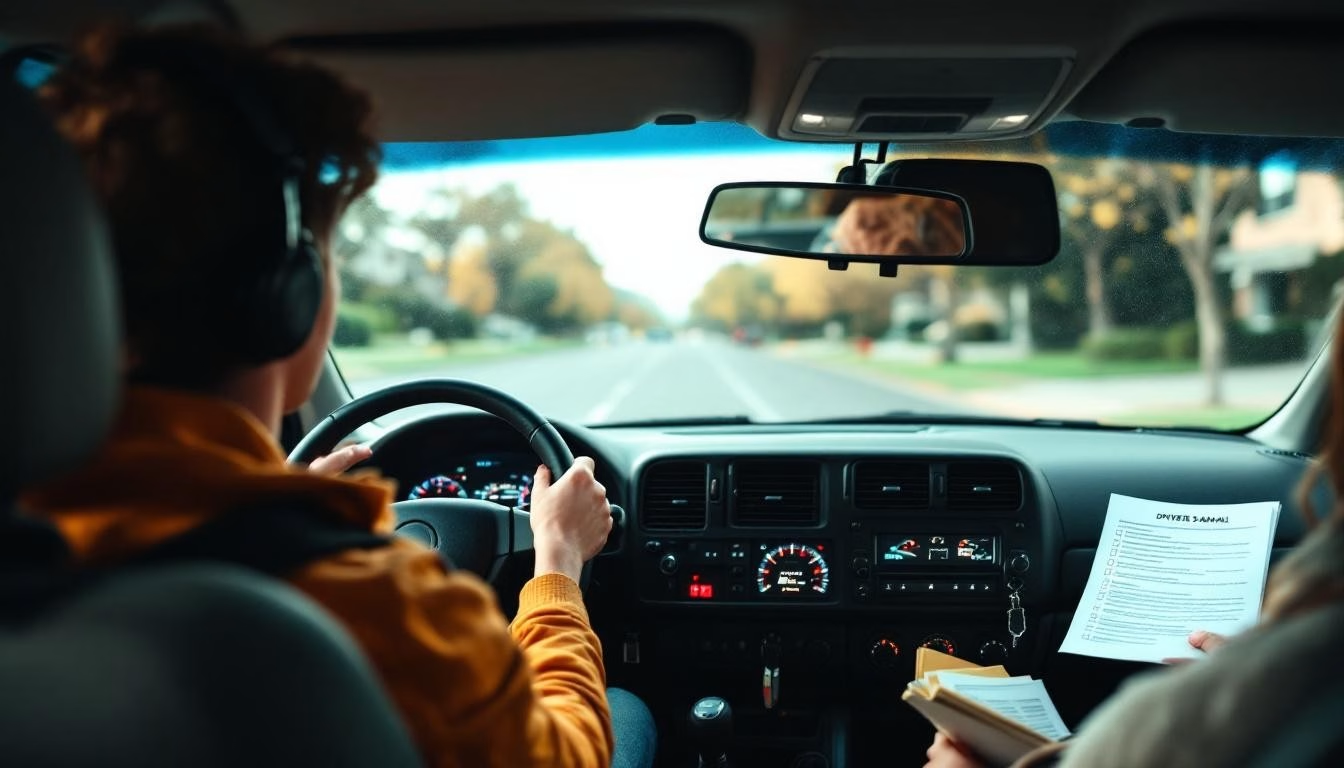
Teen drivers face a steep learning curve when they first hit the road. The basics for teen drivers-from understanding road signs to mastering defensive techniques-form the foundation of safe driving habits that last a lifetime.
At DriverEducators.com, we’ve seen firsthand how proper preparation prevents dangerous mistakes. This guide covers the essential skills every new driver needs to build confidence and stay safe behind the wheel.
What Every Teen Driver Must Know About Road Signs
Regulatory, Warning, and Informational Signs
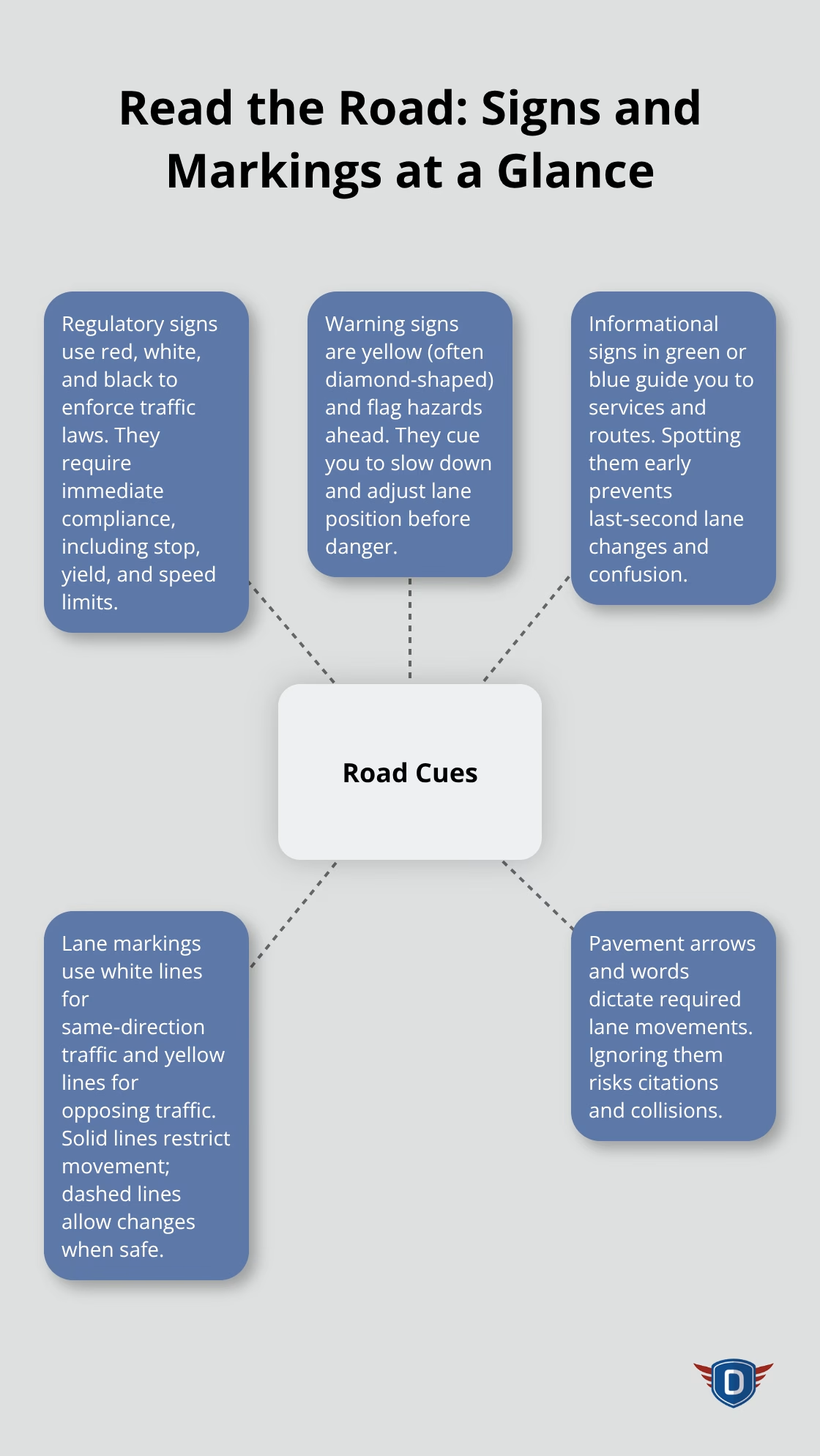
Road signs aren’t suggestions-they’re legal instructions that directly impact your safety and liability. Teen drivers who misread or ignore signs cause preventable crashes. The three main categories of signs serve distinct purposes: regulatory signs (red, white, black) enforce traffic laws; warning signs (yellow) alert you to hazards; and informational signs (green, blue) guide navigation.
Regulatory signs like stop and yield demand immediate action with no exceptions. A stop sign means a complete halt with wheels stopped, not a rolling pause. Yield signs require you to assess oncoming traffic and proceed only when safe. Speed limit signs establish the maximum legal speed, but that’s not your target speed in all conditions. In rain or heavy traffic, driving at the posted limit can still be too fast.
Speed Limits and Real-World Conditions
According to the Governors Highway Safety Association, speeding was a factor in fatal crashes involving teen drivers. That statistic alone should reshape how you approach speed limits. In rain or heavy traffic, you must slow below the posted limit to maintain control. Warning signs use yellow backgrounds and diamond shapes to signal road hazards ahead: sharp curves, pedestrian zones, animal crossings, or slippery surfaces. These signs give you seconds to adjust speed and position before danger appears.
Informational signs use green or blue backgrounds to direct you toward rest areas, hospitals, or highways. Learning to spot these quickly prevents last-minute lane changes that startle other drivers.
Understanding Road Markings and Lane Control
Road markings communicate constant information that signs cannot. White lines separate traffic moving in the same direction; solid white lines mean you should not cross them, while dashed white lines allow lane changes when safe. Yellow lines separate opposing traffic, with solid yellow on your side meaning no passing into oncoming lanes. A solid yellow line paired with a dashed yellow line means passing is allowed only from the side with the dashed line.
Pavement arrows and words painted on the road surface dictate which direction traffic must move in that lane-ignoring them leads to head-on collisions or citations. Lane markings become harder to see in rain, fog, or darkness, which is why your scanning and mirror-checking habits matter more than your ability to read paint.
Markings in Challenging Conditions
Speed limit signs tell you the legal maximum, but road markings tell you the actual traffic pattern. If you see faded or missing markings in a construction zone, that’s a signal to slow down further and increase your following distance. The transition from familiar residential streets with vague markings to highways with bold, clear markings can feel overwhelming to new drivers, but that’s exactly why practice on roads with limited traffic builds real competence. Once you master reading these visual cues, you’ll move into the next critical skill: maintaining safe distances and anticipating what other drivers will do before they do it.
Core Defensive Driving Techniques
The Three-Second Rule and Real Stopping Distance
Defensive driving starts with distance. The three-second rule is the minimum standard, not a target. At 55 mph, your car travels 80 feet per second, meaning a three-second gap puts roughly 240 feet between you and the car ahead-about the length of a tennis court. In rain or on wet roads, increase this to five or six seconds because your tires lose grip and your brakes need extra distance to stop. At night, when visibility drops and fatigue sets in, add another second.
Teen drivers consistently misjudge stopping distance because they underestimate how long it takes to react and brake at speed. The National Highway Traffic Safety Administration reports that distraction-affected traffic crashes caused 2,955 fatal motor vehicle crashes in 2024. Count the seconds between when the car ahead passes a fixed point and when your car reaches that same point. If you count fewer than three seconds, you’re too close and need to ease off the accelerator to create space. This isn’t defensive-it’s basic physics.
Weather and Visibility Impact Your Safe Distance
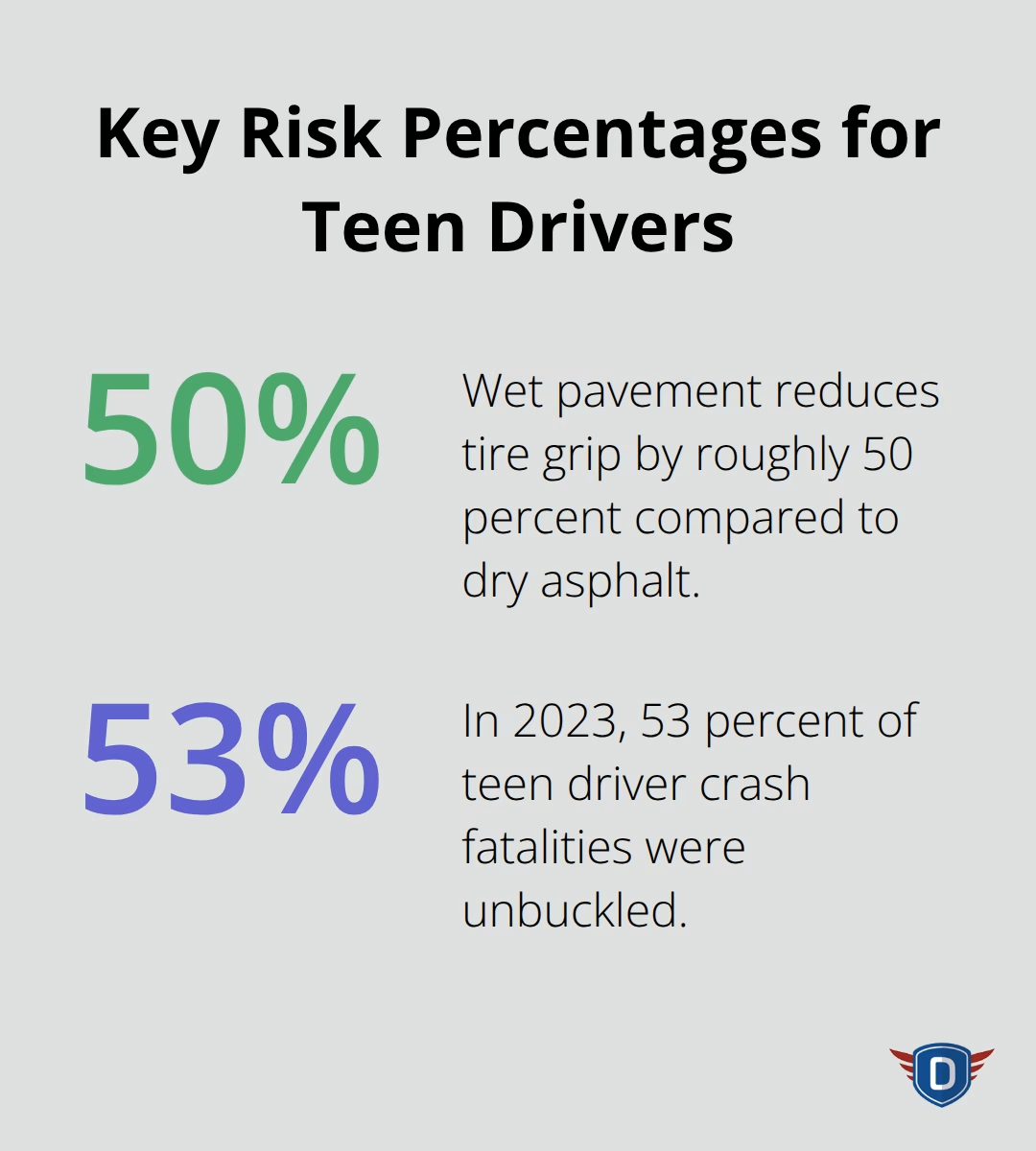
Wet pavement reduces tire grip by roughly 50 percent compared to dry asphalt, which means your stopping distance doubles. Heavy rain at night compounds this problem because headlight glare reduces what you can actually see. Fog is worse than rain because it collapses your visibility window to perhaps 50 feet, making the three-second rule insufficient.
In these conditions, slow down to 25 or 30 mph even on roads posted at 45 mph. Speed limits assume normal conditions and clear visibility. Your job is to match your speed to actual conditions, not the sign.
Scan Ahead, Not Just at the Car in Front
Scanning ahead matters more than staring at the car directly in front of you. Look through the windshield of the vehicle ahead to see traffic patterns two or three cars up the road. If brake lights start lighting up in the distance, you have time to ease off the gas before the car in front of you brakes hard. This technique, called commentary driving, forces you to verbalize what you see: the pedestrian stepping off the curb two blocks away, the delivery truck double-parked with its hazard lights on, the child’s ball rolling toward the street. When you narrate your observations out loud, your brain processes hazards faster and your hands respond more deliberately.
Parents can sit in the passenger seat and listen to this commentary, providing immediate feedback on what you missed. Scanning requires moving your eyes constantly-forward, to the sides, and checking mirrors every five to ten seconds. Most teen crashes happen because drivers fixate on one object or get distracted and fail to notice changing conditions around them.
Predict Traffic Patterns Before They Affect You
Speed changes in traffic are predictable if you read the patterns. Brake lights ahead signal slowdowns before they reach you. Merging traffic from on-ramps telegraphs lane changes. Pedestrians clustered at a crosswalk signal an upcoming intersection. Your peripheral vision catches movement that demands attention. Rain and darkness compress these warning windows, so scanning becomes even more critical. In poor conditions, scan more frequently and look further ahead to compensate for reduced visibility. Once you master these scanning habits and distance calculations, you’ll face your biggest challenge: recognizing the mistakes that trip up most new drivers and learning how to avoid them.
Where Teen Drivers Go Wrong
Distraction and Phone Use: The Deadliest Mistake
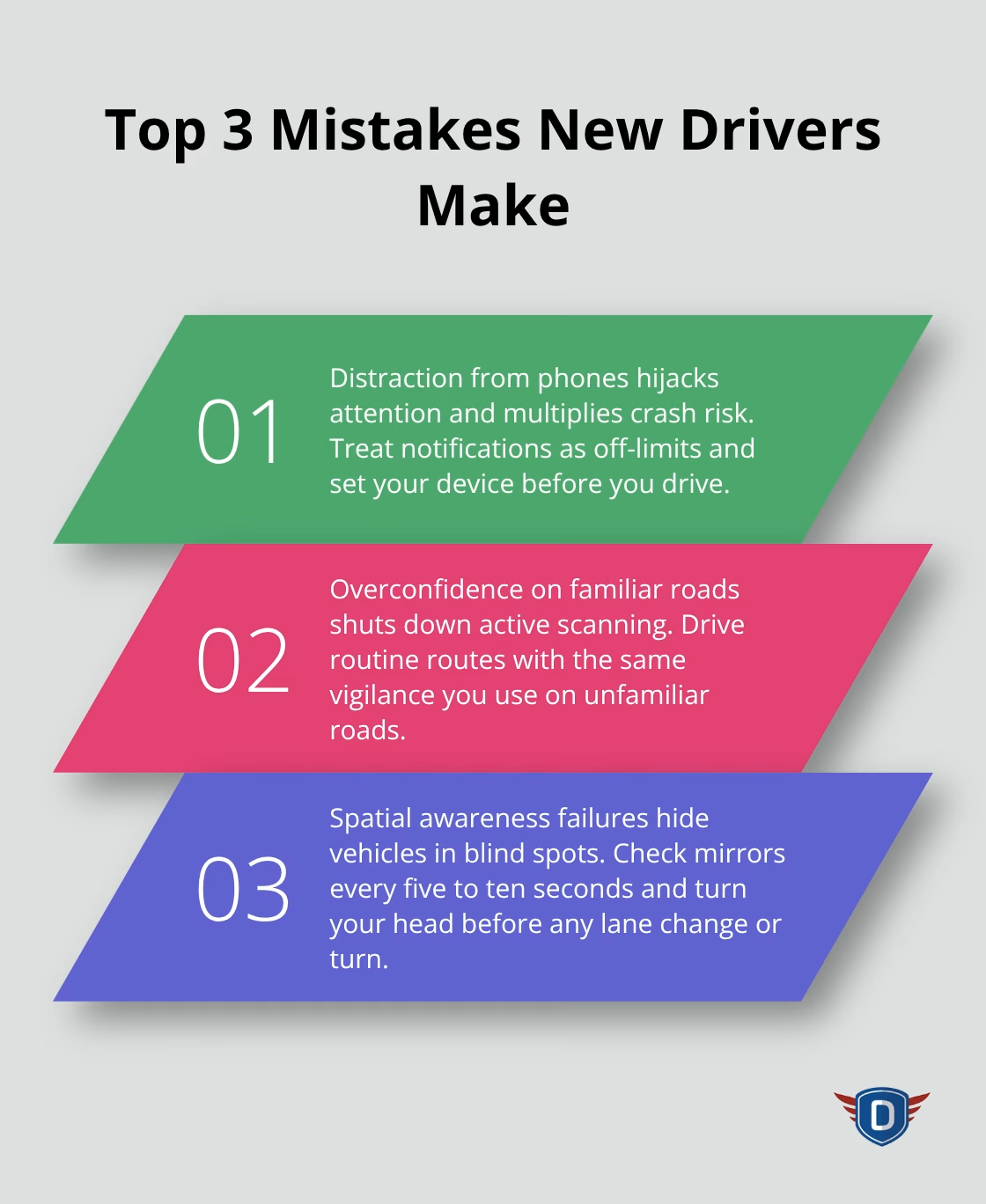
Teen drivers make three critical errors that compound into crashes. The first is distraction, particularly from phones. According to the National Highway Traffic Safety Administration, about one in three teens who text admit to texting while driving, and texting while driving increases crash risk by about 23 times compared to undistracted driving. Dialing a number increases risk by about 6 times. The problem isn’t that phones are new-it’s that teen brains are still developing impulse control and risk assessment. Your prefrontal cortex won’t fully mature until age 25, which means you’re neurologically predisposed to underestimate danger and overestimate your ability to multitask.
A text message arriving while you’re driving at 40 mph means your eyes leave the road for roughly five seconds. In that time, you travel approximately 290 feet without looking-the length of a football field. No message is worth that distance or that risk.
Overconfidence on Familiar Routes
The second mistake is overconfidence on familiar routes. You know your neighborhood streets, so you stop scanning. You know the traffic pattern on your regular commute, so you ease off attention. Familiarity breeds complacency, and complacency kills. Crashes happen on routes you’ve driven 100 times because you stopped treating them as active driving environments. A child can dart from between parked cars on your street just as easily as on an unfamiliar road. Your brain categorizes familiar roads as low-threat, which causes your vigilance to drop. But hazards don’t respect your comfort level.
Blind Spots and Mirror Checks: Spatial Awareness Failures
The third mistake is spatial awareness failure: not checking blind spots and not using mirrors consistently. Your car has blind spots where other vehicles simply vanish from your view. Mirrors show what’s behind and beside you, but only if you look at them. Most teen drivers check mirrors once every 10 seconds or less frequently. Safe driving requires checking mirrors every five to ten seconds and physically turning your head to scan blind spots before changing lanes or turning.
The Real Cost: Statistics That Matter
In 2023, the National Highway Traffic Safety Administration reported that there were 2,148 young drivers who died in traffic crashes. In that same year, 53 percent of teen driver crash fatalities were unbuckled. Distraction contributes heavily to these numbers. The data shows passengers significantly raise risk: with one teen passenger, you’re 2.5 times more likely to engage in risky behaviors; with multiple teen passengers, risk rises to 3 times. This means your friends in the car aren’t just distracting you emotionally-they’re changing your decision-making in real time. Your brain prioritizes social connection over safety.
How to Fix These Mistakes
Never touch your phone while driving, period. If you need navigation, mount your phone on the dashboard before you drive so you don’t look down at it. On familiar routes, maintain the same scanning and distance discipline you use on new roads. Before changing lanes or turning, turn your head to check blind spots even if your mirrors show clear space. These aren’t suggestions-they’re the difference between arriving and not arriving.
Final Thoughts
The basics for teen drivers rest on three interconnected skills: reading the road through signs and markings, maintaining safe distances while scanning ahead, and recognizing the mistakes that cause crashes. Road signs and markings communicate what’s safe and legal, while defensive driving techniques like the three-second rule and commentary driving separate drivers who anticipate hazards from those who merely react to them. The mistakes teen drivers make-distraction, overconfidence, and spatial awareness failures-are preventable through deliberate practice and honest self-assessment.
Building confidence happens through repetition in progressively challenging environments. Start in parking lots and quiet residential streets where mistakes carry minimal consequences, then move to busier roads with complex intersections and varied weather conditions. Each hour behind the wheel strengthens your hazard perception and decision-making, allowing your brain to develop the pattern recognition that separates safe drivers from dangerous ones.
Continued learning extends far beyond your driving test, as road conditions shift and your own skills improve with intentional practice and feedback. At DriverEducators.com, we provide comprehensive driver education programs designed to help you master safe driving habits that last a lifetime, with certified instructors who offer personalized guidance tailored to your learning needs. Visit DriverEducators.com to explore programs that support your development as a confident, responsible driver.