Teen drivers face real dangers on the road. The statistics are sobering: drivers aged 16-19 have crash rates three times higher than drivers aged 20 and older, according to the CDC.
Parent-teen driving guidelines matter because they bridge the gap between classroom learning and real-world experience. At DriverEducators.com, we’ve seen how structured expectations and open communication transform teen driving safety.
Why Teen Drivers Crash More Often
The Experience Gap That Matters Most
Teen drivers aged 16-19 crash at rates nearly three times higher than drivers 20 and older, according to the CDC. This isn’t because teens lack knowledge-most complete driver education courses. The real problem is inexperience combined with poor judgment under pressure. When a tire blows or another car cuts them off, teens underestimate danger and make critical errors in split seconds. CDC data shows that during their first months after licensure, crash risk peaks sharply. This window is when parents need to be most vigilant, not least.
Speed Kills Teen Drivers First
Speeding caused 34 percent of teen fatal crashes, according to NHTSA data. That’s one in three deaths linked directly to speed. Teen drivers often fail to adjust their speed for road conditions, weather, or their own limited experience. They accelerate without fully understanding how speed affects stopping distance and vehicle control. Parents who model safe speeds and enforce speed limits at home send a powerful message about what responsible driving looks like.
Distractions, Alcohol, and Seat Belts
Distracted driving increases crash risk significantly-about 10 percent of teen drivers in fatal crashes were distracted at the moment of impact. Alcohol involvement appears in roughly 22 percent of fatal teen driver crashes. But here’s what surprises most parents: seat belt non-use kills more teens than any single behavior. In 2024, 51 percent of teen driver fatalities involved unbelted occupants. A simple rule-no one moves the car until everyone buckles up, front and back-saves lives.
How Passengers and Nighttime Multiply Risk
Passengers amplify risk dramatically. One teen passenger doubles risky driving behaviors; multiple teen passengers can triple the crash risk. Nighttime driving creates a threefold increase in fatal crash rates for 16-19-year-olds compared to adult drivers. Nearly half of teen crash deaths occur between 9 pm and 6 am. These two factors (passengers and nighttime hours) interact with inexperience to create the highest-risk scenarios for new drivers.
What Parents Can Control Right Now
Understanding these crash causes helps parents set rules that actually matter. Speeding, distraction, passengers, and nighttime driving are all behaviors parents can restrict during the critical first months after licensure. The next section shows how to build a parent-teen driving agreement that addresses these specific risks and turns statistics into actionable household rules.
How to Build Rules That Stick
Phone Use: The Non-Negotiable Rule
Clear driving rules fail when they’re vague or unenforced. Parents who say no phone use without explaining why, or who don’t follow through on consequences, watch their teens ignore the rules entirely. Rules work best when they’re written down, specific about consequences, and enforced consistently from day one. The American Academy of Pediatrics recommends a formal parent-teen driving agreement, and research shows this simple step reduces unsafe driving behaviors significantly.
Phone use is non-negotiable. About 39 percent of high school drivers reported texting or emailing while driving in 2019 according to CDC data, and texting increases crash risk 23-fold compared to focused driving. The solution is absolute: the phone goes into the glove compartment or trunk before the engine starts. Hands-free calls still distract the brain from the road, and your teen lacks the experience to divide attention safely. Tell your teen to activate do-not-disturb mode on their phone to block notifications entirely.
Passenger Limits and Nighttime Curfews
Set a passenger limit that matches your state’s graduated driver licensing rules or is stricter. One teen passenger doubles risky driving; multiple passengers triple it. During the first six months after licensure, limit passengers to immediate family only. No exceptions for best friends or school events. This restriction feels harsh to teens, but it’s the single most effective rule you can enforce.
Establish a hard curfew for unsupervised driving. Nighttime driving creates a threefold increase in fatal crash rates for 16-19-year-olds. Most states prohibit intermediate-stage teen drivers from driving after 9 or 10 pm, and you should enforce this limit at home regardless of state law.
Writing and Enforcing Your Driving Agreement
Write these three rules into a formal agreement that both you and your teen sign. Include specific consequences: texting while driving means no driving for two months, carrying extra passengers means one month without keys, violating curfew means three weeks grounded. Make the consequences clear before your teen drives, not after they break a rule. Post the agreement on the refrigerator or keep it with the car keys so it stays visible.
Staged Exposure to Real Driving Conditions
Gradual exposure to different driving conditions happens within these strict boundaries, not outside them. Start with daytime driving on familiar, low-traffic roads during your teen’s learner permit phase. Progress to busier roads and highways only after your teen demonstrates consistent safe behavior. Bad weather, heavy traffic, and nighttime driving come last, after dozens of supervised hours. This staged approach respects your teen’s growing experience while preventing overconfidence. Every new condition introduces new risks, and your teen’s brain is still developing the judgment to handle surprises.
Enforce the rules ruthlessly in these early months. Your teen will resent you temporarily, but the alternative is preventable crashes that kill or injure them and others. Once your teen proves they can follow these rules consistently, you’ll move into the monitoring phase-where technology and communication replace strict restrictions and help you track their progress without hovering.
Monitoring and Supporting Teen Drivers
Real-Time Data Reveals Actual Driving Habits
Once your teen moves past the strict rule-enforcement phase, your job shifts from restriction to observation. This doesn’t mean stepping back entirely-it means using smarter tools to stay informed while your teen gains independence. Telematics apps and dashcams provide real data about how your teen drives when you’re not in the passenger seat. Services like Life360, Verizon’s Hum, or your insurance company’s mobile app track speed, hard braking, rapid acceleration, and location in real time. Insurance companies increasingly offer discounts for teens who use these apps, sometimes reducing premiums by 10 to 30 percent, which offsets the cost immediately.
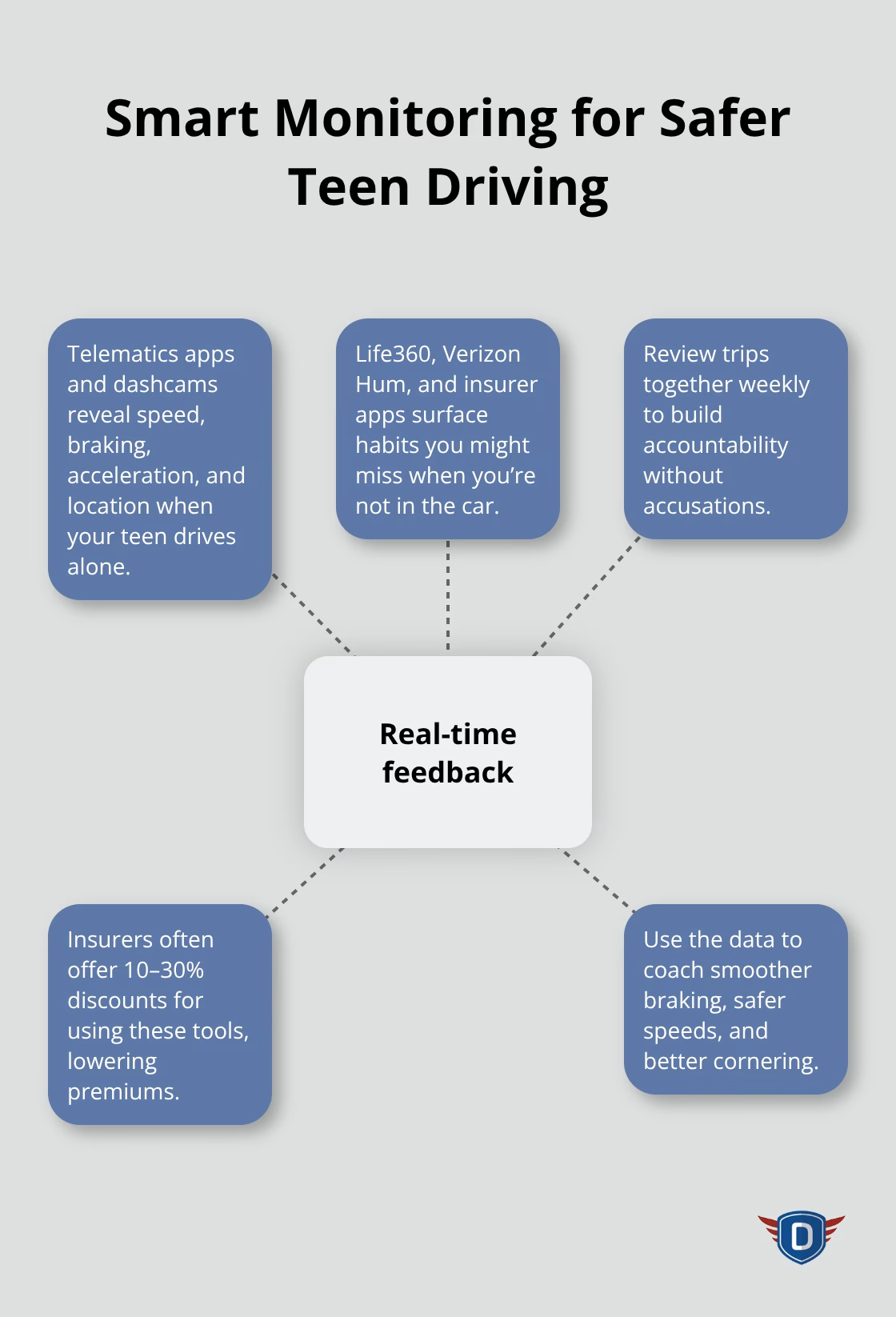
The data tells you whether your teen respects speed limits on the highway, whether they brake smoothly in traffic, or whether they accelerate recklessly. When you review this data together with your teen weekly or monthly, you create accountability without accusations. A conversation that starts with the data-not with suspicion-keeps communication open. Your teen knows you’re watching, but they also know you’re interested in their actual driving habits, not just catching them breaking rules.
Questions That Build Better Judgment
Regular conversations about road experiences matter more than surveillance data alone. Ask your teen specific questions: What surprised you about that intersection? Did you feel safe in heavy traffic? What would you do differently next time? These questions train your teen to reflect on their own driving decisions instead of simply reacting to the road. Teens who discuss driving challenges with parents develop better judgment over time because they process experiences rather than just accumulate miles.
Celebrate concrete improvements-your teen maintained safe speeds all week, executed smooth lane changes, or handled a rainy commute safely-and connect these wins to reduced crash risk. Positive reinforcement works better than punishment at this stage because your teen already drives independently and needs internal motivation to stay safe, not external fear of consequences.
Mistakes as Learning Opportunities
If your teen reports a near-miss or mistake, respond with curiosity rather than anger. A teen who tells you they almost hit a pothole and swerved is learning to recognize blind spots and hazards; one who hides mistakes from you is dangerous. Treat mistakes as learning opportunities, not failures. This approach keeps communication flowing through the most critical driving years, when your teen’s confidence grows but their judgment is still developing.
Final Thoughts
Parent-teen driving guidelines work because they combine clear expectations with gradual independence. The rules you set in those first months after licensure-no phone use, passenger limits, nighttime curfews, and seat belt requirements-directly address the behaviors that kill teen drivers. Speeding, distraction, passengers, and nighttime driving aren’t abstract risks; they’re preventable causes of crashes that appear in real crash data.
As your teen gains experience and demonstrates safe habits, your role shifts from enforcer to observer and mentor. Technology gives you real data about how they drive when you’re not watching, and regular conversations about road experiences build their judgment instead of just accumulating miles. Celebrate improvements, treat mistakes as learning opportunities, and keep communication open so your teen feels supported rather than surveilled.
DriverEducators.com offers comprehensive driver education programs designed to reinforce safe driving habits and help young drivers master defensive techniques that complement your parent-teen driving guidelines. Their courses provide the knowledge and skills that create a complete foundation for safe, responsible driving.