Your attitude behind the wheel is the single most powerful factor in whether you get home safely. It shapes every decision you make, from how you respond to traffic delays to how you handle frustration on the road.
Emotion management while driving isn’t a nice-to-have skill-it’s the foundation of crash prevention. At DriverEducators.com, we’ve seen firsthand how drivers who master their mindset dramatically reduce their accident risk.
How Your Attitude Shapes Every Decision on the Road
Anger was the single most significant factor determining whether drivers would speed, tailgate, weave through traffic, or ignore traffic signals. A study of 410 Thai public van drivers examined this relationship through personality and attitude toward risky driving behavior. This matters because anger isn’t something that happens to you randomly-it’s triggered by specific situations. When another driver cuts you off, when you’re running late, or when traffic crawls, your attitude determines your crash risk directly.
Aggressive Drivers Make Fundamentally Different Choices
Aggressive drivers make fundamentally different choices than calm drivers in identical situations. An aggressive driver sees a gap in traffic and accelerates; a calm driver waits for a safer opportunity. An aggressive driver tailgates to pressure someone to move faster; a calm driver maintains distance and adjusts their route.
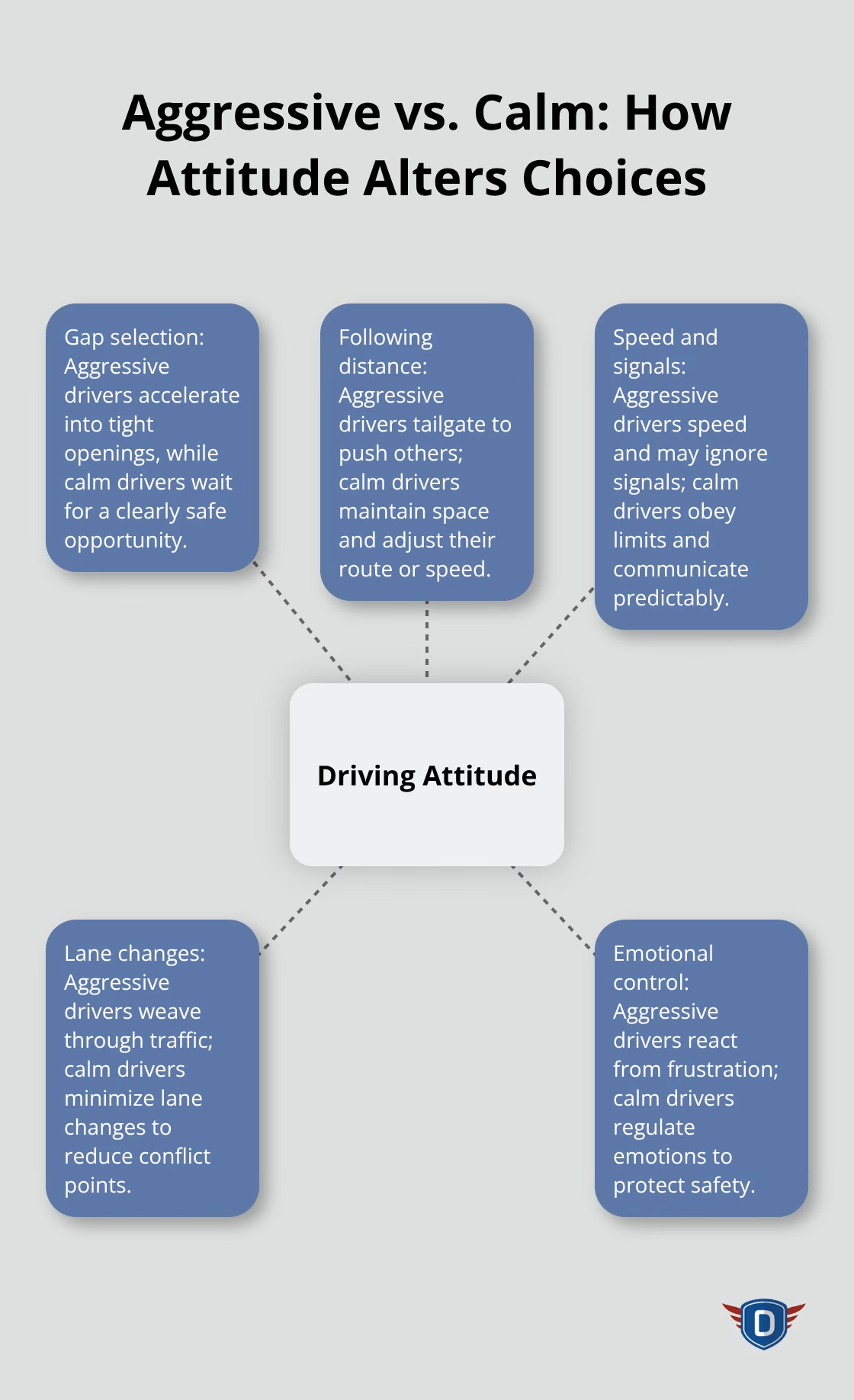
These aren’t personality quirks-they’re measurable behavioral differences that correlate directly with crash risk.
Overconfidence Blinds You to Real Hazards
Overconfident drivers consistently underestimate hazards because they believe they can handle more than they actually can. Drivers with lower risk perception reported significantly more dangerous behaviors, including speeding, running red lights, and texting while driving. The critical insight here is that these drivers weren’t driving recklessly because they were unaware of risks-they were driving recklessly because they didn’t perceive the risks as applying to them.
They believed they were skilled enough to text and drive safely, fast enough to run that yellow light, experienced enough to tailgate without consequences. This false confidence directly influences reaction time. When you underestimate a hazard, you don’t prepare for it. Your foot isn’t poised near the brake. Your attention isn’t sharpened. Your eyes aren’t scanning for escape routes. The moment you need to react, you’re already behind.
Mindset Controls Your Focus in Critical Moments
Your mindset determines where your attention goes, and attention determines whether you see hazards before they become emergencies. Drivers who maintain a defensive mindset-expecting other drivers to make mistakes and anticipating potential conflicts-have measurably faster hazard detection. Studies using hazard-perception training with near-crash videos show that drivers who practice spotting hazards improve their response times and prediction accuracy.
This isn’t about being paranoid or anxious; it’s about directing your mental resources efficiently. A defensive mindset means you’re already thinking about what could go wrong at every intersection, on every highway merge, in every parking lot. When something unexpected happens, you’ve already considered it as a possibility, so your reaction is faster. A careless mindset means you’re reacting for the first time when the hazard appears, which costs you critical milliseconds. The difference between a near-miss and a crash often comes down to whether your mind was already primed to handle that specific threat.
How Emotional State Shapes Your Driving Behavior
Your emotional state doesn’t just influence how you feel-it directly changes how you drive. Stress, frustration, and fatigue all impair your attention and increase the likelihood of risky decisions. A driver running late makes different choices than a driver with time to spare. A driver who just had an argument makes different choices than a calm driver. These emotional shifts aren’t minor variations; they’re significant behavioral changes that affect safety outcomes. The good news is that you can control your emotional state before and during driving. Planning ahead, exercising regularly, and creating a calming driving environment all reduce irritability and improve decision-making. Some drivers even share driving duties on long trips to manage fatigue and stress. These practical steps work because they address the root cause-your emotional state-rather than trying to fight it once you’re already behind the wheel.
How Attitude Predicts Your Crash Risk
Anger Drives Risky Decisions More Than Experience or Age
Research consistently shows that your attitude behind the wheel is one of the strongest predictors of whether you’ll crash. A study of 410 Thai public van drivers found that anger was the single most significant factor determining risky driving behavior, with anger explaining more variance in crash-related actions than education level, age, or experience combined. The data showed a clear pattern: drivers scoring higher on anger scales reported more speeding, tailgating, weaving through traffic, and ignoring traffic signals.
What makes this finding actionable is that anger isn’t random. It’s triggered by specific situations-running late, sitting in traffic, being cut off-and you can manage those triggers before they influence your driving decisions. If you know that time pressure increases your crash risk, you can leave earlier. If you know that frustration makes you aggressive, you can plan your route to avoid high-stress roads or share driving duties to reduce irritability.
Sleep Deprivation Amplifies Your Emotional Reactivity
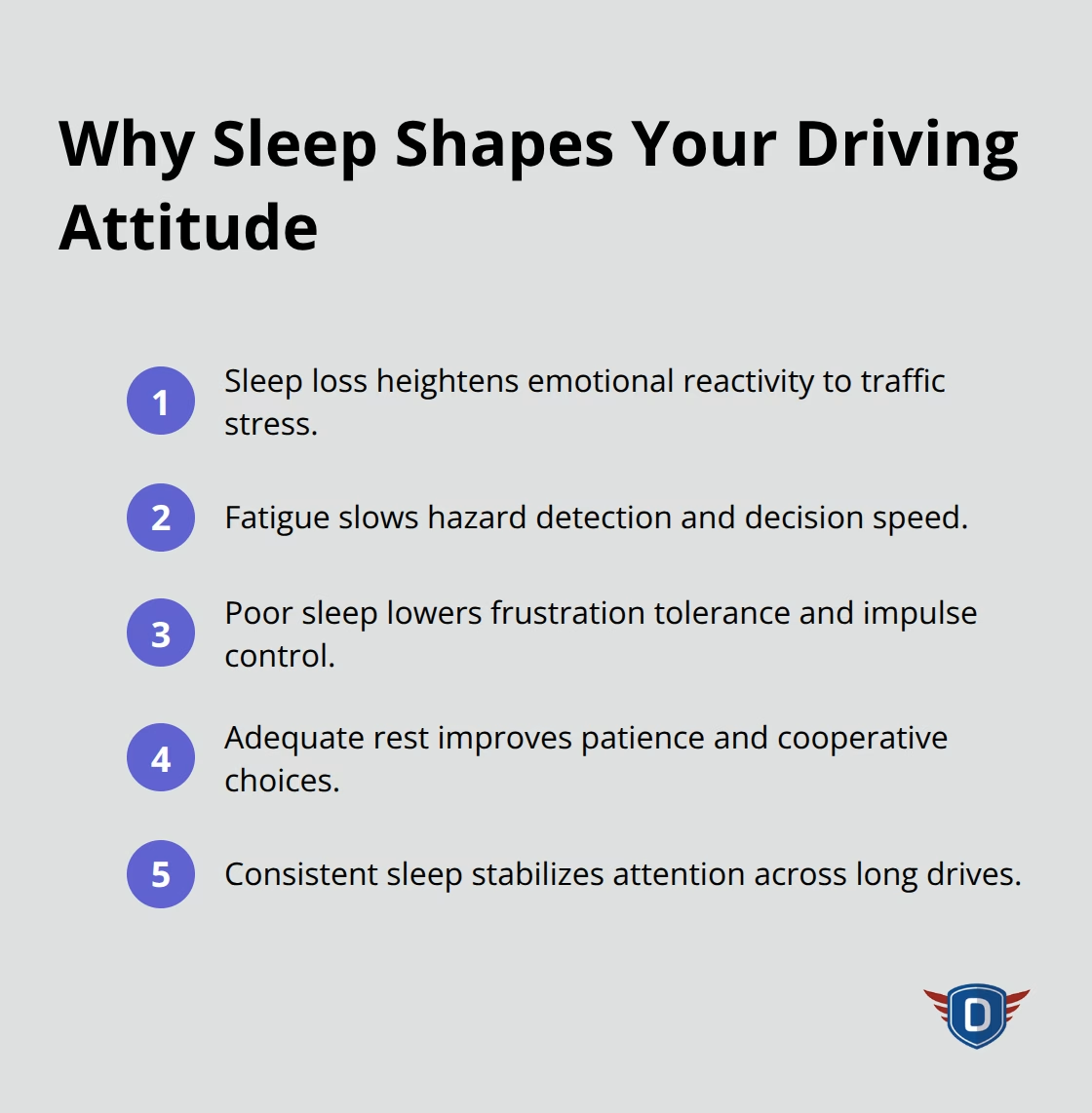
The National Sleep Foundation research adds another critical layer: sleep deprivation dramatically amplifies your emotional reactivity behind the wheel. After 24 hours awake, impairment is equivalent to a blood alcohol content of 0.10 percent. Less than five hours of sleep increases your crash risk four to five times compared to adequate rest.
This means that managing your attitude isn’t just about controlling anger in the moment-it’s about addressing the physical and emotional foundations that make anger more likely to occur. Your sleep quality directly determines how you respond to traffic stress, how quickly you become frustrated, and how well you make decisions under pressure.
Hostile Attitudes Escalate Risk for Everyone on the Road
Hostile attitudes and road rage don’t just increase your likelihood of crashing; they increase the severity of crashes and put other road users directly at risk. California Vehicle Code Section 13210 classifies aggressive driving as a criminal offense, and for good reason. When you drive with hostility-tailgating aggressively, blocking other drivers, honking excessively, or making aggressive gestures-you create a chain reaction that escalates risk for everyone on the road.
An aggressive driver who tailgates forces the driver ahead to react defensively, which can trigger sudden braking, swerving, or panic responses in nearby vehicles. That single aggressive action increases crash risk for five or six other vehicles. Your attitude determines not only whether you crash, but whether your crash involves one vehicle or multiple vehicles, whether anyone gets hurt, and whether that hurt extends beyond yourself.
Shifting From Hostile to Cooperative Reduces Crash Severity
The shift from a hostile to a cooperative mindset with other road users directly reduces crash severity and protects the people around you. Acknowledging mistakes, using signals consistently, maintaining proper following distance, and yielding when appropriate all work together to lower the stakes on every road interaction. These behaviors seem simple, but they represent a fundamental change in how you view your role on the road-not as a competitor trying to win against other drivers, but as a participant responsible for the safety of everyone around you. This distinction matters because it changes which behaviors you prioritize and which risks you accept. A driver with a cooperative mindset doesn’t tailgate to pressure someone faster because they understand that aggressive pressure creates panic and poor decisions in the vehicle ahead. They don’t weave through traffic because they recognize that each lane change puts multiple vehicles at risk. They don’t run red lights because they know that their few seconds of time savings come at the cost of someone else’s safety. The practical reality is that your attitude determines the actual consequences of your driving-not just for you, but for your passengers, other drivers, and pedestrians who share the road with you. Understanding this connection between attitude and real-world harm is what separates drivers who occasionally make mistakes from drivers who create dangerous situations repeatedly.
How to Identify and Control Your Driving Triggers
Your triggers are predictable. A driver running 15 minutes late makes different decisions than one with buffer time. A driver stuck in gridlock after a frustrating workday responds differently than one on a relaxed Saturday drive. The National Sleep Foundation research shows that drivers operating on less than five hours of sleep have crash risk four to five times higher than well-rested drivers, meaning fatigue itself is a trigger that amplifies anger and impairs judgment.
Recognize Your Personal Risk Patterns
The practical step is identifying which situations reliably shift your behavior toward risk. If time pressure consistently makes you speed and tailgate, leave 10 minutes earlier on every trip-not just important ones. If traffic frustration pushes you toward aggressive lane changes, choose less congested routes even if they take slightly longer. If fatigue after work shifts increase your irritability, schedule important drives for morning hours or share driving duties.
One van driver study found that working more days per week correlated with higher risky driving behavior, demonstrating that cumulative fatigue and stress directly influence how you behave behind the wheel. These aren’t minor adjustments; they’re interventions that address the root cause before your attitude deteriorates. Recognizing what triggers your worst driving impulses is the first step toward controlling them. The actionable insight is this: don’t rely on willpower to stay calm once a trigger has activated. Instead, structure your driving circumstances to avoid triggers entirely.
Replace Reactions With Prepared Responses
Defensive driving techniques work because they replace reactive decision-making with prepared responses. Instead of reacting when a hazard appears, you’re already positioned to handle it. Maintain at least three seconds of following distance on highways-this gives you reaction time and escape space if the vehicle ahead brakes suddenly. Scan intersections for vehicles running red lights before you accelerate on green. Check your mirrors every five to eight seconds so you know what’s around you before you need to change lanes.
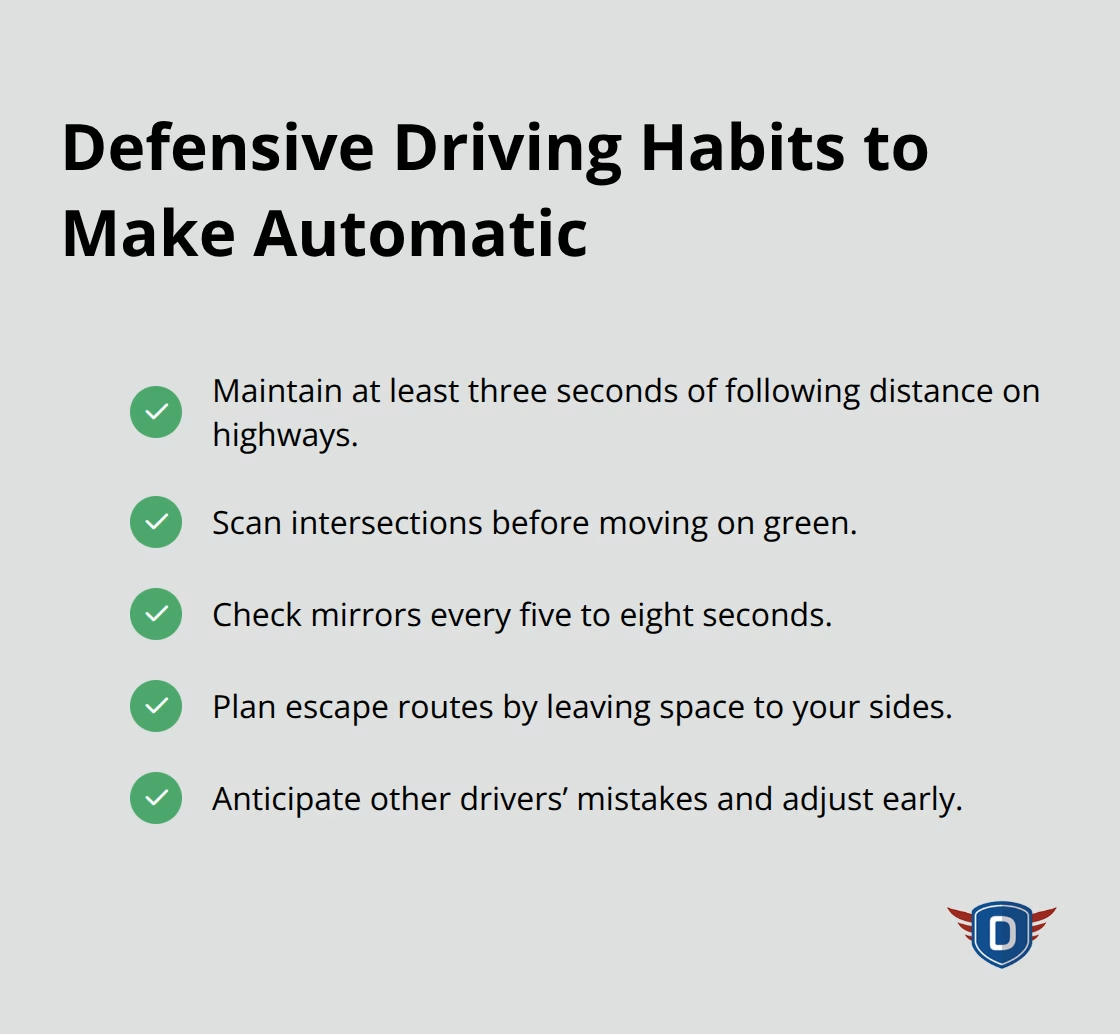
These aren’t optional courtesies; they’re the difference between a near-miss and a crash. When you practice these techniques consistently, they become automatic, which means your attitude’s influence on decision-making diminishes. A calm driver following three seconds back makes the same safe choice as an angry driver in the same position-distance creates safety regardless of emotional state.
Understand How Your Attitude Affects Others
Your choices on the road ripple outward to other drivers and pedestrians who share no responsibility for your decisions but bear the consequences. A single aggressive tailgate forces the driver ahead into defensive reactions that could trigger panic braking, swerving, or collisions with vehicles behind them. A driver who runs a red light at an intersection creates a hazard for cross-traffic that had every right to proceed.
Your attitude determines whether you create additional danger for others or whether you maintain predictable, safe behavior that allows other road users to navigate confidently. This perspective shift-from viewing driving as individual performance to understanding it as shared responsibility-is what separates drivers who occasionally make mistakes from drivers who repeatedly generate dangerous situations. A cooperative mindset (acknowledging mistakes, using signals consistently, maintaining proper following distance) directly reduces crash severity and protects the people around you.
Final Thoughts
Your attitude behind the wheel is the single factor you control completely. You cannot control other drivers, road conditions, or unexpected hazards, but you control how you respond to frustration, time pressure, and stress. The research is clear: anger predicts risky driving more reliably than age, experience, or education, and sleep deprivation amplifies emotional reactivity behind the wheel. Hostile attitudes escalate danger for everyone around you, and these patterns determine whether you get home safely or become part of crash statistics.
Emotion management while driving protects far more than yourself. Your cooperative mindset, consistent signaling, and proper following distance directly reduce crash severity for other drivers and pedestrians who share no responsibility for your decisions but bear the consequences of them. You address the root cause by leaving earlier to eliminate time pressure, choosing less congested routes to reduce frustration, and prioritizing sleep to maintain emotional stability. These practical steps work because they prevent your triggers from activating in the first place.
We at DriverEducators.com understand that building safer driving habits requires more than knowing the rules-it requires understanding how your attitude shapes every decision and developing the skills to maintain a defensive, cooperative mindset consistently. Our comprehensive driver education programs, including our Aggressive Driver Course and Basic Driver Improvement options, focus specifically on how attitude and behavior affect decision-making behind the wheel. DriverEducators.com provides the guidance and support you need to make that shift permanent.