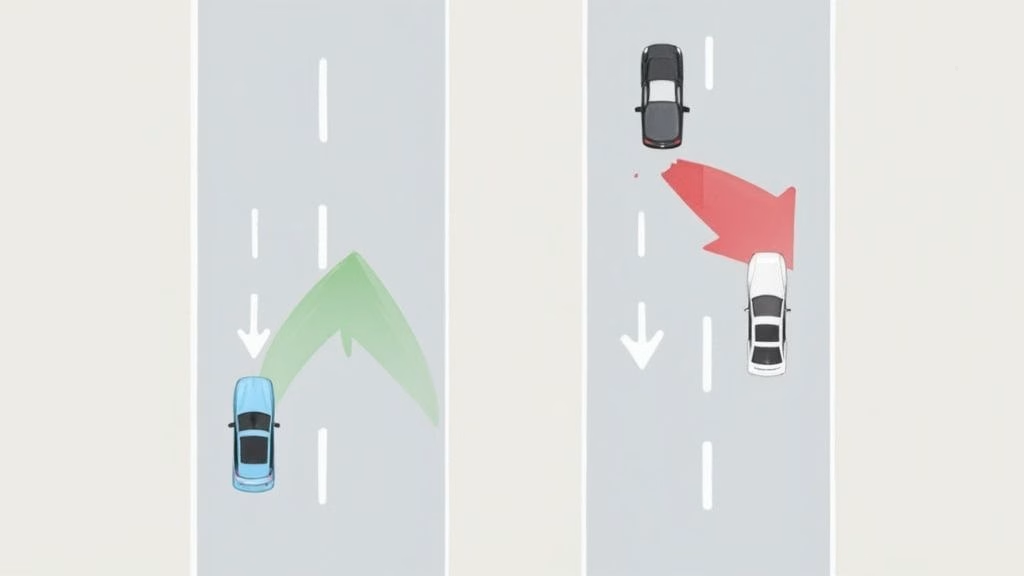
At its most basic, an improper lane change happens anytime you move into another lane without making sure it’s safe and without signaling your intention first. It’s a surprisingly common ticket, and it all boils down to a driver failing to check their surroundings or communicate their next move.
Decoding the Rules of the Road
You can think of traffic as a team sport. Everyone on the road has to anticipate what the other “players” are going to do next to keep things moving smoothly and safely. When someone makes an erratic or unannounced move, it throws the whole system into chaos and creates a recipe for a collision.
That’s why the law is so specific about this. The rules aren’t arbitrary—they’re designed to build predictability on the road, and that starts with two simple, non-negotiable actions.
The Two Pillars of a Safe Lane Change
Every single legal and safe lane change is built on these two fundamental pillars:
- Communication (Signaling): Your turn signal is the only way to tell the drivers around you what you’re planning to do. Activating it well before you move gives everyone else a heads-up, allowing them to adjust their speed and give you the room you need.
- Awareness (Checking Surroundings): Before you even hit that signal, you have to know for a fact that the coast is clear. This isn’t just a quick glance in the rearview mirror. It means checking all your mirrors, turning your head to see your blind spot, and accurately judging the speed of cars in the lane you want to enter.
An experienced driver knows that changing lanes is a request, not a demand. You’re asking for space in traffic, and you have to wait for a safe gap to open up. You can’t just force your way in.
Skipping either of these steps turns a routine maneuver into a dangerous gamble. Whether you’re cutting someone off or swerving unexpectedly, you’re not just breaking the law—you’re putting everyone on the road at risk.
For a more detailed breakdown of the legal ins and outs, this guide on what constitutes an improper lane change is a fantastic resource. Getting a handle on these basics is the first step to becoming a safer, more predictable driver.
Key Elements Of A Proper Vs Improper Lane Change
To make it even clearer, let’s break down the critical differences between doing it right and doing it wrong. This table highlights what separates a safe, legal lane change from a ticket-worthy one.
| Action | Proper Lane Change (Legal & Safe) | Improper Lane Change (Illegal & Dangerous) |
|---|---|---|
| Signaling | Activates signal 100+ feet before the move. | Signals late, during the move, or not at all. |
| Awareness | Checks mirrors and blind spots thoroughly. | Fails to check blind spots; misjudges traffic speed. |
| Execution | Moves into a clear, safe gap smoothly. | Forces other drivers to brake suddenly; cuts someone off. |
| Timing | Waits patiently for a safe opening in traffic. | Swerves or merges impulsively without waiting. |
As you can see, the difference lies entirely in communication and situational awareness. A proper lane change is a deliberate, well-communicated action, while an improper one is often rushed and careless, putting others in danger.
The Hidden Dangers Of An Unsafe Lane Change
Changing lanes feels like such a routine part of driving that it’s easy to forget how dangerous it can be. But make no mistake—a poorly executed lane change is a deceptively simple action that can set off a chain reaction of devastating events. It’s far more than a minor traffic mistake; it’s one of the leading causes of collisions that can turn a normal day into a nightmare in the blink of an eye.
The risk skyrockets on high-speed roads like highways and interstates. Imagine a car suddenly cutting into your lane without a signal. You’re forced to slam on your brakes, and the driver behind you does the same. This single, reckless move can easily trigger a multi-car pileup, all because of one person’s momentary lapse in judgment.
The Sobering Statistics
The numbers don’t lie, and they paint a pretty grim picture. An improper lane change isn’t just a theoretical risk; it’s a very real threat that causes a shocking number of accidents, injuries, and deaths every single year.
According to the National Highway Traffic Safety Administration (NHTSA), unsafe lane changes are responsible for somewhere between 240,000 to 610,000 police-reported crashes in the U.S. each year. These incidents result in at least 60,000 injuries and cause up to 732 fatalities annually.
These figures drive home a crucial point: switching lanes is one of the most hazardous maneuvers you’ll ever perform behind the wheel. The problem isn’t just in the U.S., either. Global research shows that a mind-boggling 33% of all road accidents happen while a vehicle is changing lanes or making a turn. It’s a statistic that really highlights why mastering defensive driving is non-negotiable.
Beyond The Crash Itself
The immediate chaos of a collision is just the beginning. The fallout from an unsafe lane change creates ripples that can impact your finances, your legal record, and your mental health for years to come.
- Serious Injuries: These types of accidents often lead to whiplash, brutal side-impact injuries, and even rollovers—all of which can have lifelong health consequences.
- Emotional Trauma: Whether you caused the crash or were a victim, the experience can leave you with lasting anxiety and a genuine fear of getting back on the road.
- Legal Ramifications: A ticket is just the start. If you’re found at fault for causing an accident, you could be facing civil lawsuits and massive liability claims that go far beyond what insurance might cover.
Knowing these hidden dangers is the first step toward preventing them. For more on this, check out our guide on how to avoid car accidents for some practical, actionable strategies. When you truly grasp the severe outcomes, you start to understand why changing lanes demands your complete and total attention, every single time.
Common Mistakes That Lead To Unsafe Lane Changes
Knowing the textbook definition of an improper lane change is one thing, but seeing how it plays out on the asphalt makes the danger real. These aren’t rare, isolated incidents; they happen every single day, often born from a moment of distraction, a bout of impatience, or just plain unawareness.
Getting a handle on these common blunders is the first step. It helps you avoid making them yourself and, just as importantly, spot them before another driver’s mistake becomes your problem.
The Classic Blind Spot Blunder
This is probably the one we all think of first. A driver checks their mirrors, sees a gap, and starts to move over—completely oblivious to the car lurking right in their blind spot. The result is almost always a startling sideswipe that can send both vehicles careening.
Sure, many newer cars come with blind-spot warning lights, but those are just a backup system. They are not a substitute for the tried-and-true, over-the-shoulder glance. That quick head turn is the only surefire way to know you’re in the clear.
The Aggressive “Cut-Off”
We’ve all been on the receiving end of this one. A car suddenly darts into your lane, leaving you with mere inches to spare between bumpers. It’s a move that forces you to stomp on the brakes, hoping you can stop in time.
This isn’t just rude; it’s incredibly dangerous. It completely vaporizes the safe following distance everyone needs to react. A sudden cut-off at 65 mph on the highway can easily set off a chain-reaction crash as the cars behind you are also forced to panic-brake.
Changing Lanes Within An Intersection
Intersections are already a chaotic dance of traffic streams, pedestrians, and signals. Trying to change lanes right in the middle of one is illegal in Florida for a reason—it injects a totally unpredictable move into a space where drivers expect predictability.
When you’re driving through an intersection, your focus is locked on cross-traffic and the signal ahead. An unexpected lane change can put you directly in the path of someone making a turn, setting the stage for a nasty T-bone or sideswipe crash. It’s a gamble that just isn’t worth it.
The Multiple Lane Weave
Here’s another move fueled by a “me first” attitude: the driver who zips across two or more lanes of traffic in one go. This is a clear violation of the rules of the road, which state you must change lanes one at a time, getting settled in each new lane before you even think about the next.
This simple diagram shows how a single bad decision can have catastrophic consequences.
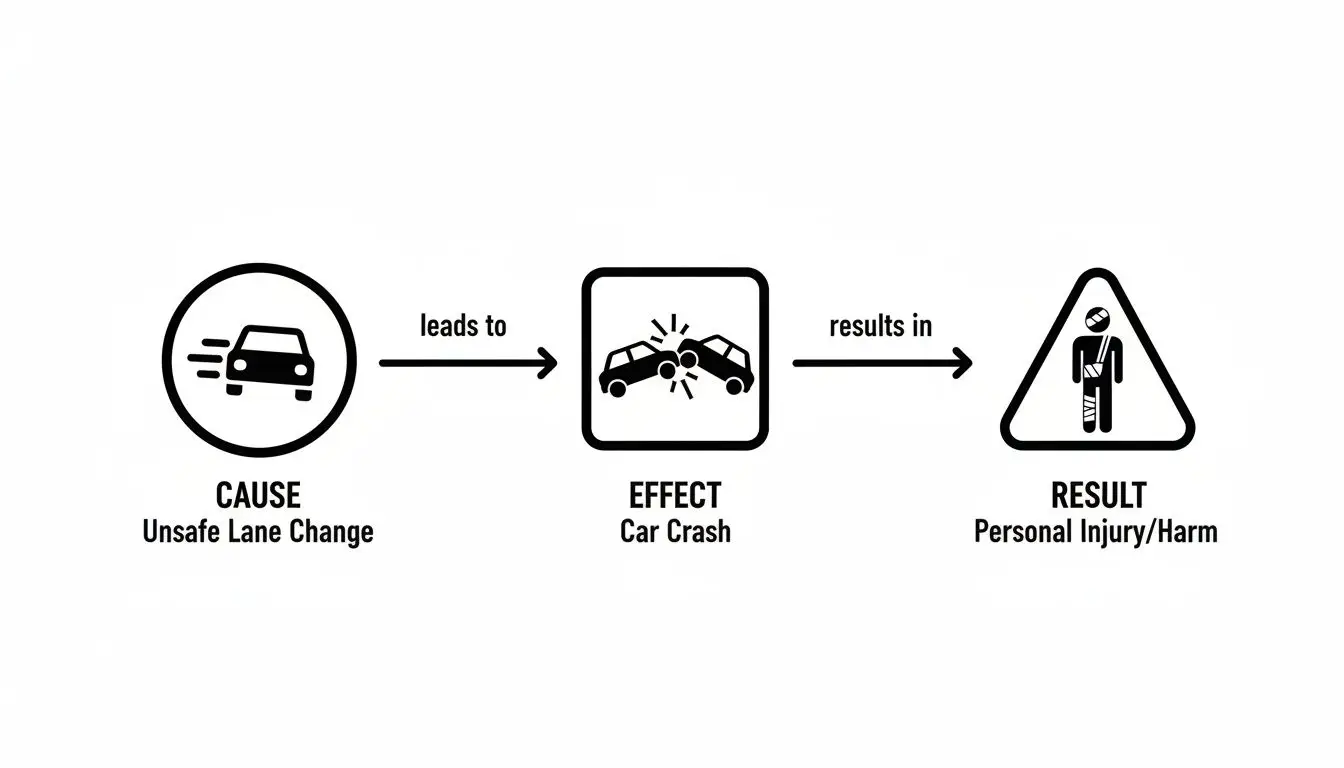
As you can see, a simple swerve can directly lead to a collision and potentially serious personal injury.
- Why It’s So Dangerous: Drivers in other lanes have no way of guessing your ultimate destination. A driver two lanes over might see you merge into the middle lane and assume you’re staying put, only to be shocked when you keep coming right into their space.
- The Simple Solution: A little bit of patience. Make one lane change, get stable, and then signal and check again before making another.
These all-too-common mistakes underscore just how crucial situational awareness is behind the wheel. Building the right habits is key, and you can sharpen these life-saving skills by exploring defensive driving techniques designed to help you anticipate and steer clear of these exact situations.
2. The Real Cost of an Improper Lane Change Ticket
Getting a ticket for an improper lane change can feel like a minor annoyance, but the true cost goes way beyond the fine printed on the citation. Think of it less as a one-time payment and more like the start of a long-term financial headache.
This one mistake can set off a chain reaction, affecting your driving record, your insurance rates, and your wallet for years to come.
Points on Your License: The Ticking Clock
The first hit, of course, is the fine. But the more lasting damage comes from the points added to your driver’s license.
In Florida, an improper lane change ticket typically adds 3 points to your record. These aren’t just abstract numbers; they’re how the state tracks your risk as a driver. Pile up too many points in a certain timeframe, and you’re looking at an automatic license suspension.
A ticket for an unsafe lane change is a red flag for both the state and your insurance company. It suggests a pattern of risky driving that often leads to bigger financial penalties down the road.
This system is all about identifying and penalizing high-risk drivers before something worse happens. To get a full picture of how quickly these points can add up, it’s worth learning more about the Florida traffic ticket point system and the specific thresholds for suspension.
The Insurance Hike: Where It Really Hurts
This is where the real financial pain kicks in. After you get a moving violation, your insurance company will almost certainly label you a “higher-risk driver.” The result? A significant hike in your premiums.
A single improper lane change violation can cause your rates to jump, and that increase can stick around for three to five years. Over that period, you could easily pay hundreds—or even thousands—of extra dollars in insurance costs, all from one small error.
Now, let’s put all the potential costs together to see the full financial picture.
Potential Costs Of An Improper Lane Change Ticket In Florida
Here’s a breakdown of the financial and legal penalties you could be facing from a single improper lane change citation.
| Consequence | Typical Range or Impact | Long-Term Effect |
|---|---|---|
| Ticket Fine | $160 – $250+ | One-time payment, but can increase with court costs. |
| License Points | 3 points | Points remain on your record for years, contributing to potential suspension. |
| Insurance Increase | 15% – 30%+ increase | Higher premiums typically last for 3-5 years. |
| Civil Liability (If Accident Occurs) | $1,000s to $100,000s | Potential lawsuits for damages, medical bills, and lost wages. |
| BDIS Course (To Avoid Points) | ~$25 – $40 | A small upfront cost to prevent the long-term insurance increase. |
As you can see, the initial fine is often just the tip of the iceberg. The long-term insurance premium increases are where the real financial damage is done.
When a Lane Change Causes a Crash
If your lane change leads to an accident, the consequences multiply in a big way. On top of the ticket, points, and insurance hikes, you could be facing civil liability. This means the other driver can sue you for damages.
That lawsuit could cover things like:
- Property Damage: The cost to fix or replace their car.
- Medical Bills: Paying for any injuries they suffered.
- Lost Wages: Reimbursing them for time they couldn’t work.
All of a sudden, a simple driving mistake has spiraled into a major legal and financial crisis.
How to Execute the Perfect Lane Change Every Time
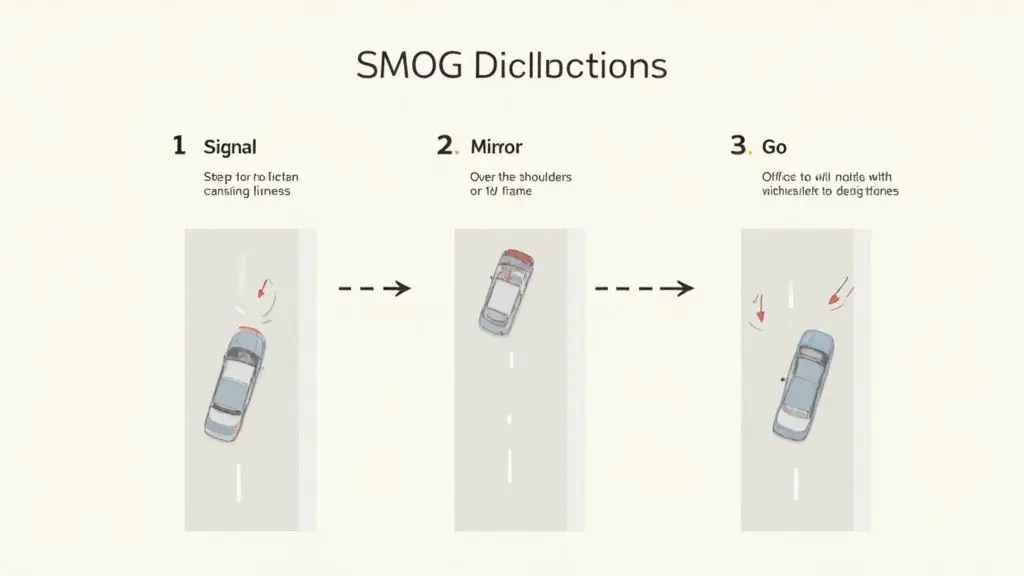
Knowing the rules is one thing, but making them second nature is what truly keeps you safe on the road. A perfect lane change isn’t about being fast or aggressive; it’s a calm, deliberate process that protects you and everyone around you.
To make it easy to remember, I always teach drivers the SMOG method. Think of it as a quick mental checklist to run through every single time you move over. Committing this four-step ritual—Signal, Mirror, Over-the-shoulder, and Go—to muscle memory turns a tricky maneuver into a safe, predictable habit.
S Is For Signal
Your turn signal is your way of communicating with other drivers. It’s not just a suggestion; it’s the first and most vital step to broadcast what you’re about to do. Don’t be the person who flicks it on while turning—give everyone a heads-up.
The golden rule here is to signal at least 100 feet before you actually start to move. That buffer gives other drivers plenty of time to see your plan, adjust their speed, and give you the room you need. And if you want to dig deeper, our guide on when to use turn signals has even more great tips.
M Is For Mirrors
With your signal blinking, it’s time to start gathering intel. Your mirrors are your best friends here, painting a picture of what’s happening behind and beside you. This isn’t just one quick glance; it’s a sequence of checks.
- First, peek at your rearview mirror to get a feel for the traffic flow directly behind you.
- Then, check your side mirror for the lane you want to enter. Is a car there? Is it closing in fast?
Properly adjusted mirrors are fantastic for minimizing blind spots, but they never get rid of them completely. That’s precisely why this next step is an absolute must.
O Is For Over The Shoulder
This is it. This is the one step that so many drivers skip, and it’s often the one that leads to a collision. That quick turn of your head to look over your shoulder is the only way to be 100% certain that your blind spot is clear.
A sobering study looked at 8,667 lane changes and found that a shocking 33% of drivers didn’t check their surroundings properly before moving left. It was even worse for right-hand moves, at 36%. These mistakes are most common in faster traffic, right where the danger is highest.
G Is For Go
Okay, you’ve signaled, checked your mirrors, and looked over your shoulder. The coast is clear. Now, and only now, is it time to “Go.”
And “Go” doesn’t mean jamming the gas pedal. It means smoothly and gradually guiding your car into the next lane. Try to maintain your speed or accelerate just a bit to blend seamlessly with the flow of traffic. Once you’re fully in the new lane, you can switch off your signal. Nail the SMOG method, and you’ll make every lane change a safe one.
Your Options After Receiving A Traffic Ticket
Few things sink your stomach quite like seeing flashing lights in your rearview mirror. But the stress doesn’t end when the officer hands you a ticket—that’s when the real decisions begin.
It’s easy to feel backed into a corner, but what you do next has a major impact on your driving record, your insurance premiums, and your wallet for years to come.
In Florida, you essentially have three ways to handle a citation for an improper lane change. Let’s walk through each one so you can make a smart, informed choice that’s right for your situation.
Understanding Your Three Main Choices
Navigating the court system can feel overwhelming. So, let’s cut through the confusion and break down exactly what your options are. The goal here is simple: protect your driving record and avoid the long-term financial sting of a moving violation.
Here’s a look at the paths you can take:
- Pay the Fine and Accept the Points: This is the path of least resistance, but it’s often the most expensive in the long run. When you just pay the fine, you’re pleading guilty. The Florida HSMV will then automatically add 3 points to your license, and you can bet your insurance company will notice—and raise your rates.
- Fight the Ticket in Court: You always have the right to your day in court. If you believe you were wrongly cited and have evidence to back it up, contesting the ticket is a valid option. Just be aware that it’s a bit of a gamble. If you lose, you could be on the hook for the fine plus additional court costs.
- Elect to Attend a Basic Driver Improvement (BDI) Course: For most drivers, this is hands-down the best move. By choosing to take a state-approved BDI course, you can keep the points from ever hitting your driving record in the first place.
Choosing to attend a BDI course is like hitting a reset button on your ticket. You still pay the citation fine, but you protect your record from the points that cause insurance companies to raise your rates.
Think of it this way: a small investment of your time and a modest course fee can save you from paying hundreds, or even thousands, in higher insurance premiums over the next few years. Taking this proactive step is often the smartest way to manage the fallout from an improper lane change ticket.
Common Questions About Changing Lanes
Even when you know the rules, real-world driving can throw some curveballs. Let’s clear up a few of the most common questions drivers have about making a safe and legal lane change.
Can I Change Lanes In An Intersection?
Absolutely not. In Florida, changing lanes inside an intersection is against the law, and for good reason—it’s incredibly dangerous. Think of an intersection as a highly choreographed dance; everyone expects you to hold your position.
A sudden lane change can easily lead to a crash with someone turning or a car coming from another direction. It’s best to wait until you’re completely through the intersection before you even think about moving over.
How Far Ahead Do I Need to Signal?
Florida law is very specific on this: you must signal continuously for at least 100 feet before you change lanes or make a turn.
This isn’t just a suggestion; it’s a critical heads-up for the drivers around you. Signaling early gives them plenty of time to adjust their speed and position, avoiding last-second slams on the brakes.
Pro Tip: On the highway, where speeds are higher, a good habit is to signal for about five full seconds before you start to move. This gives everyone, especially those in your blind spot, a fair warning.
Is It Illegal to Weave Across Multiple Lanes at Once?
Yes, that’s a huge no-no. Cutting across two or three lanes of traffic in one fluid motion is considered reckless and is a clear violation.
The law requires you to change lanes one at a time. Settle completely into the first lane, then signal and check your mirrors and blind spot again before moving into the next. Weaving is unpredictable and one of the fastest ways to cause a multi-car pileup.
What If I Used My Signal but Still Caused an Accident?
Flipping on your turn signal doesn’t give you a free pass to move over. It’s a request, not a right-of-way.
Your primary job is to make sure the lane is actually clear before you move. If you signal and then merge into another car, you’ll almost certainly be found at fault for the improper lane change. The signal just communicates your intent; it’s up to you to ensure the move is safe.
If you’re looking at a ticket for an improper lane change, don’t just accept the points and higher insurance premiums. Our state-approved online BDISchool course is the easiest way to keep your driving record clean. Enroll today and take control of your driving future.