Florida sets a specific legal driving age when teens can start their journey toward independence behind the wheel. Understanding these age requirements helps parents plan ahead and get their teens on the road safely.
At DriverEducators.com, we guide families through Florida’s driver education process from start to finish. This guide breaks down exactly when your child can enroll, what to expect, and how early education pays off.
When Can Your Child Start Driver Education in Florida
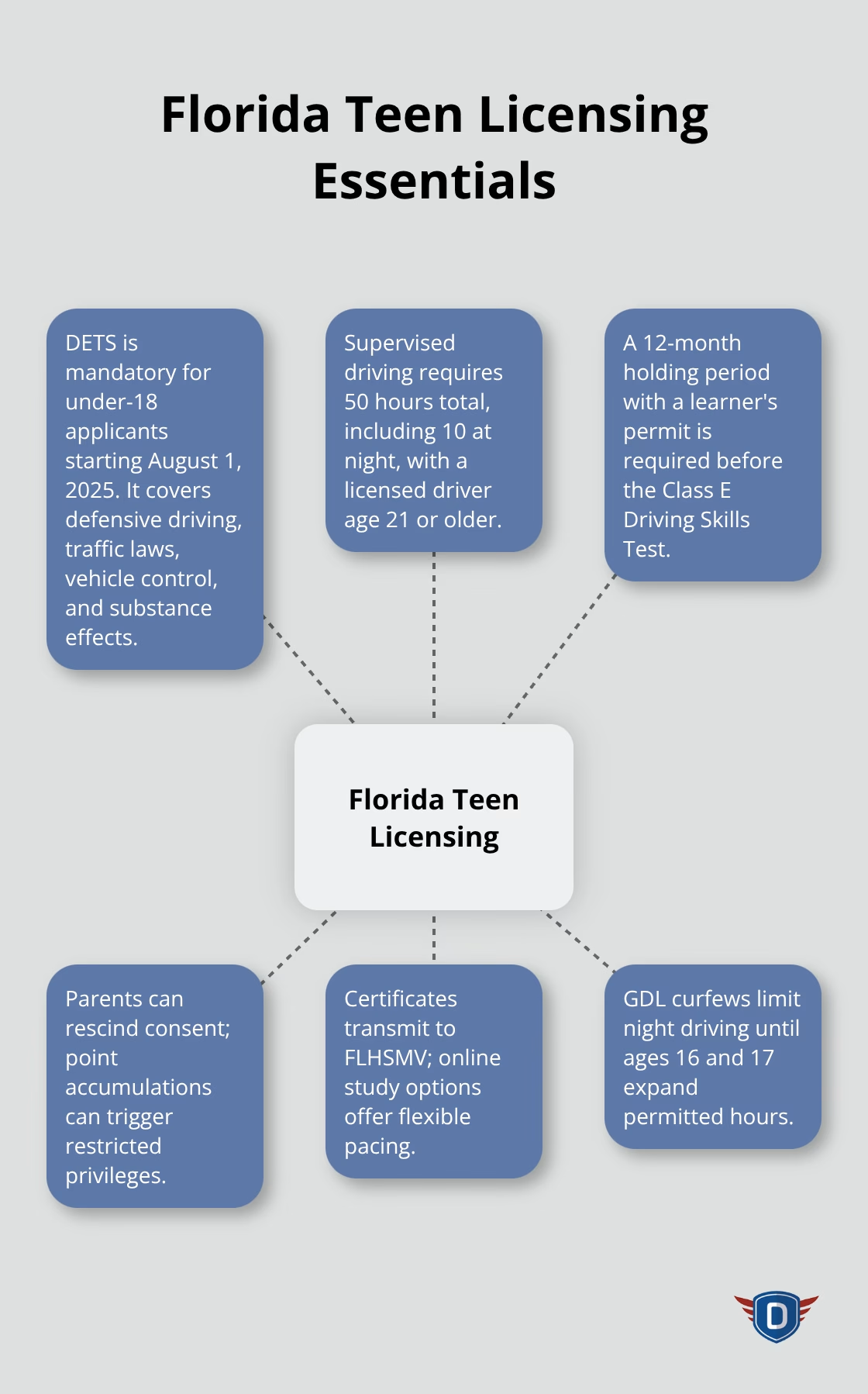
Florida law sets the starting line at age 15 for teens to enroll in driver education, but the journey actually begins earlier. According to the Florida Department of Highway Safety and Motor Vehicles, a Traffic Safety Education course (DETS) is now mandatory as of August 1, 2025, for anyone under 18 seeking a learner’s permit. This program covers defensive driving, traffic laws, vehicle control, and the effects of drugs and alcohol. The shift from the older TLSAE course to DETS reflects Florida’s commitment to structured, modern driver education. Parents should start planning around age 14 so their teens can complete the course and be ready to apply for a learner’s permit the moment they turn 15. This timing matters because the knowledge exam score remains valid for one year, giving families a realistic window to move forward without pressure.
Completing DETS and Taking the Knowledge Exam
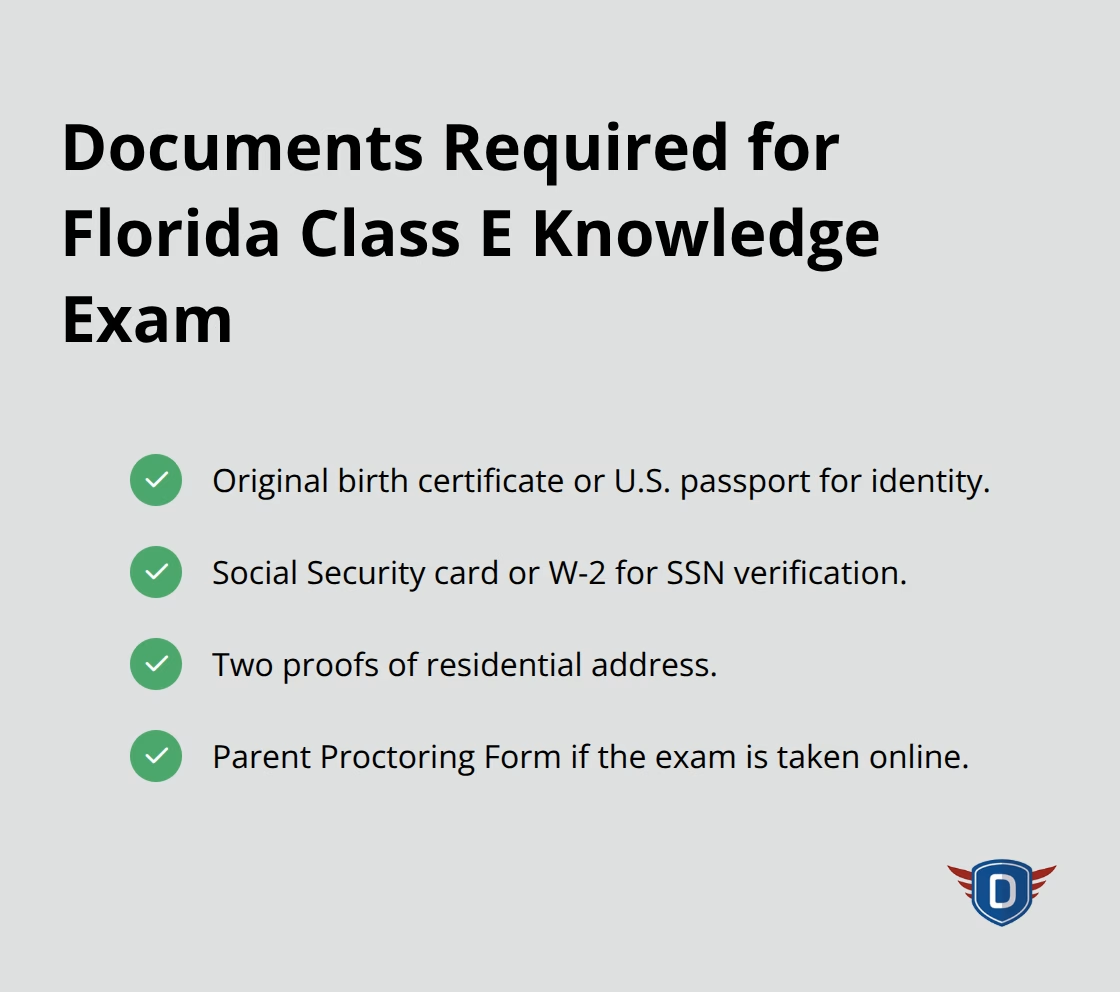
Once your child completes DETS and turns 15, they can take the Class E Knowledge Exam, which consists of 50 multiple-choice questions with a passing score of 40 correct answers (80%). You’ll need to gather specific documents: an original birth certificate or U.S. passport for identity, a Social Security card or W-2 form for the SSN, and two proofs of residential address such as utility bills or a school transcript. If your teen takes the exam online, you must sign a Parent Proctoring Form in front of a notary public. After passing, your child holds a learner’s permit for at least 12 months, during which they must complete 50 hours of supervised driving with a licensed driver aged 21 or older, including at least 10 hours at night.
The Learner’s Permit Phase and Supervised Driving
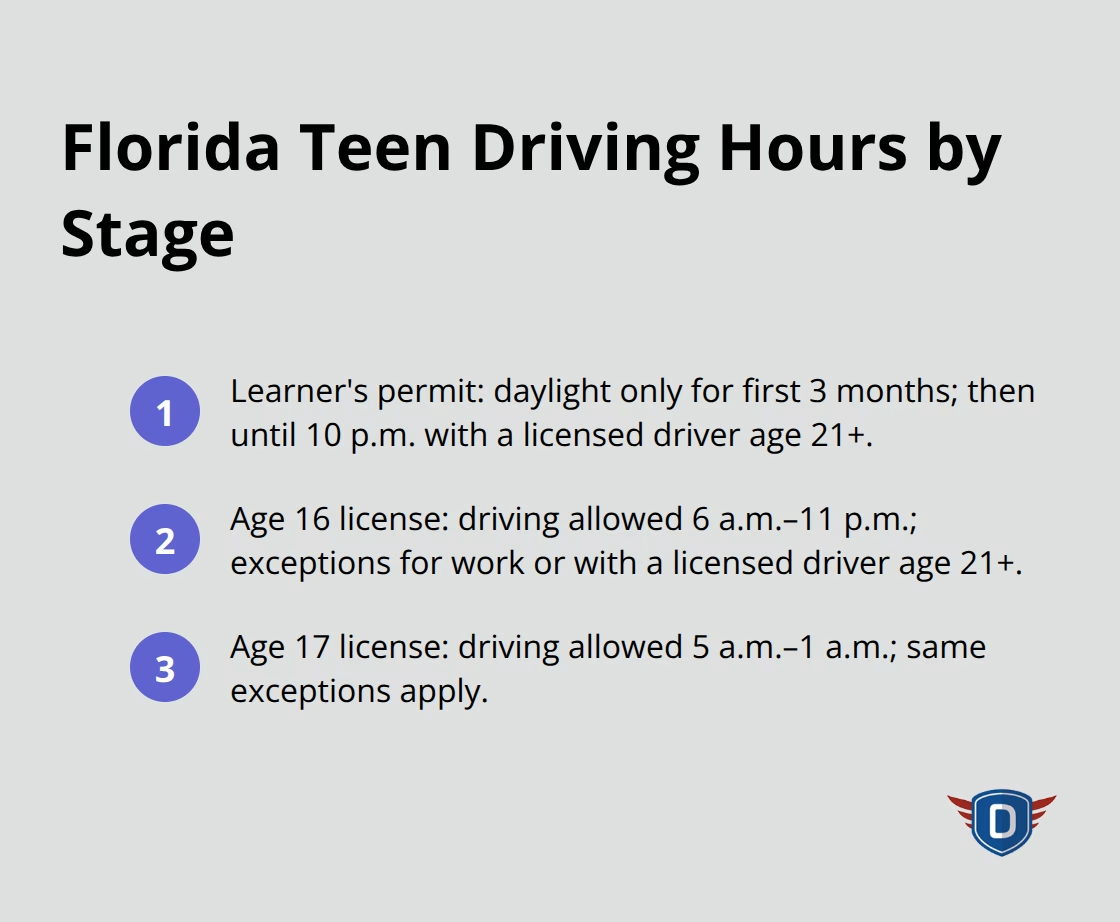
The learner’s permit phase demands serious commitment from both teen and parent. During the first three months, your teen can only drive during daylight hours. After that period, driving extends until 10 p.m., but only with a licensed driver aged 21 or older present. This graduated approach works because it builds real experience under controlled conditions before full privileges arrive. Your teen will log these 50 hours on a Certification of Minor Driving Experience form, which documents progress toward full licensure.
Florida’s Three-Stage Licensing System
Florida’s Graduated Driver Licensing system intentionally restricts teen driving to reduce crash risk. At age 16, your teen can earn a full Class E license with driving allowed from 6 a.m. to 11 p.m., unless driving to or from work or accompanied by someone 21 or older. At age 17, those hours expand to 5 a.m. to 1 a.m. under the same conditions. The system works because it acknowledges that teen crashes spike during nighttime hours and when unsupervised.
Parental Control and Legal Consequences
Your role as a parent doesn’t end at the permit stage. Florida law allows you to rescind consent and cancel driving privileges if needed. Six or more points on a teen’s driving record within 12 months triggers a Business Purposes Only restriction for 12 months or until age 18. Additionally, Florida enforces a zero-tolerance alcohol policy for drivers under 21, with a blood alcohol level of 0.02% or higher triggering license suspension on the first offense. These restrictions exist because teens who follow the gradual progression develop safer habits and gain experience before facing the highest-risk situations. Understanding these rules now prepares you to support your teen through each stage and helps you make informed decisions about when behind-the-wheel training should begin.
Why Starting Driver Education Early Matters
Starting driver education at age 14 or 15, rather than waiting until 16 or 17, gives your teen a genuine competitive advantage that extends far beyond meeting legal requirements. The confidence gap between a teen who practices for months and one who rushes through the process is measurable and real. When your teen completes driver education early and begins supervised driving immediately after turning 15, they accumulate practical experience during a critical developmental window. Supervisors can offer guidance, correct mistakes, and help teens build confidence behind the wheel before they begin driving independently. Early action means your teen builds muscle memory and judgment gradually, which is how the brain actually learns complex motor tasks. This methodical approach transforms driver education from a checklist item into genuine skill development.
Insurance Discounts Start Sooner
Insurance companies reward early completion of driver education with concrete savings that accumulate over time. Many insurers offer discounts when a teen completes an approved driver education course, and some programs provide additional discounts if the course finishes before age 16. A Good Student Discount is available when your teen maintains a “B” average (3.0 GPA) or higher, often saving 10–25%. If your 15-year-old completes driver education and begins supervised driving six months before their 16th birthday, they’ll potentially qualify for insurance discounts that year rather than waiting. Over four years of high school and early college, those savings compound significantly. The discount applies immediately upon completion and proof of certification, so no financial reason exists to delay. Contact your insurance provider now to confirm their specific discount structure and requirements, as programs vary by company.
Consistent Practice Prevents Panic
Completing driver education over several months rather than weeks fundamentally changes the stress level for both teen and parent. When your teen finishes their course at 15 and begins the 50-hour supervised driving requirement immediately, they practice consistently throughout the year leading to their 16th birthday. This means they complete five to ten hours per month rather than trying to cram everything into a few intense weeks. Consistent, spaced practice produces better long-term retention than cramming, which is why spreading the requirement across months makes neurological sense. Your teen develops genuine comfort behind the wheel through repetition and varied conditions, rather than anxiety-driven urgency. The Certification of Minor Driving Experience form documents these hours as they accumulate, so you’ll see real progress recorded. Early action removes the pressure cooker scenario where everything must happen at once, and that reduction in stress translates directly into better learning outcomes and safer driving behavior.
Real-World Experience Builds Judgment
Teens who start early encounter diverse driving conditions across multiple seasons. A teen who practices from age 15 through 16 experiences rain, occasional fog, and varying traffic patterns that a compressed timeline simply cannot provide. This exposure matters because judgment develops through experience, not instruction alone. Your teen learns how their vehicle handles in wet conditions, how visibility changes throughout the year, and how traffic patterns shift between school days and weekends. These real-world lessons stick because they happen naturally over time rather than in isolated practice sessions. The 50-hour requirement becomes a genuine learning journey instead of a box to check before the driving test.
Moving Forward with Confidence
Early driver education positions your teen to approach the Class E driving skills test with genuine confidence rather than nervous hope. Your teen has logged substantial hours, faced varied conditions, and developed real competence under supervision. This foundation matters when they sit down with an examiner who evaluates their ability to handle the road safely and independently.
How Florida Driver Education Programs Work
Florida’s driver education landscape shifted dramatically on August 1, 2025, when the state mandated driver education courses for all applicants under 18. The six-hour online DETS program from providers like Florida Virtual School covers defensive driving, traffic laws, vehicle control, and the neurological impact of drugs and alcohol on driving ability. This online format allows your teen to complete the course at their own pace, typically finishing within 9–10 weeks at roughly 2–3 hours per week. The structured curriculum addresses real hazards your teen will face: how to share the road with pedestrians and cyclists, techniques for defensive driving, and physical and mental factors that affect driving ability.
DETS Completion and Certificate Transmission
Your teen receives a certificate upon completion, which transmits directly to the Florida Department of Highway Safety and Motor Vehicles, streamlining the permit application process. The online delivery matters because your teen can study from any device at any time, which eliminates scheduling conflicts that plague classroom-based alternatives. Some high schools offer semester-long DETS courses as well, but the self-paced online option provides flexibility that busy families need. After your teen completes DETS and turns 15, they take the Class E Knowledge Exam, a 50-question test requiring 40 correct answers to pass. This exam can be taken online through approved programs, at a FLHSMV office, or through participating high school programs, giving your family genuine choice about where and when your teen sits for the test.
Behind-the-Wheel Training and Supervised Hours
Behind-the-wheel training happens separately from DETS and requires your teen to work with a local driving school or certified instructor. This is where the actual skill development occurs, and it cannot be rushed or replaced by video instruction. Your teen must complete 50 hours of supervised driving with a licensed driver aged 21 or older, including at least 10 hours at night, documented on a Certification of Minor Driving Experience form. The Florida Safety Council partners with counties to provide free or low-cost behind-the-wheel training options in select areas, so contact your county directly before paying for private instruction. For counties without free programs, use the FLHSMV directory to locate certified instructors.
The 12–Month Holding Period and Driving Skills Test
The behind-the-wheel phase lasts at least 12 months or until your teen turns 18, whichever comes first, which means your teen cannot rush through even if they complete the hours quickly. Once your teen accumulates the required 50 hours and holds their learner’s permit for the full 12-month minimum, they become eligible for the Class E Driving Skills Test, where an examiner evaluates their ability to operate the vehicle safely and independently. The test vehicle must have valid registration, insurance, and pass a basic vehicle inspection, so arrange this before your testing appointment.
Full License and Ongoing Restrictions
Upon passing the driving skills test, your teen receives their full Class E license, though the Graduated Driver Licensing restrictions on nighttime driving and passenger limits remain in effect until age 17 or 18 depending on the specific rule. Some insurance companies offer discounts after completing driver education, so verify eligibility with your provider once your teen finishes the DETS course.
Final Thoughts
Florida’s legal driving age of 15 for learner’s permits marks the start of a structured journey toward independence behind the wheel. Starting driver education at age 14 or 15 gives your teen months of supervised practice, real-world experience across varying conditions, and genuine confidence before facing the driving skills test. The state’s Graduated Driver Licensing system works because teens who follow this gradual progression develop safer habits and better judgment than those who rush through the process.
Early action delivers measurable benefits beyond meeting state requirements. Your teen builds muscle memory through consistent practice, qualifies for insurance discounts sooner, and approaches their full license with competence rather than anxiety. The 50-hour supervised driving requirement transforms into a genuine learning experience instead of a box to check, and the 12-month holding period ensures your teen faces varied road conditions and develops real-world judgment.
We at DriverEducators.com understand that driver education extends far beyond passing tests-it shapes how your teen approaches safety for life. Our Florida-approved curriculum covers defensive driving techniques, traffic laws, and the real hazards your teen will face on the road, and DriverEducators.com offers the support your family needs to navigate the entire licensing process with confidence.