Traffic violations cost drivers money, time, and safety. Understanding traffic rules isn’t just about following the law-it’s about protecting yourself and others on the road.
At DriverEducators.com, we’ve seen how proper knowledge of right-of-way rules, defensive driving techniques, and common violations prevents accidents. This guide breaks down what you need to know to drive safely and legally.
Understanding Florida’s Right-of-Way Rules
Traffic Violations Cost Real Money
Right-of-way violations carry serious financial consequences for Florida drivers. A moving violation for failing to yield can result in fines depending on the specific infraction, plus points on your driving record and increased insurance premiums. These costs add up quickly, making it essential to understand exactly who moves first at intersections.
How Traffic Lights and Stop Signs Work
At intersections with traffic lights, drivers approaching a green light must still yield to pedestrians and cyclists who are legally in the crosswalk, even if that pedestrian entered on a previous signal cycle. Florida law requires you to come to a complete stop at red lights and stop signs before proceeding-rolling stops do not satisfy this requirement. When you approach a stop sign, you must yield to all vehicles and pedestrians that have already entered the intersection or are close enough to be an immediate hazard.
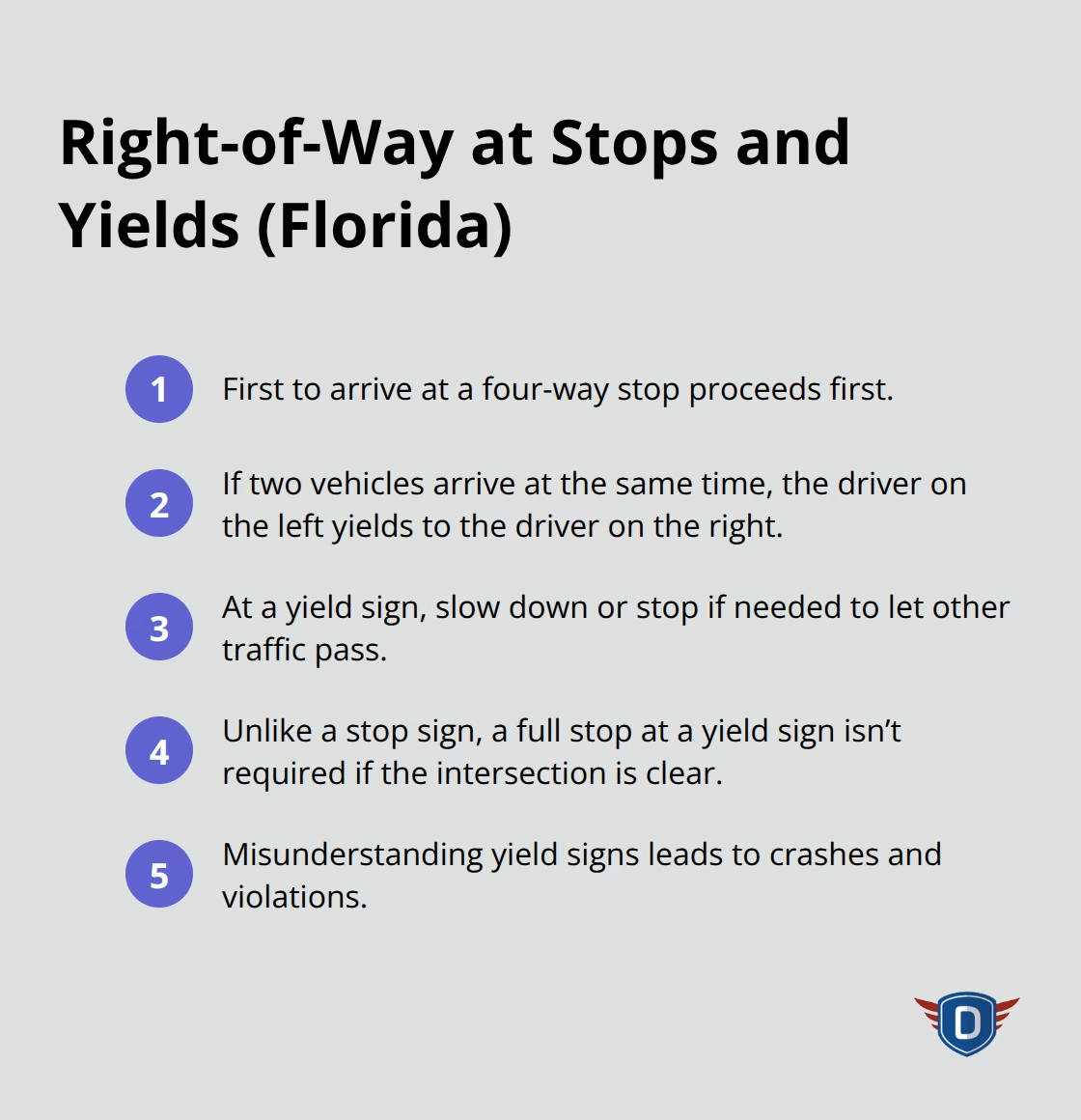
At four-way stops, the first vehicle to arrive proceeds first. If two vehicles arrive simultaneously, the driver on the left yields to the driver on the right. Yield signs require you to slow down or stop if necessary to let other traffic pass, but unlike stop signs, you do not need to come to a complete halt if the intersection is clear. Many drivers misunderstand yield signs and treat them as optional, which leads to crashes and violations.
Protecting Pedestrians and Cyclists
Pedestrians and cyclists have specific protections under Florida law that drivers frequently overlook. When turning left or right at an intersection, you must yield to pedestrians and cyclists crossing in your path, regardless of whether a walk signal is displayed. Pedestrians have the right of way in marked crosswalks and unmarked crosswalks at intersections, and drivers turning into a driveway must also yield to pedestrians on the sidewalk.
Florida’s move-over law requires drivers to move to another lane or slow to a safe speed when approaching stopped vehicles with hazard lights flashing. Violating move-over laws results in fines, points on your license, and increased insurance cost. The safest approach assumes pedestrians and cyclists will move unpredictably-maintain extra space and reduced speed in areas where they are present (school zones, residential neighborhoods, downtown areas).
Building the Foundation for Defensive Driving
Understanding right-of-way rules forms the foundation for defensive driving. These rules establish predictability on the road, allowing drivers to anticipate what others will do. When you master right-of-way rules, you reduce your crash risk and protect vulnerable road users. The next section explores how defensive driving techniques work together with right-of-way knowledge to help you avoid violations and stay safe.
How to Build Real Defensive Driving Skills
The Three-Second Rule That Saves Lives
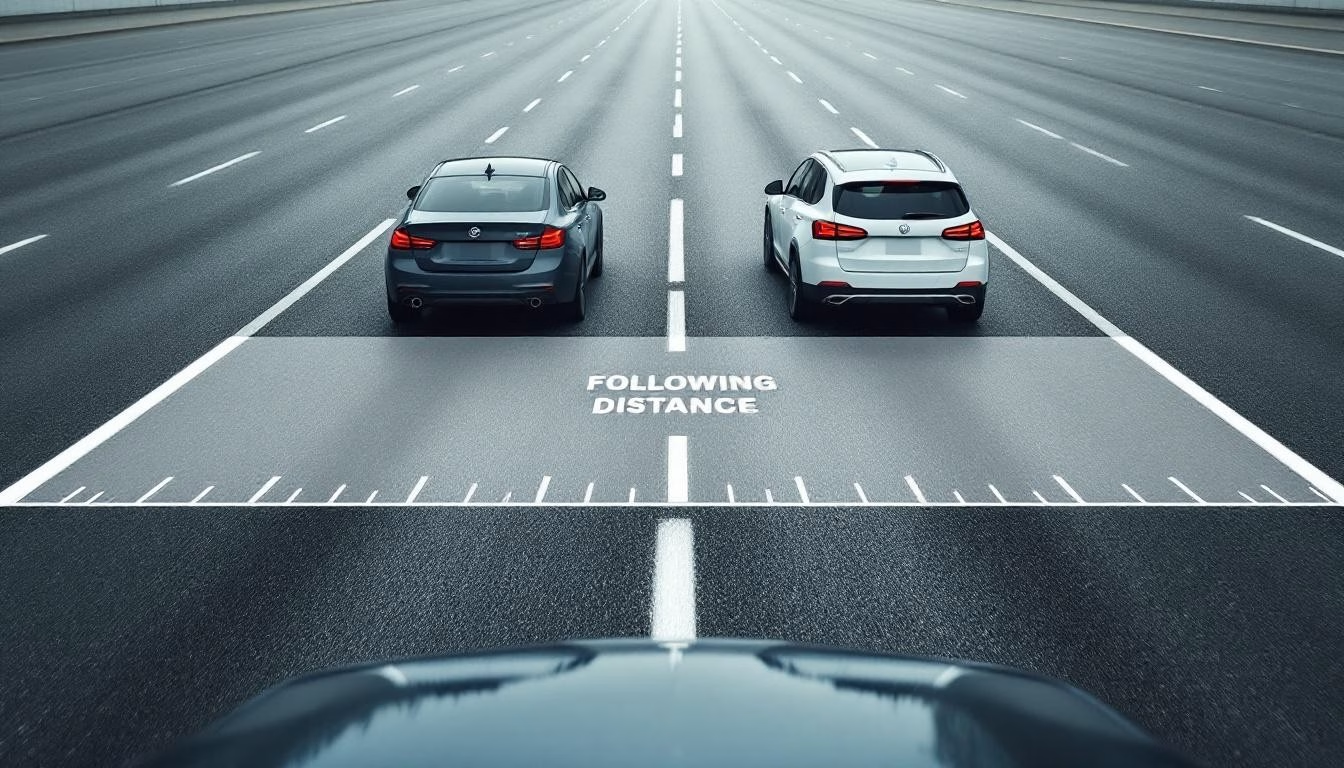
Defensive driving means controlling what you can control right now. The three-to-four-second following distance rule exists because that’s how long it takes your brain to process danger, your foot to move to the brake, and your car to stop. At 55 mph, you travel 61 feet during your reaction time, which means a three-second gap gives you stopping space. Most drivers maintain less than two seconds, which is why rear-end collisions remain the most common crash type on Florida roads.
Test your own distance by picking a fixed object ahead, starting a count when the car in front passes it, and stopping when your car reaches it. If you finish before three seconds, you’re too close. Poor weather and higher speeds demand five or six seconds-not as a suggestion, but as a requirement for survival. Tailgating a slow driver won’t make them go faster; it only removes your escape route when something goes wrong ahead.
Speed Control and Hazard Recognition
Speed isn’t just a number on a sign; it’s a statement about how much control you’re willing to surrender. Florida’s new dangerous excessive speeding law, effective July 1, 2025, imposes criminal penalties for driving 50 mph over the limit or 100 mph on many roads, triggering mandatory hearings and serious consequences beyond fines. Residential neighborhoods, school zones, and construction zones demand immediate speed reduction because hazards appear without warning in these areas.
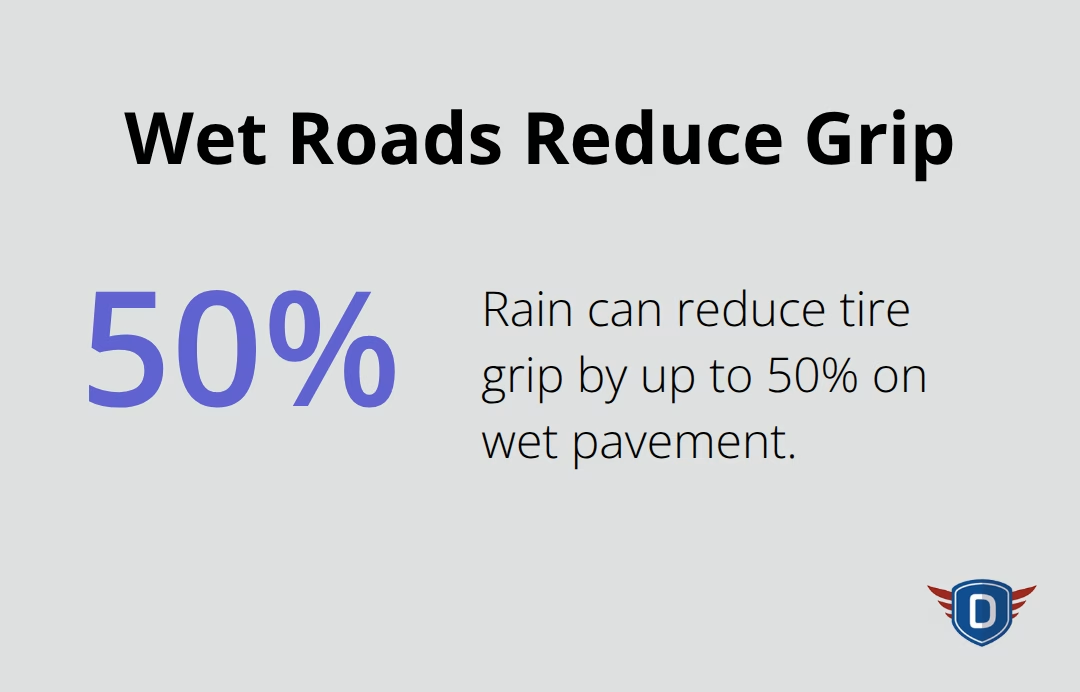
Rain reduces tire grip by up to 50 percent, yet most drivers maintain highway speeds on wet pavement. Adjust your speed before conditions force you to-you brake early, you signal clearly, and you leave space for others to react. Road conditions change constantly: construction zones appear overnight, pedestrians step into crossings, and other drivers make sudden decisions.
Scanning Ahead and Anticipating Danger
Scan ahead 10-15 seconds instead of staring at the hood in front of you. This habit reveals hazards before they become emergencies. Glance at mirrors every five to eight seconds, check blind spots before changing lanes, and expect the unexpected at every intersection. Your eyes control your survival on the road-where you look determines what you see and what you miss.
The Ripple Effect of Calm Driving
Aggressive driving is contagious, but so is calm, patient driving. When you slow down, signal early, and maintain distance, the drivers around you unconsciously adopt safer habits too. Your behavior on the road influences everyone sharing that space with you. This shift in mindset-from rushing to arriving safely-transforms not just your own crash risk but the safety culture of the roads you travel.
The foundation of defensive driving rests on these habits: distance, speed adjustment, constant scanning, and composure. These techniques work together to give you time to react when danger appears. The next section examines how distracted driving and aggressive behaviors undermine these protective habits and create violations that cost drivers money, points, and peace of mind.
What Phone Use and Aggressive Behavior Really Cost You
The True Price of Distracted Driving
Five seconds of texting at 55 mph covers the length of a football field while your eyes stay off the road. That’s not theory-that’s physics. Florida drivers caught with a handheld device face fines, points on their license, and insurance premiums that spike immediately. Distracted driving isn’t about carelessness for a moment; it’s about surrendering control of a two-ton vehicle to a notification. Your phone will still be there after you park.
The text can wait. The call can wait. Your life cannot. The hands-free law in Florida applies to all drivers, and enforcement tightens across the state. Insurance companies now track phone use through telematics apps, meaning they know when you’re distracted-and they adjust your rates accordingly. One distracted driving incident costs you hundreds in fines plus thousands in increased premiums over the next three to five years.
How to Eliminate Phone Distractions
Set your device to do-not-disturb mode before you leave. Mount it on the dashboard if you need GPS. Commit to zero interaction while moving. When you feel the urge to check your phone while driving, that urge is exactly when you should not touch it.
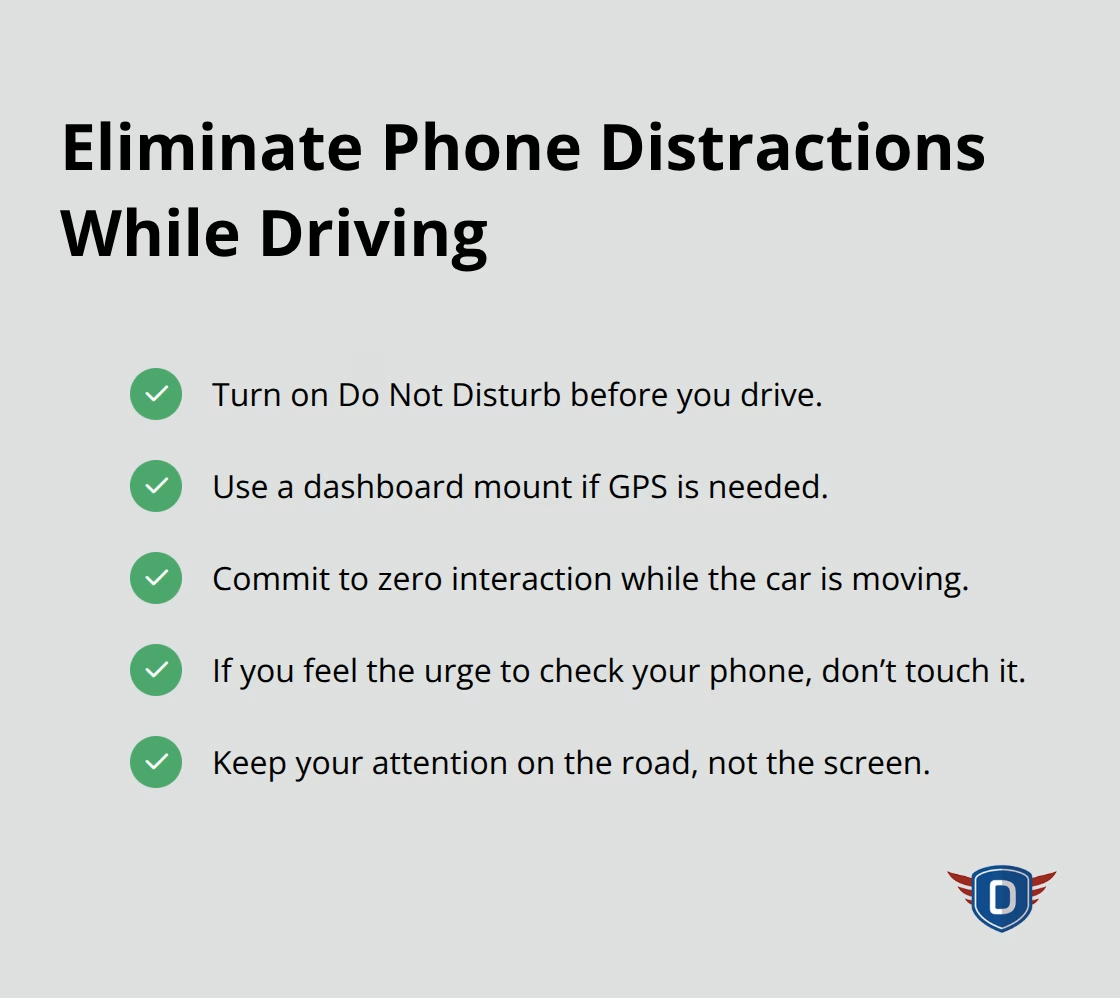
Your attention belongs on the road, not on a screen.
Aggressive Driving Kills
Tailgating, cutting off other drivers, honking excessively, flashing lights, and making rude gestures create a chain reaction of escalating danger that ends in crashes, injuries, and deaths. Florida’s roads see aggressive drivers every single day, and many have no idea how their behavior affects the people around them. Aggressive driving starts with a choice, and speeding combined with weaving through traffic, refusing to let other cars merge, or blocking the left lane absolutely does.
Criminal Penalties for Dangerous Speeding
Florida’s new dangerous excessive speeding law effective July 1, 2025, imposes criminal penalties for driving 50 mph over the limit on many roads. You face mandatory hearings, possible jail time, and a permanent criminal record-not just a traffic ticket. This law transforms a traffic violation into a criminal offense with consequences that follow you for life.
The Path to Safer Driving Behavior
If anger builds while driving, pull over, take a breath, and reset. Aggressive drivers don’t arrive faster; they arrive in ambulances or not at all. The safest drivers on the road are the patient ones. Leave fifteen minutes earlier than you think you need to. Plan your route before you start driving to avoid last-minute lane changes. Accept that other drivers will make mistakes. When someone cuts you off, let them go. When traffic slows, slow down without frustration. Defensive driving skills directly influence the safety of everyone sharing that road with you, and your arrival time matters far less than your arrival alive.
Final Thoughts
Understanding traffic rules transforms how you drive and what happens when you make mistakes. Right-of-way knowledge, defensive techniques, and awareness of violations form a complete safety system that protects you and everyone sharing the road. The financial cost of violations-fines, points, insurance increases, and potential criminal penalties-makes compliance worth your immediate attention, but the real cost of poor driving is measured in crashes, injuries, and lives lost.
Safe road navigation depends on habits you build today. Maintaining three to four seconds of following distance, adjusting speed before conditions force you to, scanning ahead constantly, and staying calm under pressure work together to prevent violations before they happen. When you eliminate phone distractions and refuse to engage in aggressive driving, you remove the behaviors that cause the most crashes. Florida’s new dangerous excessive speeding law shows how seriously the state treats reckless driving-criminal penalties now apply to drivers going 50 mph over the limit, transforming a traffic ticket into a permanent criminal record.
Professional driver education accelerates this learning process. At DriverEducators.com, our Florida-approved traffic school programs teach you exactly what the FLHSMV requires while building habits that stick. Our courses cover defensive driving techniques, safe following distances, right-of-way rules, and the behavioral changes that reduce crash risk.
![Teen Driver Licensing Requirements in Florida [2026]](https://drivereducators.com/wp-content/uploads/emplibot/florida-license-requirements-hero-1773544196.avif)