A traffic ticket in Florida can derail your driving record and wallet faster than you’d expect. The penalties stack up quickly-points on your license, insurance rate hikes, and potential suspension all loom ahead.
At DriverEducators.com, we’ve seen drivers fight back successfully using the right traffic ticket defense Florida strategy. This guide walks you through your actual options, from court battles to negotiation tactics to traffic school alternatives.
What Penalties Follow a Florida Traffic Ticket
Points accumulate automatically and trigger suspension
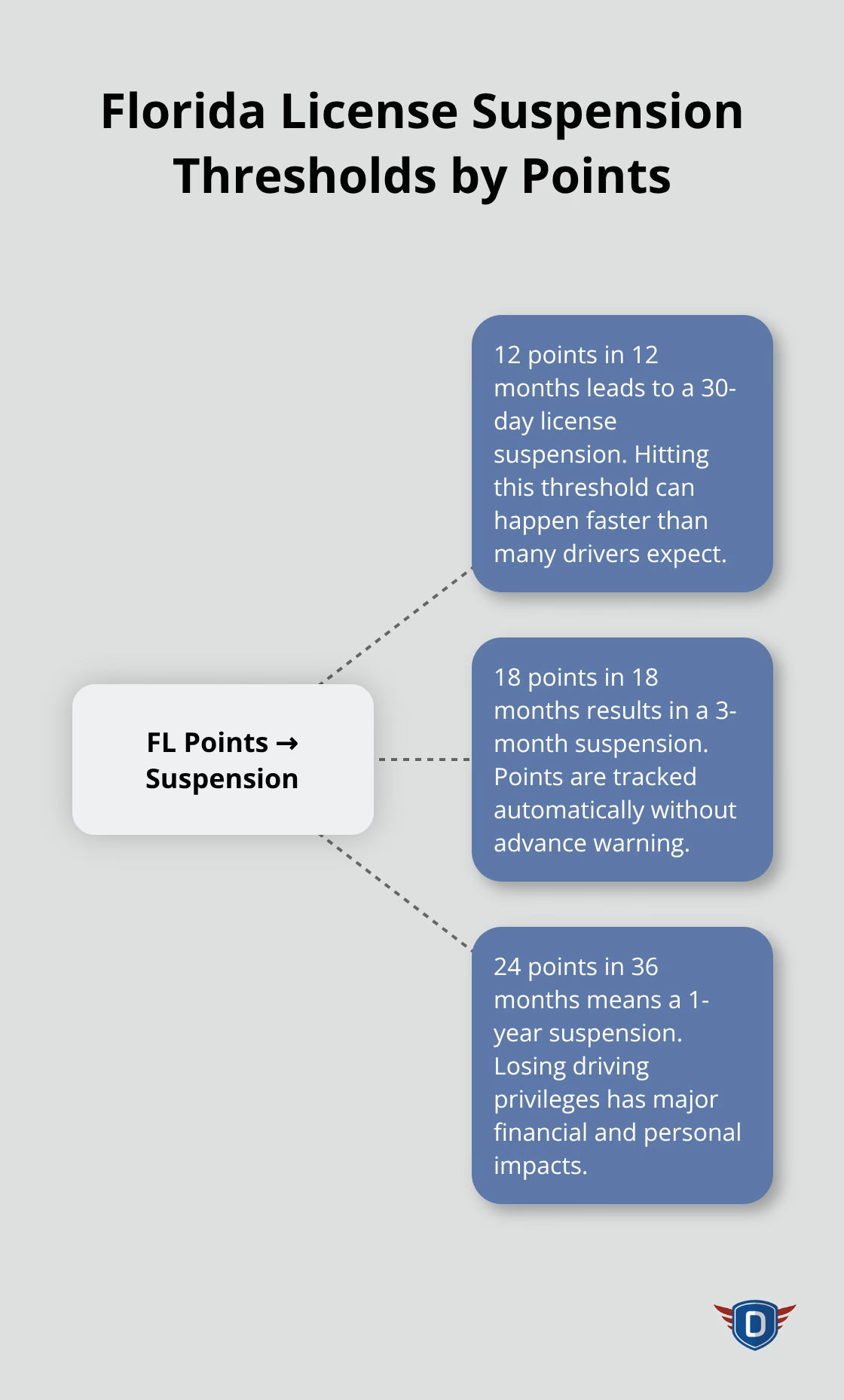
Florida’s traffic penalties hit harder than most drivers realize, and the damage extends far beyond the initial fine. A single moving violation triggers an automatic point assessment that feeds directly into the state’s license suspension system. According to the Florida Department of Highway Safety and Motor Vehicles, accumulating 12 points within 12 months results in a 30-day license suspension; 18 points in 18 months triggers a 3-month suspension; and 24 points in 36 months means a full year without driving privileges. The state tracks these points automatically every single day, with no warning letter before suspension kicks in. Crossing a threshold can happen without notice if you’ve accumulated violations over time.
Speeding violations carry steep point costs
Speeding violations carry point values that depend on how far over the limit you were traveling. Going 6 to 9 mph over the limit adds 3 points, while 15 to 19 mph over costs you 4 points. Hit 30 mph or more over the limit and you face 6 points plus a $250 fine. School zone violations double the fine structure, so speeding 10 to 14 mph over in a school zone costs $100 instead of the standard amount. Red-light tickets, reckless driving citations, and improper lane changes each carry their own point values that compound quickly.
Insurance costs dwarf the ticket itself
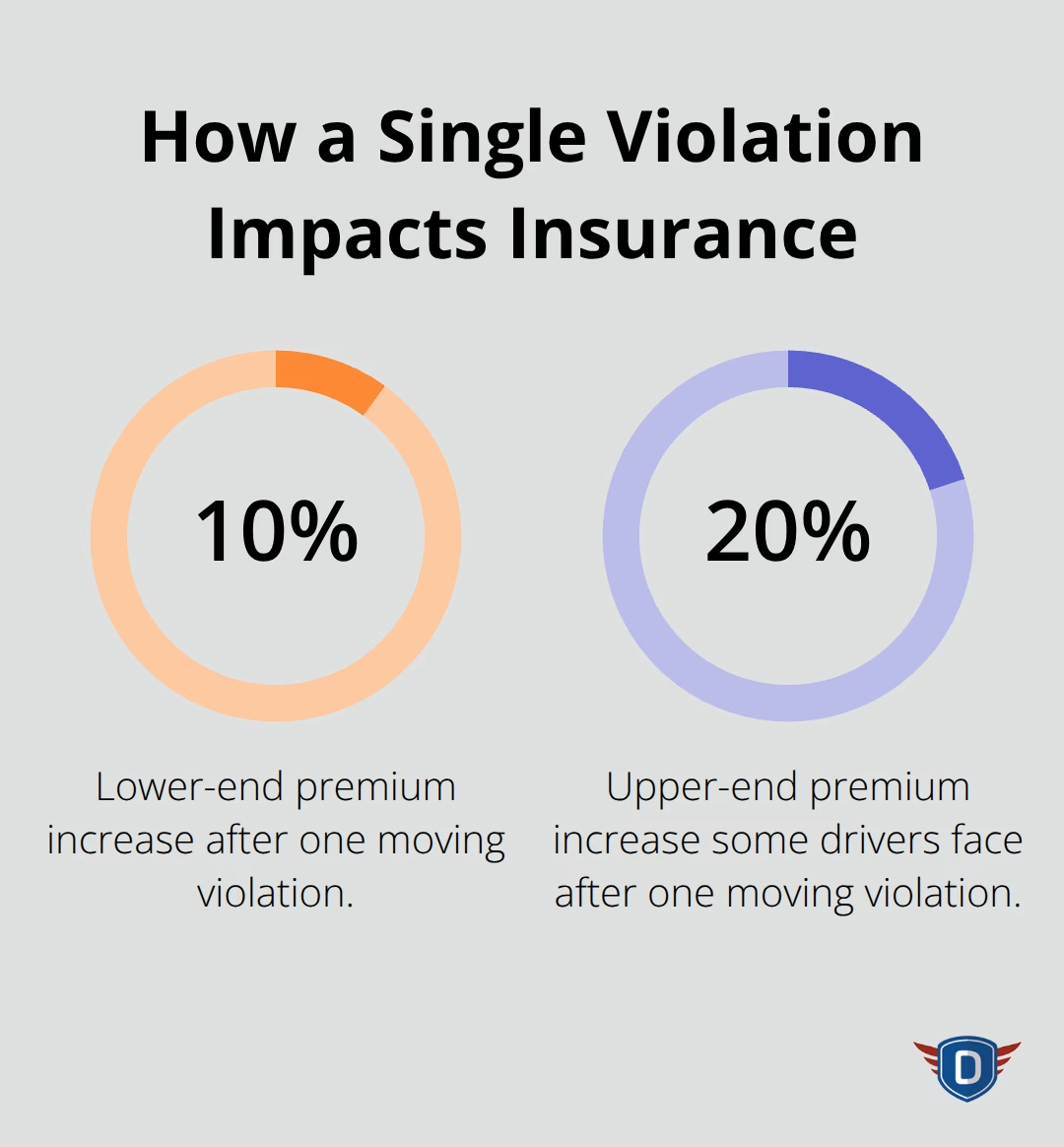
Your insurance company will discover the violation long before you finish paying the court fine. A single moving violation can increase your premiums by 10 to 20 percent depending on your carrier and driving history, and that increase typically lasts three to five years. If you end up with a license suspension due to point accumulation, Florida requires you to carry SR-22 insurance, which is substantially more expensive than standard coverage and must stay in place for three years after your suspension ends.
The combined cost of higher premiums, mandatory SR-22 requirements, and court fines often exceeds what a traffic attorney would charge to fight the ticket.
The long-term financial trap
Many drivers who simply pay the fine and accept the points end up spending thousands more over the following years than they would have invested in a proper defense. This is why treating a traffic ticket as a financial problem rather than just a legal inconvenience matters so much. The real question isn’t whether you can afford to fight the ticket-it’s whether you can afford not to. Understanding your defense options becomes critical when you realize that one ticket’s long-term insurance costs may exceed a lawyer’s flat-fee upfront charge. Your next move determines whether points hit your record or whether you preserve your driving privileges and keep your rates stable.
What Happens After You Get Ticketed
Fight the ticket in traffic court for the strongest outcome
Fighting a traffic ticket in Florida court gives you the best chance to avoid points entirely. You have 30 days from the ticket date to plead not guilty and request a hearing-this deadline is absolute, and missing it locks in the violation and triggers automatic point assessment. At the hearing, the officer must prove their case, and you or your attorney can cross-examine them about how they measured your speed, whether they had a clear line of sight, or if equipment like radar was properly calibrated. Many tickets contain small errors (misspelled names, incorrect vehicle descriptions, or wrong statute citations) that lead to dismissal without requiring a full defense. Speed camera and red-light tickets are especially vulnerable because you can request maintenance records and calibration logs for the equipment used. If the officer fails to appear or cannot establish probable cause, the case gets dismissed and no points are added.
The financial math works strongly in your favor. A flat-fee traffic attorney typically costs $150 to $400, while a single conviction’s insurance increases over three to five years easily exceed $1,000. Court costs of around $35 for moving violations apply regardless of outcome, but that remains far cheaper than accepting points.
Negotiate a withhold of adjudication with the prosecutor
Negotiating with the prosecutor before trial offers a middle path that many drivers overlook. Prosecutors handle hundreds of cases and often accept withhold of adjudication agreements, which means the court finds you responsible but doesn’t enter a conviction, leaving your driving record and insurance rates unaffected. You avoid points without exhausting your five-lifetime traffic school eligibility, and the prosecutor moves faster through their docket.
This approach requires contacting the state attorney’s office in your county within that 30-day window and discussing whether they’ll agree to a withhold without requiring you to attend traffic school or spend additional money. The withhold agreement typically requires paying the fine plus a small processing fee to the clerk (usually around $30 to $50), making it cheaper than traffic school while delivering the same point-free result.
Use traffic school as your fallback defense option
Traffic school through an approved Florida provider serves as your fallback option if negotiation fails or court defense isn’t viable. Completing a Florida Department of Highway Safety and Motor Vehicles-approved Basic Driver Improvement course prevents points from being assessed and can qualify you for insurance discounts. Traffic school costs between $60 and $150 depending on the provider, plus the court fine itself. This option is limited to five uses in your lifetime, and you cannot use it more than once every 12 months.
DriverEducators.com offers Florida-approved traffic school programs designed to help drivers become safer and more responsible while meeting court requirements. Our Basic Driver Improvement course covers Florida traffic laws, defensive driving techniques, and safe driving habits-all delivered online at your own pace.
Compare your three paths forward
Your choice between fighting in court, negotiating a withhold, or attending traffic school depends on how strong your defense evidence is and how quickly you want the case resolved. Court defense works best when you have dashcam footage, witness statements, or equipment calibration issues to challenge. Withhold negotiation works when the prosecutor is willing to move quickly and you want to avoid the time commitment of a hearing. Traffic school works when you want a straightforward, predictable outcome without the uncertainty of court proceedings.
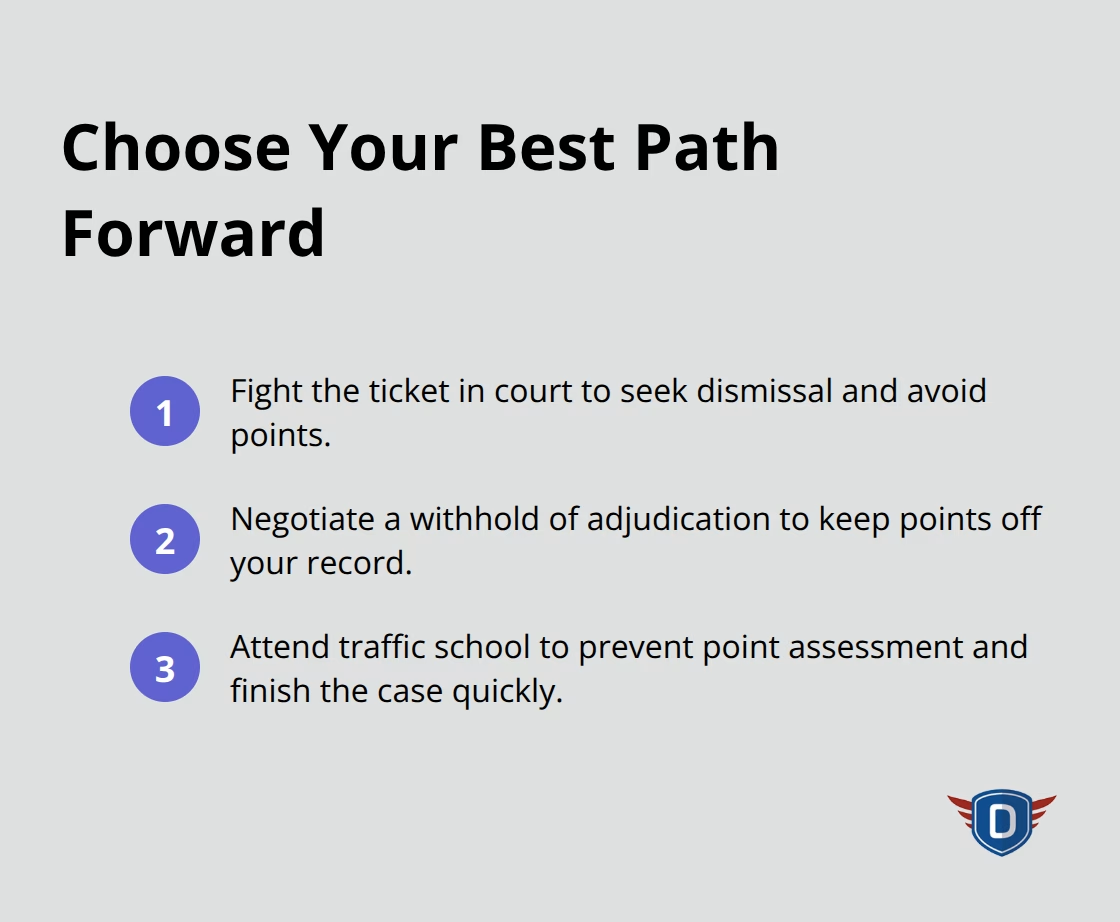
The next step determines whether you preserve your driving privileges or let points accumulate on your record. Understanding which path fits your situation requires examining your specific ticket details and the strength of any evidence you can present.
How to Build a Winning Defense
Collect evidence immediately after the traffic stop
Start your defense the moment you receive the ticket by documenting every detail of the traffic stop itself. Write down the exact time, location, weather conditions, visibility, road surface conditions, and how many vehicles occupied the road. If dashcam footage exists, retrieve it right away because storage systems often delete recordings after 30 to 90 days. Photograph the location where the stop occurred, including road markings, signage visibility, and any obstructions that might have affected the officer’s line of sight.
For speeding tickets specifically, request the radar or LIDAR device’s maintenance records and calibration logs from the arresting agency within 30 days, as Florida courts require proof that equipment was properly maintained and calibrated. Contact any witnesses present during the stop and obtain their statements in writing with their contact information. Strong evidence collection forms your foundation because officer testimony alone never suffices to convict if you present contradictory facts.
Attack the officer’s observations and equipment accuracy
A well-prepared defense challenges specific elements of the officer’s case, such as whether they actually saw your speed displayed on the radar screen or whether they maintained a clear line of sight while measuring your vehicle’s speed from a moving patrol car. Speed detection equipment fails calibration checks regularly, and maintenance records often reveal gaps in proper servicing. Request the officer’s training certifications and verify they completed required radar operator courses before the stop occurred.
Red-light and speed camera tickets are especially vulnerable because you can challenge camera calibration, maintenance schedules, and whether warning signs were clearly visible at the location. Small errors on the ticket itself (misspelled names, incorrect vehicle descriptions, or wrong statute citations) lead to dismissal without requiring a full defense. These procedural mistakes happen frequently and courts take them seriously.
Work with a traffic attorney to strengthen your case
A traffic attorney accelerates this process because they know exactly which evidence matters most in your jurisdiction and which judges respond to specific defense arguments. An attorney requests the officer’s training records, traffic stop reports, and calibration documentation through discovery, which individual drivers often struggle to obtain. They also understand local prosecution patterns and identify when a particular prosecutor accepts withhold agreements regularly.
The financial calculation strongly favors hiring representation: most traffic attorneys charge flat fees between $200 and $500, while a single moving violation conviction increases insurance premiums by 10 to 20 percent for three to five years according to major carriers. That long-term cost easily exceeds the attorney’s upfront fee, making professional defense the practical choice rather than an expensive luxury. An attorney also handles all court appearances on your behalf, meaning you don’t miss work or spend hours navigating the court system.
Avoid critical mistakes that weaken your defense
If you decide to represent yourself, avoid common mistakes like paying the fine before exploring your options (which constitutes admission of guilt) or missing the 30-day deadline to request a hearing. Never ignore a ticket, as this triggers license suspension and mandatory SR-22 insurance requirements that compound your costs significantly. The strongest defenses attack the accuracy of speed detection equipment, the officer’s observations, or procedural errors on the ticket itself, not general arguments about fairness or circumstances.
Final Thoughts
You now have three concrete paths forward after receiving a traffic ticket in Florida. Fighting the ticket in court offers the strongest outcome if you have evidence like dashcam footage or equipment calibration issues to challenge. Negotiating a withhold of adjudication with the prosecutor delivers a point-free result without the time commitment of a hearing. Traffic school provides a straightforward alternative that prevents points from hitting your record while helping you become a safer driver.
The financial stakes make your choice matter. A single moving violation conviction increases insurance premiums by 10 to 20 percent for three to five years, easily costing you $1,000 or more in additional payments. License suspension triggers mandatory SR-22 insurance requirements that compound these costs significantly. Investing in a proper traffic ticket defense Florida strategy now prevents years of financial damage later.
You have 30 days from the ticket date to plead not guilty and request a hearing, and missing this deadline locks in the violation automatically. Contact a traffic attorney, gather evidence from the traffic stop, or explore withhold negotiation with the prosecutor within this window. If you choose traffic school, we at DriverEducators.com offer Florida-approved Basic Driver Improvement courses that help you avoid points while becoming a safer driver through self-paced online programs reported directly to the Florida Department of Highway Safety and Motor Vehicles upon completion.