Getting a traffic citation can feel overwhelming, but understanding the traffic citation steps that follow is your best defense. We at DriverEducators.com know that most drivers don’t realize they have options beyond simply paying the fine.
This guide walks you through what happens next, from your rights during the traffic stop to how you can protect your driving record.
What’s Actually on Your Citation
The Legal Document You Hold
A traffic citation is a legal document, not just a piece of paper with a fine amount. When an officer hands you a citation, it contains specific information that determines your next steps and potential consequences. The citation lists the violated traffic law, the court that will handle your case, the due date for your response, and your available options including whether you can attend traffic school. Florida citations follow a standardized format set by the Florida Department of Highway Safety and Motor Vehicles, so the layout remains consistent across counties.
Understanding the Violation Code
The violation code on your citation tells you exactly which law you allegedly broke, whether that’s speeding under Florida Statute 316.189, running a red light, or improper lane change. This specificity matters because different violations carry different point values and consequences. Speeding 15 miles per hour over the limit adds 3 points to your driving record in Florida, while speeding 30 miles per hour or more adds 4 points. The citation also includes the officer’s observations, such as the speed allegedly recorded by radar or the exact location of the infraction. Double-check this information immediately for accuracy, as errors in the citation can become grounds for dismissal if you contest it in court.
The Court Notice That Follows
You’ll receive a courtesy notice or court notice within 30 days that states exactly how much bail you owe, the due date for payment or response, and your options. This notice is critical because missing the due date can result in additional civil assessments of up to $100, a Failure to Appear charge, and a conviction on your driving record regardless of whether you actually violated the law.
Your Rights During the Traffic Stop
Your rights during the traffic stop itself are fundamental, and understanding them protects you from the moment the officer approaches your vehicle. You have the right to remain silent and should exercise it, providing only your license, registration, and proof of insurance. You have the right to refuse a search of your vehicle without a warrant, though an officer can ask. You can ask whether you’re free to leave or if you’re being detained, and you can decline a field sobriety test, though a breath or blood test may be required depending on the circumstances.
Building Your Evidence
The citation the officer issues must rest on their observation or measurement of your conduct, and any inaccuracy in that observation weakens their case if you choose to contest it. You can take photos or video of the scene, the traffic signals, road conditions, or your speedometer at the moment of the citation-this evidence proves valuable later. Many drivers assume they have no choice but to pay the fine, but Florida law gives you clear alternatives that we’ll explore next.
What You Can Do After Getting a Citation
Pay the Fine and Accept the Conviction
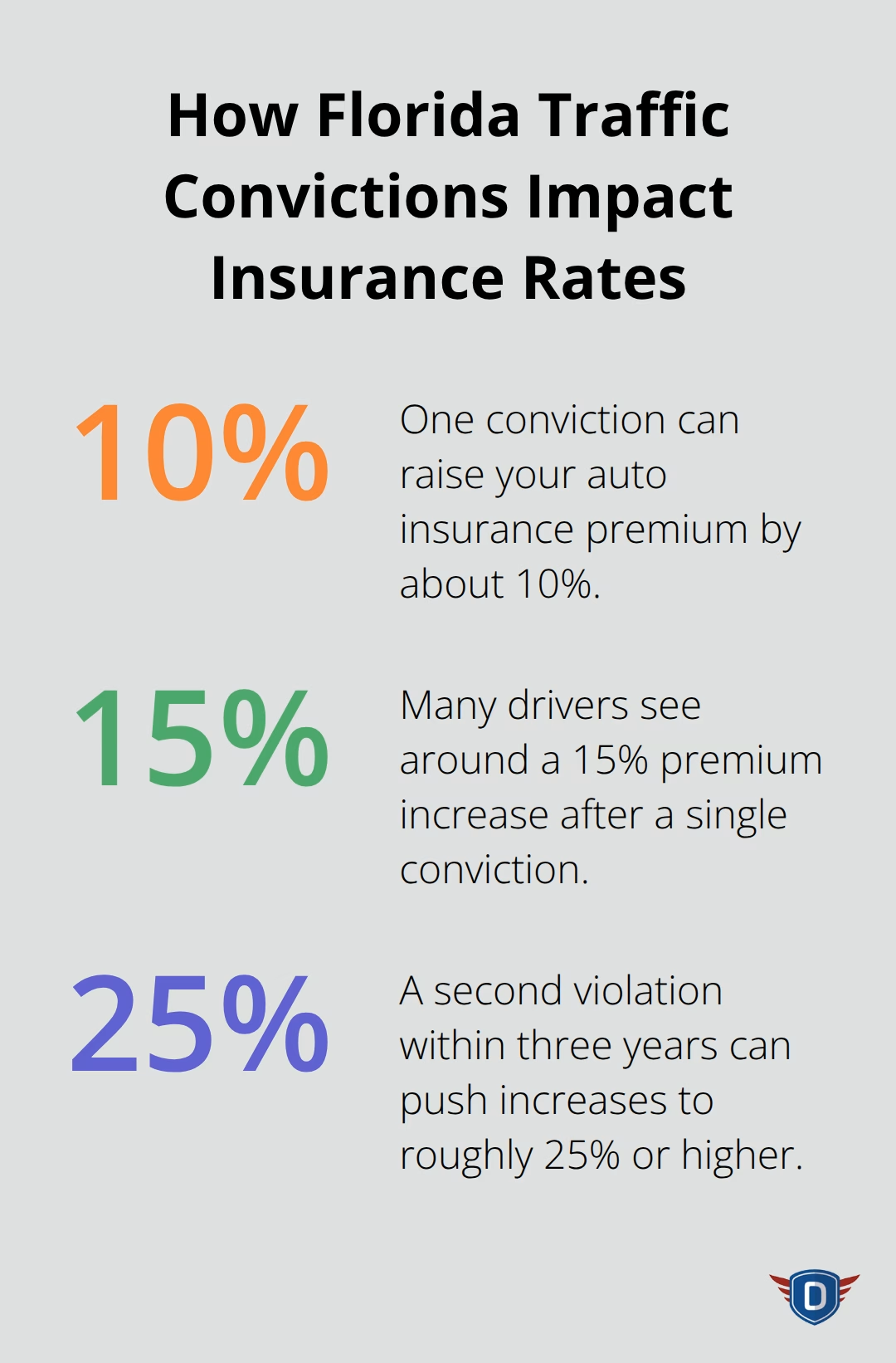
When a traffic citation lands in your hands, you face three fundamentally different paths forward, and which one you choose will shape your driving record and insurance costs for years. Paying the fine seems like the quickest option, but it’s also the most expensive long-term decision. The moment you pay a Florida traffic citation conviction, you admit guilt, and that admission becomes a conviction on your driving record. If you received a citation for speeding 15 miles per hour over the limit, that conviction adds 2-3 points to your record under Florida law. Those points stay on your record for 3 to 7 years and directly influence your insurance rates. Drivers with points on their record pay significantly higher premiums, and some insurers cancel policies entirely after multiple violations. One conviction might raise your rates by 10 to 15 percent, but a second violation within three years can push increases to 25 percent or higher. The fine itself might be $150 to $300, but the real cost emerges in insurance premiums over the next few years, which can total thousands of dollars.
Contest the Citation in Court
Contesting the citation in court is the option most drivers overlook, yet it protects your record most aggressively. In Florida, you can request a trial and challenge whether the officer’s observations were accurate. You don’t need a lawyer to contest a ticket, and you don’t have to pay bail before an in-person trial in most cases. At trial, the officer must appear and testify about how they measured your speed or observed your violation, and you can cross-examine them about their equipment, visibility, and procedures. If the officer fails to appear, the case is often dismissed immediately. Many citations contain errors in the violation code, the location, or the officer’s notes, and these mistakes become grounds for dismissal if you catch them. Preparation for trial means gathering evidence like dashcam footage, photos of road conditions or traffic signals, witness statements, or maintenance records for your vehicle. The trial itself typically lasts under an hour, though you should plan to spend about 3 hours at court including wait time. If you’re found not guilty, your record remains clean and your insurance stays unaffected. If you’re found guilty, you can still pursue traffic school afterward to prevent points from showing on your insurance record.
Complete Traffic School to Mask Points
Traffic school mask points insurance offers a middle path that protects your insurance while accepting the violation. Florida law allows drivers to attend an approved traffic school course to mask points from insurance companies, preventing rate increases. The course costs between $25 and $50 depending on the provider, far less than the long-term insurance increases from points. You must complete the course before your citation’s due date, and the court must approve your request to attend traffic school. Not all violations qualify for traffic school-serious offenses like reckless driving typically don’t-but most standard speeding and red-light tickets do. Once you complete the course, the certificate is reported to the Florida Department of Highway Safety and Motor Vehicles, and the point remains on your record but stays hidden from insurance companies. This means your rates won’t increase, even though the conviction technically exists. You can only use traffic school once every 12 months in Florida, so this option works best if it’s your first or second violation in several years.
Understanding the Real Cost of Each Path
The choice between these three options hinges on your specific situation and what you value most. If you want to protect your insurance rates immediately and avoid court, traffic school is your fastest solution. If you believe the citation contains errors or the officer made a mistake, contesting in court gives you the strongest defense and the cleanest outcome. If you simply want the matter resolved quickly without effort, paying the fine accomplishes that-but you’ll pay for that convenience through higher insurance premiums for years.
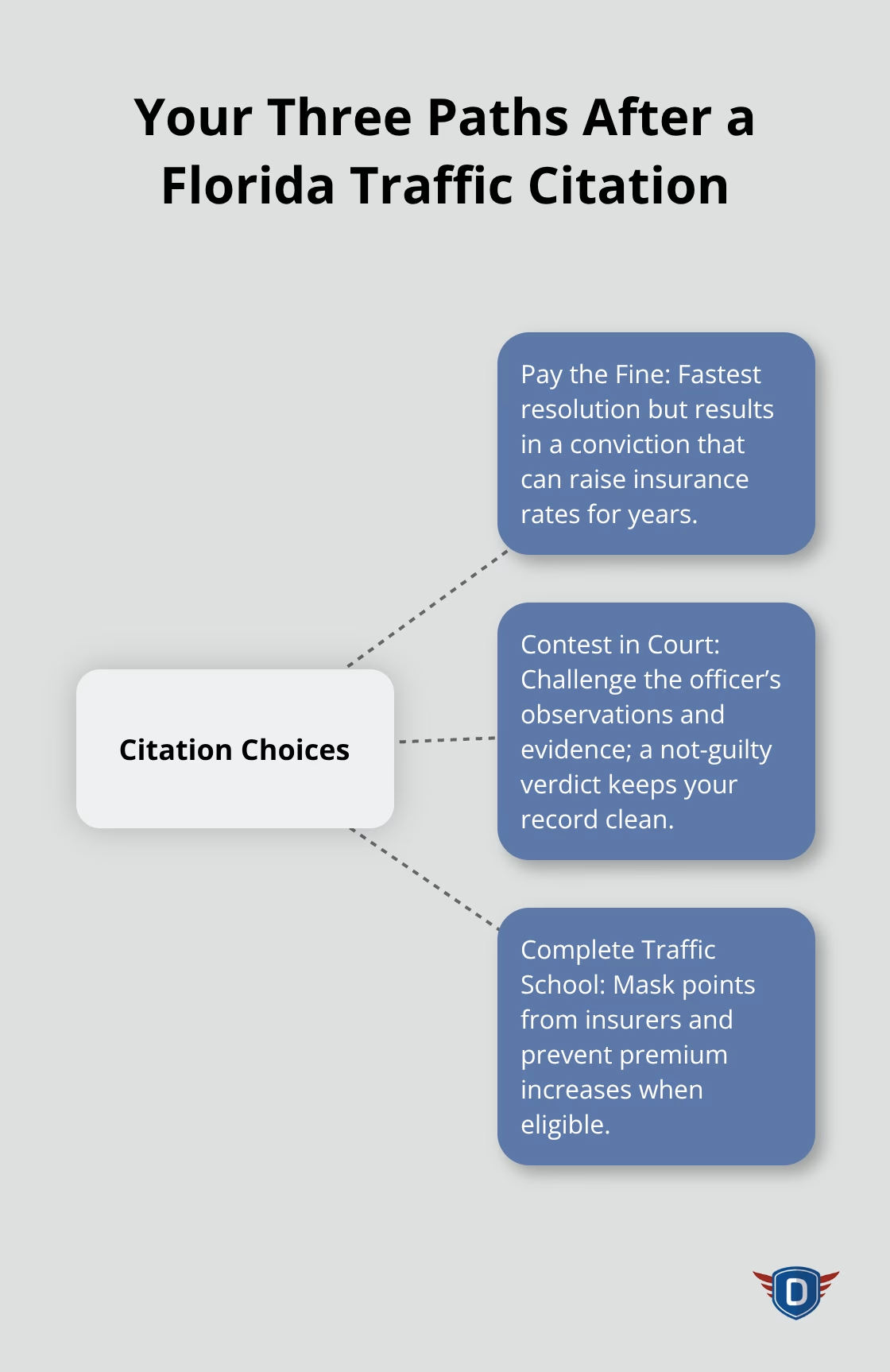
Each path carries different risks and rewards, and your decision here determines what happens next with your driving record and your wallet.
What Really Happens to Your Driving Record
How Points Accumulate and What They Cost
A traffic citation conviction in Florida adds points to your driving record, and those points trigger a cascade of consequences that extend far beyond the initial fine. The Florida Department of Highway Safety and Motor Vehicles assigns point values based on the violation type: speeding 1-10 miles per hour over the limit adds 3 points, speeding 11-30 miles per hour adds 4 points, and speeding more than 30 miles per hour adds 6 points. Running a red light adds 4 points, while reckless driving adds 4 points. These points remain on your record for 3 to 7 years depending on the violation, and they accumulate if you receive multiple citations.
Insurance companies monitor your driving record closely, and the moment points appear, your rates increase. A single 4-point violation typically raises your premiums by 10 to 15 percent, while multiple violations within three years can increase rates by 25 percent or more. Some insurers impose surcharges of $50 to $100 per point annually, so a 4-point conviction costs $200 to $400 extra per year for 3 to 7 years, totaling $600 to $2,800 in additional premiums.
When Points Lead to License Suspension
Accumulating 12 points within 12 months triggers a 30-day license suspension in Florida, 18 points within 18 months results in a 3-month suspension, and 24 points within 36 months leads to a 1-year suspension. This means a driver with three speeding convictions in two years faces automatic license suspension without ever going to court for a separate hearing. A driver can reach these thresholds quickly if violations occur in rapid succession.
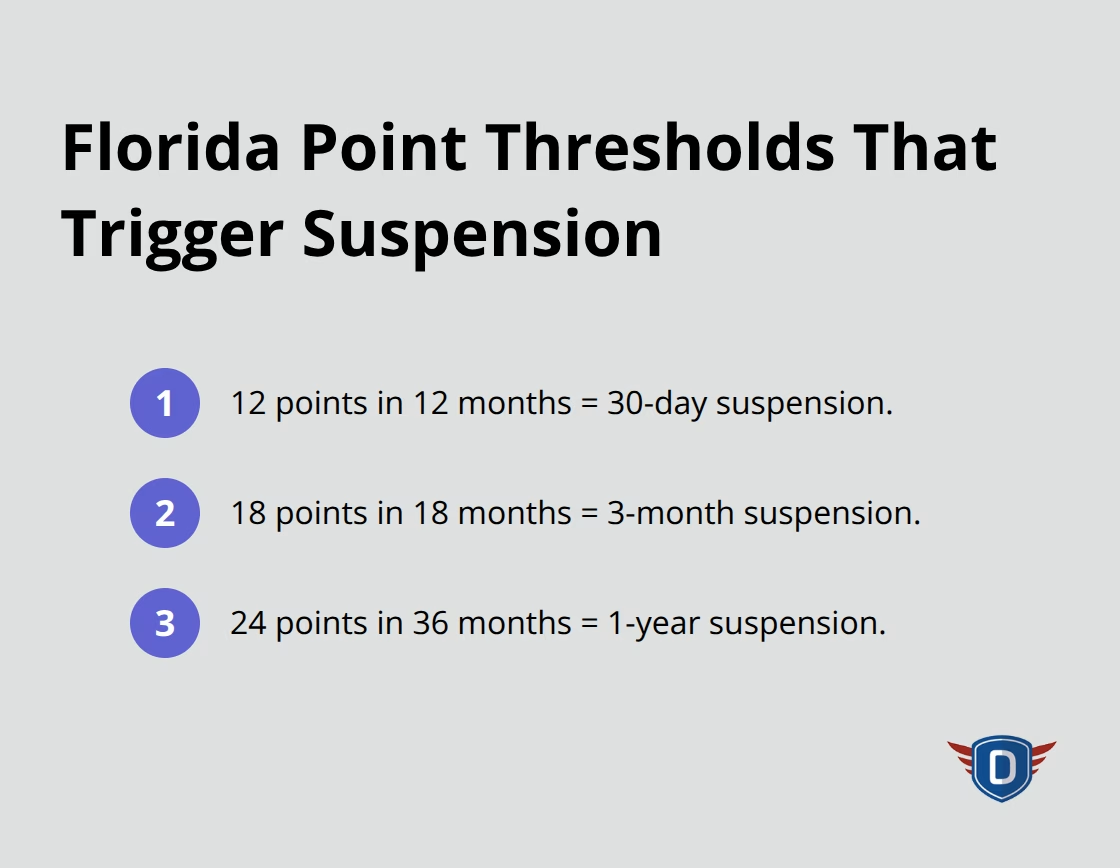
License suspension or revocation represents the most severe consequence and occurs when points accumulate beyond Florida’s thresholds or when you accumulate serious violations like DUI or reckless driving causing injury. Once your license is suspended, driving becomes illegal, and doing so results in criminal charges and additional fines. Your vehicle may be impounded, and your insurance becomes impossible to obtain legally.
The Insurance Cancellation Risk
Some insurers simply cancel your policy after multiple violations, leaving you scrambling to find coverage at even higher rates from high-risk providers. This cancellation creates a domino effect: without insurance, you cannot legally drive, and obtaining new coverage becomes exponentially more expensive. High-risk insurers charge premiums two to three times higher than standard rates, and they often impose strict conditions or refuse to cover certain types of claims.
How Traffic School Protects Your Record
Traffic school offers strong value by masking points from insurance companies, preventing rate increases entirely while the conviction technically remains on your record. Completing an approved course before your citation’s due date stops insurers from seeing the points, which means your rates stay stable. This protection applies only to insurance purposes; the conviction still appears on your driving record for official purposes.
Contesting Citations to Remove Points Entirely
The safest strategy involves preventing points from accumulating in the first place, which means contesting citations when the officer made errors or completing traffic school immediately after a violation to mask points. If you’re facing multiple violations or approaching the point threshold for suspension, contesting citations becomes especially valuable because a successful defense removes points entirely rather than just hiding them from insurers. A not-guilty verdict clears your record completely, eliminating both the conviction and any points that would have attached to it.
Final Thoughts
A traffic citation does not have to derail your driving record or drain your wallet for years. The traffic citation steps you take immediately after receiving a ticket determine whether you pay once or pay repeatedly through insurance increases. If you believe the officer made an error, contest the citation in court and protect your record completely; if you want to shield your insurance rates without court involvement, complete traffic school before your due date and mask the points from insurers.
Protecting your driving record starts with taking action before the deadline passes. Missing your response date triggers additional fees and automatic conviction, so mark your calendar immediately and respond within the timeframe stated on your citation. Review the violation code and officer’s notes for errors that could lead to dismissal, and gather evidence like dashcam footage or photos of road conditions if you plan to contest.
We at DriverEducators.com offer Florida-approved traffic school courses that help you mask points from insurance companies while meeting court requirements. Our Basic Driver Improvement course takes just four hours, covers Florida traffic laws and defensive driving techniques, and you can complete it online at your own pace in English, Spanish, and Portuguese. Visit DriverEducators.com to explore how our courses can protect your record and help you become a safer driver.