Getting your teen driver’s license in Florida involves several steps, and the TLSAE teen course is your first major milestone. This required course teaches essential safety knowledge before you can even apply for a learner’s permit.
We at DriverEducators.com have guided thousands of teens through this process, and we know the licensing path can feel overwhelming. This guide breaks down everything you need to know to move forward confidently.
What TLSAE Is and Why It Matters for Your Licensing Journey
TLSAE stands for Traffic Law and Substance Abuse Education, and it represents the mandatory first step in Florida’s teen licensing system. This 4-hour course is not optional-the Florida Department of Highway Safety and Motor Vehicles requires every first-time driver to complete it before applying for a learner’s permit. The course teaches how alcohol and drugs impair driving by affecting reaction time, vision, and judgment, then connects that knowledge to real decisions you’ll face on the road. Teen drivers face higher crash risks than other age groups, making TLSAE essential for building awareness from day one.
Age and Eligibility Requirements
You must be at least 15 years old to begin the licensing process in Florida. At that age, you can enroll in TLSAE and start moving toward your learner’s permit. You’ll need proof of identity, your Social Security number, and proof of residency to get started. If you’re under 18, your parent or guardian must provide signed, notarized consent before you can enroll. The timing of your start matters for a practical reason: your TLSAE completion certificate remains valid for one year, so you must obtain your permit within that window. Starting at 15 gives you the full year to complete the rest of the licensing steps without rushing.
How TLSAE Fits Into Your Licensing Path
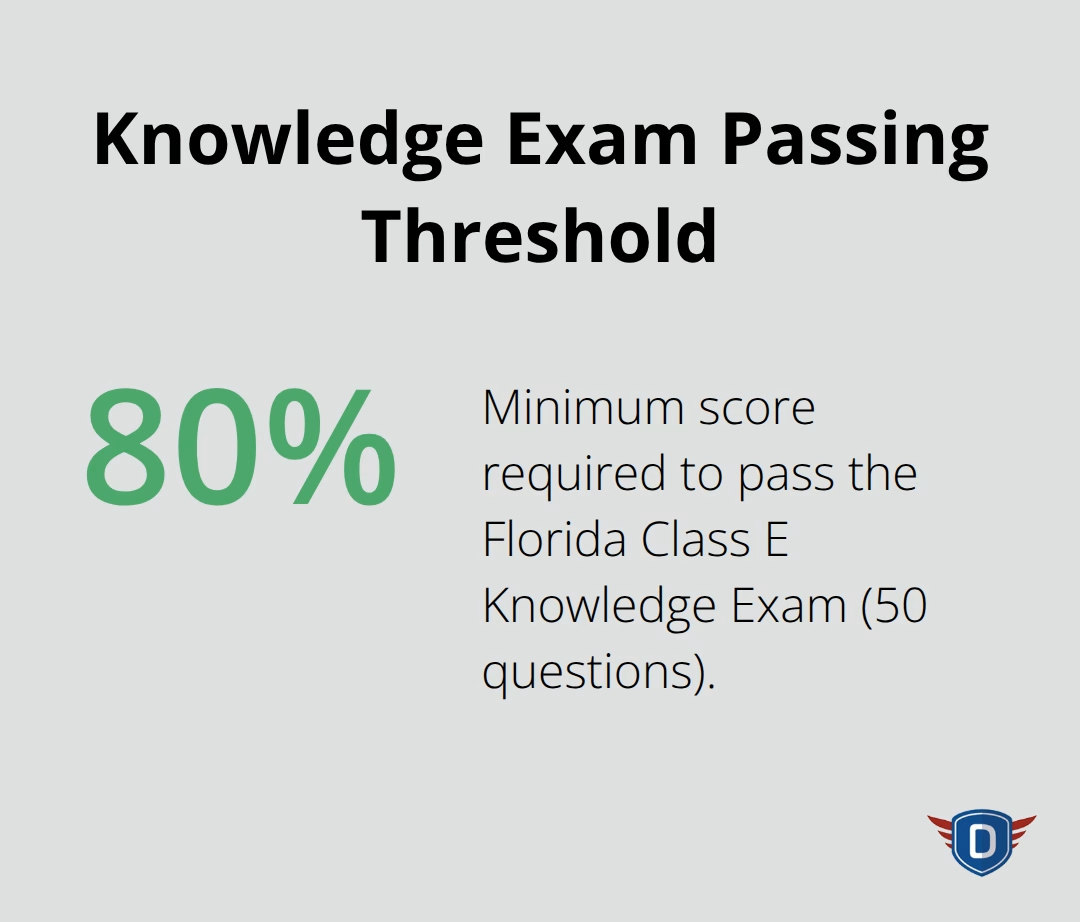
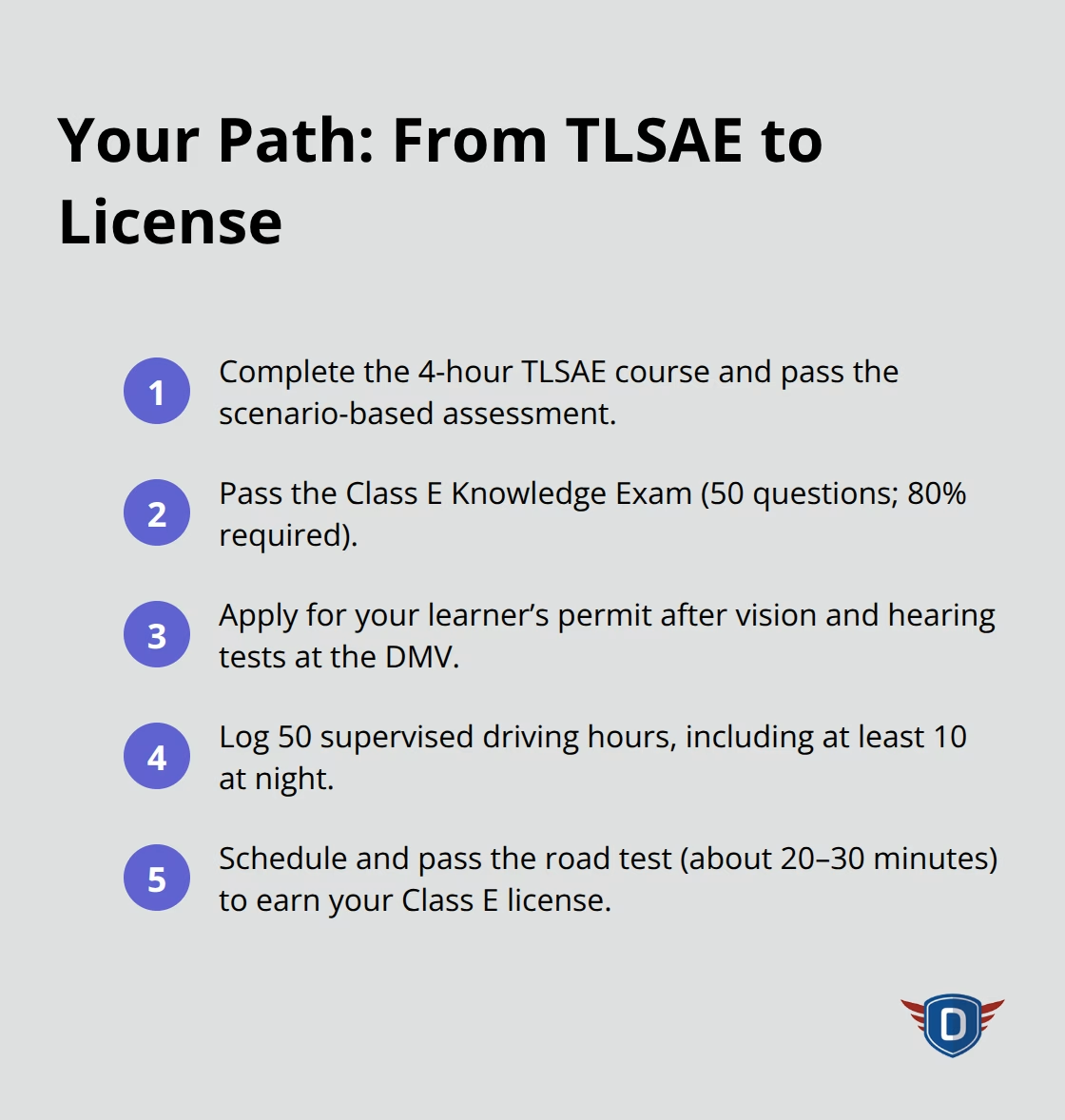
TLSAE is step one, but it’s not the whole story. After you complete the course, you’ll pass the final assessment (a scenario-based test that takes 30–45 minutes), receive your completion certificate, and the provider reports it directly to the state. That certificate unlocks your eligibility to take the Class E Knowledge Exam, which has 50 questions and requires 80% correct to pass. Once you pass that exam and complete a vision and hearing test at the DMV, you apply for your learner’s permit.
Then comes 50 hours of supervised driving-at least 10 of those at night-before you’re ready for the road test. Florida’s graduated licensing system spaces these steps out to build experience gradually, not to create obstacles.
What Happens Next in Your Journey
With your TLSAE certificate in hand and your learner’s permit approved, you transition from classroom learning to real-world practice. The next phase requires you to log supervised driving hours and prepare for the road test that leads to your Class E license.
What You’ll Learn in TLSAE and How the Course Works
The Three Core Areas of TLSAE Content
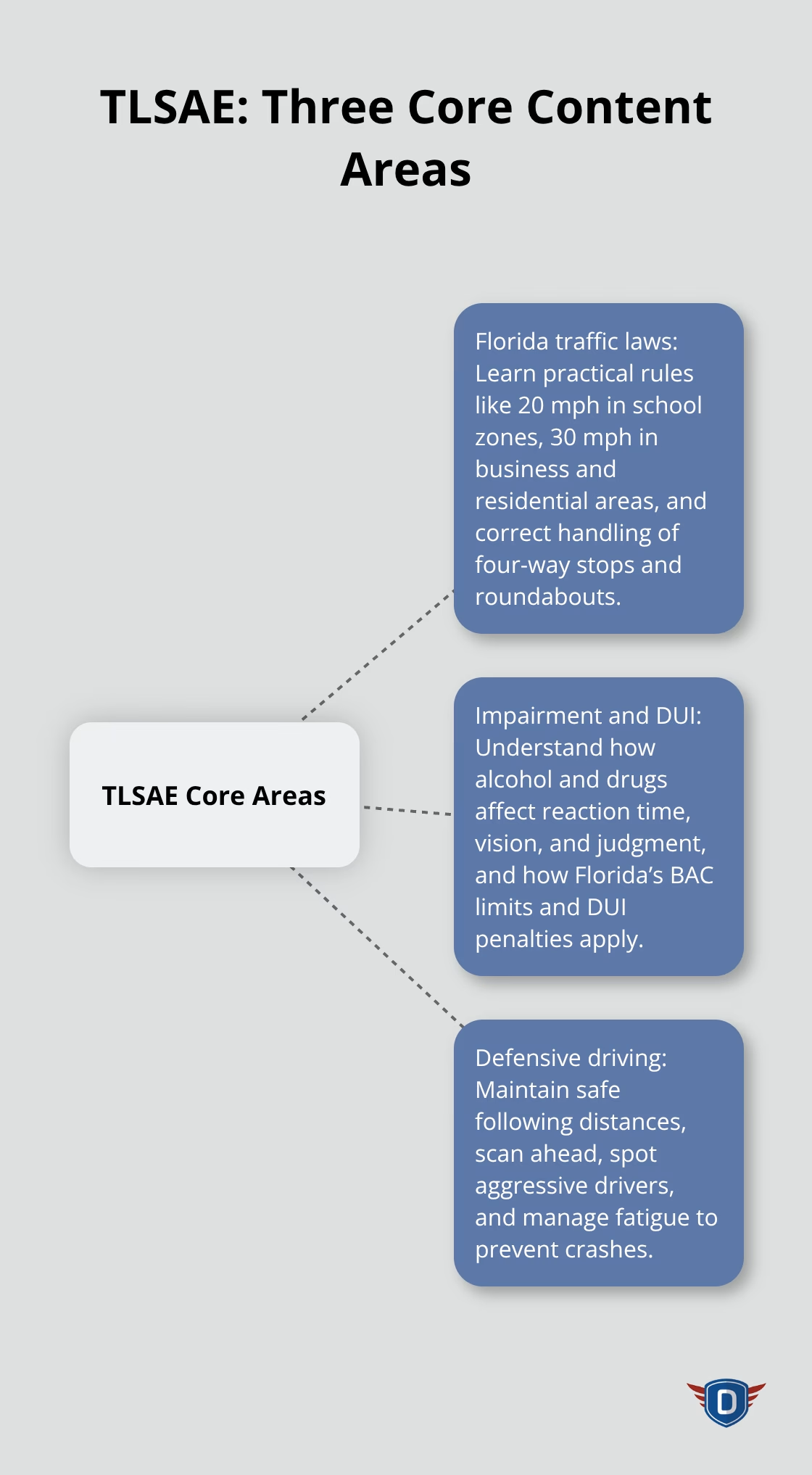
The TLSAE course teaches three interconnected areas that shape how you approach driving. First, you learn Florida traffic laws in practical terms, not just memorizing signs. You’ll understand when school zone speed limits of 20 mph apply, why business and residential areas require 30 mph limits, and how to handle four-way stops and roundabouts correctly. Second, the course covers how alcohol and drugs physically impair your brain, vision, and reaction time, with specific focus on blood alcohol levels and DUI penalties in Florida. The 2024 Florida Youth Substance Abuse Survey found that delta-8-THC use among high school students has risen notably, and Florida teens report higher recent drug use than the national average, which is why this content matters directly to your age group. Third, you learn defensive driving techniques like maintaining proper following distances, scanning the road ahead, recognizing aggressive drivers, and managing fatigue.
How the Final Assessment Works
The final assessment applies your knowledge to real decisions rather than just recalling facts. You’ll face scenario-based questions that test how you’d actually respond on the road, and the assessment takes 30–45 minutes to complete. This approach means you can’t simply memorize answers-you need to understand the concepts behind safe driving choices.
Course Duration and Self-Paced Options
The course runs 4 hours total, but online options let you spread it across multiple days at your own pace. You’re not forced to sit through it all at once; you can start and stop whenever your schedule allows. Most FLHSMV-approved providers cost between $20 and $35, making the course affordable for most families.
Certificate Validity and Retake Policies
When you finish, you receive a completion certificate that the provider reports directly to the state automatically, eliminating the need to submit anything yourself. That certificate remains valid for one year from completion, meaning you have a full 12 months to pass your knowledge exam and apply for your learner’s permit without losing eligibility. If you fail the final assessment, retakes are allowed, so you’re not locked out after one attempt.
Moving From Course Completion to Your Permit Application
With your TLSAE certificate in hand, you’re ready to tackle the next step: passing the Class E Knowledge Exam and applying for your learner’s permit.
From Course Completion to Your First Road Test
Passing Your Knowledge Exam and Applying for Your Permit
Your TLSAE certificate opens the door to the next phase, but you must act quickly to obtain your learner’s permit. Within 30 days of completing your final assessment, schedule your Class E Knowledge Exam at your local DMV or testing facility. Bring your TLSAE completion certificate, proof of identity, Social Security number, and proof of residency. The exam contains 50 questions covering road signs, right-of-way rules, and traffic laws from the Florida Driver Handbook. You need 80% correct to pass, which means 40 questions answered right.
Most teens pass on their first attempt when they study the handbook and take practice tests beforehand. Once you pass, you complete a vision and hearing test at the DMV as part of the permit application process. These tests are straightforward but mandatory, so do not skip them. Submit your exam results, TLSAE certificate, parental consent form (notarized if you are under 18), and the permit fee to receive your learner’s permit. This entire sequence from exam to permit typically takes two to three weeks, so start immediately after your TLSAE completion rather than waiting.
Understanding Your Learner’s Permit Restrictions
Your learner’s permit is not a license-it is a structured training document with real restrictions designed to build driving experience safely. A licensed driver aged 21 or older must sit in the front passenger seat whenever you drive. Florida law requires exactly 50 hours of supervised practice before you can take your road test, with a minimum of 10 hours happening after dark. County-specific curfew rules also apply: if you are 15 or 16, you cannot drive past 10:00 PM; if you are 17, the curfew extends to 1:00 AM. Night driving restrictions exist because teen crash rates spike during evening hours, with fatal crash rates at night among teen drivers about 3 times as high as adult drivers.
Building Real Driving Competence Through Varied Practice
Keep a detailed driving log documenting each practice session with the date, time, distance, and conditions. This log becomes required documentation when you schedule your road test, so treat it seriously. Schedule your supervised driving across different road types and weather conditions rather than clustering hours on easy routes. Practice on highways, in heavy traffic, during rain, and in unfamiliar neighborhoods. This variety builds genuine competence instead of false confidence. When you reach 50 logged hours, contact the Florida Department of Highway Safety and Motor Vehicles to schedule your road test.
Preparing for and Taking Your Road Test
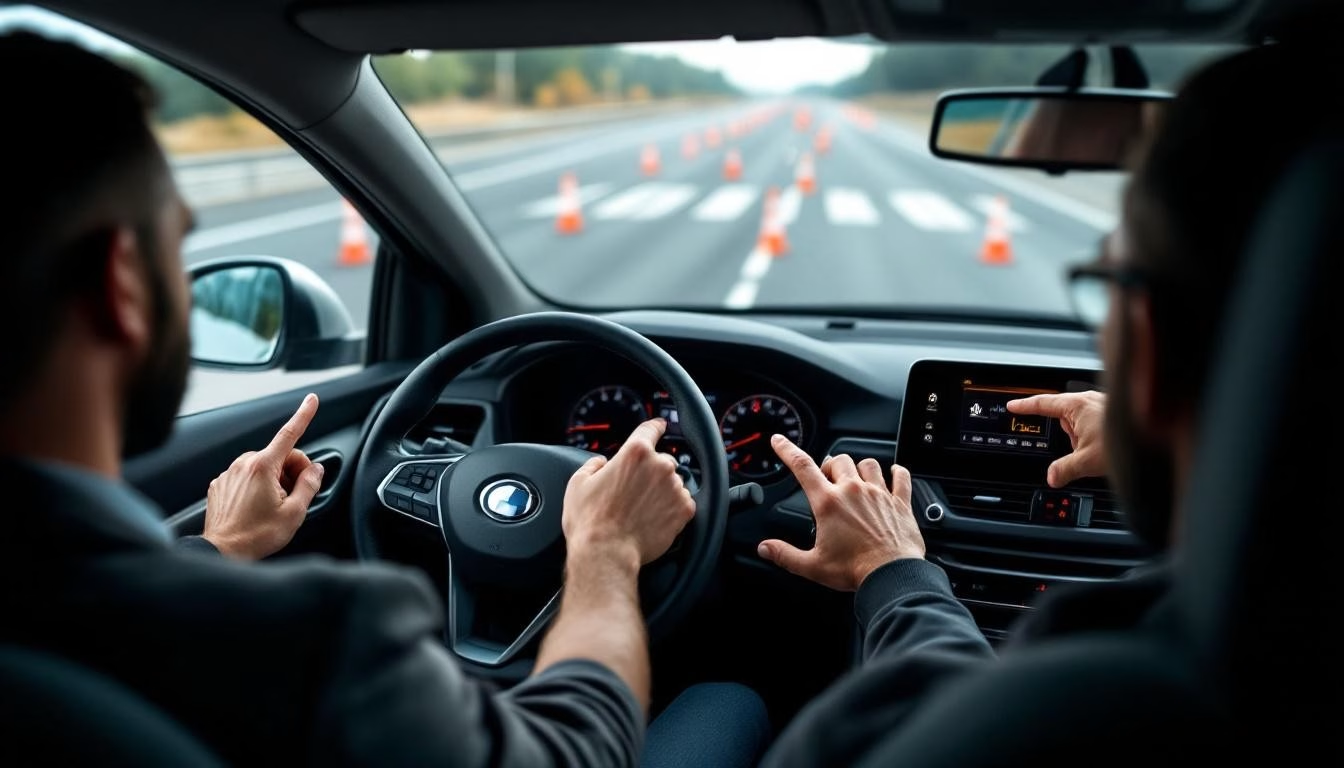
The road test includes parallel parking, backing straight, proper turn signal use, a three-point turn, and obeying traffic signs and signals. Bring your learner’s permit, driving log, and a vehicle in good working order. The road test typically lasts 20 to 30 minutes, and passing earns you your Class E license.
Final Thoughts
Florida’s teen licensing system requires patience and preparation, but completing TLSAE is your first real step toward independent driving. You now understand what the course covers, why substance abuse education matters for your age group, and how the licensing path unfolds after completion. The 4-hour course teaches practical traffic laws and the physiological effects of impairment, then the knowledge exam, learner’s permit, 50 hours of supervised driving, and finally your road test follow in sequence.
During your learner’s permit phase, treat every supervised driving hour as an opportunity to develop habits that will protect you for decades. Log your hours accurately, practice in varied conditions, and take the curfew restrictions seriously-these aren’t obstacles to resent but safeguards that work. When you reach your road test, you’ll be genuinely prepared because you’ve logged real miles under real conditions with a qualified supervising driver.
We at DriverEducators.com understand that navigating Florida’s licensing requirements feels complex, which is why we’ve built our programs to support drivers at every stage. Our comprehensive driver education courses follow strict FLHSMV guidelines and blend clear explanations with real-life scenarios so you understand not just the rules but why they matter. Complete your TLSAE course, pass your knowledge exam, and begin your supervised driving hours with confidence that you’re building genuine skill, not just checking boxes.