Florida’s TLSAE study guide covers two essential areas every driver must understand: traffic laws and substance abuse education. These topics aren’t just academic requirements-they directly impact your safety and the safety of others on the road.
At DriverEducators.com, we’ve structured this guide to help you grasp the real-world applications of what you’re learning. From recognizing impaired drivers to mastering defensive techniques, you’ll gain practical knowledge that extends far beyond passing a test.
What Florida Traffic Violations Actually Cost You
Florida’s traffic laws exist for one reason: to keep drivers alive. The state enforces speed limits and right-of-way rules because violations kill people, not to generate revenue. According to the Florida Department of Highway Safety and Motor Vehicles, understanding these laws isn’t optional knowledge you forget after passing the TLSAE exam. It’s the foundation of staying safe on roads that carry over 20 million licensed drivers.
Why Violations Stick With You
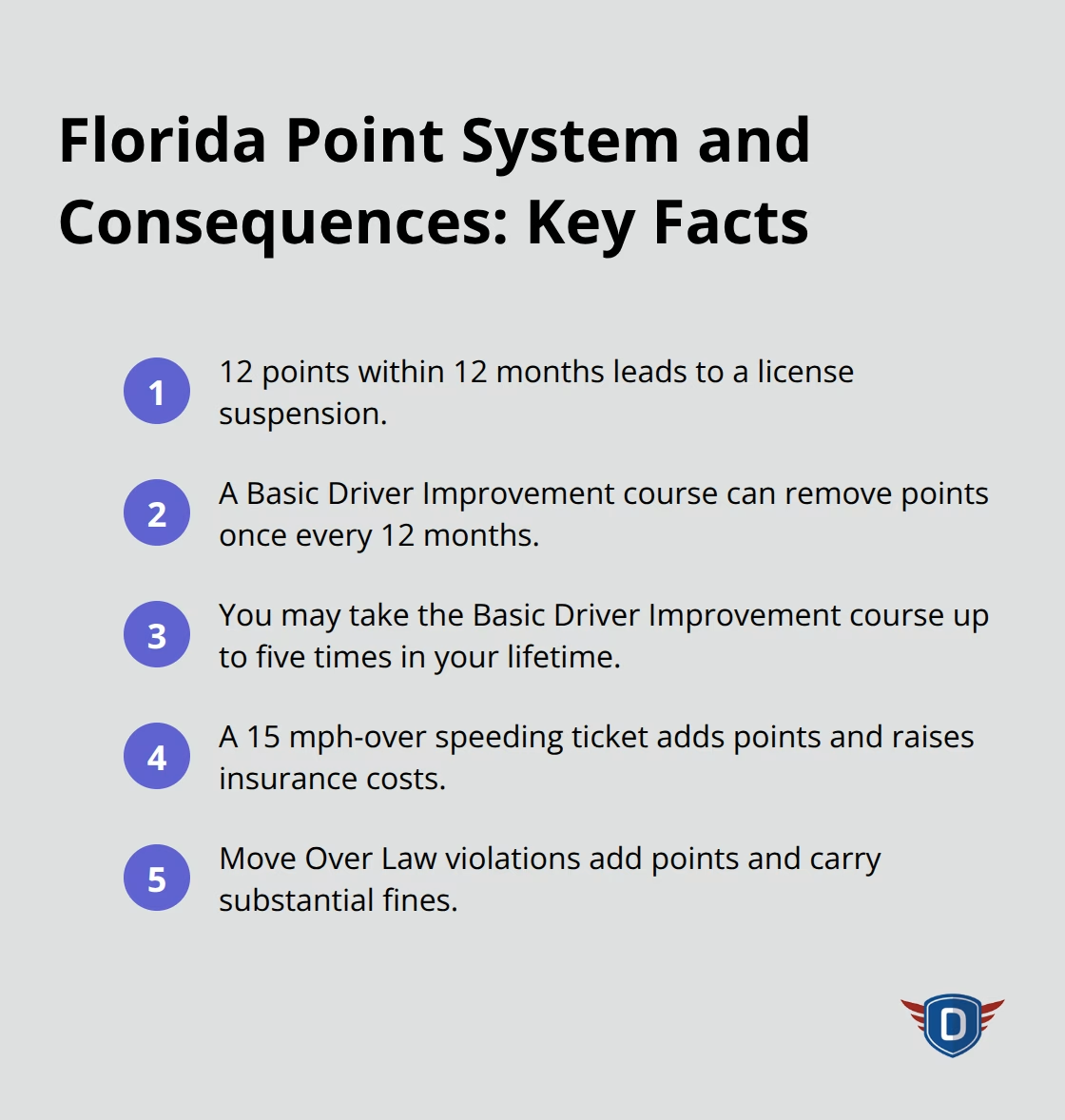
When you run a red light, you don’t just break a rule-you gamble with your life and everyone else’s. A single moving violation in Florida stays on your driving record. During that period, your insurance rates climb significantly, and multiple violations trigger license suspension under Florida’s point system. Statute 318.14 allows you to take a Basic Driver Improvement course to remove points, but only once every 12 months and up to five times in a lifetime.
This means you can’t accumulate violations without consequences-the state’s system eventually catches up.
The Real Penalties Beyond the Fine
A speeding ticket for going 15 miles per hour over the limit costs far more than just the fine. You’ll receive points on your license, face increased insurance premiums that can last years, and if you accumulate 12 points within 12 months, Florida suspends your license. Right-of-way violations are equally serious; failing to yield causes intersection crashes, which account for a significant portion of fatal accidents. The Move Over Law-a tricky topic on the Florida knowledge test-requires drivers to change lanes or slow down when approaching emergency vehicles on the shoulder. Violating this law results in points and substantial fines.
Speed, Distance, and Road Conditions
Speed limits aren’t arbitrary numbers; the state sets them based on road conditions, traffic patterns, and crash data. Driving too slowly is just as dangerous as speeding because it disrupts traffic flow and confuses other drivers. The TLSAE course teaches that you should try a three-to-four-second following distance in normal conditions, and extend that distance in rain or poor weather to prevent rear-end collisions. This simple adjustment stops most crashes before they happen.
Recognizing Road Signs and Markings
Road signs use a color and shape system for a reason: red means stop or do not enter, green means go, yellow warns of hazards ahead, and black or white indicates regulatory rules. Octagon shapes always mean stop, downward-pointing triangles mean yield, and circles warn of railroad crossings. Learning to recognize these patterns instantly-not just for the test, but for real driving-separates safe drivers from dangerous ones. Solid yellow lines prohibit passing on your side, broken yellow lines allow passing when safe, solid white lines indicate lane edges or one-way directions, and broken white lines permit changing lanes. These markings govern lane discipline under Florida Statute 316.089.
Understanding how violations affect your record, insurance, and freedom on the road transforms the TLSAE material from abstract rules into real consequences. This foundation prepares you to recognize the dangers that substance abuse introduces to driving-a topic that demands equal attention.
How Alcohol and Drugs Destroy Your Ability to Drive Safely
Alcohol’s Immediate Impact on Driving Performance
Alcohol impairs the brain’s ability to process information in real time, which is exactly what safe driving demands. The TLSAE course teaches that alcohol affects your vision, reaction time, and judgment simultaneously-and these effects begin at blood alcohol levels far below the legal limit of 0.08%. At 0.02% BAC, your visual tracking ability declines and you lose the ability to steer with precision. At 0.05%, your coordination suffers and you struggle to track moving objects, which means you can’t follow traffic flow or anticipate other drivers’ movements. At 0.08%, you’ve lost significant muscle control and your concentration is severely compromised.
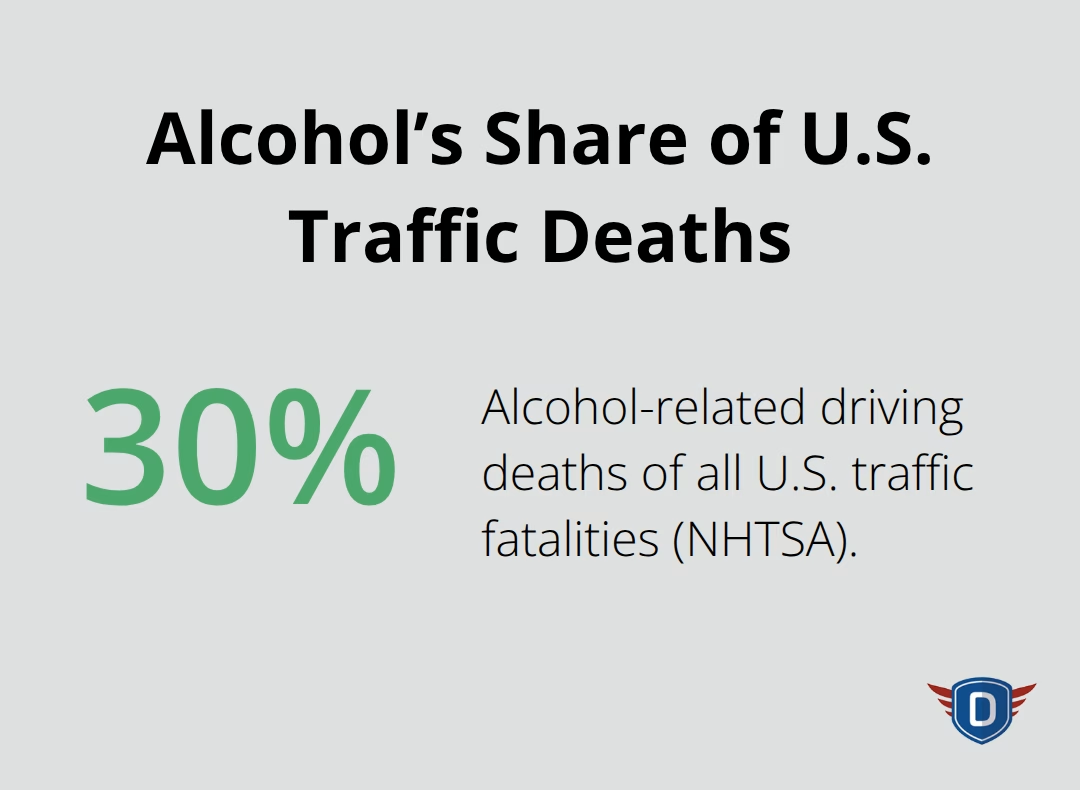
Florida maintains zero tolerance for impaired driving because the data is unambiguous: impaired drivers cause crashes that kill people. The National Highway Traffic Safety Administration reports that alcohol-related driving deaths account for about 30% of all traffic fatalities in the United States, making this the single most preventable cause of death on our roads.
How Drugs Impair Your Control Behind the Wheel
Drugs produce similar or worse effects than alcohol. Cannabis impairs your ability to track objects and concentrate for extended periods. Prescription medications like opioids and benzodiazepines slow your reaction time and impair judgment. Stimulants like methamphetamine create overconfidence while degrading fine motor control, which means you’ll feel capable of handling dangerous situations when you’re actually more likely to cause them.
The TLSAE curriculum emphasizes that you cannot reliably recognize your own impairment-your judgment about your driving ability is itself compromised by the substance. This reality makes substance abuse prevention the only truly safe choice.
Spotting Impaired Drivers and Protecting Yourself
Recognizing an impaired driver on the road is a survival skill, not just a test topic. Impaired drivers make specific mistakes that signal danger: they weave between lanes without using turn signals, they brake suddenly for no apparent reason, they drive significantly slower than traffic flow, they turn without signaling, or they nearly hit other vehicles. If you spot these patterns, increase your following distance to at least five or six seconds-double the normal three-to-four-second standard-and position your vehicle to avoid collision if the impaired driver swerves.
Report the driver to law enforcement by providing the vehicle description, license plate, location, and direction of travel; most states have dedicated hotlines for this purpose. Your quick action can prevent a tragedy.
The Severe Legal and Financial Consequences of DUI
Florida’s legal consequences for driving under the influence reshape your entire life. A first offense DUI conviction results in a fine of 500 to 1,000 dollars, up to six months in jail, a mandatory 10-day vehicle impound, a suspended license for six months to one year, and court-ordered substance abuse treatment. Your insurance rates will increase dramatically-expect to pay 1,500 to 3,000 dollars more annually for years.
A second conviction within five years escalates penalties: fines increase to 1,000 to 2,000 dollars, jail time extends to nine months, and your license suspension stretches to five years. You’ll install an ignition interlock device, which prevents your vehicle from starting if it detects alcohol on your breath. Three or more convictions within ten years reclassify DUI as a felony, resulting in prison time measured in years, not months.
The TLSAE course makes this practical: one decision to drive impaired can eliminate your career prospects, destroy your financial stability, and take years from your life. Impaired driving prevention starts with recognizing the moment before you get behind the wheel-that’s when the choice actually matters. Understanding these consequences sets the stage for exploring how defensive driving techniques help you avoid the dangerous situations that impaired drivers create on the road.
Defensive Driving Techniques and Safe Behaviors
Spotting Hazards Before They Become Crashes
Hazard perception separates drivers who react from drivers who anticipate. The moment you recognize danger developing, you’ve already won half the battle because you can adjust speed, position, or direction before a crash occurs. Real hazard perception means identifying patterns that signal risk: the car two vehicles ahead braking suddenly, the pedestrian stepping toward the curb while looking at their phone, the motorcycle weaving through traffic, the commercial truck drifting between lanes. These aren’t random events-they’re predictable danger signals that appear seconds before impact if you know what to watch for.
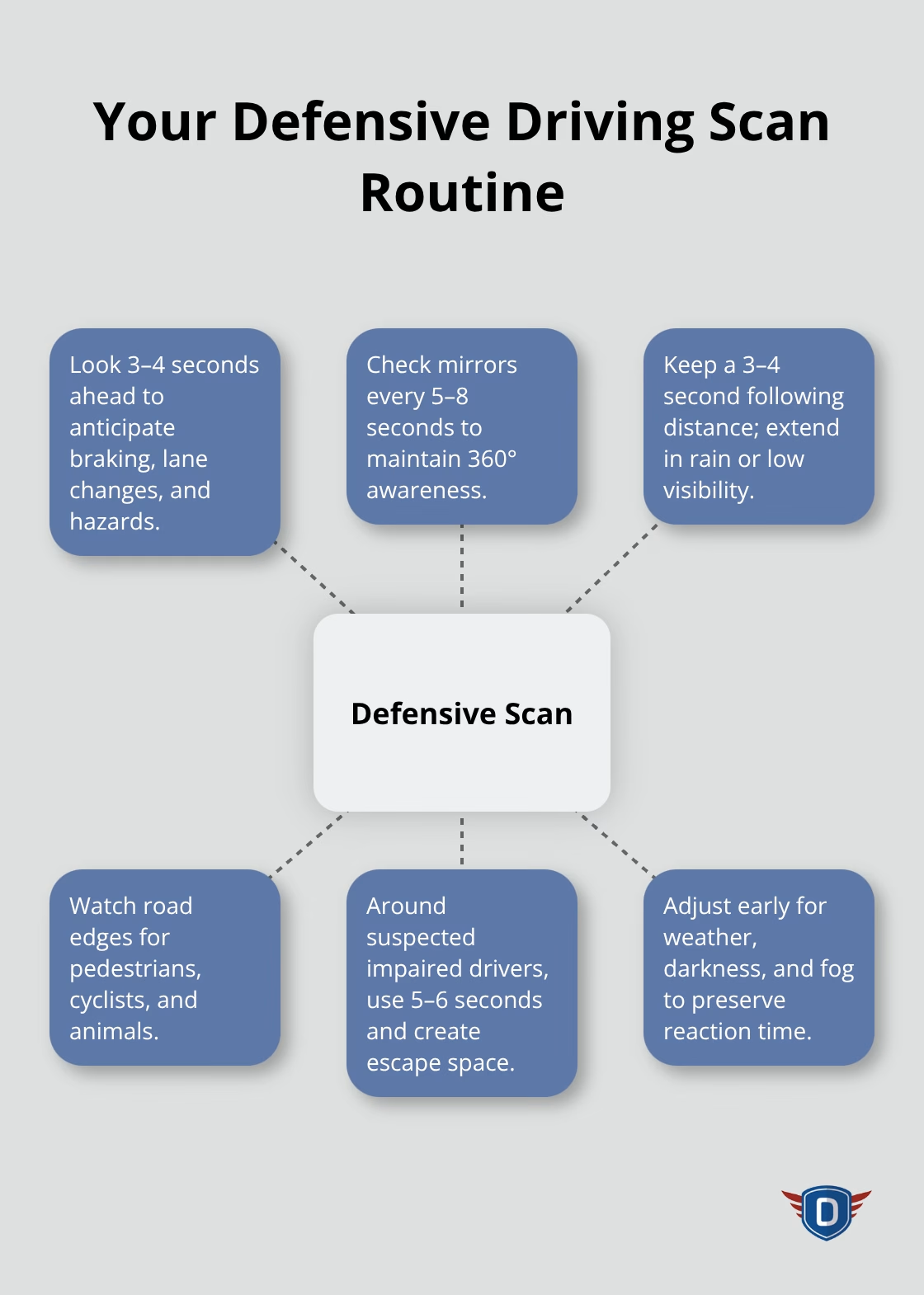
Safe driving isn’t about reacting to surprises. It’s about eliminating surprises entirely. Study the road three to four seconds ahead, not just the bumper in front of you. Check your mirrors every five to eight seconds. Scan the sides of the road for movement. This constant information gathering transforms driving from a passive activity into active threat assessment.
Most crashes happen because drivers fixate on one area instead of scanning continuously. A driver focused only on the vehicle ahead misses the car merging from the left or the debris in the roadway. The TLSAE course teaches risk assessment as a skill, and like any skill, it improves with deliberate practice.
Adjusting to Weather and Road Conditions
Extend your following distance when visibility is poor, when the road is wet, or when surrounding traffic is unpredictable. If you can’t see around the vehicle ahead, you can’t see the hazard that will kill you. Weather changes hazard levels instantly-rain reduces tire grip and visibility, darkness eliminates peripheral cues, fog compresses your reaction window. Adjust your driving accordingly, not after a close call but before conditions deteriorate.
Eliminating Distracted Driving
Distracted driving kills more people annually than alcohol-impaired driving, yet drivers treat phones as optional appendages they can monitor while operating two tons of steel. On average, about 11,000 people died every year in drunk-driving crashes over the 10-year period from 2014-2023. Your phone will still be there when you park. Your text message can wait. Your passenger conversation can pause. The road cannot wait, and neither can the hazard approaching at 60 miles per hour.
Managing Aggressive Drivers and Road Rage
Aggressive driving and road rage represent a different category of danger because they involve deliberate risk-taking and loss of emotional control. A driver who tailgates, honks excessively, or makes obscene gestures has already decided that their schedule matters more than everyone’s safety. These drivers cause crashes intentionally or recklessly, and your job is to remove yourself from their vicinity immediately.
If another driver is driving aggressively toward you, do not escalate. Do not match their speed. Do not make eye contact. Increase your following distance, let them pass, and report them to law enforcement with their vehicle description and direction of travel. The TLSAE curriculum emphasizes that you cannot control other drivers, only your own responses to them. Aggressive drivers are looking for confrontation, and the only winning move is to deny them an audience. Your safety depends on staying calm, maintaining space, and recognizing that arriving five minutes late is infinitely better than arriving in an ambulance or not arriving at all.
Final Thoughts
The TLSAE study guide teaches two interconnected realities: traffic laws exist because violations kill people, and substance abuse destroys the judgment required to follow those laws. Understanding Florida’s speed limits, right-of-way rules, and road signs transforms abstract requirements into practical survival knowledge that protects your life and the lives of everyone sharing the road with you. When you recognize the consequences of violations-license suspension, insurance increases, and the point system that tracks your mistakes-the material shifts from academic busywork into genuine safety competency.
Substance education reveals an equally critical lesson: impairment begins before you feel impaired, and alcohol affects your vision and reaction time at blood alcohol levels far below the legal limit. Drugs produce similar or worse effects, making prevention your only reliable protection combined with the ability to recognize impaired drivers and remove yourself from their path. Florida maintains zero tolerance for impaired driving because the data proves these crashes are preventable deaths.
Defensive driving techniques tie everything together, transforming you from a passive operator into an active threat assessor who spots hazards before they develop into collisions. We at DriverEducators.com designed our traffic school programs to move beyond test preparation into genuine safety competency, blending clear explanations with real-life scenarios that cover everything from Florida traffic laws to crash avoidance strategies. Whether you take a Basic Driver Improvement course to remove points, seek an insurance discount, or build lifelong safe driving habits, DriverEducators.com provides the knowledge and support you need to protect yourself and others on the road.