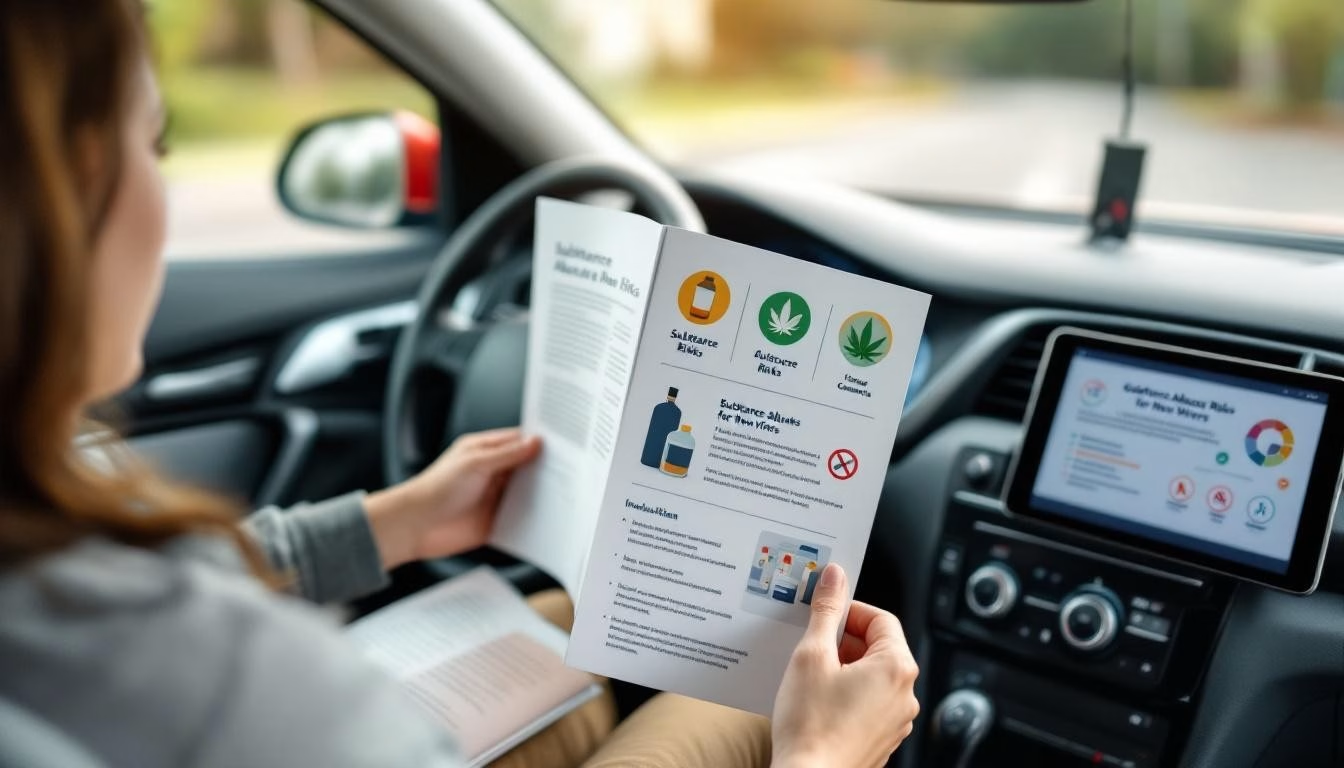
In Florida, every teen driver must pass the TLSAE before getting behind the wheel. This online course covers traffic laws, safe driving practices, and hazard recognition-all tested through TLSAE practice questions that mirror what you’ll face on exam day.
At DriverEducators.com, we know that practice questions aren’t just busy work. They’re your roadmap to understanding what examiners actually test and how to answer with confidence.
What Makes TLSAE Mandatory for Florida Drivers
The Legal Requirement and Its Purpose
TLSAE stands for Traffic Law and Substance Abuse Education, and it’s not optional in Florida. Every first-time driver aged 18 and older must complete this 4-hour online course before obtaining a learner’s permit or driver’s license. The Florida Department of Highway Safety and Motor Vehicles mandates this requirement because the statistics demand it. The leading cause of death for people aged 6 to 33 is motor vehicle crashes, according to traffic safety data. TLSAE exists to reverse this trend by teaching new drivers the real consequences of impaired driving and poor decision-making on the road. The course isn’t bureaucratic paperwork-it’s a direct response to preventable deaths.
Understanding Alcohol’s Impact on Driving
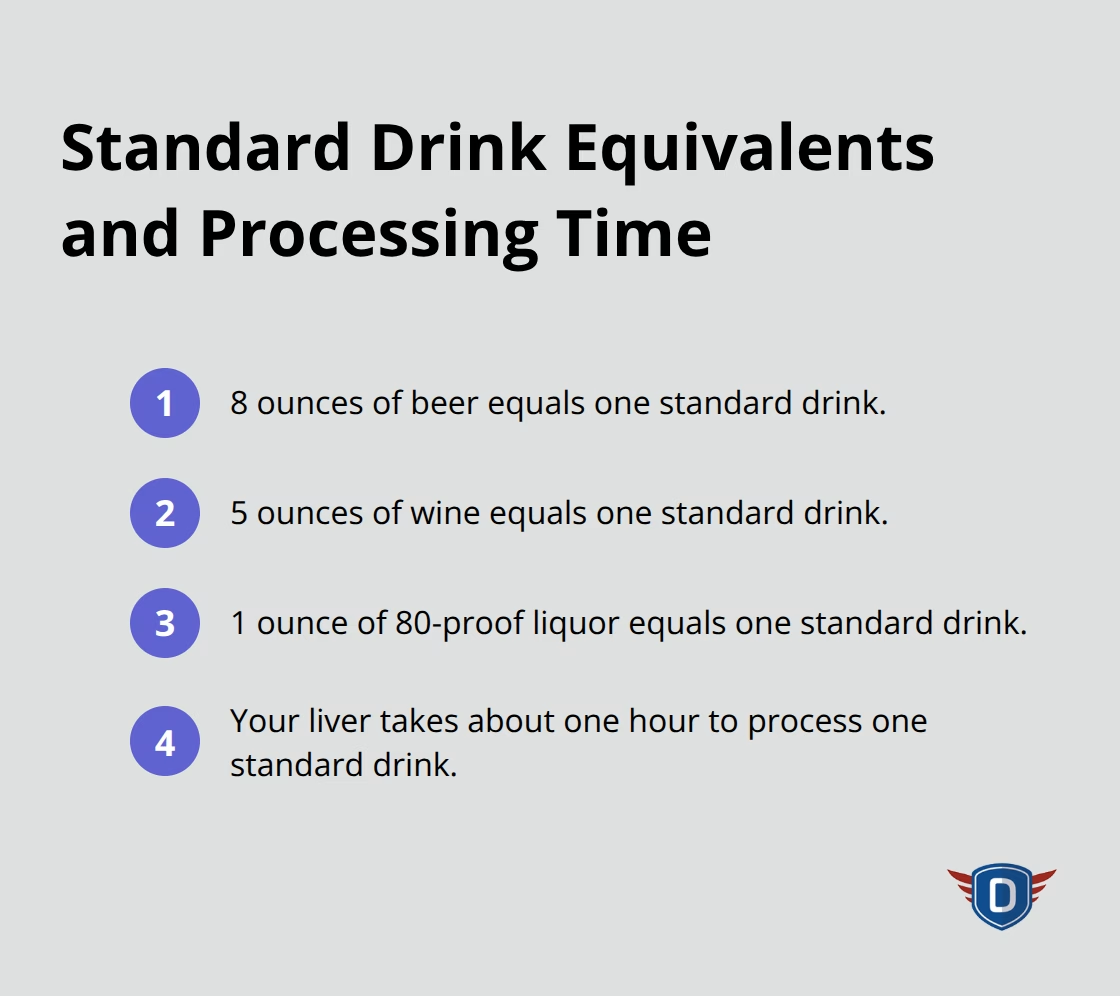
You’ll learn that driving under the influence starts at a blood alcohol content of 0.08 percent, but the course goes much further. It teaches you how alcohol acts as a central nervous system depressant, slowing reflexes and impairing vision within the first hour. You’ll understand that a standard drink-8 ounces of beer, 5 ounces of wine, or 1 ounce of 80-proof liquor-takes about one hour for your liver to process. Nothing speeds this up. Coffee, cold showers, and food don’t sober you up faster. Only time works.
The Real-World Consequences
Once you complete the course, your certificate is automatically reported to the FLHSMV, which streamlines your path to licensure. You cannot skip this step. If you’re under 21 and cited for driving with a blood alcohol level between 0.02 and 0.05 percent, you’ll face a license suspension and must complete TLSAE before applying for a hardship license. A hardship license allows you to drive only for approved purposes like work, school, medical appointments, or church-not freedom, but necessity.
Course Structure and Exam Requirements
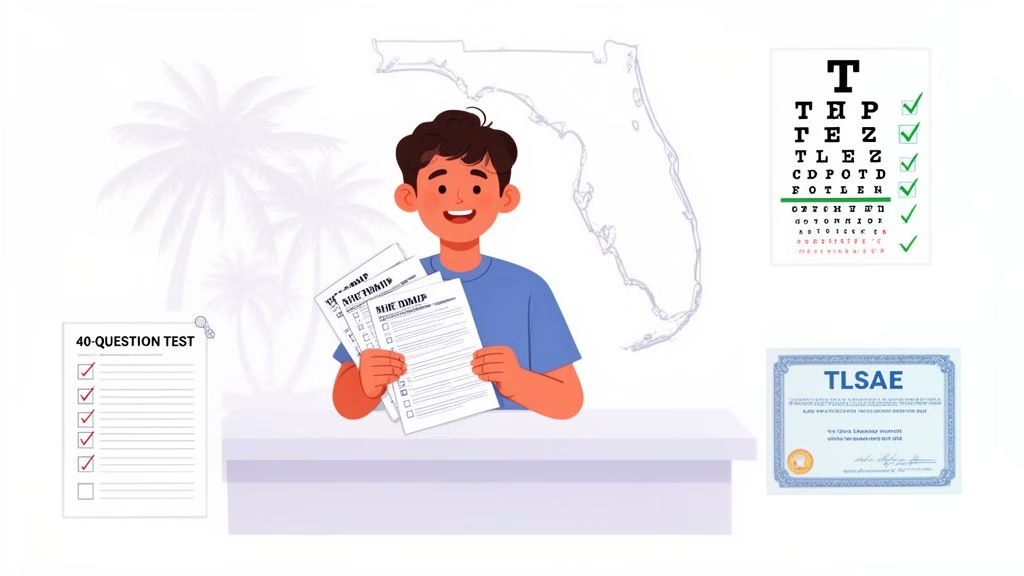
The course covers seven timed modules addressing physiological and psychological factors of substance abuse, the societal and economic costs of drug and alcohol abuse, how these substances affect drivers, and major Florida traffic laws. You must score at least 80 percent on the 40-question final exam to pass. This means you can miss only 8 questions. That’s why TLSAE practice questions are your most valuable study tool. They mirror the exact format and difficulty of the real exam, helping you identify weak areas before test day.
Building Knowledge That Lasts
The knowledge you gain doesn’t disappear after you pass. It shapes how you drive for decades. Understanding that alcohol impairs judgment explains why the course emphasizes penalties, safety techniques, and decision-making. You’re building habits, not just accumulating facts. This foundation prepares you for the specific types of questions you’ll encounter on exam day.
What You’ll Actually Face on the TLSAE Exam
The 40-Question Format and Passing Standards
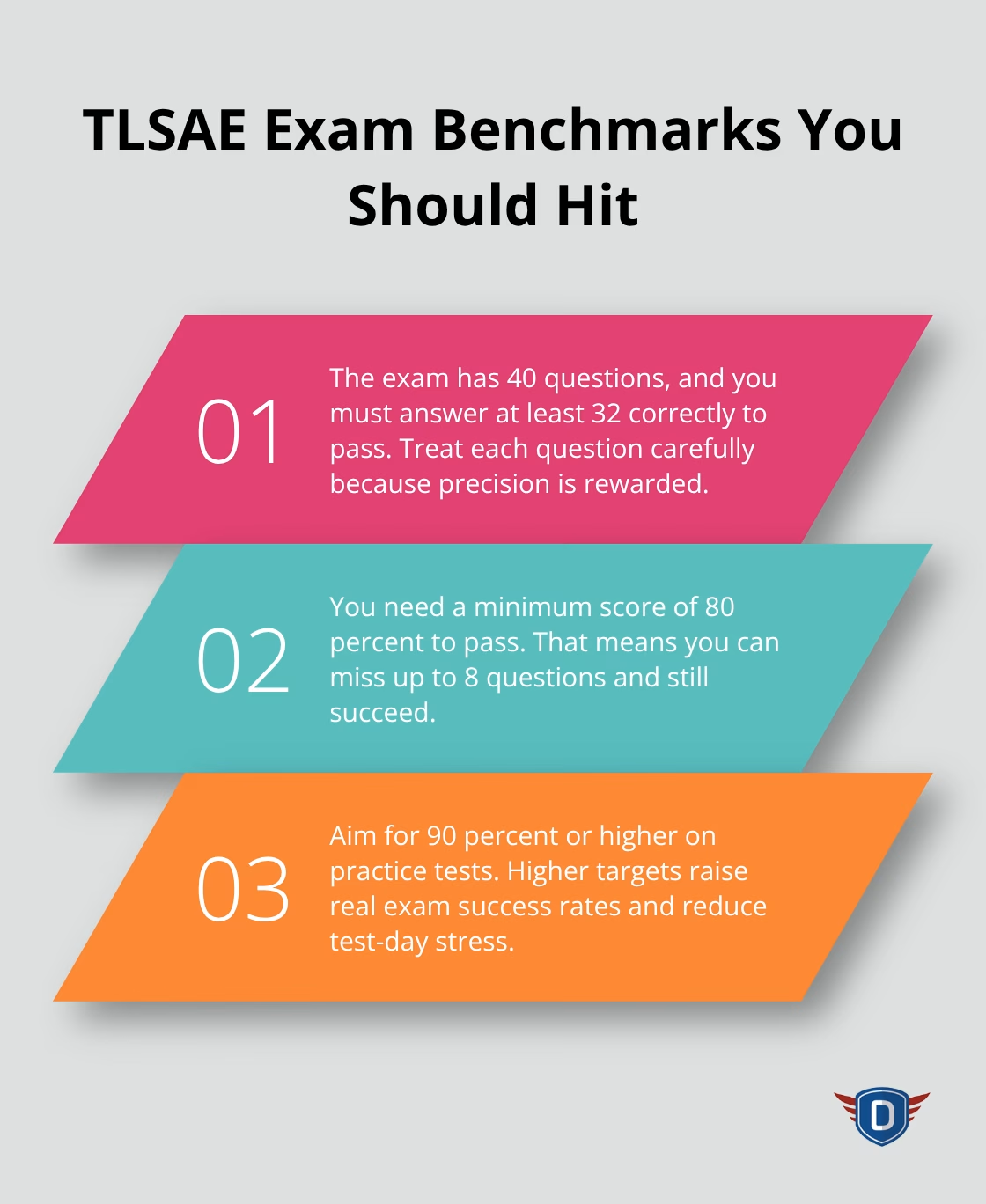
The TLSAE final exam contains 40 questions, and you need to answer at least 32 correctly to pass. This isn’t a trick test, but it rewards precision.
Most questions follow a multiple-choice format where you select the correct answer from four options. The real advantage of TLSAE practice questions is that they’re drawn directly from the official Florida Driver’s Handbook and align with the exact content the Florida Department of Highway Safety and Motor Vehicles tests. When you practice with authentic questions, you’re not guessing at what might appear-you’re studying what will appear.
Why Practice Questions Eliminate Guesswork
About 90 percent of students find TLSAE practice tests helpful, according to user feedback across platforms, because they eliminate guesswork. The practice questions reveal patterns in how examiners frame questions about alcohol metabolism, traffic laws, and impaired driving consequences. For example, questions about standard drinks always follow the same structure: 8 ounces of beer equals 5 ounces of wine equals 1 ounce of 80-proof liquor, and your liver processes one standard drink per hour. Questions about Florida traffic laws test specific rules like school bus procedures-you must stop completely when red lights flash and the stop arm extends, and you can only pass when the arm retracts and lights stop flashing.
Understanding Real Penalties and Consequences
The exam also tests your understanding of consequences. If you accumulate 12 or more points within a 12-month period, you face a 30-day license suspension. These aren’t theoretical scenarios; they’re real penalties with real timelines. Scenario-based questions push beyond simple recall. They describe situations like approaching a yellow traffic light or being passed on the highway, then ask what you should do. The correct answers reflect actual safe driving behavior, not textbook ideals. At a yellow light, you should stop if safe to do so, not accelerate through. When another vehicle passes you, you should maintain your speed, not speed up to block them. The exam tests judgment, not just memory.
Prioritizing High-Frequency Topics
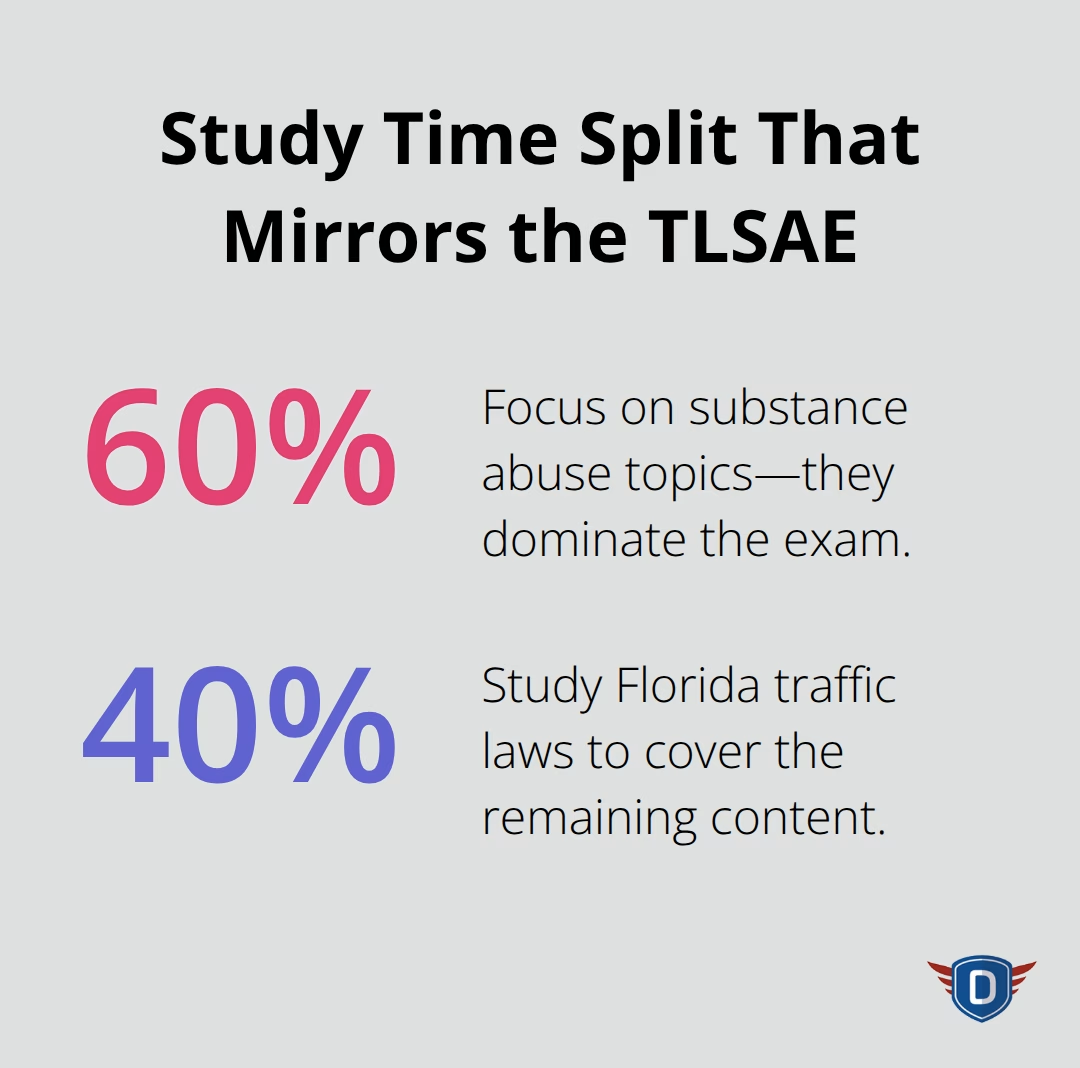
Focusing your practice on high-frequency topics saves time. Drug and alcohol awareness dominates the exam because it’s the course’s core purpose. Questions cover how alcohol affects your brain, leading to a loss of coordination, poor judgment, slowed reflexes, distorted vision, memory lapses, and blackouts. Questions about Florida traffic laws typically cover school buses, traffic signals, right-of-way rules, and seat belt requirements. Spending 60 percent of your practice time on substance abuse topics and 40 percent on traffic laws mirrors the actual exam distribution.
Unlimited Retakes and Performance Targets
Taking unlimited practice retakes matters more than most new drivers realize. Each attempt reveals which questions you consistently miss, allowing you to target weak areas before exam day. Try for 90 percent or higher on practice attempts-this significantly boosts real exam success rates, which is why pushing past 80 percent during preparation prevents last-minute panic. The questions you encounter repeatedly across multiple practice sessions will almost certainly appear on your actual exam, making each retake an investment in your passing score. Understanding these patterns transforms practice from a chore into a strategic advantage that carries directly into your test performance.
Smart Prep Strategies That Actually Work
Target Your Weak Spots First
The difference between passing TLSAE on your first attempt and retaking it multiple times comes down to how you study, not how much you study. Most new drivers waste time reviewing material they already know instead of targeting weak spots. Start by taking a full practice test without studying first. This baseline reveals exactly which topics drain your score. If you consistently miss questions about alcohol metabolism or school bus rules, that’s where your focus belongs. Spend 60 percent of your study time on substance abuse topics since they dominate the exam, then allocate 40 percent to Florida traffic laws. This distribution matches the actual test, so you’re not studying blindly.
Create a Single-Page Study Sheet
Take notes only on concepts you miss, not everything. Rewriting material you already understand is wasted effort. Instead, create a single-page cheat sheet with the facts you struggle with: standard drink equivalents, the 0.08 BAC limit, school bus stopping procedures, and point suspension thresholds. Review this sheet three times daily for five days before your exam. This repetition embeds facts into memory far better than passive reading. After each practice test, spend 15 minutes analyzing why you missed each question. Was it careless reading, a knowledge gap, or misunderstanding the question format? Identifying your error pattern prevents repeating it on exam day.
Schedule Focused Study Sessions
Schedule your TLSAE completion around your study habits, not your calendar. Block out four uninterrupted hours in a quiet space where you can focus without phone notifications or distractions. Many new drivers attempt TLSAE while multitasking and wonder why they fail. Dedicate one specific day to complete the course modules, then spend the next three days taking practice tests and reviewing weak areas. If you’re juggling work or school, spread your practice across two weeks instead of cramming the night before.
Master Practice Tests Before Exam Day
Take at least five full-length practice tests before your actual exam, trying for 90 percent or higher on each attempt. Questions you encounter repeatedly across multiple sessions will almost certainly appear on your real exam. When you’re ready to take the actual test, read each question twice before answering. The exam tests precision, and rushing through questions costs you points. If you’re unsure about an answer, flag it mentally and return to it after finishing the rest. This approach prevents overthinking and keeps your momentum.
Secure Your Completion Certificate
After passing, store your completion certificate digitally and print a physical copy. You’ll need it when applying for your license at the FLHSMV office.
Final Thoughts
Passing TLSAE comes down to one principle: practice with real TLSAE practice questions, identify your weak spots, and review until you hit 90 percent on practice attempts. The knowledge you gain isn’t temporary-it shapes how you drive for decades. After you pass and receive your completion certificate, store it digitally and print a physical copy for your records.
Your next step is straightforward. You’ll present that certificate when applying for your learner’s permit or driver’s license at the Florida DHSMV office. Your certificate reports automatically to the state, but a physical copy prevents delays. The real work then begins as you take your permit test, log hours behind the wheel, and encounter situations that TLSAE prepared you for without you realizing it.
Safe driving isn’t about following rules because they exist-it’s about understanding consequences and choosing actions that protect your life and others. We at DriverEducators.com believe driver education extends beyond passing tests (it builds lifelong safe driving habits through comprehensive instruction and real-world scenarios). Whether you’re completing TLSAE or advancing to defensive driving courses, the goal remains the same: becoming a driver who thinks critically, acts responsibly, and arrives home safely every time.

![Teen Driver Licensing Requirements in Florida [2026]](https://drivereducators.com/wp-content/uploads/emplibot/florida-license-requirements-hero-1773544196.avif)