Teen drivers face real dangers on the road. Inexperience, distraction, and poor judgment create a deadly combination that claims thousands of young lives annually.
We at DriverEducators.com believe parents and teens need concrete teen driver safety tips, not vague warnings. This guide walks you through the specific skills, habits, and conversations that actually reduce crashes.
Why Teen Crashes Happen So Often
The numbers tell a stark story. In 2023, 2,611 teens aged 15–18 died in motor vehicle crashes, according to NHTSA data. The fatal crash rate per mile driven for 16–19-year-olds is nearly three times higher than for drivers 20 and older.
Newly licensed 16-year-olds face the worst odds, with a crash rate about 1.5 times higher than 18–19-year-olds. This isn’t random bad luck-it’s a pattern rooted in specific, identifiable factors that parents and teens need to understand before getting behind the wheel.
Inexperience Creates Blind Spots
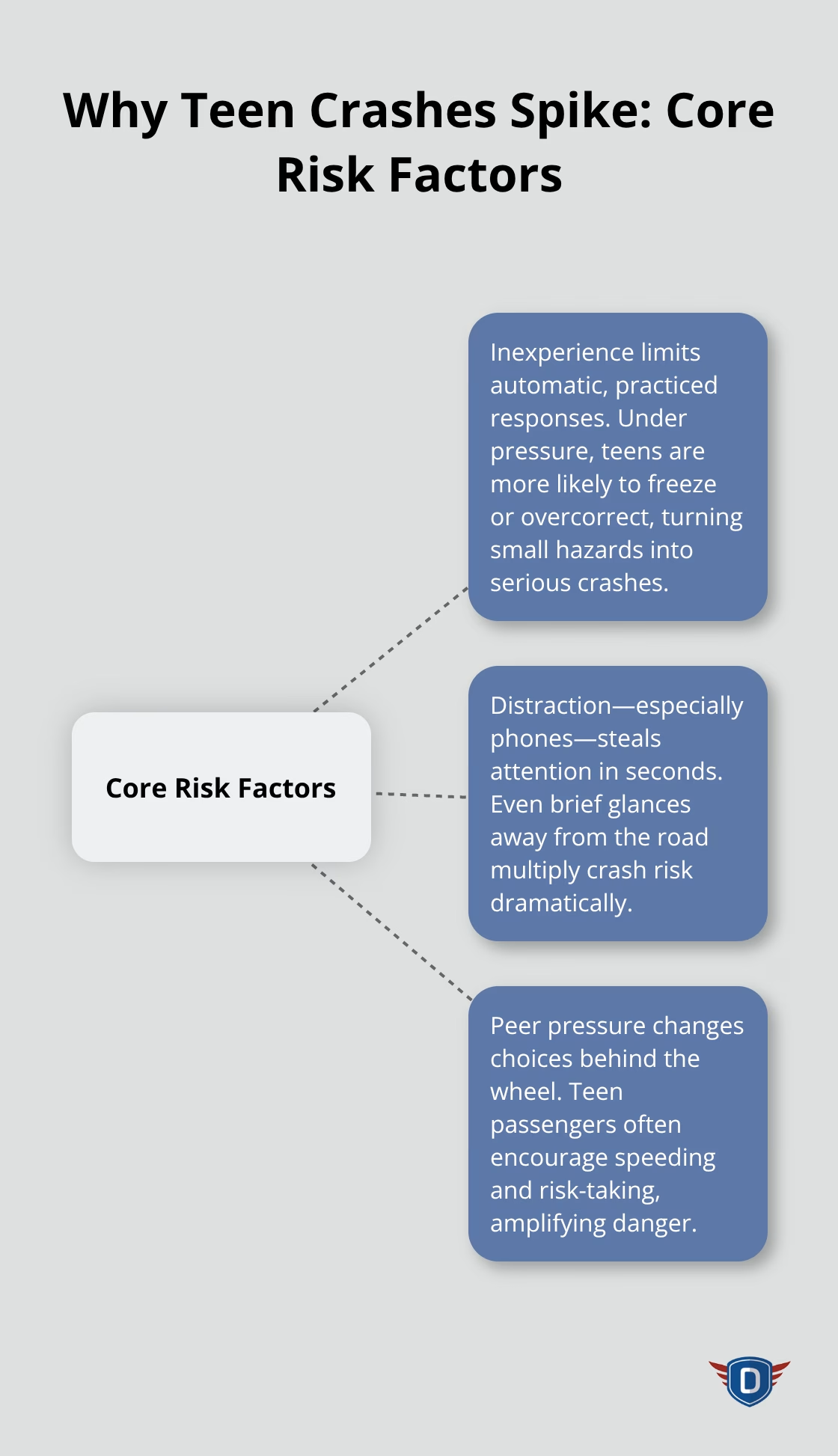
Teen drivers lack the thousands of hours of driving experience that build automatic safety responses. When something unexpected happens-a car merges without signaling, weather turns bad, another driver cuts them off-experienced drivers react from muscle memory. Teen drivers freeze or overcorrect. NHTSA research shows that inexperience compounds with a still-developing brain. The prefrontal cortex, which handles judgment and impulse control, continues developing into the mid-20s. This means teens struggle to assess risk accurately, overestimate their own abilities, and underestimate danger. They know the rules intellectually but lack the neural wiring to apply them under pressure. Supervised practice hours build those automatic responses before a teen drives alone.
Distraction Multiplies Crash Risk Dramatically
Texting while driving increases crash risk about 23 times compared to focused driving, according to NHTSA. Dialing a phone raises risk about 6 times. These aren’t small increases-they’re catastrophic. Yet 39% of high school drivers who drove in the prior 30 days texted or emailed at least once while driving. The problem isn’t that teens don’t know phones are dangerous. They know. But they underestimate how quickly a distraction causes a crash and overestimate their ability to multitask. A two-second glance at a text message means a car traveling at 55 mph covers 161 feet blind. At highway speeds, that’s enough distance to collide with another vehicle or obstacle. Removing the phone from the driver’s reach entirely during supervised practice and establishing clear rules before a teen gets licensed works far better than lectures about phone dangers.
Passengers and Peer Pressure Amplify Risk
Having one teen passenger increases crash risk about 2.5 times. Multiple teen passengers raise risk up to 3 times. NHTSA data consistently shows this peer effect, and it’s not just about distraction. Passengers encourage riskier behavior-faster speeds, more aggressive driving, less caution. Teens want to appear confident and in control, so they drive differently when peers are watching. This is why graduated driver licensing systems restrict teen passengers during the intermediate stage. Male teen drivers have roughly triple the crash death rate of female teen drivers, and much of that difference stems from higher rates of speeding and risky driving with passengers present. Limiting passengers during the first months of independent driving isn’t punishment-it’s a proven crash-prevention strategy.
What This Means for Your Teen’s First Year
These three factors-inexperience, distraction, and peer pressure-don’t operate in isolation. A newly licensed teen who texts while driving with friends in the car faces compounded risk that multiplies across all three categories. Understanding these specific dangers helps parents and teens move beyond general warnings and toward concrete safety strategies that actually work.
Skills That Actually Stop Crashes
Defensive driving builds automatic responses that keep your teen alive when something unexpected happens on the road. The gap between knowing what to do and executing it under stress is where most teen crashes occur. According to CDC data, the fatal crash rate for 16–19-year-olds is nearly three times higher than for drivers 20 and older, and much of that difference comes from poor hazard recognition and slow reaction times. Teens need specific, practiced skills that become muscle memory before they drive unsupervised.
Scan Ahead and Identify Escape Routes
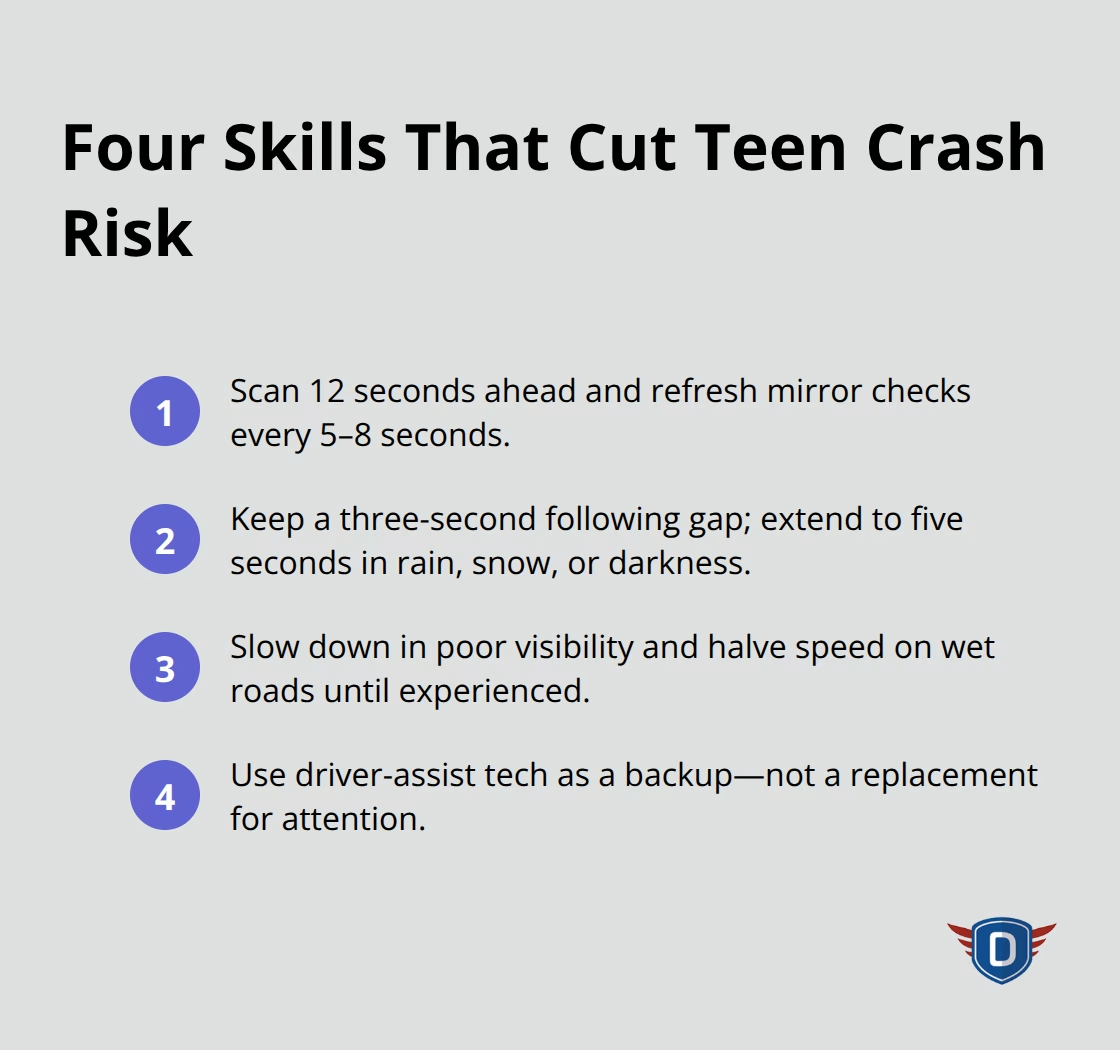
Situational awareness forms the foundation of crash prevention. Your teen should scan the road 12 seconds ahead, check mirrors every 5–8 seconds, and constantly identify escape routes if a crash becomes unavoidable. This isn’t paranoia; professional drivers use the same technique.
During supervised practice, have your teen narrate what they see: the car two vehicles ahead is braking, that pedestrian is looking at their phone, the left lane has gravel. Speaking observations aloud forces the brain to process threats actively rather than passively staring at the road.
Master the Three-Second Rule
Speed and following distance are where most teens fail catastrophically. NHTSA data show that 34% of teen fatal crashes in 2023 involved speeding, and speeding combined with inadequate following distance removes the margin for error that keeps crashes from becoming fatal. Your teen should maintain at least a three-second gap behind the vehicle ahead in normal conditions and increase it to five seconds or more in rain, snow, or darkness. Teach them the counting method: when the car ahead passes a road sign, your teen counts one-thousand-one, one-thousand-two, one-thousand-three before reaching that same sign. If they reach it sooner, they’re too close. This simple technique works at any speed and becomes automatic with practice.
Speed kills not because going fast is inherently dangerous, but because it removes reaction time and increases stopping distance. At 35 mph, a vehicle needs roughly 100 feet to stop; at 55 mph, it needs 260 feet. Most teens don’t internalize this relationship between speed and physics.
Navigate Darkness and Bad Weather
Bad weather and darkness expose every weakness in a teen driver’s skills. Nighttime driving requires slower speeds, wider following distances, and heightened awareness because visibility drops dramatically and reaction time increases. Rain and snow demand the same adjustments. Your teen should reduce speed by 50% in wet conditions and avoid highways entirely in heavy rain or snow until they have months of supervised experience. Tire condition matters enormously; underinflated tires reduce grip and increase hydroplaning risk. Make checking tire pressure part of your teen’s pre-drive routine.
Use Technology as a Safety Assistant, Not a Replacement
Modern vehicles with Adaptive Cruise Control and Automatic Emergency Braking can help, but only if your teen understands these systems assist rather than replace attention. A teen who relies on automatic braking to avoid consequences of following too closely will eventually encounter a situation where the system can’t help. These features work best when paired with solid fundamentals-proper following distance, appropriate speed, and constant awareness. Once your teen masters these core skills through supervised practice, vehicle technology becomes a valuable backup rather than a crutch. This foundation of practical skill is what separates teens who stay safe from those who face preventable crashes, which is why the next step involves the adults who guide them.
How Parents Shape Teen Driving Safety
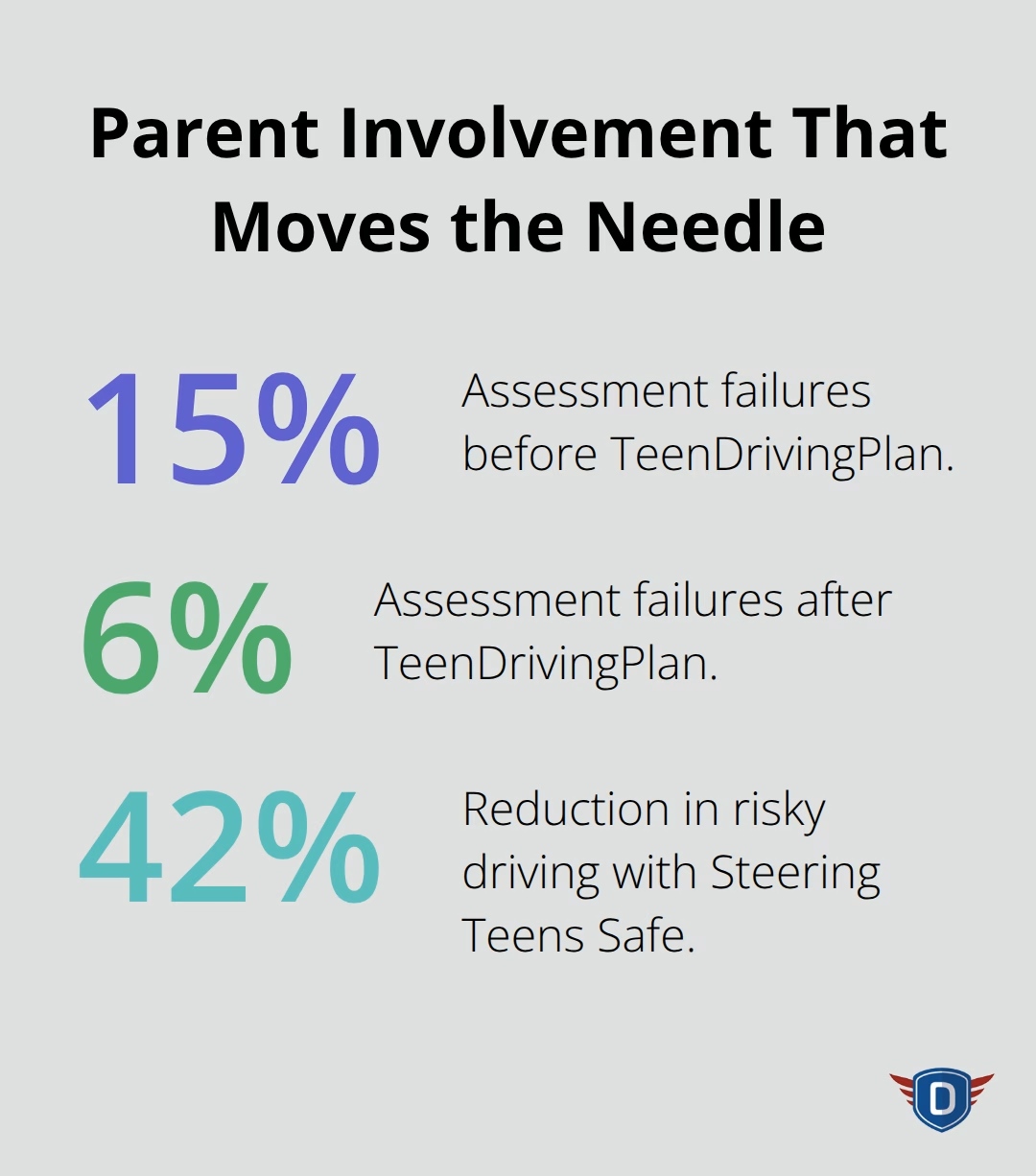
Research shows that parental involvement determines whether teens drive safely or crash. A 2015 review in the Journal of Adolescent Health examined 18 parent-focused teen driving interventions and found that programs relying on passive media like videos or printed warnings had almost no impact on behavior. Interventions that provided concrete tools and required direct parent engagement, however, produced measurable improvements in teen driving skills and parental supervision. TeenDrivingPlan, a web-based program that structured supervised practice hours and tracked progress, reduced teen assessment failures from 15% to 6%. Steering Teens Safe, which used motivational interviewing between parents and teens, showed approximately 42% reduction in risky driving among teens whose parents engaged actively in conversations.
The pattern is clear: parents who take deliberate action reduce crashes; parents who assume their teen will figure it out watch crashes happen.
Create a Written Driving Agreement
You need a written driving agreement before your teen drives unsupervised. The CDC publishes a Parent-Teen Driving Agreement specifically designed for this purpose. Print it, sit down together, and establish rules around phone use, passengers, speed, nighttime driving, and alcohol. Make the agreement specific: no phone use at any time while driving, zero passengers for the first three months, no driving between 9 pm and 6 am, no alcohol ever. Vague expectations produce vague compliance. When rules are written and visible, teens know exactly what you expect and what happens if they violate it. This isn’t about control; it’s about eliminating ambiguity.
Track Progress Through Structured Feedback
During the first months of independent driving, your teen needs structured feedback, not just freedom. Ask them to maintain a driving log that notes conditions, distance, and any difficult situations they encountered. Review this log weekly and discuss what they learned. This practice accomplishes two things: it keeps you informed about where and how your teen is driving, and it forces your teen to reflect on their own performance rather than simply accumulating miles. Supervised practice across different road types, weather conditions, and times of day produces better hazard recognition than repetitive driving on familiar routes. Ensure your teen practices on highways, rural roads, residential areas, and in rain or darkness before they encounter these situations alone.
Model Safe Driving Behavior
Your own driving behavior matters more than any lecture. If you text while driving, your teen notices. If you exceed speed limits, tailgate, or drive drowsy, your teen internalizes these behaviors as normal. Conversely, if your teen sees you pull over to check your phone, maintain proper following distance, and refuse to drive when tired, they learn that safety is non-negotiable. Parental modeling doesn’t eliminate teen risky driving, but it establishes the baseline expectations that make your rules credible.
Stay Informed Through Open Conversations
Monitoring doesn’t mean distrust; it means staying informed. Know where your teen is driving, who is in the vehicle, and how they performed. Open conversations about driving should happen regularly and casually, not just after mistakes. Ask what surprised them, what felt difficult, what they’re confident about. Listen more than you lecture. When a mistake happens-and it will-address it immediately but proportionately. A minor speeding incident calls for a conversation about speed and consequences; a serious violation calls for restricting privileges until behavior improves.
Final Thoughts
Teen driver safety tips work only when parents and teens commit to them together. The statistics are sobering, but they also reveal something hopeful: most teen crashes are preventable. The three factors that cause crashes-inexperience, distraction, and peer pressure-all respond to deliberate action. Start with a written driving agreement, make it specific, and enforce it consistently.
Research confirms that programs providing concrete tools and requiring active parental engagement reduce risky driving by 42% or more. Structured supervised practice cuts assessment failures in half, and parents who stay involved keep their teens alive. Your teen will make mistakes behind the wheel; what matters is catching those mistakes early, addressing them immediately, and adjusting your approach. A minor speeding incident becomes a teaching moment, while a serious violation becomes a restriction on privileges until behavior improves.
We at DriverEducators.com understand that teen driver safety requires more than a license-it requires skills, habits, and a family commitment to safety. Our comprehensive driver education programs help teens master defensive driving techniques and build the confidence to handle real-world road situations. Visit DriverEducators.com to explore structured guidance and personalized instruction that transforms knowledge into lifelong safe driving behavior.