![Teen Driver Licensing Requirements in Florida [2026]](https://drivereducators.com/wp-content/uploads/emplibot/florida-license-requirements-hero-1773544196.avif)
Getting your Florida license requirements right as a teen driver matters more than most people think. At DriverEducators.com, we’ve seen how confusion about the graduated licensing system leads to costly mistakes and delays.
This guide walks you through each phase of Florida’s teen licensing process, from your learner’s permit to your full license. We’ll also cover the mistakes that trip up most new drivers and how to avoid them.
What You Need Before Getting Your Florida Learner’s Permit
Age and Course Requirements
You must be at least 15 years old to apply for a learner’s permit in Florida, but starting at 14½ gives you a head start. The sooner you begin, the more time you have to complete the six-hour Driver Education Traffic Safety (DETS) course before your permit application. Individuals under 18 years old who complete this course will need to take the DETS course to meet state requirements. Approved course providers appear on the FLHSMV website, so verify your selection before enrollment.
Documents and Identity Verification
You’ll need parental or notarized consent, proof of identity, your Social Security number, and proof of residential address to complete your application. The FLHSMV website lists exactly which documents qualify-checking this before your appointment prevents wasted trips.
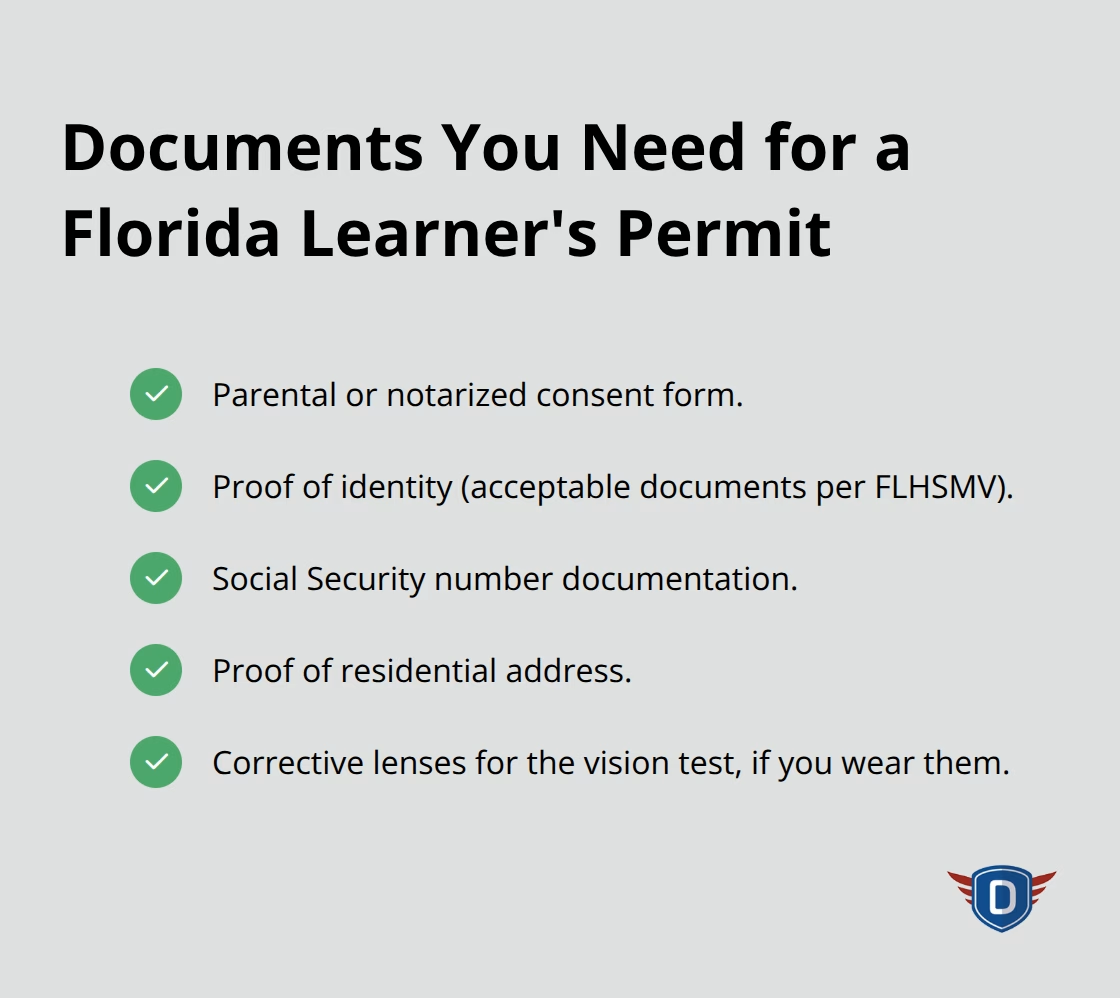
Vision and hearing tests are part of the process too; your eyesight must meet state standards, and if you wear corrective lenses, you must have them during the test and whenever you drive.
The Written Knowledge Exam
The written knowledge exam tests your understanding of Florida traffic laws and road signs. You’ll answer 50 multiple-choice questions and need at least 40 correct answers to pass. Study the Official Florida Driver License Handbook thoroughly because the test covers real scenarios you’ll encounter on the road. The exam directly reflects situations you’ll face as a new driver, so take it seriously rather than treating it as a formality.
Supervised Driving Hours and Early Restrictions
Once you pass and hold your learner’s permit, you must complete 50 hours of supervised driving-at least 10 of those hours must occur at night-with a licensed driver 21 or older in the vehicle. For the first three months, you can only drive during daytime hours, which limits your early experience to morning and afternoon practice. After three months, you can drive until 10 p.m., but you must always have that 21+ adult present. Track every hour using the Practice Log Sheet available from FLHSMV; you’ll need a supervising adult to sign the Certification of Minor Driving Experience Form to prove you completed the requirement.
Building Real Competence Over Time
Spread your 50 hours over several months rather than rushing through them. This approach means you’ll practice in different weather conditions, on highways and local roads, during rush hour and quiet times-all of which builds genuine competence instead of just checking boxes. Varied practice exposes you to the unpredictable situations that actually happen on Florida roads, preparing you far better than concentrated, repetitive sessions. Once you’ve logged your hours and met all permit requirements, you’ll be ready to tackle the driving skills test and move toward your restricted license.
How Florida’s Three-Phase Licensing System Works
Understanding the Three Phases
Florida’s graduated driver licensing system breaks your path to full driving privileges into three distinct phases, each designed to build skills progressively under controlled conditions. Phase 1 starts when you complete the six-hour DETS course and pass the written exam. Phase 2 begins when you pass the driving skills test at age 16 and receive your restricted driver’s license. Phase 3 grants you full driving privileges once you turn 18, assuming you’ve maintained a clean driving record and completed all previous phases successfully.
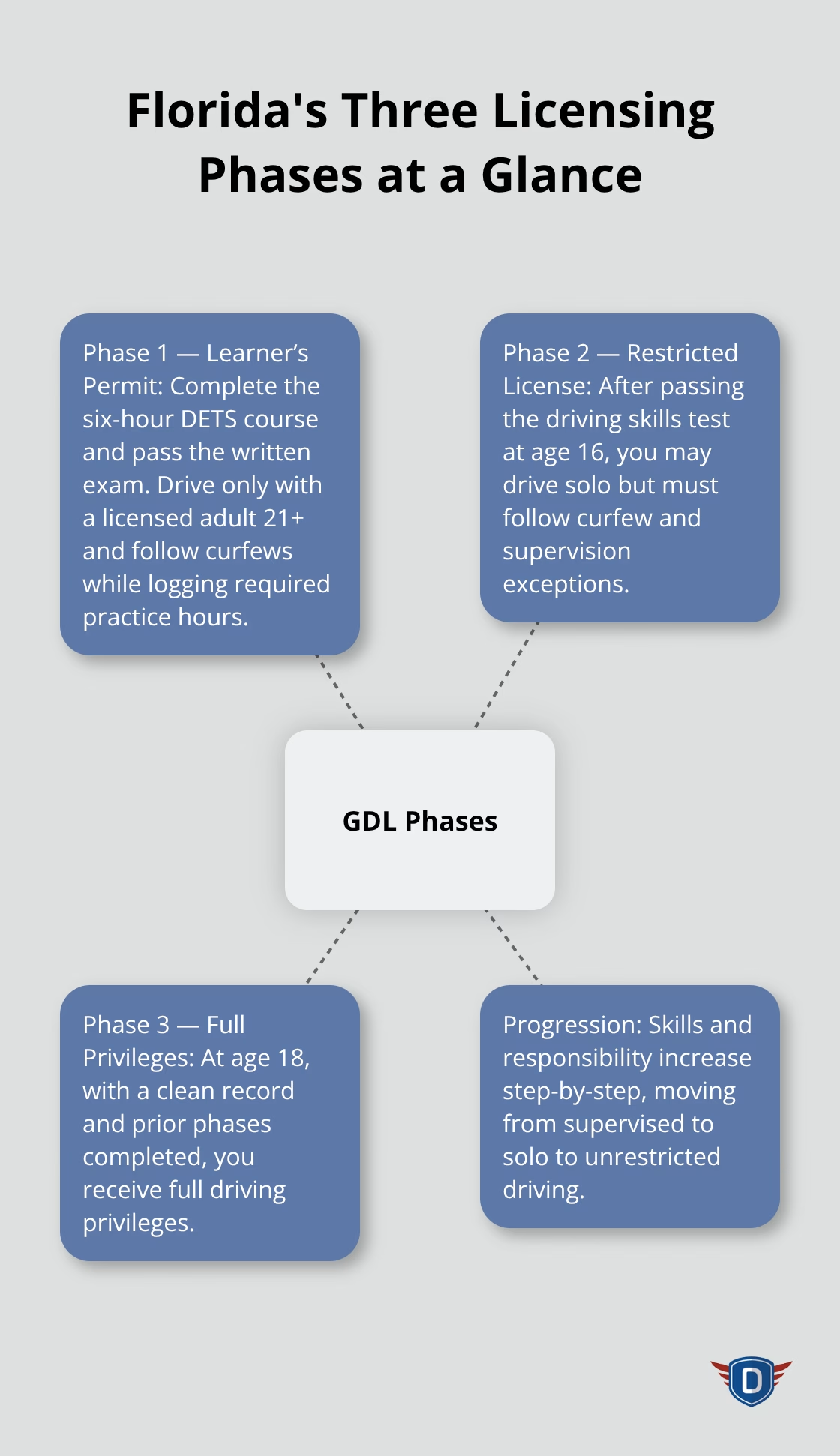
This structure mirrors real-world complexity gradually: you start with a trusted adult present, then progress to solo driving with time limits, then finally to unrestricted driving.
Phase 1: Your Learner’s Permit Stage
During Phase 1, you’re limited to daytime driving for the first three months, then driving until 10 p.m. after that, always with a licensed adult 21 or older supervising. You must log 50 hours of supervised driving with at least 10 hours occurring at night, tracked on the Practice Log Sheet and certified by your supervising adult. This phase typically lasts 12 months or until you turn 18, whichever comes first. Any moving violations during this stage extend your waiting period by one additional year before you can advance to Phase 2.
Phase 2: Your Restricted License Stage
Phase 2 begins when you pass the driving skills test at age 16. At this stage, you can drive alone, but your curfew is strict: you can drive from 6 a.m. to 11 p.m. unless you’re driving to or from work or accompanied by a licensed driver 21 or older. The restrictions tighten slightly at age 17 if you’re still holding a learner’s permit-your curfew shifts to 5 a.m. to 1 a.m., giving you more nighttime flexibility but still requiring adult supervision.
Why Florida’s Standards Matter
Florida’s approach ranks among the stricter states nationwide, requiring 50 hours of supervised driving when many states mandate 20 hours or fewer. This higher standard directly addresses Florida’s teen crash statistics-teen drivers in this age group have a fatal crash rate almost three times as high as drivers ages 20 and older per mile driven. The three-phase system forces you to build genuine experience before handling roads independently, reducing the likelihood you’ll become part of that overrepresentation.
Your Responsibility in Each Phase
Your job during each phase is straightforward: follow the restrictions exactly, log your hours meticulously, and treat violations as serious setbacks rather than minor infractions. One moving violation while holding your learner’s permit delays your progress substantially, so defensive driving isn’t optional-it’s the only way forward. As you progress through each phase and gain more independence, the mistakes you make on the road become increasingly costly to your timeline and your safety record. Understanding what happens when you violate traffic laws during these phases helps you stay focused on the real goal: becoming a driver who reaches full privileges without unnecessary delays or dangerous habits.
What Mistakes Cost Teen Drivers the Most
Phone Use Destroys Your Licensing Timeline
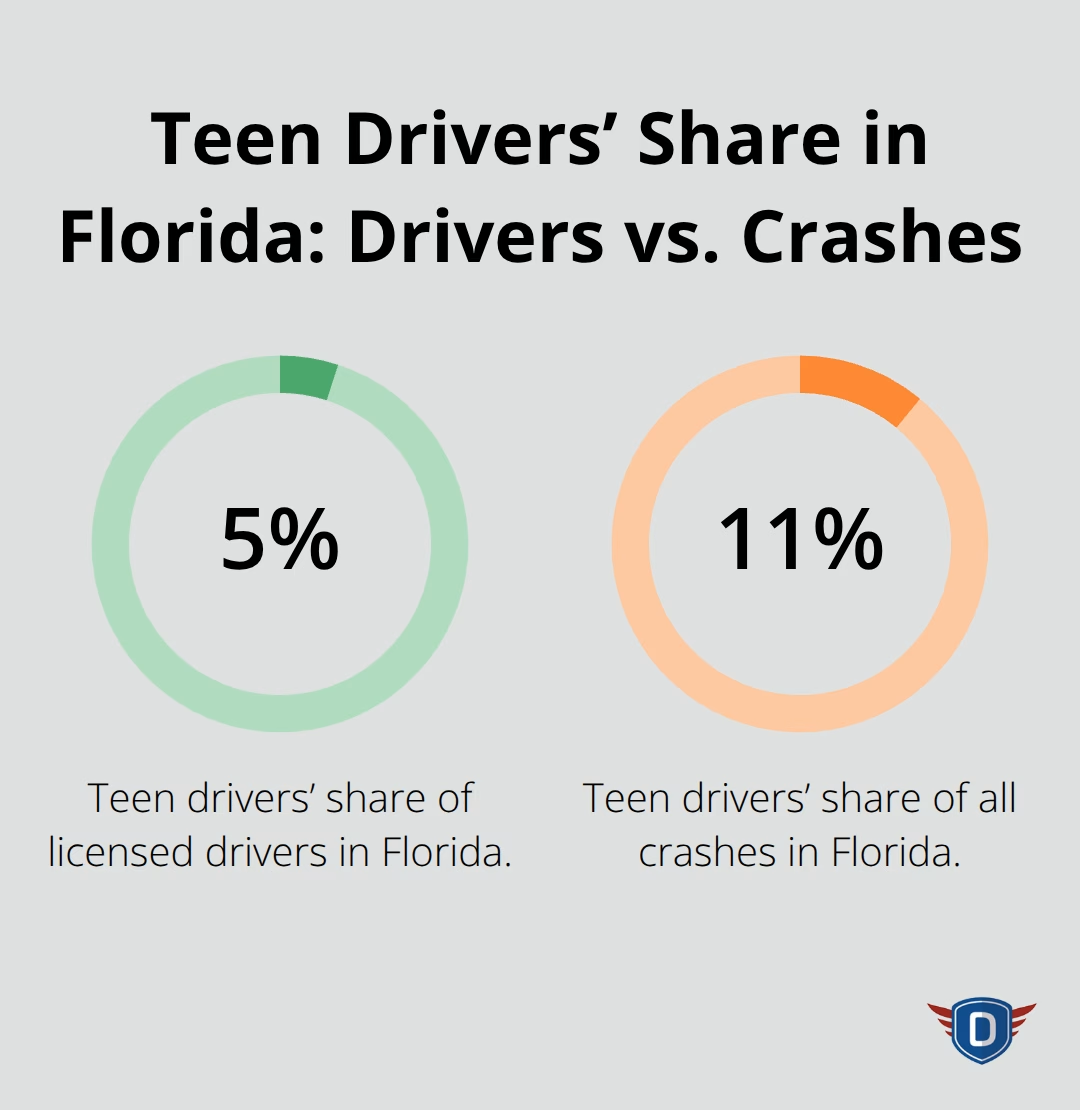
Phone use while driving represents the single biggest threat to your license progression in Florida, and the data proves it. The National Highway Traffic Safety Administration (NHTSA) reports that in 2023, 3,275 people were killed in motor vehicle crashes involving distracted drivers. In Florida, where teen drivers represent 5 percent of licensed drivers but account for 11 percent of all crashes, a distraction-caused accident does not just risk your life-it halts your licensing timeline completely.
One moving violation during your learner’s permit phase extends your waiting period by a full year, and a serious crash can disqualify you from advancing to your restricted license entirely.
Your phone must be completely inaccessible while driving, not just silenced. Put it in the trunk, the glove compartment, or your parent’s bag-anywhere except your hands or lap. Some teens think hands-free calling is safe, but research from the Insurance Institute for Highway Safety (IIHS) shows that cognitive distraction from conversations impairs driving performance regardless of whether your hands hold the phone. Learning defensive driving tips can help you stay focused and avoid accidents caused by distraction.
Speeding and Aggressive Driving Trigger Automatic Restrictions
Speeders and aggressive drivers face equally devastating consequences but with faster punishment. Exceeding the speed limit by just 10 miles per hour significantly increases your crash risk, especially on unfamiliar roads where you’re still building judgment. Florida law assigns points for speeding violations, and accumulating six or more points within 12 months triggers automatic license restriction. That restriction means you cannot drive to school, social events, or anywhere except work-effectively stranding you socially and academically.
Aggressive driving behaviors like tailgating, unsafe lane changes, or honking in anger compound the problem because they often result in reckless driving citations, which carry three points and potential license suspension. These violations accumulate quickly and create a record that follows you beyond your teen years.
Traffic Signs and Right-of-Way Rules Require Active Practice
Failure to follow traffic signs and right-of-way rules stems from either carelessness or incomplete understanding, both equally costly. Stop signs are not suggestions, and right-of-way rules exist because crashes at intersections kill thousands annually. When you miss a stop sign or misjudge who has the right of way, you create a collision scenario rather than simply breaking a rule.
Many teen drivers cause crashes at intersections specifically because they did not fully process stop signs or traffic signals during their practice hours. The solution requires deliberate practice: during your 50 supervised hours, specifically practice intersection navigation with your supervising adult, asking them to quiz you on right-of-way scenarios before you reach each intersection. Your supervising adult should correct you immediately when you make errors, not after you have created a dangerous situation. This active feedback during your practice phase prevents bad habits from becoming automatic responses that you will repeat once you drive alone.
Final Thoughts
Florida’s teen licensing requirements exist for one reason: to keep you alive. The three-phase system forces you to build real driving competence before you handle roads independently, starting with a trusted adult present, progressing to solo driving with time restrictions, and earning full privileges only after you demonstrate you can follow the rules and avoid crashes. One moving violation during your learner’s permit stage costs you a full year of waiting, and one serious crash can disqualify you entirely-these consequences reflect the reality that teen drivers in Florida represent 5 percent of licensed drivers yet account for 11 percent of all crashes.
Your 50 hours of supervised driving should span different conditions: highways and local roads, daytime and nighttime, rush hour and quiet times. Your supervising adult must actively correct your mistakes during practice, not after you create a dangerous situation, so right-of-way rules and intersection navigation become automatic responses rather than afterthoughts. Phone use, speeding, and failure to follow traffic signs represent the mistakes that derail most teen drivers-keep your phone completely inaccessible while driving, treat speed limits as non-negotiable, and practice intersection scenarios deliberately during your supervised hours.
We at DriverEducators.com understand the pressure you face as a new driver, and our comprehensive driver education programs help you master the skills and knowledge required to navigate Florida roads safely. Whether you need to complete your DETS course, prepare for your written exam, or develop defensive driving habits, DriverEducators.com provides the guidance and support you need to succeed with Florida license requirements.