Substance abuse behind the wheel kills thousands of drivers, passengers, and pedestrians every year. Florida sees this tragedy firsthand, with impaired driving remaining one of the state’s deadliest traffic problems.
Substance abuse traffic education works because it changes how people think about the risks. We at DriverEducators.com know that the right training program can break dangerous habits and save lives.
The Real Damage Impaired Driving Does to Florida Roads
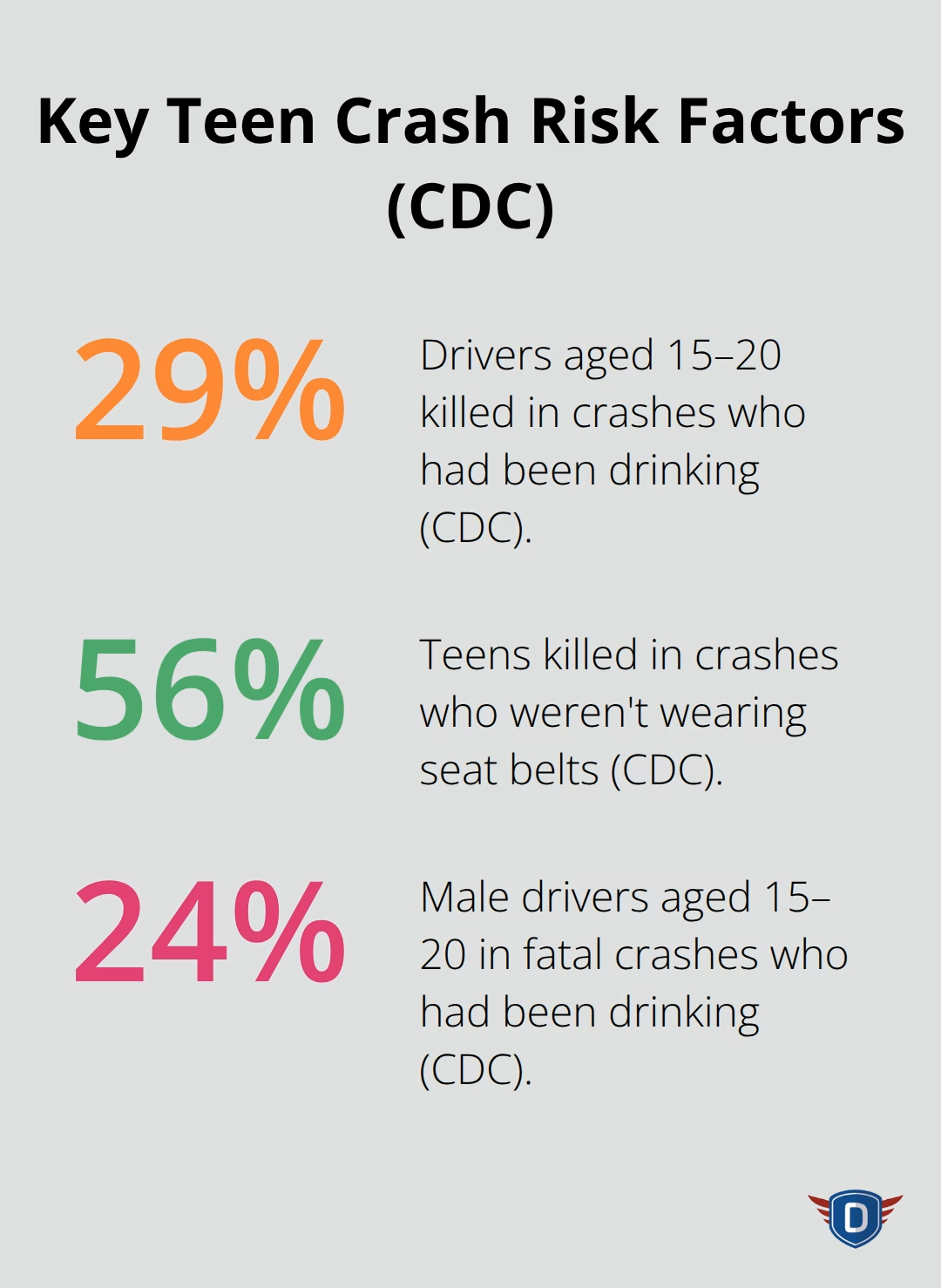
Alcohol and drugs slow your brain’s ability to process danger. The National Institute on Alcohol Abuse and Alcoholism reports that substances impair reaction time, judgment, and motor control-the three things that keep you alive behind the wheel. In Florida, this translates to preventable deaths. According to the CDC, 29% of drivers aged 15–20 killed in crashes had been drinking, and 56% of teens killed in crashes weren’t wearing seat belts, suggesting impairment played a role in their failure to take basic safety precautions. Male drivers face the harshest toll: about 24% of male drivers aged 15–20 involved in fatal crashes had been drinking, compared to 17% of females.
The economic burden is staggering-teen crash fatalities cost the U.S. economy about $40.7 billion in 2020 alone in medical expenses and lost productivity. Florida’s roads carry this burden every single day.
How Alcohol Rewires Your Driving Brain
Alcohol attacks your prefrontal cortex, the part of your brain responsible for decision-making and risk assessment. You become overconfident at the exact moment you should be most cautious. Reaction time slows dramatically. The NEXT Generation research project found that adolescents who engaged in binge drinking in the past 30 days were 3.17 times more likely to drive while impaired and 6.12 times more likely to ride with an impaired driver. This pattern of poor judgment extends far beyond the night of drinking itself.
Marijuana compounds the problem significantly. About 13% of high school students who drove reported using marijuana in the past 30 days, and when combined with alcohol, the impairment multiplies rather than simply adds up. Nonmedical prescription drug misuse is rising too. Vicodin use among high school seniors jumped from 4.1% in 2002 to 5.7% in 2008, and OxyContin climbed from 1.6% to 3.7% in the same period. These pills slow your reflexes just as effectively as alcohol, yet many drivers don’t recognize them as dangerous.
Florida’s Legal Reality for Impaired Drivers
Florida law treats impaired driving as a serious crime, not a mistake. A DUI conviction leaves a permanent mark on your record, requires mandatory substance abuse education courses, suspends your license, and imposes fines ranging from hundreds to thousands of dollars. First-time offenders face a minimum six-month license suspension. Repeat offenders face exponentially harsher penalties-individuals with prior DUI convictions are four to five times more likely to be involved in fatal crashes. The U.S. Department of Transportation reports that roughly 21% of first-time offenders are arrested again within five years, proving that one mistake often leads to another.
Florida’s TLSAE Requirement and Its Purpose
Florida’s TLSAE requirement-a 4-hour Traffic Law and Substance Abuse Education course-is mandatory for most first-time adult applicants seeking a license and for drivers under 21 caught driving with a blood alcohol level between 0.02 and 0.05. The state doesn’t make this requirement lightly. It exists because education, paired with legal consequences, actually works. Programs that combine interactive learning with personalized feedback show stronger behavior change than lectures alone.
What Effective Education Actually Accomplishes
Evidence-based substance abuse education addresses the psychological factors that drive risky decisions. These programs promote self-awareness, build empathy for victims, and reinforce personal responsibility. When drivers understand not just the law but why the law exists, they make different choices on the road. The structure of these courses-combining clear explanations, real-life scenarios, and interactive components-creates the conditions for lasting behavioral change rather than temporary compliance.
This foundation of understanding how substances damage your driving ability and what Florida’s legal system demands sets the stage for exploring how structured education programs actually prevent impaired driving before it starts.
How Education Stops Impaired Driving Before It Starts
Why Structured Programs Change Driver Behavior
Education interrupts the decision chain that leads to impaired driving. Research from the NEXT Generation study shows that adolescents who received structured substance abuse education were significantly less likely to drive impaired compared to those without formal training. The mechanism is straightforward: when drivers understand exactly how alcohol and drugs degrade reaction time, judgment, and motor control, they stop convincing themselves they can handle it.
Florida’s TLSAE requirement isn’t bureaucratic busywork-it directly addresses the psychological factors that make people take risks. Interactive programs that combine clear explanations with real-life scenarios create lasting behavioral change far more effectively than fear-based lectures or generic warnings. The structure matters enormously.
How Effective Programs Engage the Brain
Programs that include personalized feedback, self-assessment activities, and exploration of actual crash scenarios engage drivers at a cognitive level that passive instruction cannot reach. When a program forces you to confront what impairment actually looks like through video evidence or detailed case studies, you absorb the information differently than when someone simply tells you alcohol is dangerous.
Florida’s approach integrates education into the licensing and legal systems, making it inescapable. First-time applicants complete TLSAE before they can legally drive. Drivers caught with a BAC between 0.02 and 0.05 must complete the course again to restore a hardship license. Repeat offenders face mandatory education as part of their sentencing.
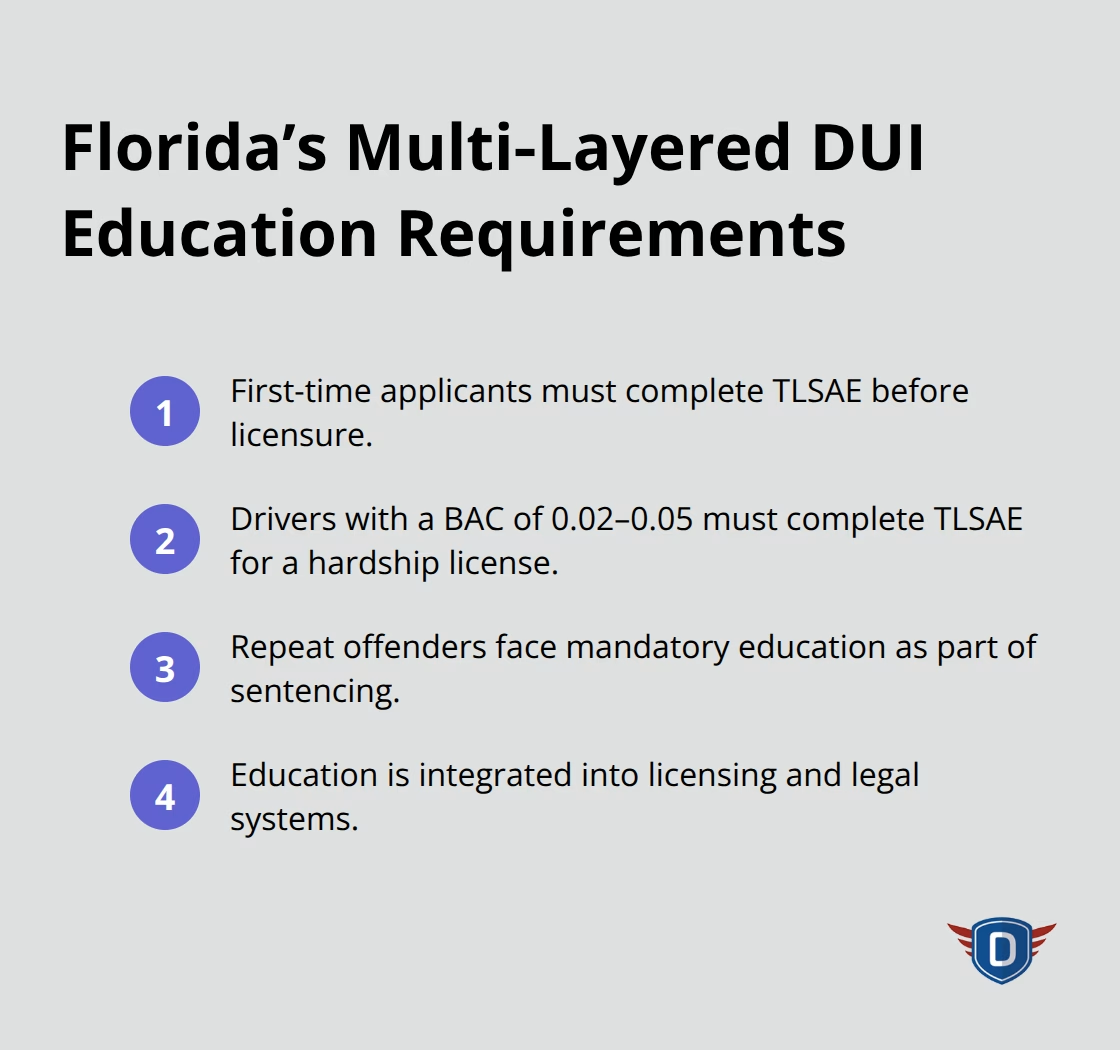
This layered approach works because it removes the option to ignore the problem.
Evidence-Based Programs Reduce Recidivism
The U.S. Department of Transportation data shows that roughly 21% of first-time DUI offenders are arrested again within five years, but evidence-based programs paired with legal consequences reduce recidivism. Programs like Life Skills Training focus on drug resistance and personal decision-making, showing measurable reductions in both substance use and risky driving behavior across multiple randomized trials.
The key distinction is that effective programs teach skills, not just facts. Drivers learn how to recognize social pressure, how to make faster decisions under stress, and how to manage the impulse toward risk-taking that peaks during adolescence (particularly among male drivers, who represent about 24% of fatal crashes involving alcohol among those aged 15–20).
Why Curriculum Content Matters
Florida’s requirement that TLSAE providers use curricula combining traffic law with substance abuse education ensures that drivers understand both what the law demands and why impairment makes them incapable of meeting those demands. This dual focus-legal accountability paired with neurological understanding-creates the conditions for real behavioral change rather than temporary compliance.
The next section explores how these educational foundations translate into specific defensive driving techniques that drivers can apply immediately on Florida’s roads.
Behavioral Change Through Structured Learning
Structured learning programs rewire the decision-making process itself rather than simply telling drivers to stop making mistakes. When you complete a traffic safety course focused on substance abuse prevention, you train your brain to recognize danger faster and respond differently. The NEXT Generation study found that adolescents who engaged in binge drinking were 3.17 times more likely to drive impaired, but those who participated in evidence-based prevention programs showed measurable reductions in both substance use and risky driving behavior. These programs teach you to identify the moment when peer pressure or overconfidence kicks in, then provide concrete techniques to override that impulse. Male drivers benefit particularly from programs that address the specific risk factors driving their behavior-overestimating their control, underestimating danger, and responding to social pressure to prove themselves.
Defensive Driving as Your Practical Defense
Defensive driving techniques provide immediate, actionable protection against impaired drivers on Florida’s roads. Safe following distances-at least three seconds behind the vehicle ahead-give you time to react when another driver swerves or brakes unexpectedly. When you combine this with the knowledge that reaction time slows by roughly 20% at a blood alcohol level of 0.05, you understand why maintaining distance matters so critically.
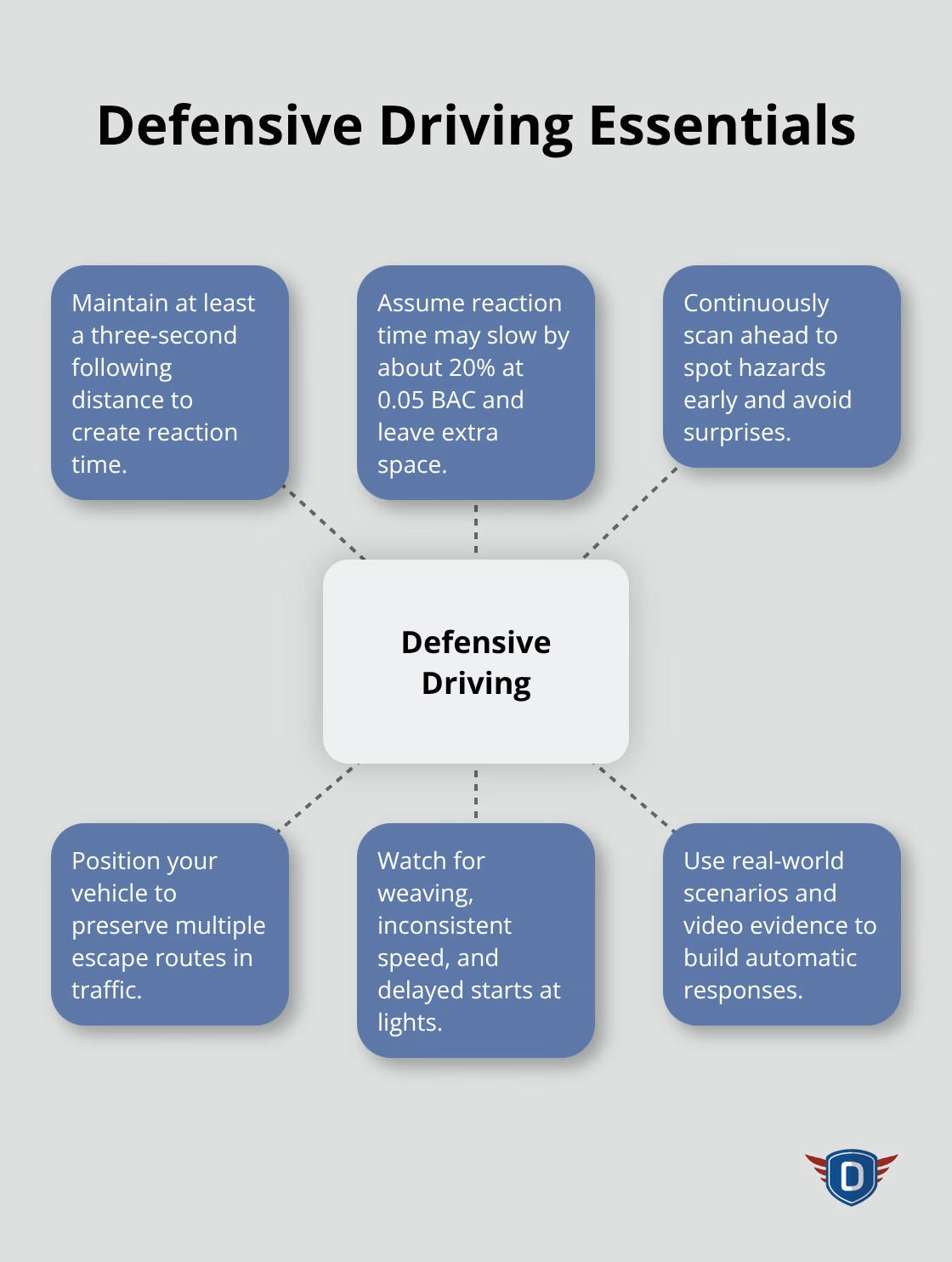
Crash avoidance strategies taught in evidence-based programs focus on scanning ahead for hazards, positioning your vehicle to maximize escape routes, and recognizing the early warning signs of impaired driving in other vehicles (weaving, inconsistent speed, delayed responses at traffic lights). These aren’t theoretical skills; they’re the exact techniques that reduce your collision risk when you encounter an impaired driver. Programs that use real-world scenarios and video evidence of actual crash outcomes create stronger behavioral change than generic warnings.
How Impairment Destroys Defensive Maneuvers
When you learn defensive driving techniques alongside substance abuse education, you build two protective layers simultaneously. You understand that impairment destroys your ability to execute defensive maneuvers, and you practice those maneuvers until they become automatic responses rather than conscious decisions. The U.S. Department of Transportation reports that roughly 21% of first-time DUI offenders are arrested again within five years, but this rate drops significantly when offenders complete comprehensive programs that combine legal consequences with interactive education and follow-up monitoring. Evidence-based programs teach skills for managing impulses and social pressure, not just facts about alcohol’s effects. This skill-based approach creates lasting behavioral change far more effectively than fear-based lectures or generic warnings.
Long-Term Safety Gains from Completing Courses
Drivers who complete comprehensive traffic safety courses show sustained behavior changes years after finishing. Life Skills Training programs, which emphasize drug resistance and personal decision-making skills, demonstrate reductions in substance use that persist across multiple follow-up periods. Florida’s TLSAE requirement mandates this skill-based approach for first-time applicants and drivers caught with a blood alcohol level between 0.02 and 0.05. Completing the course doesn’t just satisfy legal requirements-it fundamentally changes how you evaluate risk and make decisions under pressure. Drivers who finish these programs report greater awareness of their own vulnerability to impairment and stronger commitment to alternatives like designated drivers or rideshare services (which cost far less than a single DUI conviction). The economic impact of your decision matters too: a single DUI conviction costs thousands in fines, legal fees, and increased insurance premiums, making prevention far cheaper than dealing with consequences.
Final Thoughts
Substance abuse traffic education works because it addresses the exact moment when drivers make the choice to get behind the wheel impaired. The statistics are unambiguous: 29% of drivers aged 15–20 killed in crashes had been drinking, and roughly 21% of first-time DUI offenders are arrested again within five years. These numbers represent preventable deaths and broken lives that education paired with legal accountability can stop.
The programs that work best combine clear explanations with real-life scenarios and interactive components that engage your brain at a deeper level than lectures alone. Life Skills Training and similar evidence-based programs produce measurable reductions in substance use and risky driving behavior that persist years after completion. Male drivers, who represent about 24% of fatal crashes involving alcohol among those aged 15–20, benefit particularly from programs that address overconfidence and social pressure.
Your decision to drive sober or to use a designated driver protects yourself, your passengers, and everyone sharing Florida’s roads. If you need to complete court-ordered education or want to strengthen your driving skills, DriverEducators.com offers Florida-approved traffic school programs designed to help you adopt lifelong safe driving habits.