
Impaired driving kills someone every 39 minutes in the United States, and Florida accounts for a significant share of these preventable tragedies. Substance abuse education in Florida isn’t optional-it’s a lifeline for drivers who want to understand the real dangers of getting behind the wheel while impaired.
At DriverEducators.com, we’ve seen firsthand how education transforms attitudes and saves lives. This guide walks you through what you need to know about impaired driving, the legal consequences you’ll face, and why taking a substance abuse course matters.
How Impairment Damages Your Driving Ability
Alcohol’s Immediate Effects on Driving Performance
Alcohol slows your central nervous system and the risk of being involved in a crash increases significantly at 0.05 BAC and above. At 0.08 BAC, your ability to concentrate drops significantly, and your muscle coordination deteriorates. You cannot steer smoothly, brake effectively, or respond to sudden obstacles on the road.
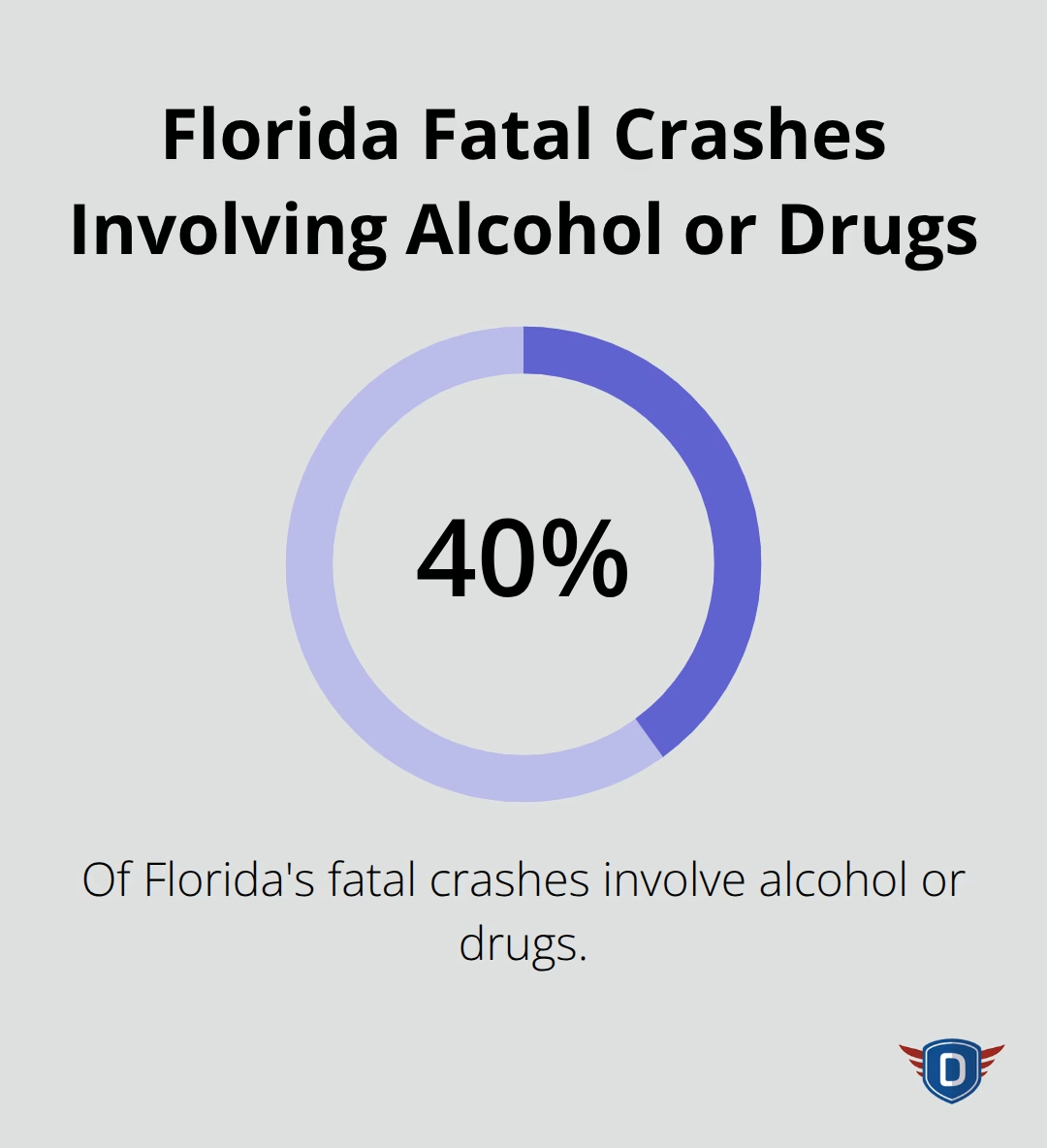
Florida recorded 8,934 DUI arrests in 2022 alone, and nearly 40 percent of fatal crashes in the state involve alcohol or drugs. The danger isn’t theoretical-it’s happening on Florida roads every single day.
Why Impaired Drivers Misjudge Their Own Condition
When you drink, your vision narrows, your judgment fails, and your risk assessment collapses. You think you’re fine to drive when you’re actually impaired. That false confidence kills people.
Drugs Create Different but Equally Destructive Problems
Marijuana impairs judgment and reaction time for up to three hours after use, while opioids cause drowsiness, poor concentration, and delayed reflexes. Stimulants like methamphetamine increase aggression and reckless decision-making behind the wheel.
Florida’s toxicology data shows that roughly one-third of DUI cases involve drugs instead of alcohol, and many involve both. The state has seen a steady rise in drug-related driving fatalities over the past decade.
Why Drug Impairment Remains Hard to Detect
Unlike alcohol, where there’s a legal BAC limit, drug impairment is harder to measure but no less lethal. A driver on cocaine or heroin poses the same danger as one with a high BAC. This measurement gap creates a false sense of safety among drivers who use substances other than alcohol.
What Substance Abuse Education Reveals
Substance abuse education forces you to understand this reality before it kills you or someone else. You learn exactly what impairment does to your body and brain-not with scare tactics, but with hard facts about how your driving performance actually degrades. This knowledge becomes the foundation for understanding why Florida’s legal system requires these courses and why your next steps matter.
What DUI Costs You in Florida
Criminal Penalties That Escalate Quickly
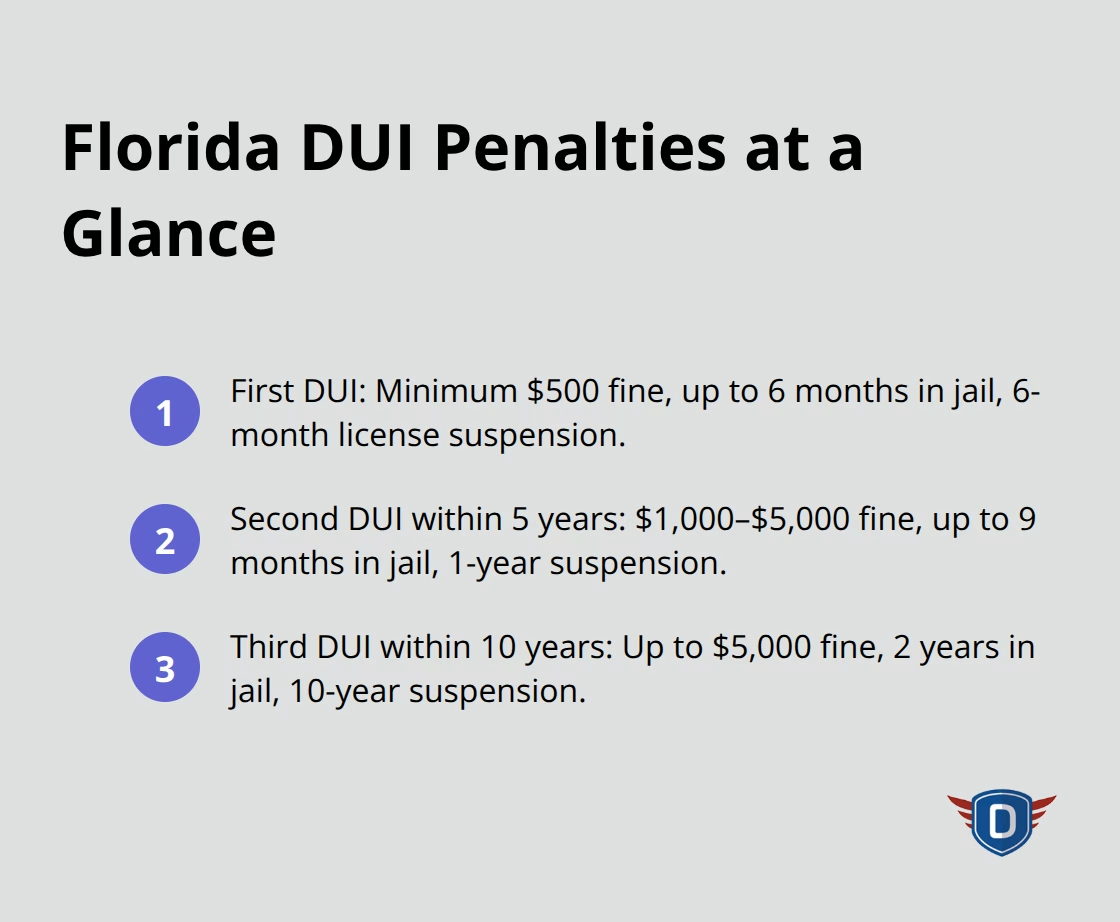
A first DUI conviction in Florida carries a minimum $500 fine, up to six months in jail, and a mandatory six-month license suspension. Second and subsequent offenses escalate dramatically: a second DUI within five years brings fines between $1,000 and $5,000, up to nine months in jail, and a one-year license suspension. A third DUI within ten years results in fines up to $5,000, two years in jail, and a ten-year license suspension.
Mandatory Education and Administrative Costs
Florida courts require substance abuse education courses before your license reinstatement. First offenders must complete Level I DUI education ($330 to $377.50 depending on registration method), while repeat offenders face Level II courses ($495). You’ll also complete a Driver Risk Inventory evaluation as part of the process. If you miss deadlines or fail to complete coursework within 90 days, reassignment fees add $40 to $420 more to your total bill.
Insurance Rate Spikes That Last Years
A single DUI conviction increases your car insurance premiums significantly, with typical 20-year-olds paying an average of $2,532 more annually. If you caused an accident while impaired, expect increases exceeding 200 percent. These rate hikes compound your financial damage long after you’ve paid court fines and course fees.
Employment and Licensing Barriers
Many employers conduct background checks and reject candidates with DUI convictions, particularly in positions requiring driving or professional licensing. Your professional credentials may face suspension or revocation depending on your field. This employment impact often exceeds the direct legal costs.
The Full Financial Picture
A first-time DUI typically costs between $10,000 and $25,000 when all expenses combine. You’ll pay for towing, potential vehicle impoundment fees, legal representation, ignition interlock device installation and monthly monitoring costs (averaging $65 to $300), and lost wages from court appearances and jail time. Florida takes impaired driving seriously because these consequences are permanent, expensive, and entirely preventable-which is why understanding what substance abuse education actually teaches you becomes your next critical step.
Why Education Stops Repeat Offenses
How Substance Abuse Education Changes Behavior
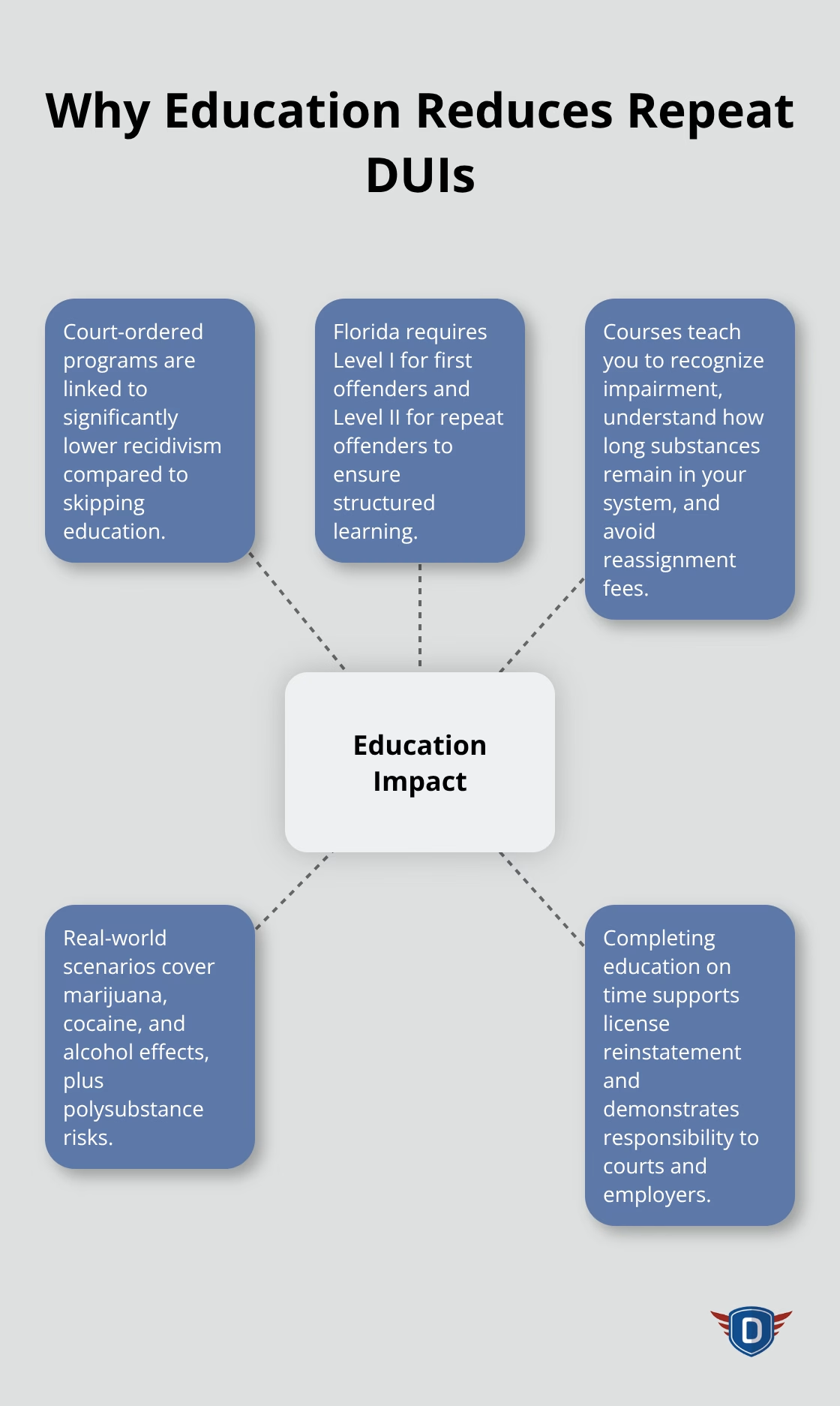
Substance abuse education works because it forces confrontation with specific consequences, not abstract warnings. Studies show that drivers who complete court-ordered substance abuse programs have significantly lower recidivism rates than those who skip education entirely. The Florida Department of Highway Safety and Motor Vehicles requires Level I courses for first offenders and Level II for repeaters because the data proves education changes behavior when it’s mandatory and structured.
What You Actually Learn in These Courses
Substance abuse education curriculum focuses on the exact mechanisms of impairment-how alcohol degrades your visual processing in milliseconds, how drugs alter your decision-making in ways you cannot self-correct, and how your brain lies to you about your own condition. This isn’t theoretical psychology; it’s applied neuroscience that connects directly to the $10,000 to $25,000 financial disaster you face after a DUI conviction. When you understand that a single decision to drive impaired will cost you thousands in fines, mandatory courses, insurance increases, and potential jail time, the education transforms from punishment into investment in your own survival.
Real-World Scenarios That Stick With You
Real-world scenarios embedded in substance abuse courses matter far more than general lectures about safety. You learn what happens when you drive on marijuana and misjudge a curve, when cocaine accelerates your aggression toward other drivers, or when alcohol narrows your vision so severely that a pedestrian in your lane becomes invisible until impact. Florida’s toxicology data shows one-third of DUI cases involve drugs instead of alcohol, which means the course must address polysubstance impairment-the reality that many drivers mix alcohol with prescription medications, cannabis, or stimulants, creating unpredictable and dangerous combinations.
Practical Training in Decision-Making
The practical component teaches you to recognize impairment in yourself and others, to calculate how long substances remain in your system, and to understand that a failed education course reassignment costs $40 to $420 in additional fees depending on your offense level. These aren’t scare tactics; they’re the actual rules you’ll navigate. Completing substance abuse education before your license reinstatement deadline avoids those reassignment penalties entirely, saves you months in the reinstatement process, and demonstrates to courts and employers that you’ve taken responsibility seriously. The drivers who benefit most from these courses treat them as practical training in decision-making under pressure, not as an obstacle to endure.
Final Thoughts
Substance abuse education in Florida protects you and everyone sharing the road. Impaired driving kills someone every 39 minutes in the United States, and Florida accounts for nearly 40 percent of fatal crashes involving alcohol or drugs-a reality that makes education your most direct defense against becoming a statistic. A single DUI conviction costs between $10,000 and $25,000 when you add fines, course fees, insurance increases, and lost wages, yet completing substance abuse education before your 90-day deadline avoids reassignment fees and demonstrates responsibility to courts and employers.
The drivers who succeed after a DUI conviction treat education as practical training, not punishment. You learn exactly how impairment degrades your reaction time, vision, and judgment in ways you cannot self-correct, and you understand how long substances remain in your system and how to recognize impairment in yourself and others. This knowledge directly prevents the financial, legal, and personal consequences that repeat offenses create.
Enroll in a Florida-approved substance abuse course immediately if you face a DUI conviction or court-ordered education requirement. We at DriverEducators.com provide comprehensive, FLHSMV-approved programs designed to meet court requirements while teaching you the real mechanics of impaired driving, with fully online, self-paced courses available in multiple languages.