Speed limit laws exist for one reason: to keep you and everyone else safe on the road. Yet many drivers misunderstand what these laws actually mean, leading to costly tickets and dangerous situations.
At DriverEducators.com, we’ve seen firsthand how confusion about speed limits causes problems. This guide breaks down Florida’s speed limit rules, shows you why limits matter, and reveals the mistakes drivers commonly make.
What Florida Speed Limits Actually Mean
Posted Limits and How They Work
Florida’s speed limit system appears simple on the surface but confuses drivers who don’t understand the difference between posted limits and how enforcement actually works. Posted speed limits in Florida range from 25 mph in residential areas to 70 mph on rural interstates, and these numbers represent the maximum legal speed under ideal conditions. The Federal Highway Administration notes that speed limits reflect the 85th percentile rule-the speed at which 85 percent of drivers travel under normal conditions-yet this does not mean the limit is a target or that driving slower is wrong.
Absolute vs. Presumed Speed Limits
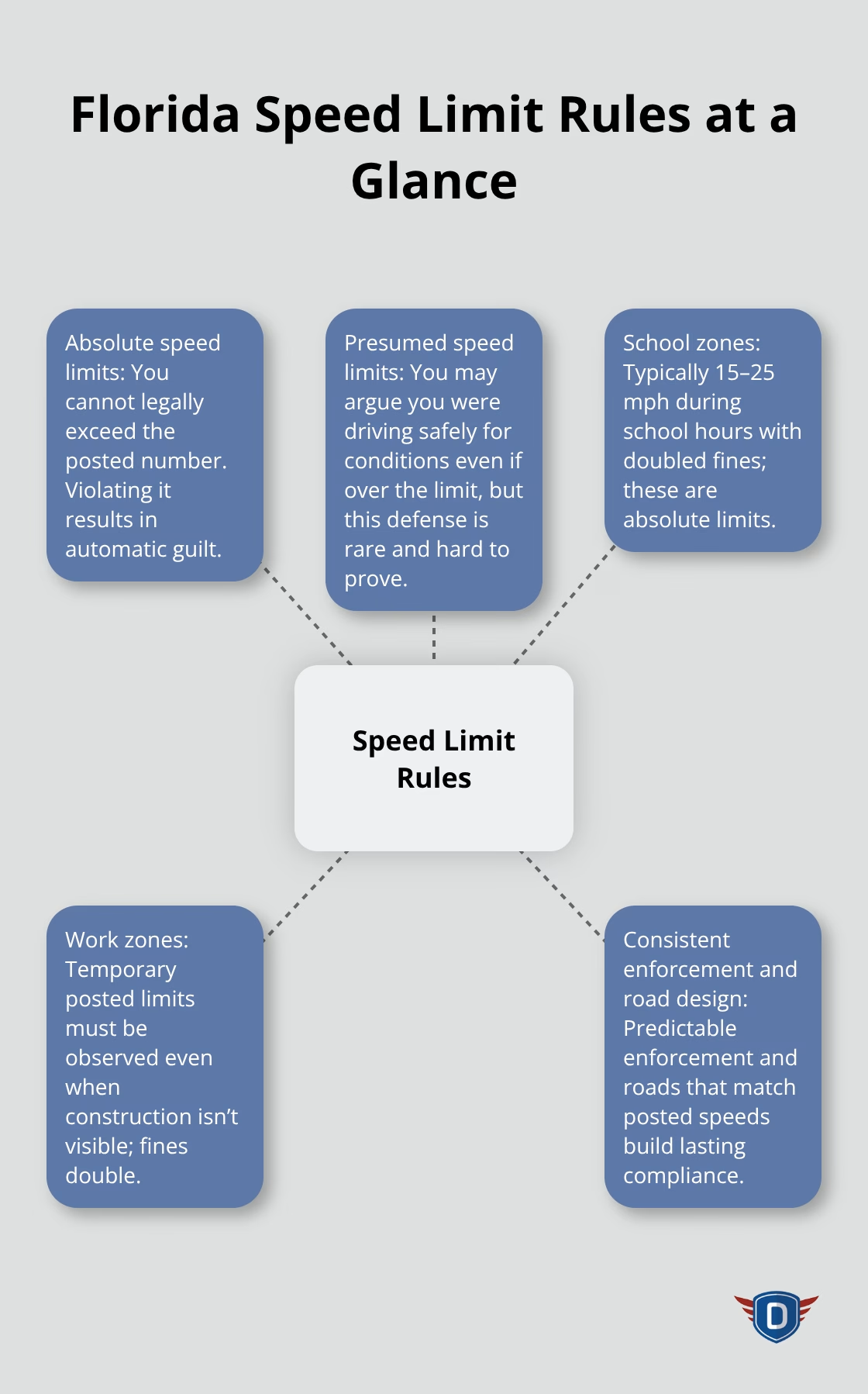
Florida law distinguishes between absolute speed limits and presumed speed limits, a distinction that fundamentally changes how a speeding ticket plays out in court. An absolute speed limit means you cannot legally exceed that posted number, period-violating it results in automatic guilt. A presumed speed limit, by contrast, allows you to argue in court that you drove safely for conditions even if you exceeded the posted limit, though this defense is rare and difficult to prove. This difference matters because it affects your legal strategy if you receive a ticket.
Special Zones Require Extra Caution
School zones in Florida typically post 15 to 25 mph limits during school hours, and these are absolute limits with doubled fines for violations. Work zones operate under temporary posted limits that you must observe even when active construction isn’t visible, and fines double there as well. Violating these zone limits carries far steeper consequences than standard speeding violations.
How Penalties Escalate Quickly
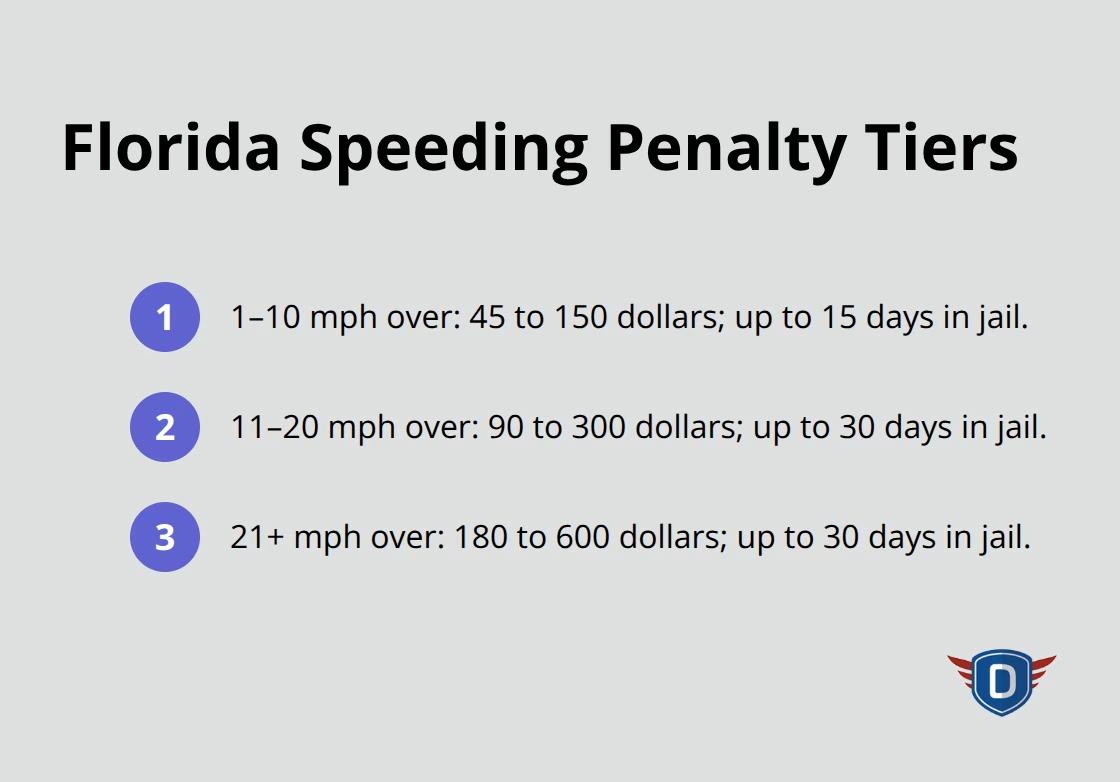
Penalties for speeding in Florida escalate based on how much you exceed the limit. Driving 1 to 10 mph over the limit costs between 45 and 150 dollars with up to 15 days in jail, while 11 to 20 mph over costs 90 to 300 dollars with 30 days possible jail time. At 21 mph or more over the limit, fines reach 180 to 600 dollars with the same 30-day maximum.
Each violation adds points to your driving record: 1 to 10 mph over adds 3 points, 11 to 20 mph adds 4 points, 21 to 30 mph adds 6 points, and speeds over 40 mph add 11 points. Accumulating 6 or more points in 18 months triggers a state surcharge and potentially a Driver Responsibility Assessment. Three speeding convictions within 18 months can result in license suspension, making even seemingly minor tickets costly over time.
Fines increase further if you have multiple violations within 18 months, and violations in school or work zones carry enhanced penalties. Driving 15 mph over the limit in a school zone could result in fines exceeding 600 dollars, license points that raise insurance rates for years, and potential license suspension if you accumulate violations. Staying at or below posted limits protects your wallet, your driving record, and your insurance costs far more than shaving a few minutes off your trip. Understanding these penalties sets the stage for recognizing why speed variability on Florida roads creates real dangers that go beyond the posted number itself.
Why Speed Variability Creates Real Danger on Florida Roads
The Hidden Problem: Speed Differences, Not Speed Itself
Speed crashes don’t happen at the speed limit-they happen because of speed variability, the dangerous gaps between how fast different drivers travel on the same road. The AAA Foundation for Traffic Safety found that drivers who exceed posted speeds or drive too fast for conditions are involved in nearly one-third of all fatal crashes, yet this statistic masks a deeper problem. Speed itself isn’t the villain; inconsistent speed is. When one driver travels 45 mph and another travels 60 mph on the same street, the difference forces lane changes, abrupt braking, and aggressive passing that trigger collisions far more often than uniform travel speeds do.
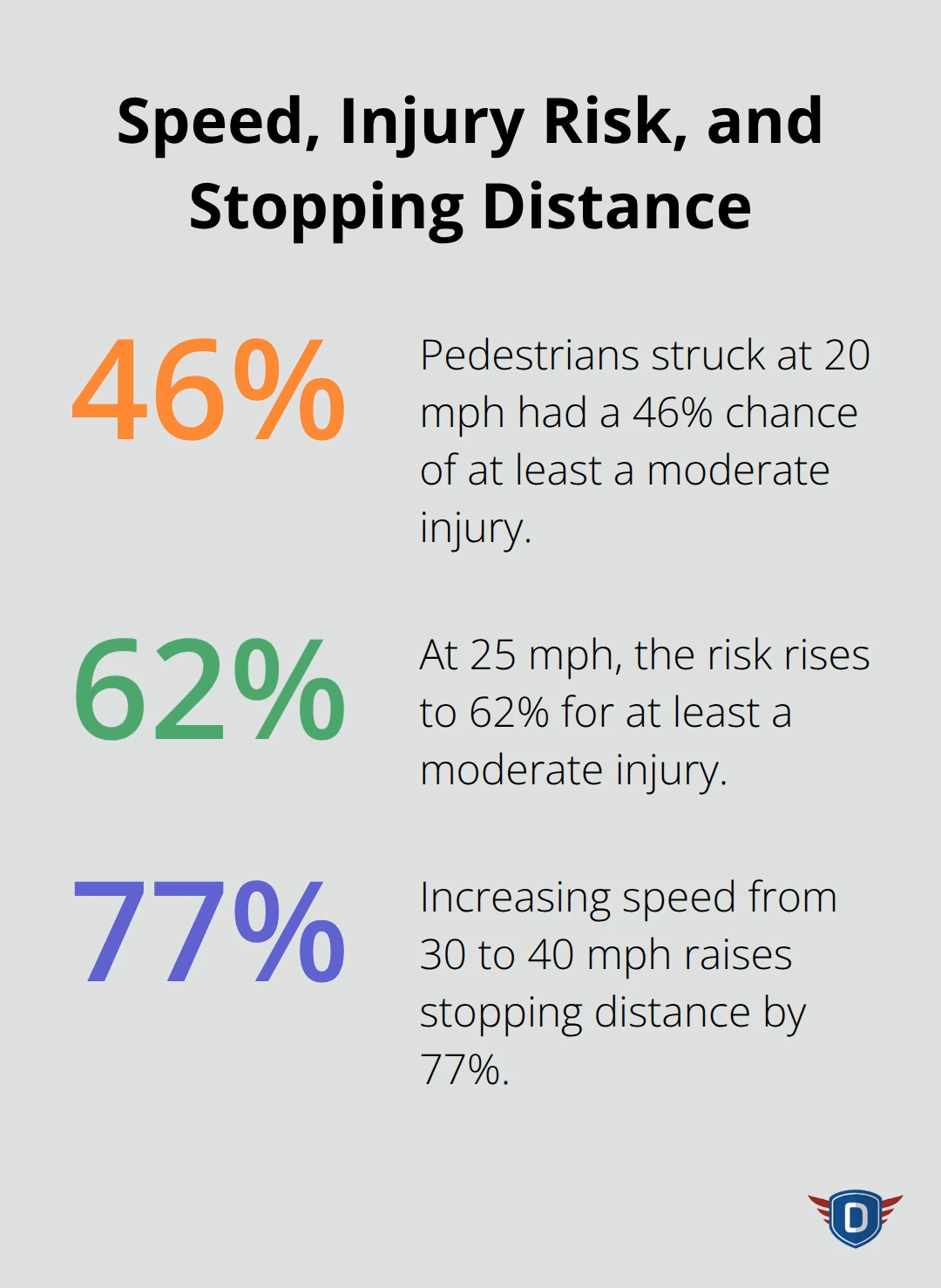
Florida roads suffer from this exact problem-residential streets where some drivers creep along at 20 mph while others accelerate to 40 mph, creating unpredictability that leads to crashes. The Insurance Institute for Highway Safety data on pedestrian injuries reveals the real consequence: pedestrians struck at 20 mph had a 46% chance of sustaining at least a moderate injury, and at 25 mph that risk jumps to 62 percent. This five-mile-per-hour difference represents a 35 percent increase in injury severity.
How Inconsistent Enforcement Teaches Drivers to Ignore Limits
On Florida’s busier roads, speed variability compounds when enforcement is inconsistent-some officers ticket drivers five mph over the limit while others ignore drivers traveling ten mph over, teaching drivers that the posted limit is negotiable rather than a boundary. This inconsistency breeds the exact behavior that causes crashes. Drivers learn to treat speed limits as suggestions rather than rules, and that learned behavior spreads across the road network as more drivers adopt the same attitude.
Stopping Distance and Reaction Time Expose the Real Risk
Stopping distance and reaction time expose why speed variability kills. At 30 mph, a driver needs roughly 65 feet to stop after spotting a hazard; at 40 mph, that distance stretches to 115 feet-a 77 percent increase in stopping distance from just a ten-mile-per-hour increase. On Florida’s residential streets where children cross unexpectedly and parked cars block sightlines, this difference between stopping and hitting a child is the ten-mph margin between 30 and 40.
Reaction time doesn’t improve with speed-it stays around one second for most drivers-so the faster you travel, the farther you coast before your brakes even engage. Drivers who travel significantly faster than surrounding traffic also face higher closing speeds when approaching slower vehicles, forcing them to brake harder and more suddenly, which triggers rear-end collisions and the chain-reaction crashes that follow.
Building Compliance Through Consistent Enforcement and Road Design
The real safety gain comes not from lowering limits arbitrarily but from enforcing consistent speeds where they’re posted, training drivers to stay calm while driving rather than exceed it, and designing roads so that the speed limit feels natural rather than restrictive. Speed limits work when drivers actually follow them and when enforcement is predictable enough that compliance becomes habitual rather than optional. Understanding how speed variability operates on Florida roads sets the stage for recognizing which mistakes drivers make most often-and how to avoid them.
Common Speed Limit Mistakes Drivers Make
School and Work Zone Violations Cost More Than You Think
School and work zone speed limits catch drivers off guard because many treat them as temporary suggestions rather than absolute boundaries with doubled penalties. Florida posts 15 to 25 mph limits in school zones during designated hours, and violating these carries fines that double compared to standard speeding violations. A driver traveling 20 mph in a 15 mph school zone faces enhanced penalties under Florida law. The critical mistake is assuming that because you don’t see children or construction activity at that moment, the posted limit doesn’t apply. Florida law requires you to observe work zone and school zone limits regardless of visible activity, and officers actively patrol these areas knowing drivers frequently exceed them.
The 500-foot proximity rule for school zones means the instant you enter that zone marked by signage, the lower limit applies, period. Many drivers treat the transition into these zones as optional, costing them points that accumulate faster than they realize. Three speeding violations within 18 months results in license suspension, and school or work zone violations count just as heavily as any other speeding ticket.
Ignoring Weather and Road Conditions Increases Crash Risk
Weather and road condition changes force speed adjustments that posted limits don’t account for, yet drivers treat the number on the sign as fixed regardless of rain, wet pavement, or reduced visibility. A 45 mph residential street in dry conditions becomes dangerous at that same speed during a downpour because stopping distance increases dramatically on wet surfaces. Drivers who maintain posted speeds in adverse conditions create the exact speed variability problem that causes crashes, because other drivers slow appropriately while speeders maintain momentum through hazardous conditions.
Rain reduces tire grip and extends stopping distance on wet pavement. Fog shrinks your visible range to perhaps 100 feet, making the posted limit irrelevant when you cannot see far enough ahead to stop safely. Wet leaves, standing water, and icy patches all demand lower speeds than the sign indicates, and drivers who ignore these realities become hazards rather than rule-followers.
Failing to Match Traffic Flow Creates Dangerous Speed Gaps
Traffic flow changes throughout the day, and failing to adjust your speed to match surrounding traffic generates the dangerous speed differences that force lane changes and aggressive passing. On Florida’s I-95 during rush hour, maintaining exactly 70 mph while traffic moves at 50 mph makes you a hazard, not a rule-follower. The safest drivers adjust speed downward when conditions warrant, when traffic flow demands it, or when visibility shrinks, understanding that the posted limit represents maximum safe speed under ideal conditions, not a mandate to drive that fast regardless of reality.
Speed variability kills more effectively than uniform high speeds. When you travel significantly faster than surrounding vehicles, you close the gap rapidly and force other drivers to brake hard or change lanes abruptly. This sudden disruption triggers the chain-reaction crashes that injure and kill drivers who had nothing to do with your decision to exceed the flow of traffic. Staying at or below the posted limit protects you legally, but adjusting further for actual road and traffic conditions keeps you and others alive.
Final Thoughts
Speed limit laws protect you only when you actually follow them, and the penalties for speeding in Florida escalate quickly-accumulating points that raise insurance rates for years and can suspend your license after three violations within 18 months. Safe driving habits protect your record while preventing the speed variability that causes crashes far more often than uniform speeds do. When you adjust your speed for weather, traffic flow, and road conditions, you reduce the dangerous gaps between your vehicle and others on the road.
The foundation of safe driving starts with understanding speed limit laws and treating them as boundaries rather than targets. The posted limit represents maximum safe speed under ideal conditions, not a mandate to drive that fast when conditions change. Consistent enforcement and driver education make compliance habitual rather than optional, and these habits compound over time, keeping your driving record clean while keeping yourself and others alive.
We at DriverEducators.com believe that safe driving habits begin with proper education. Our Florida-approved traffic school programs teach drivers not just the rules but the reasoning behind them, helping you understand how your speed choices affect everyone on the road. Visit DriverEducators.com to explore courses designed to protect your record and make Florida’s roads safer.