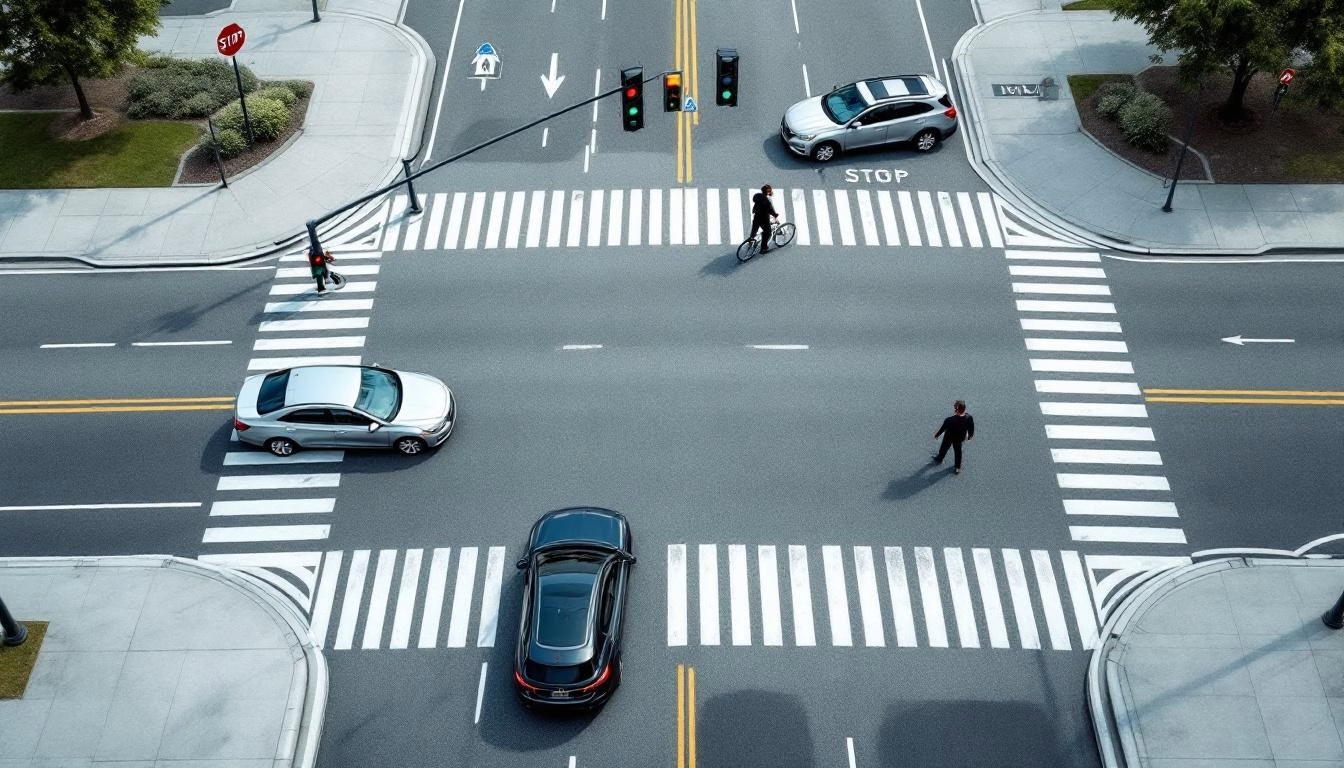
Intersection confidence starts with understanding right of way rules. Most drivers think they know these rules, but misconceptions cause thousands of accidents every year.
At DriverEducators.com, we’ve seen how clarity on right of way transforms how drivers handle intersections. This guide covers what you need to know to navigate safely.
What Right of Way Actually Means
The Legal Definition and Why It Matters
Right of way is not permission to proceed-it’s a legal obligation for other drivers to yield to you. The distinction matters because many drivers treat a right of way as a green light to go, when it’s actually a rule that governs who must wait. In practical terms, right of way establishes priority at intersections when traffic signals, signs, or road markings don’t provide clear direction. A driver with the right of way can proceed, but only if it’s safe to do so. This is why assuming others will yield proves dangerous.
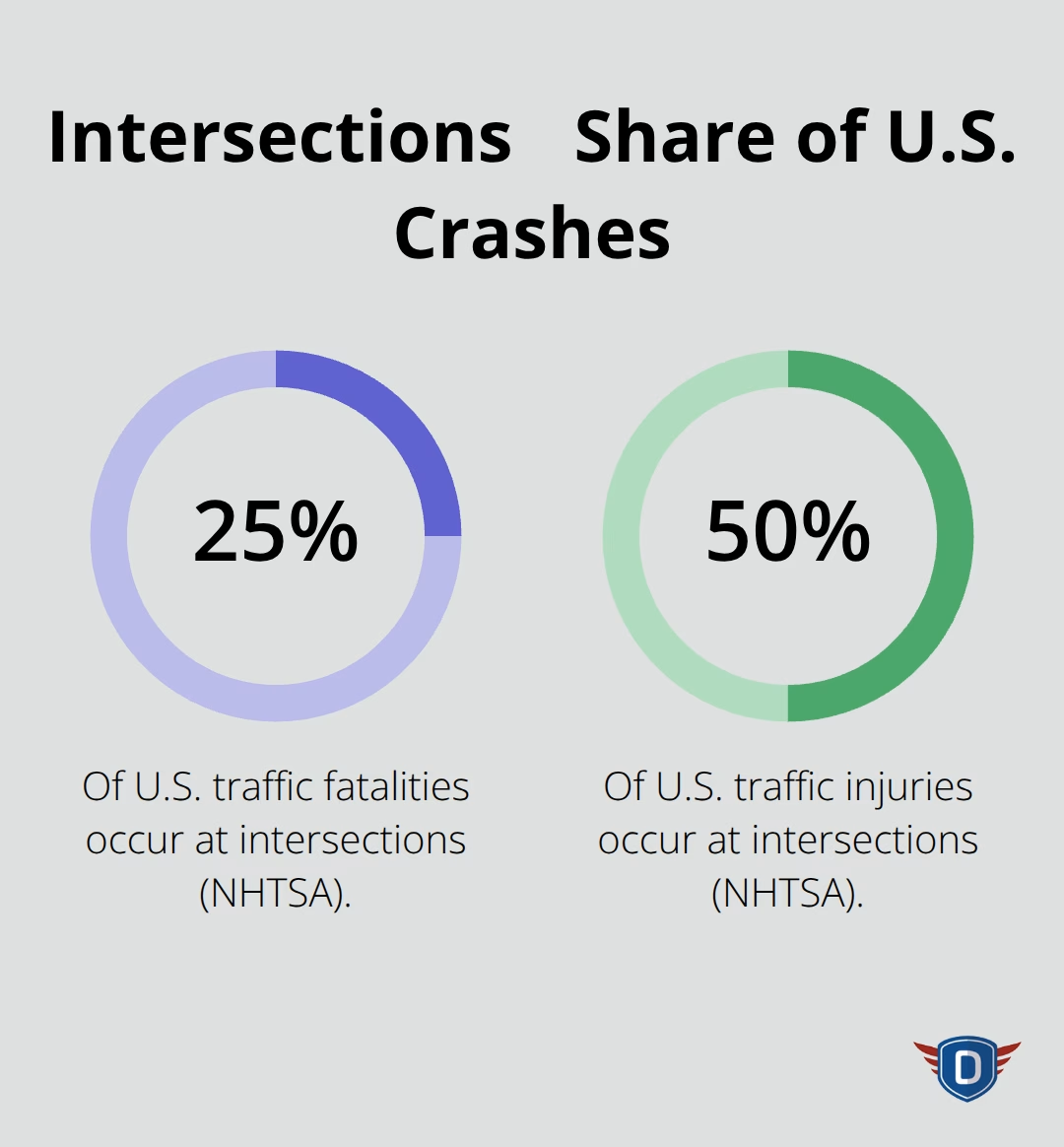
According to data from the National Highway Traffic Safety Administration, roughly one–quarter of traffic fatalities and about one–half of all traffic injuries in the United States are attributed to intersections. Most of these collisions stem from drivers misunderstanding or ignoring right of way rules, not from mechanical failure or weather alone. The legal foundation of right of way varies slightly by state, but the core principle remains universal: reduce conflict and keep traffic predictable.
The Conditional Green Light Myth
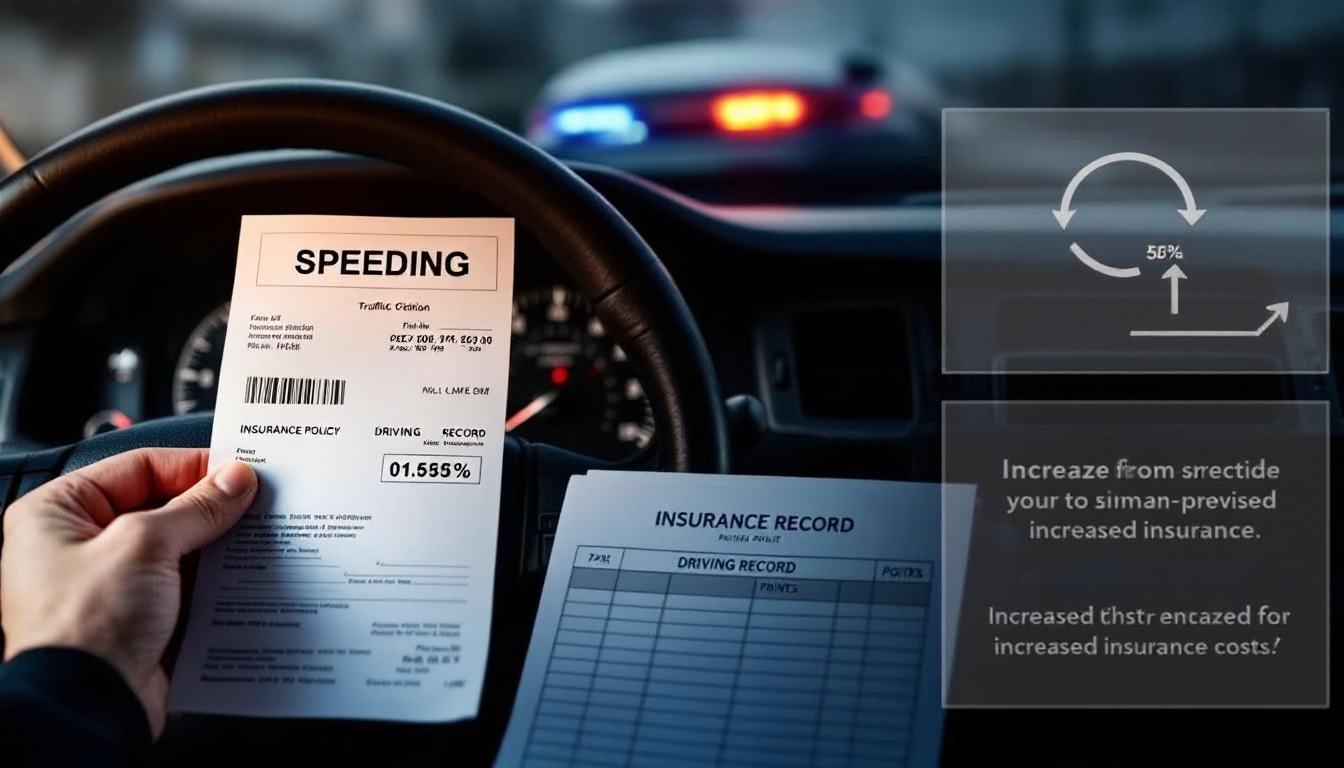
One critical misconception is that a green light gives you absolute right of way-it doesn’t. A green light is conditional. If you turn left on green, you must still yield to oncoming traffic. Drivers who turn left on a green light without checking for oncoming vehicles cause thousands of crashes annually. Florida law, like most states, requires drivers to yield when another vehicle has the right of way, and failure to do so can result in citations, insurance increases, or worse.
Another dangerous myth is that the faster or more aggressive driver has priority. Speed and aggression have no legal standing in right of way rules. What matters is arrival order, position, direction of travel, and whether you turn or go straight. These factors (not driver behavior or vehicle type) determine who proceeds first at intersections.
Building a Yielding Mindset
Right of way is about yielding, not taking. A yielding mindset builds trust and predictable driving patterns, reducing conflicts before they escalate into collisions. Drivers who adopt this approach report feeling more confident at intersections because they stop gambling on what others will do. Instead, they follow clear rules and stay alert to unexpected moves from other road users.
This shift in perspective transforms how you navigate intersections. Rather than asserting your right of way aggressively, you verify that the path is clear before you proceed. You anticipate what other drivers might do and prepare to stop if necessary. This defensive posture keeps you safe even when other drivers make mistakes. Understanding these distinctions prepares you to handle the specific scenarios you’ll face at different intersection types, each with its own right of way rules and challenges.
Right of Way at Four-Way Stops, Traffic Signals, and Roundabouts
Four-Way Stops: Arrival Order and Position
Four-way stops demand split-second decision-making, and the rules are straightforward once you understand arrival order. The first vehicle to arrive at the intersection has the right of way, regardless of direction. If two vehicles arrive simultaneously, the driver on your right proceeds first-this is the universal tiebreaker. If three vehicles arrive at once, the car furthest left yields until the two cars on its right have passed. When you and an oncoming driver both want to go straight, you can proceed at the same time since your paths don’t cross. However, if one of you turns left and the other goes straight, the straight-going vehicle has priority. Right turns always take priority over left turns when vehicles arrive at the same time, which means left-turning drivers must wait.
Two-Way Stops and Through-Road Priority
At two-way stops, the situation simplifies considerably. Traffic on the through road has absolute priority, so you must yield before turning onto it. The National Highway Traffic Safety Administration reports that intersections account for roughly 25 percent of U.S. traffic deaths, with many involving confusion over right-of-way rules. The safest approach at any stop is to slow to a crawl, scan left-right-left, and only proceed when you’re certain the intersection is clear.
Traffic Signals: Green Lights Are Conditional
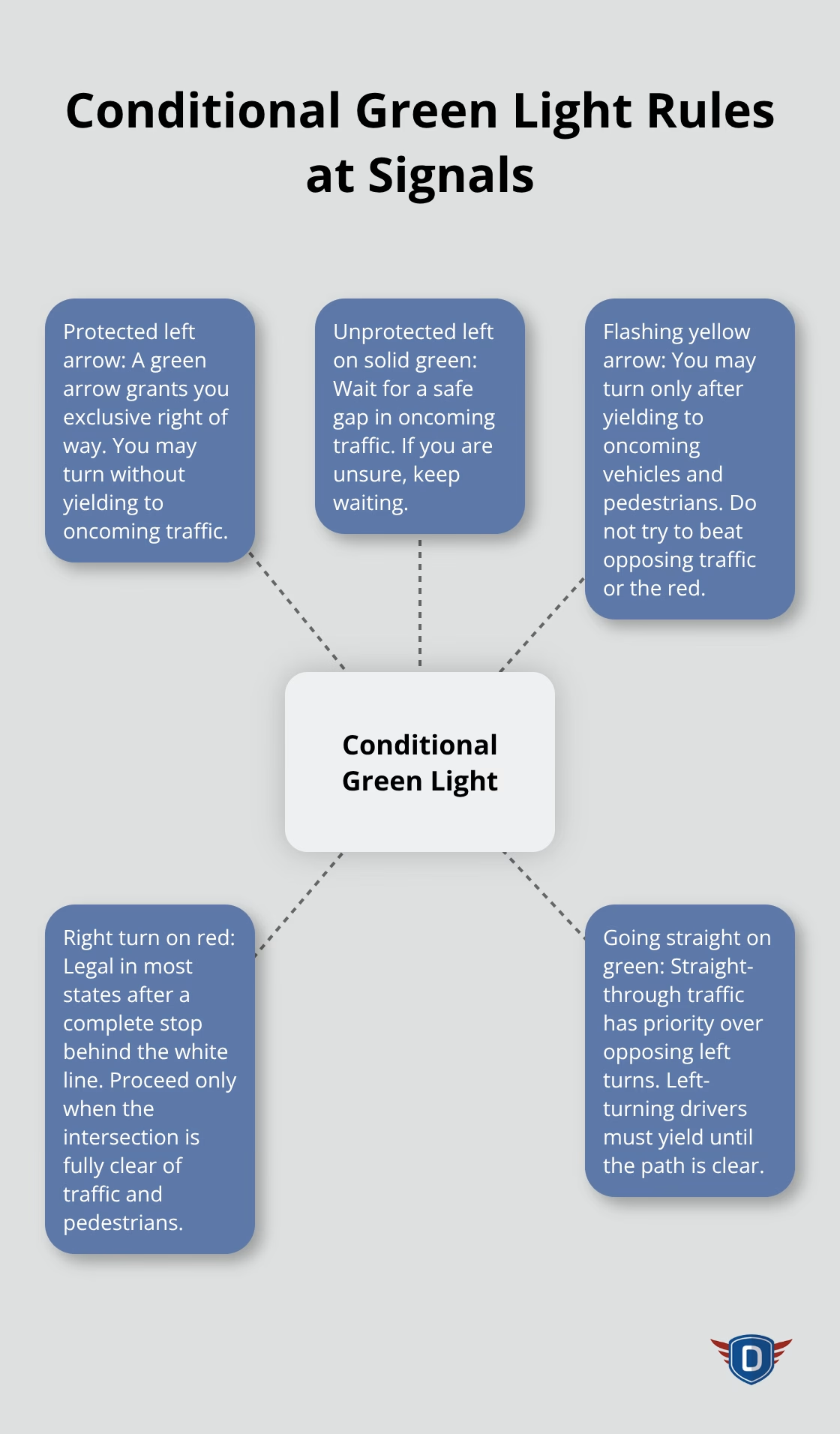
Traffic signals create controlled environments, yet drivers still mishandle them constantly. A green light for going straight does not protect a left turn-you must yield to oncoming traffic before turning, even on green. Protected left turns marked by a green arrow grant you exclusive right of way and allow you to proceed without yielding. Unprotected left turns on solid green require you to wait for a safe gap in oncoming traffic, and if doubt creeps in, you wait longer. Flashing yellow arrows mean you may turn only after yielding to oncoming vehicles and pedestrians, so don’t attempt to beat the other direction or the red. Right turns on red are legal in most states, including Florida, but only after a complete stop behind the white line and only when the intersection is completely clear of oncoming traffic and pedestrians.
Many drivers skip the full stop or glance briefly and turn anyway, creating unnecessary collisions.
Roundabouts: Yield to the Left
Roundabouts operate on a different logic entirely. Traffic already inside the roundabout has the right of way, so you must yield to the left before entering. Approach at a safe speed, scan for pedestrians in crosswalks, and maintain steady speed through the circle. Signal your exit clearly so other drivers know when you’re leaving. Multi-lane roundabouts require you to choose your lane before entering: use the right lane for right turns, the left lane for left turns or U-turns, and either lane to go straight. Once inside, stay in your chosen lane and never pass slower vehicles. Large vehicles like semi-trucks have wide turning radii, so give them extra space and avoid driving alongside them in the roundabout.
Applying These Rules Across Intersection Types
These three intersection types demand different mental approaches, but the underlying principle remains constant: verify safety before proceeding, yield when required, and never gamble on what another driver will do. Each scenario you encounter at intersections tests your ability to apply these rules quickly and accurately. The next section covers the real-world situations where these rules matter most-turning left across oncoming traffic, sharing the road with pedestrians and cyclists, and responding to emergency vehicles.
Practical Scenarios and Real-World Application
Left Turns Across Oncoming Traffic
Left turns across oncoming traffic cause more intersection collisions than any other single maneuver, and the reason is straightforward: drivers misjudge gaps and overestimate their ability to clear the intersection. When you turn left on a green light without a protected arrow, you’re gambling that oncoming traffic will either slow down or that you’ve judged the distance correctly. Most drivers haven’t. The National Highway Traffic Safety Administration data shows that unprotected left turns at controlled intersections generate a disproportionate share of injury crashes, yet drivers repeat the same mistake daily.
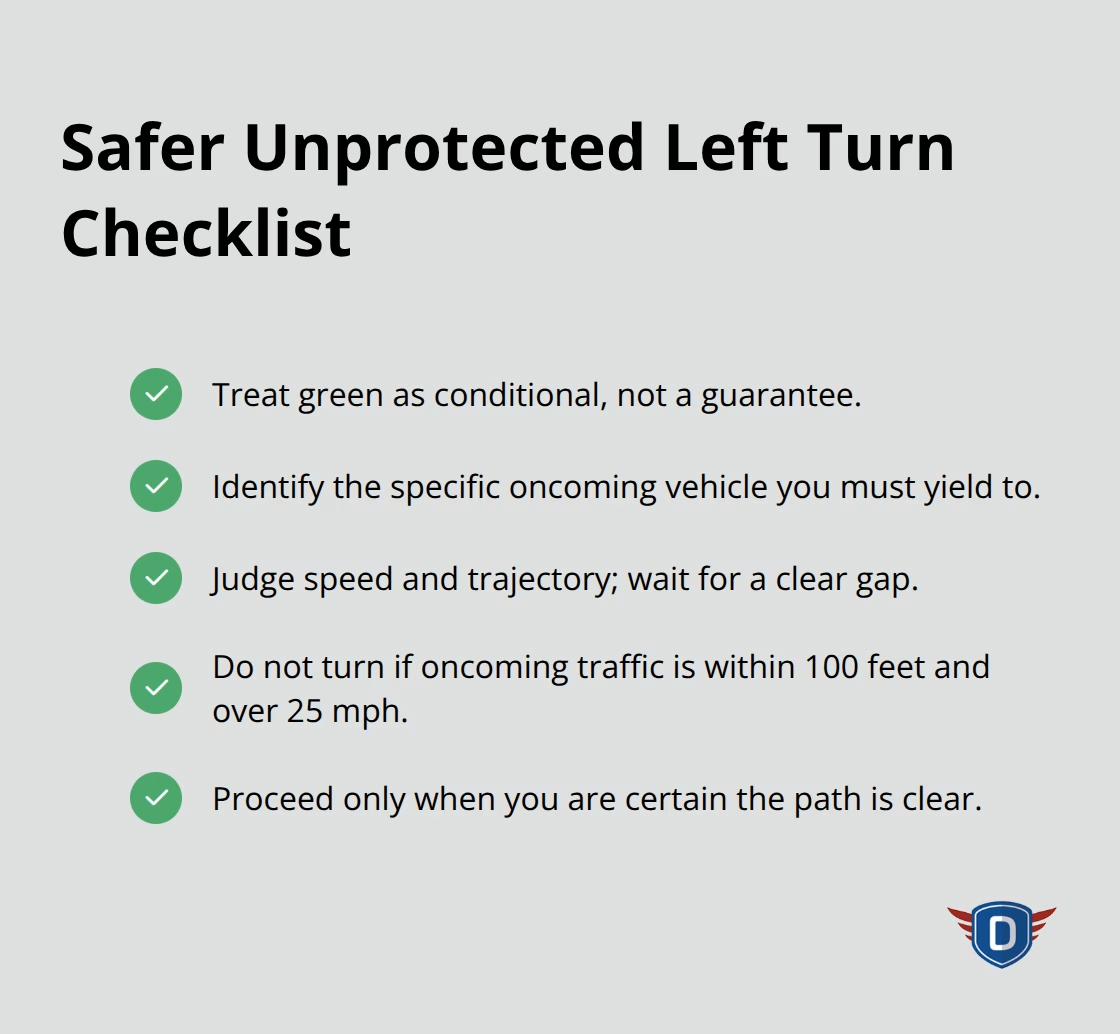
The fix is mechanical: stop treating a green light as permission and start treating it as conditional. Before you turn, identify the exact vehicle you’re yielding to, watch its speed and trajectory, and only proceed when you’re certain it will clear your path. If oncoming traffic is within 100 feet and traveling faster than 25 mph, don’t turn. The gap that feels safe often isn’t.
At uncontrolled intersections without traffic lights, left-turning drivers must yield to oncoming traffic even if they arrived first. This means you wait for a complete gap in both directions before committing to the turn. Many drivers hesitate at uncontrolled intersections because they’re unsure of the rule, and that hesitation saves lives.
Pedestrians and Cyclists at Intersections
Pedestrians and cyclists operate under different rules than you do, and treating them as obstacles rather than traffic participants causes preventable deaths. In marked or unmarked crosswalks, pedestrians have the right of way, period. This means if a pedestrian is in the crosswalk or even approaching it, you must stop, not slow down.
Cyclists in most states have the same rights and responsibilities as vehicles at intersections, which means they can proceed on green lights and must yield on red. The problem is visibility: pedestrians and cyclists are harder to spot, especially at night or when you’re focused on other vehicles. At a four-way stop, many drivers check for cars but miss a pedestrian stepping off the curb.
The solution is to scan the entire intersection, not just the traffic lanes. Look at the curbs, the crosswalk markings, and the edges of your vision where pedestrians often appear. If you’re turning right on a red light, come to a complete stop behind the white line, scan left for oncoming traffic and right for pedestrians or cyclists, and only proceed when the entire intersection is empty.
Emergency Vehicles and Special Situations
Emergency vehicles demand absolute priority and immediate action. When you see or hear an emergency vehicle with lights activated, pull to the right edge of the road and stop completely. If you’re in an intersection, clear it first before pulling over (don’t try to anticipate where the emergency vehicle is going or assume it will slow down).
Many drivers panic and make dangerous moves like slamming on brakes in the middle of an intersection or turning directly into the emergency vehicle’s path. Move deliberately to the right, stop, and wait until the vehicle passes and is clearly out of the area before you resume normal driving.
Final Thoughts
Right of way rules form the foundation of safe intersection navigation, and mastering them transforms how you drive. The core principle remains simple: yield when required, verify safety before proceeding, and never assume other drivers will do the right thing. Whether you face a four-way stop, a traffic signal, or a roundabout, these rules apply consistently across every intersection type.
Confidence at intersections requires more than reading about rules-it demands practice, repetition, and a shift in mindset from asserting your right of way to yielding strategically. Defensive drivers scan systematically, anticipate unexpected moves, and prepare to stop even when they have priority. This approach keeps you safe regardless of what other road users do.
At DriverEducators.com, we teach right of way mastery through real-world scenarios and practical guidance. Our Florida-approved traffic school programs cover right of way rules alongside defensive driving techniques, safe following distances, and crash avoidance strategies. Visit DriverEducators.com to explore our comprehensive driver education programs and start building your confidence today.