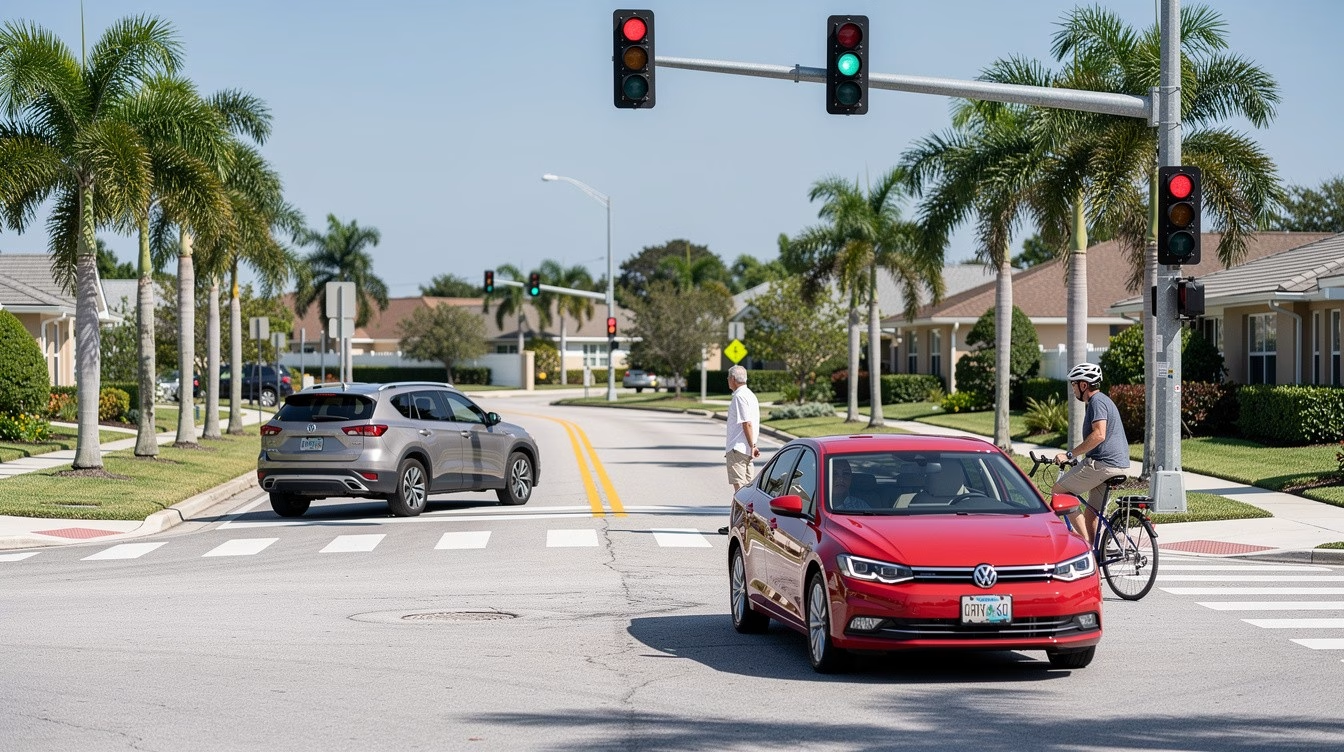
Right of way in Florida determines who moves first at intersections, and getting it wrong costs lives. Florida sees over 400,000 traffic crashes annually, with intersection collisions accounting for a significant portion of those accidents.
At DriverEducators.com, we’ve seen how confusion about right of way rules leads drivers to make dangerous split-second decisions. This guide breaks down exactly what you need to know to navigate Florida intersections safely and legally.
What Right of Way Actually Means in Florida
Right of way is not a suggestion or a courtesy-it’s a legal rule that determines who has the responsibility to proceed first at intersections. According to the Florida Department of Highway Safety and Motor Vehicles, right of way violations are among the most cited traffic offenses in the state, and they directly cause intersection crashes that kill and injure thousands annually. In Florida traffic law, right of way means you must yield to another vehicle or pedestrian when they have the legal right to proceed. Failing to yield costs money and points, but more importantly, it creates the split-second chaos that leads to collisions.
The real cost of getting it wrong
Florida drivers face serious consequences for right of way violations. A red light violation in Palm Beach County carries a $264 civil penalty, while failing to yield to a pedestrian in a crosswalk results in fines and points on your license. More critical than the fine is the insurance impact: violations add points to your driving record, and accumulating points can lead to license suspension.
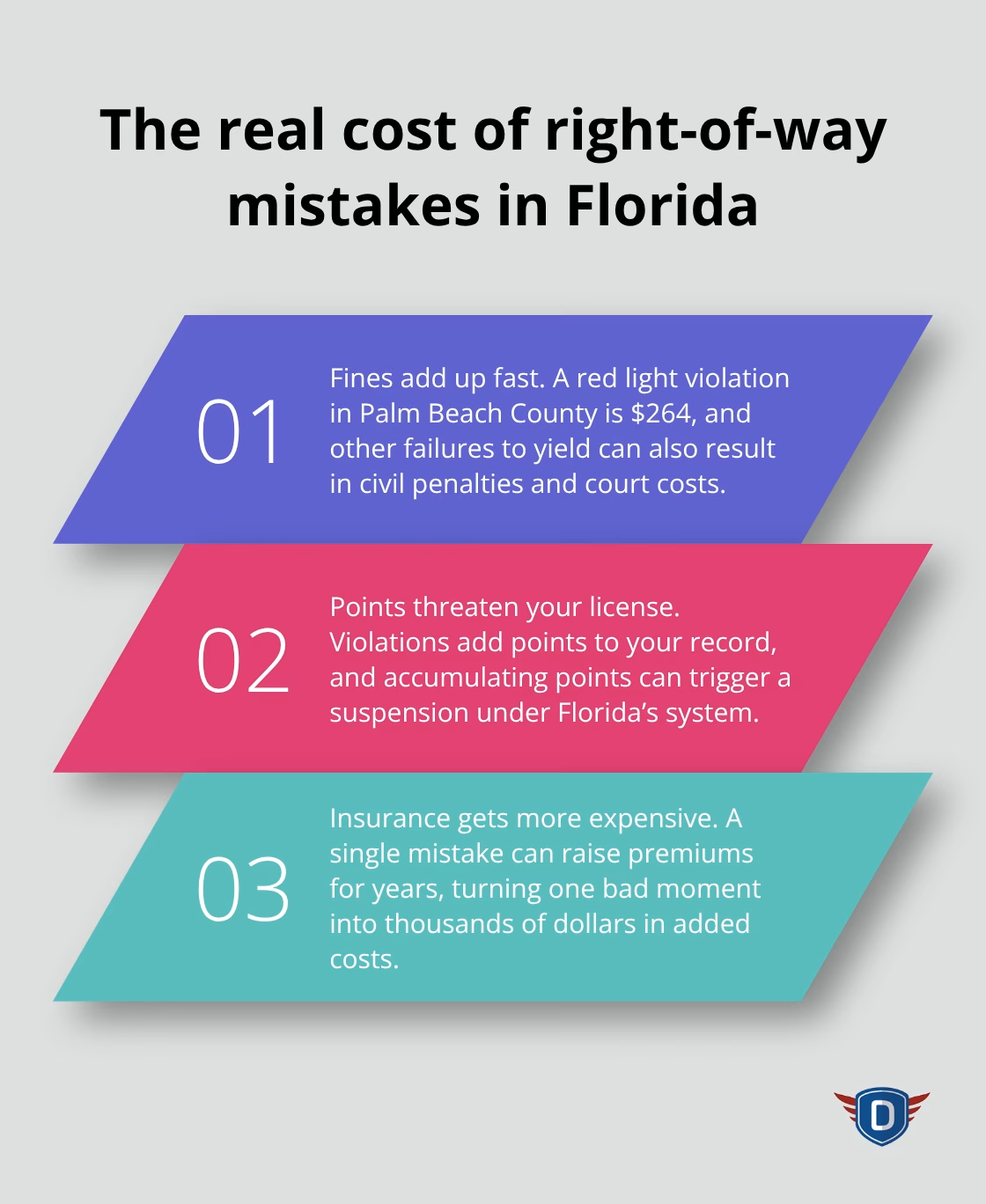
One moment of confusion at an intersection can cost you thousands in insurance increases over three years. The Florida Driver Handbook makes clear that at uncontrolled intersections, you must yield to the vehicle on your right, and when arriving simultaneously, the driver on the left yields to the right. Many drivers skip this detail and assume first-come-first-served rules apply, which they don’t.
Pedestrians and cyclists have strict protections
Pedestrians have the right of way in marked and unmarked crosswalks. You must yield to pedestrians in any crosswalk, including unmarked ones at intersections, according to FLHSMV guidelines. This rule exists because pedestrian-involved crashes are far more severe than vehicle-to-vehicle collisions. Bicyclists have the same rights and duties as motorists, and you must pass them with at least 3 feet of clearance whenever possible. Treating pedestrians and cyclists as vulnerable users at intersections prevents conflicts and saves lives.
Mistakes that trigger citations
The biggest misconception is that you can turn right on red without yielding. You can turn right on red after a complete stop, but only if you yield to pedestrians and oncoming traffic-this is not a free pass. Another frequent mistake is blocking the crosswalk while waiting to turn left. If you cannot clear the intersection, you must not enter it; blocking the crosswalk traps pedestrians and other vehicles, and it violates Florida law.
Drivers also misunderstand roundabouts, thinking they have the right of way while entering. In reality, you must yield to vehicles already circulating in the roundabout and travel counterclockwise while yielding to pedestrians in crosswalks. Many drivers believe that if a traffic light is broken, they can proceed cautiously. The law requires you to treat a malfunctioning signal as an all-way stop and yield to other vehicles and pedestrians accordingly.
What happens next at different intersection types
These misunderstandings are expensive and dangerous, which is why mastering the actual rules saves both your safety and your wallet. Different intersection types-traffic light controlled intersections, four-way stops, and uncontrolled intersections-each have their own specific right of way rules that you must follow precisely.
How Right of Way Works at Each Intersection Type
Traffic Light Controlled Intersections
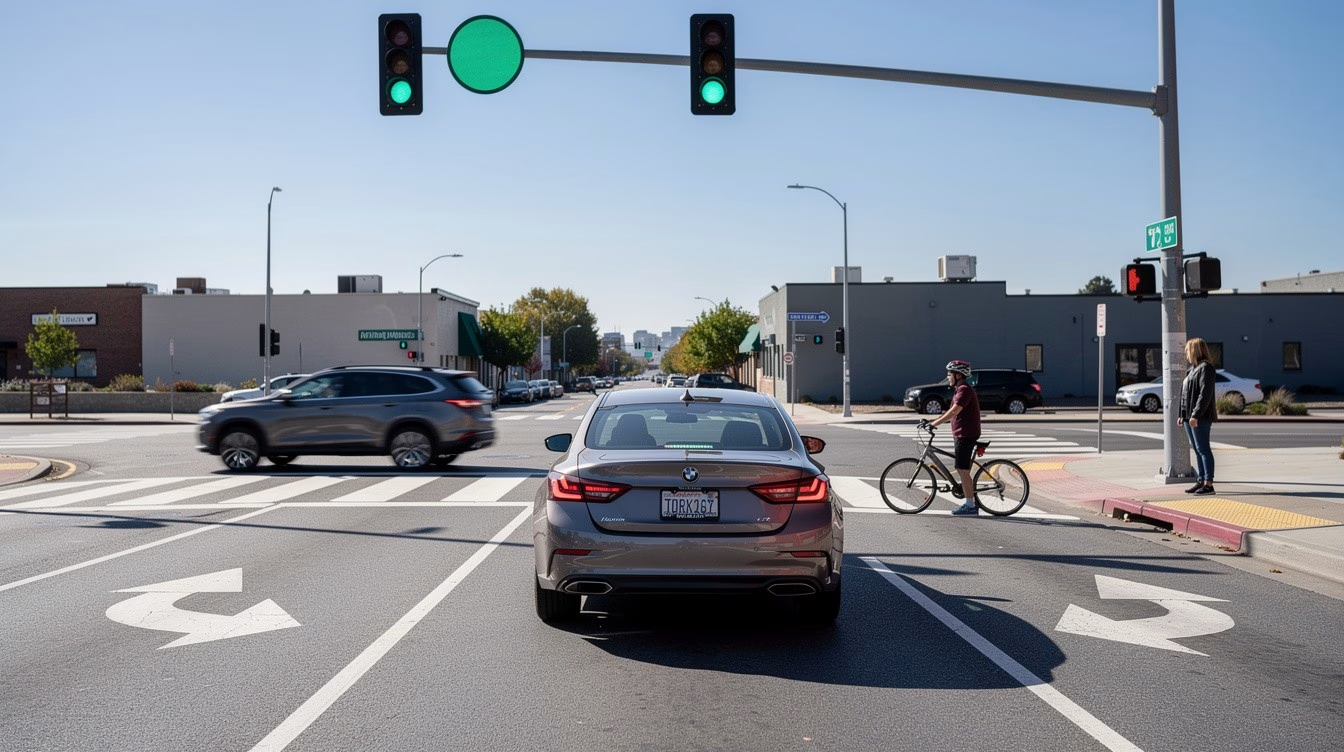
Traffic lights control the flow at most Florida intersections, and the rule is straightforward: obey the signal. When the light turns green, you have the right of way to proceed, but only if the intersection is clear. According to the Florida Driver Handbook, you cannot enter an intersection unless you can clear it completely. This means stopping behind the stop line, not in the crosswalk, even if the light is green.
Left turns at green lights require extra caution because you must yield to oncoming traffic and proceed only when there is a safe gap. Drivers often misjudge this gap, leading to left-turn collisions that account for a significant share of intersection crashes. Red lights demand a complete stop, period. Right turns on red are permitted after a full stop, but you must yield to pedestrians in the crosswalk and oncoming traffic.
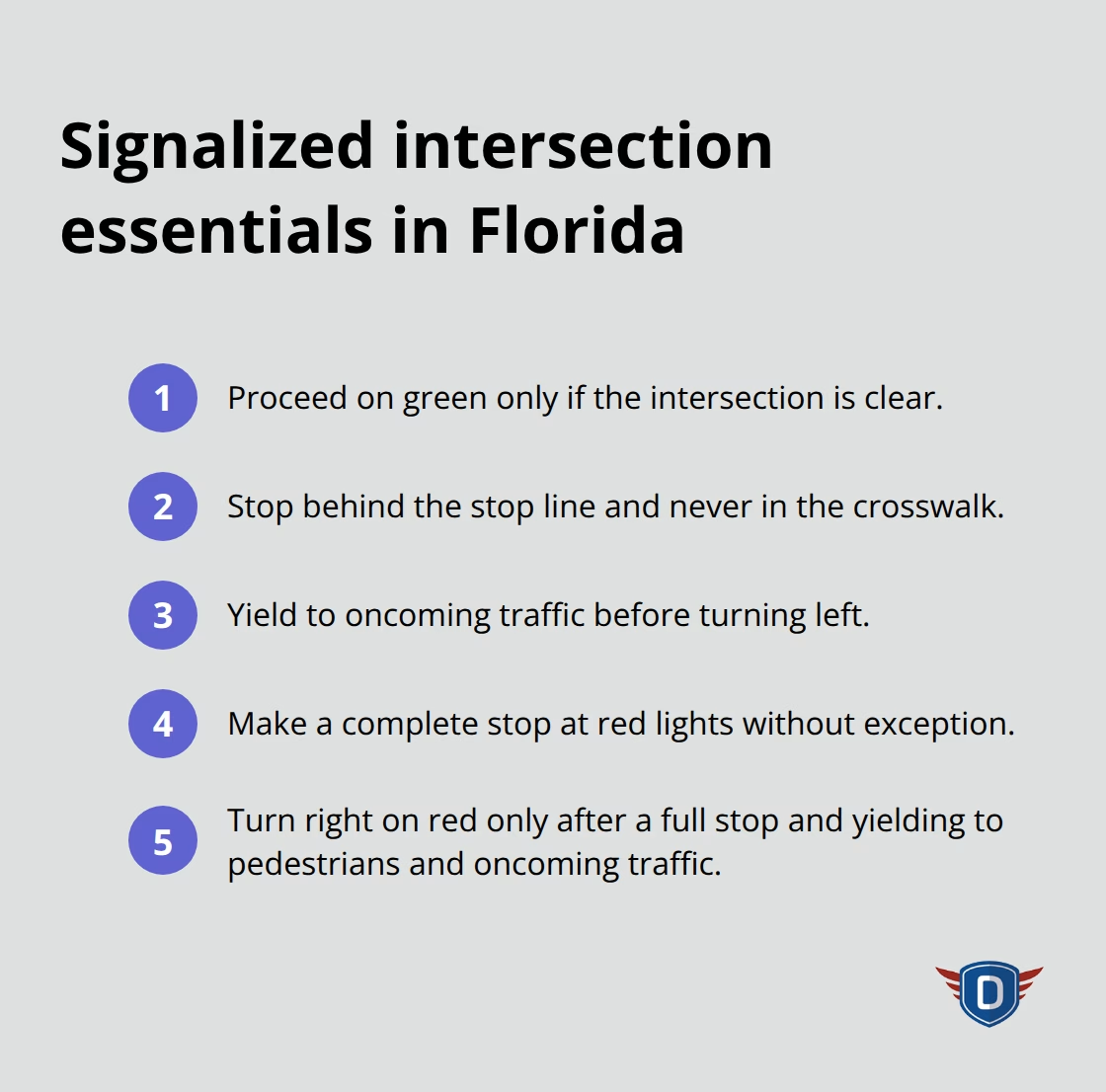
The moment you treat a red light as optional, you expose yourself to a $264 civil penalty in Palm Beach County plus points on your license. When traffic lights malfunction, treat the intersection as an all-way stop and yield to other vehicles and pedestrians accordingly.
Four-Way and Two-Way Stops
Four-way stops and two-way stops operate on a different principle that trips up many drivers. At four-way stops, the first vehicle to stop at the intersection shall be the first to proceed. If two vehicles arrive simultaneously, the driver on the left yields to the driver on the right. This is not a judgment call or a courtesy decision; it is the law.
At two-way stops, you must yield to traffic on the main road. The vehicle on the main road has the right of way, and you must come to a complete stop behind the stop line before proceeding. Uncontrolled intersections, where no signs or signals exist, follow the same rule: yield to the vehicle on your right. If you arrive at the same time as another vehicle, the driver on the left yields to the driver on the right.
Many drivers assume first-come-first-served applies, but it does not.
Roundabouts and Rotary Intersections
Roundabouts operate differently than traditional intersections. You must yield to vehicles already in the roundabout, travel counterclockwise, and yield to pedestrians in crosswalks within the roundabout. This counterclockwise flow (in the United States) differs from what many drivers expect, and misjudging entry speed or position causes collisions at these increasingly common intersections.
Failing to yield at any of these intersection types results in citations, insurance increases, and most critically, crashes that injure or kill people on Florida roads. Understanding these specific rules for each intersection type prevents the split-second errors that lead to collisions. Left turns, pedestrian interactions, and bicycle encounters at intersections demand your full attention and knowledge of how right of way actually works in real-world driving situations.
Practical Scenarios and Real-World Applications
Left Turns at Florida Intersections
Left turns at Florida intersections create more collision opportunities than any other maneuver because they force you to cross oncoming traffic while the clock ticks down. The Florida Driver Handbook is explicit: when turning left at an intersection, you must yield to oncoming traffic and proceed only when there is a safe gap. This is not a suggestion-it is the law, and misjudging that gap costs money and lives.
The critical mistake drivers make is treating a green light as permission to turn left without confirming the intersection is clear. You have the right of way to enter the intersection on green, but not to complete the turn if oncoming traffic occupies your path. Many drivers advance into the intersection, stop halfway across, and then try to turn when the light changes, trapping themselves and blocking cross traffic. Never do this.
If you cannot complete the left turn before oncoming traffic arrives, do not enter the intersection. Wait for the next cycle. Left-turn collisions are among the costliest and most severe crashes because they occur at full or near-full speed with no time to brake.
The safe approach is straightforward: treat every left turn as if the driver across from you might run the red light or turn left without yielding. Scan the intersection twice before entering, confirm oncoming traffic has actually stopped, and only then proceed into the intersection. Once in the intersection, complete your turn quickly but smoothly without rushing. If you cannot see clearly or hesitate for even a moment, abort the turn and wait. A $264 red light violation in Palm Beach County or worse-a collision that injures someone-is not worth the few seconds you save by forcing a marginal turn.
Pedestrians and Cyclists at Intersections
Pedestrians and cyclists operate under the same right-of-way laws that govern vehicles, except Florida law gives them extra protection because crashes involving them are far more severe. According to the Florida Driver Handbook, you must yield to pedestrians in marked and unmarked crosswalks at intersections, and bicyclists have the same rights and duties as motorists. This means you must pass cyclists with at least 3 feet of clearance whenever possible, and if a safe pass is not available, slow down and wait.
Many drivers believe pedestrians must make eye contact or wave before they have the right of way. They do not. A pedestrian in a crosswalk has the right of way whether they look at you or not. Your job is to stop. The same applies to cyclists: they have the legal right to use the road, and you must respect that right even if you feel delayed.
Treat every pedestrian and cyclist as a situation where someone else has the right of way until you confirm it is safe to proceed. This mindset prevents the split-second errors that lead to serious injuries or fatalities. Defensive driving techniques emphasize this approach to reduce accidents and keep you safe on roads.
Roundabouts and Entry Techniques
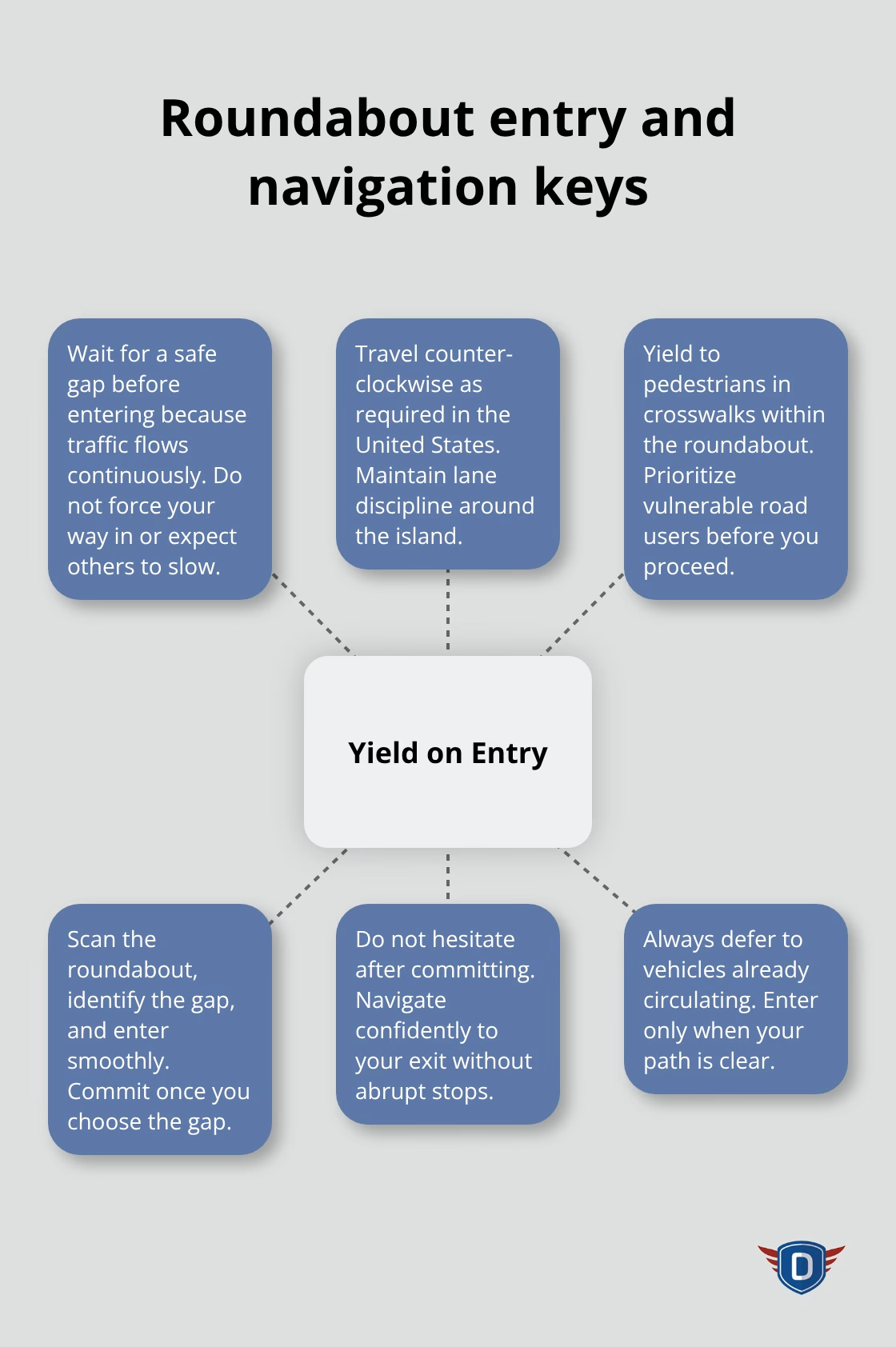
Roundabouts require a different mindset because you must yield to vehicles already circulating in the roundabout before you enter. Travel counterclockwise and yield to pedestrians in crosswalks within the roundabout. The mistake drivers make is treating roundabout entry like a traditional intersection where you assess oncoming traffic once.
In a roundabout, traffic flows continuously, so you must wait for a safe gap before entering. Do not force your way in or assume other drivers will slow down for you. Scan the roundabout, identify the gap, enter smoothly, and exit at your destination.
Roundabouts are safer than traditional intersections when used correctly because they eliminate high-speed T-bone collisions, but only if drivers respect the yield-on-entry rule. The continuous flow means you cannot hesitate once you commit to entering-commit to the gap, enter with confidence, and navigate to your exit.
Final Thoughts
Right of way Florida rules eliminate the split-second confusion that causes collisions when you commit to following them every time you drive. Traffic light controlled intersections demand that you obey the signal and refuse to enter unless you can clear the intersection completely, while four-way stops require you to yield to the vehicle on your right if you arrive simultaneously. At uncontrolled intersections, yield to traffic on your right; left turns demand that you yield to oncoming traffic and proceed only when a safe gap exists; pedestrians and cyclists have the right of way in crosswalks; and roundabouts require you to yield to vehicles already circulating before you enter.
Florida experiences over 400,000 traffic crashes annually, with a significant portion occurring at intersections where right of way violations happen. When you know exactly who has the right of way in every situation, you stop guessing and start acting with confidence, anticipating what other drivers will do and positioning your vehicle correctly to avoid the hesitation that leads to crashes. This knowledge protects your life, your wallet, and everyone else on the road.
We at DriverEducators.com help drivers build these habits through comprehensive traffic school courses that cover right of way rules, defensive driving techniques, and the decision-making skills that keep you safe. Whether you need to reduce points, meet court requirements, or simply become a better driver, our Florida-approved programs provide the knowledge and confidence you need to protect your driving record and your safety.