Losing your driver’s license can throw a major wrench in your life. Suddenly, getting to work, taking kids to school, or even running to the grocery store feels like an impossible task. If you’re in this situation, a Florida hardship license might be the lifeline you need. It’s not a full-blown reinstatement of your license, but it’s a special permit that lets you drive for essential, pre-approved reasons.
Who Qualifies for a Florida Hardship License
So, who actually gets approved for one of these? The state doesn’t hand them out to everyone with a suspended license. Eligibility is tied directly to why your license was suspended in the first place, whether it was for accumulating too many points or a DUI conviction. You’ll have to prove that not being able to drive creates a genuine, verifiable hardship.
Think of it this way: the state understands that a total driving ban can prevent you from earning a living or taking care of your family. A hardship license is their way of giving you a restricted key—one that only opens the doors you absolutely need to get through, like the one to your workplace.
The Two Types of Hardship Licenses
Before you can figure out if you qualify, you need to know what you’re applying for. Florida offers two different kinds of hardship licenses, and the one you choose has to match your specific needs.
Here’s a quick breakdown to help you see the difference.
Florida Hardship License Types at a Glance
| License Type | Permitted Driving Activities | Common Use Case |
|---|---|---|
| Business Purposes Only (BPO) | Driving to/from work, on-the-job driving, school, church, and necessary medical appointments. | The most common choice, offering flexibility for individuals who need to manage work, family, and personal health obligations. |
| Employment Purposes Only (EPO) | Driving only to/from your place of employment and any driving required as a direct part of your job duties. | A highly restrictive option for those whose hardship is strictly tied to their job and nothing else. |
As you can see, the “Business Purposes Only” (BPO) license offers a bit more breathing room, which is why it’s the more common of the two. The “Employment Purposes Only” (EPO) license is extremely limited. You’ll need to be very clear about which one you need—and why—when you go for your hearing.
Core Eligibility Factors You Must Meet
Just needing to drive isn’t enough to get approved. The state has some firm rules you’ll have to follow. A big one for many applicants, especially those with a DUI, is completing a state-approved driver education program before you can even apply. In fact, back in 2019, around 75% of applicants who hadn’t finished their required DUI school were turned down flat. You can find all the FAQs and details about these DUI programs on the FLHSMV website.
The core principle behind a hardship license is balancing public safety with an individual’s need to maintain their livelihood. The state needs assurance that granting you limited privileges won’t put others at risk.
Another major hurdle is serving a mandatory “hard time” suspension period where you absolutely cannot drive. For a first-time DUI, this is typically 30 days. For more serious charges or if you’re a repeat offender, that waiting period gets a lot longer. To get a better handle on what a full suspension involves, our guide on a suspended license in Florida breaks it down further.
Ultimately, the final call comes down to a hearing officer who will look at your entire record, the proof of hardship you provide, and whether you seem committed to driving responsibly from now on.
Gathering Your Essential Application Documents
Think of your hardship license application as building a case for yourself. The hearing officer needs to see clear, undeniable proof that your need to drive is real and that you’re taking this whole process seriously. Just saying you need your car for work isn’t going to cut it; you have to back it up with official paperwork. These documents are the bedrock of your entire application.
In fact, failing to get the paperwork right is the number one reason people get denied. In 2020, about 40% of hardship applications in Florida were turned down simply because of incomplete or missing documents. That statistic alone shows you just how much this step matters.
Your Core Document Checklist
Before you can even think about scheduling your hearing, you need to get a folder together with the absolute essentials. Each piece of paper has a job to do in painting a complete picture for the state.
Here’s what you absolutely must have:
- Proof of DUI School or ADI Course Enrollment: This is non-negotiable. It’s your way of showing the state you’re committed to being a safer driver. You’ll need the official enrollment certificate from a state-approved school.
- Application for Hardship License Form: This is the official state form, HSMV 78306. It’s where you’ll fill in your personal details and explain why you need the license.
- Proof of Identification: You’ll need a valid ID, like your state-issued ID card or a passport, to prove you are who you say you are.
- Application Fee: The state charges an administrative fee to process everything, so be prepared to pay that.
A complete, well-organized application makes the best first impression. When a hearing officer sees that you have all your ducks in a row, it immediately shows them you’re responsible and respect the process.
Proving Your Specific Hardship
Now for the most important part. Beyond those basic forms, you have to provide evidence that directly supports why you need to drive. This is where you make your case.
- For Work: Get a letter from your boss on company letterhead. It’s not enough for it to just say you work there—it needs to spell out your job title, your work schedule, and explicitly state that you must drive to get to your job or as a part of your daily duties.
- For Medical Reasons: If you’re driving to doctor’s appointments, you need a note from the clinic or doctor’s office. This letter should detail how often you have appointments and confirm that you require transportation to get there.
- For School: If you’re a student, grab a copy of your current class schedule along with a letter from the school registrar confirming you’re enrolled.
- For Religious Services: A letter from your church, synagogue, or mosque on their letterhead can verify your regular attendance schedule.
One last piece of advice: before you submit anything, pull a copy of your official driving record. The last thing you want is a surprise suspension or an old ticket popping up at your hearing. Our guide explains how to check your driving record in Florida so you can walk into that hearing fully prepared. Taking the time to gather these documents meticulously is the single best thing you can do to boost your odds of getting approved.
Your Step-by-Step Guide to the Application Process
Once you’ve gathered all your documents, it’s time to tackle the official application. I know dealing with state agencies can feel a little intimidating, but if you break it down step-by-step, it’s a very manageable process. The whole point is to clearly and respectfully show the hearing officer why you need to be back on the road.
This isn’t just about filling out a form and hoping for the best. You’re making a formal request to the Florida Highway Safety and Motor Vehicles (FLHSMV) and proving that you have a legitimate need for a restricted license. The more prepared you are, the better your chances.
Finding the Right Forms and Getting on the Calendar
First things first: you need to fill out the Application for Hardship License, which is Form HSMV 78306. You can usually download this from the FLHSMV website or pick one up at a local administrative reviews office. Be meticulous here—fill it out completely and honestly. Any little fib or inaccuracy can get your application tossed out immediately.
With your application and supporting documents in hand, you’ll need to schedule an administrative review hearing. This isn’t like a courtroom trial you see on TV; it’s a formal meeting where you’ll make your case. To get this scheduled, you’ll need to contact the Bureau of Administrative Reviews (BAR) office that serves your county.
This flowchart gives you a quick visual of the main types of documents you’ll be organizing for the hearing.
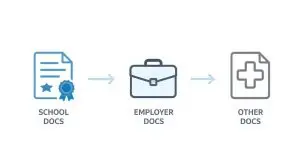
Think of it this way: your application is the foundation, but these documents are the pillars that prove your need for work, school, and other essential travel.
What Really Happens at the Administrative Hearing?
This hearing is your one shot to plead your case directly. You’ll sit down with an FLHSMV hearing officer who will put you under oath—yes, just like in court—and go through every piece of paper you’ve brought. The entire meeting is recorded, so it’s a very official and serious event.
Get ready to answer some pointed questions about:
- Why you absolutely must drive: How will you lose your job or be unable to get to your doctor without a license? Be specific.
- How you’ve changed: What have you done to ensure you’ll be a safer driver from now on? (This is where that ADI course completion comes in handy).
- If you get the rules: Do you truly understand that a “Business Purposes Only” license isn’t a green light to drive anywhere you want, anytime you want?
The hearing officer is trying to do two things at once: weigh your personal hardship against the safety of the public. Your attitude and ability to come across as a responsible person who has learned their lesson is just as critical as the paperwork you provide.
Stay calm, be polite, and answer everything directly. It’s much more like a job interview than an argument. If you want to get a better feel for this kind of formal setting, our guide on what to expect in traffic court can give you some helpful context.
The Decision and What Comes Next
Once the hearing is over, the officer will make a decision. Sometimes you’ll get an answer right then and there, but it can often take a few days or even weeks. If you get the green light—congratulations! But you’re not quite done.
You’ll still need to pay any reinstatement fees and other administrative costs. And, if your suspension requires it, you must show proof that you’ve obtained SR-22 insurance. Only after you’ve checked all these final boxes will they issue your physical restricted license, finally making it legal for you to drive again under those specific hardship conditions.
What This Is Going to Cost: A Breakdown of Fees and Insurance
Getting a hardship license isn’t just about paperwork; there are real costs involved that you need to be prepared for. Sorting out the financial side is just as critical as your application. Let’s walk through the fees and insurance rules so you know exactly what to expect.
First up are the state-mandated fees. You’ll have an application fee for the hardship hearing itself, but the bigger ticket item is usually the driver’s license reinstatement fee. This can vary quite a bit depending on why your license was suspended in the first place. Some are as low as $45, but others can climb much higher.
SR-22 vs. FR-44: Decoding High-Risk Insurance
This is often the most confusing and expensive part of the process. You can’t just use your regular car insurance. The state needs proof that you’re properly insured, and they require a special certificate from your insurance company to do it.
This certificate is either an SR-22 or an FR-44. Think of them as a “guarantee” your insurer sends to the state, confirming you have the legally required coverage.
So what’s the difference?
- An SR-22 is for most non-DUI suspensions, like having too many points on your license. It simply proves you meet Florida’s minimum liability insurance standards.
- An FR-44 is specifically for drivers convicted of a DUI. The insurance requirements are much, much higher, which means your premiums will be, too.
Florida got serious about the FR-44 back in 2007 for anyone with a DUI-related suspension. Reinstatement fees alone for these offenses can run from $150 to $500, depending on the specifics of the case. It adds another layer you’ll need to navigate carefully.
Budgeting for Your Hardship License
It’s smart to map out all the potential costs before you get started. The total amount can swing wildly based on your individual circumstances, but everyone will have to account for a few key expenses. Remember, those points that led to the suspension in the first place have a direct financial consequence. Our guide on how points affect your insurance dives deeper into that.
To give you a clearer picture, here’s a table outlining the typical expenses you might encounter.
Estimated Costs for a Florida Hardship License
| Fee/Cost Item | Estimated Range | Notes |
|---|---|---|
| Hardship Hearing Application Fee | $12 – $25 | Paid to the Administrative Reviews Office to schedule your hearing. |
| License Reinstatement Fee | $45 – $60+ | For non-DUI suspensions. Paid to the FLHSMV. |
| DUI Reinstatement Fee | $150 – $500 | For DUI-related suspensions. The exact amount depends on the offense. |
| SR-22/FR-44 Filing Fee | $15 – $25 | A one-time administrative fee your insurance company charges to file the certificate. |
| Increased Insurance Premiums | Varies Widely | This is the biggest ongoing cost. Expect a significant increase from your standard rates. |
Putting together a simple budget for these items is just as important as gathering your documents. When your hardship license gets approved, the last thing you want is a financial hurdle stopping you from getting back on the road.
Plan Ahead: Budgeting for these fees and the higher insurance premiums ahead of time will make the final steps much smoother. Once you have that approval letter, you’ll want to be ready to act on it immediately.
How to Avoid Common Application Mistakes
Trying to get a hardship license in Florida can feel like walking through a minefield. It’s frustrating, but many applications are denied for simple, avoidable mistakes. Knowing what these common tripwires are ahead of time is the best way to build a solid case and get your application approved.
The number one reason people get rejected? An incomplete application. This could be anything from a missed signature or an unchecked box to forgetting a single supporting document. To a hearing officer, an incomplete file suggests you aren’t taking the process seriously.
Incomplete Coursework or Unresolved Issues
Another huge red flag is showing up to your hearing without finishing your required driver improvement courses. You absolutely must have proof that you’ve enrolled in or completed either the Advanced Driver Improvement (ADI) course or a state-approved DUI school, depending on why your license was suspended.
Beyond that, any lingering legal troubles will bring the whole process to a screeching halt. Make sure you’ve taken care of everything, including:
- Unpaid traffic tickets or fines
- Outstanding court costs from old violations
- Any other pending legal issues tied to your driving record
Think of it this way: your application needs to show a clean slate. The hearing officer wants to see that you’ve paid your debts and met all past obligations before they’ll even consider giving you new, restricted driving privileges.
Insufficient Proof of Hardship
You can’t just say you need your car for work and expect a “yes.” You have to prove it with concrete, verifiable evidence. A vague note from your boss or a printout of your school schedule just isn’t going to convince anyone. Your documentation has to be official and specific.
For instance, a letter from your employer should be on official company letterhead and spell out your exact work hours and why your job duties require you to drive. If it’s for medical reasons, the proof should clearly state how often you have appointments and why they are essential.
Don’t underestimate how strict the state has become. Florida’s rules have tightened over the years, especially for serious offenses. While someone with four or more DUIs has been able to apply after a five-year wait since 2011, the reality is harsh. Data shows that between 2015 and 2020, only about 5% of those applicants were actually approved. This tells you just how high the bar is set. You can find more details about Florida’s rules for hardship permits on tampaflduilawyer.com.
If your first application is denied, it’s not always the end of the road. You can often reapply, but only after you’ve fixed the specific problem that got you denied in the first place. That might mean finishing your classes, settling old fines, or tracking down much stronger proof of your hardship.
Answering Your Questions About Florida Hardship Licenses
When you’re trying to navigate the rules for a hardship license, a lot of questions pop up. It’s completely normal to feel a bit lost in the details. This section tackles the most common questions I hear, giving you straight answers to help clear things up.
How Long Does It Take to Get a Hardship License in Florida?
There’s no single answer here, but you should probably brace for it to take a few weeks, or even a couple of months. The clock starts ticking the moment you hand in your application, and it doesn’t stop until you have a decision.
So, what causes the delay? A few things can slow it all down. A big factor is the caseload at your local Bureau of Administrative Reviews office—if you’re in a busy county, you might just have to wait longer for a hearing. The other major hold-up is your application itself. Any missing documents or mistakes will send you right back to the drawing board.
Can I Get a Hardship License for a 5 or 10-Year Revocation?
Yes, you can, but it’s a much tougher climb. These long-term revocations are usually tied to serious offenses, like multiple DUIs or being labeled a Habitual Traffic Offender. Before you can even think about applying, you have to serve a mandatory “hard time” period with zero driving, period. For a five-year revocation, that’s a minimum of 12 months off the road.
With long-term revocations, hearing officers need to see a real, sustained change in behavior. They’re not just checking boxes; they’re looking for solid proof of sobriety and a complete turnaround from whatever landed you in this situation.
After you’ve done your “hard time,” the real scrutiny begins. The state needs to be absolutely convinced you’re no longer a risk. This means showing up with extensive proof, like documentation of a long period of sobriety, completion of advanced substance abuse programs, and a rock-solid case for why you desperately need to drive.
What Happens If I Drive Outside My Hardship License Restrictions?
Breaking the rules of your hardship license is a huge mistake. This isn’t like getting a simple speeding ticket. If you’re approved to drive only to work and you get caught going to a movie, you’ve just committed a second-degree criminal misdemeanor in Florida.
The fallout from a violation is severe. You can expect:
- Your hardship license to be revoked on the spot.
- Your original, full suspension to be put back in place.
- To face hefty fines and even potential jail time.
It cannot be stressed enough: stick to your restrictions. The state gave you a very limited privilege, and if you violate that trust, you’ll lose all the ground you’ve gained.
Do I Need an Ignition Interlock Device for My Hardship License?
For many people, especially those with a DUI on their record, an Ignition Interlock Device (IID) is non-negotiable. Think of it as a breathalyzer for your car—it won’t start if it detects any alcohol on your breath.
You’ll almost certainly need to get an IID installed if:
- Your license was suspended for a DUI, especially if it’s not your first one.
- Your blood alcohol concentration (BAC) was particularly high when you were arrested.
- The judge or the hearing officer simply makes it a condition for getting your restricted license.
Keep in mind that you have to pay for the IID yourself. The costs for installation and monthly monitoring can run around $150 per month, so be sure to factor that into your budget.
Getting through all these requirements is a lot more manageable with the right tools. If you’ve been told you need to complete a state-approved driver improvement course, BDISchool offers fully online, self-paced programs that check all the boxes for the Florida DMV. You can check out our courses to get that step handled.