Your first driving test is one of the biggest milestones in your life. The pressure is real, and many drivers fail because they’re unprepared or nervous on exam day.
We at DriverEducators.com have helped thousands of new drivers pass their road test by focusing on what actually works. This guide breaks down the pass road test tips you need to succeed, from mastering vehicle controls to avoiding the mistakes that cost most drivers their license.
What Skills Matter Most on Test Day
Master the Pre-Drive Checklist First
The pre-drive checklist determines whether your test even starts. In California and most states, you must locate and demonstrate operation of critical vehicle controls: parking brake, windshield wipers, hazard lights, headlights, turn signals, defroster, and horn. Failure to locate or operate four or more of these items counts as a test failure before you leave the parking lot. This is non-negotiable.
Spend time in the exact vehicle you’ll use for your test and learn where every single control sits. Open the glove box, find the parking brake, test the wipers. Practice this checklist five times minimum in your test car so your hands know the location without hesitation.
Execute Stops and Lane Changes With Precision
Texas data from the Department of Public Safety shows roughly one in five test-takers fail, and improper stops are a common reason for failure. You must come to a complete stop at every stop sign, counting to three with the vehicle fully motionless before proceeding. Incomplete stops trigger automatic failures in most states.
Lane changes demand a three-step process: signal first, check your mirrors, then turn your head to scan your blind spot before moving. Many drivers skip the head check entirely, assuming mirrors are enough-they’re not. Your examiner watches for this specific action. When turning, signal at least 100 feet before the turn, not after you’ve already started turning.
Control Your Speed Across Different Environments
Speed control matters significantly, and the sweet spot is staying within five miles per hour of the posted limit. Too fast looks reckless; too slow signals fear and uncertainty to your examiner. Practice in residential areas, business districts, and on highways to build the muscle memory that keeps you in that narrow speed band regardless of surroundings.
Different environments demand different awareness levels, and your examiner will test you in varied conditions to see if you adapt appropriately. Defensive driving techniques like constant scanning and maintaining a safety cushion around your vehicle are essential skills that demonstrate this flexibility across multiple driving scenarios.
What Mistakes Cost Drivers the Most Points
The Head Check That Separates Passing Drivers From Failing Ones
Mirror checks and head turns separate passing drivers from failing ones, and most test-takers don’t realize how critical this is until they fail. Your examiner watches for a specific sequence: you signal your intention, glance at your mirrors, then turn your head to physically scan your blind spot before moving. Skipping the head check is an automatic major fault in most states because it shows you’re not truly aware of your surroundings. Practice this three-step process on every single lane change during your preparation, not just occasionally. Do it the same way fifty times so your body performs it automatically on test day without conscious thought. The head check takes less than one second but demonstrates defensive awareness that examiners demand to see.
Maintain the Three-Second Gap That Nervous Drivers Ignore
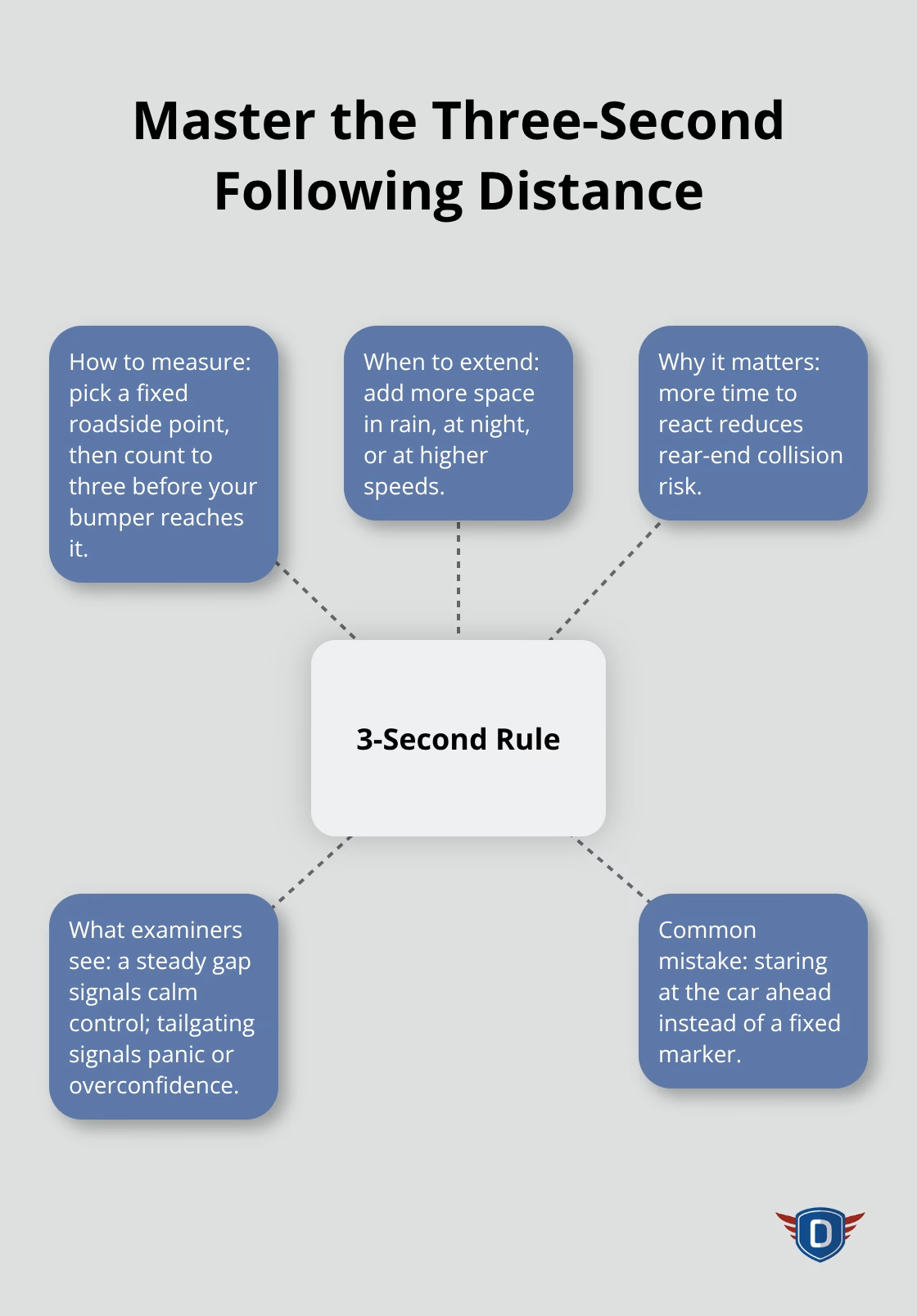
Safe following distance is another area where nervous drivers fail themselves. Maintain at least a three-second gap between your vehicle and the car ahead by picking a fixed point on the road, watching when the car ahead passes it, and counting to three before your bumper reaches that same spot. In slower traffic or residential areas, this distance should feel almost uncomfortably large to you-that’s actually correct. Examiners notice when drivers tailgate because it signals panic or overconfidence, neither of which passes a road test.
Control the Nervous Habits That Undermine Your Performance
Nervous habits like gripping the steering wheel too tightly, checking the examiner’s face repeatedly, or hesitating at intersections when you should proceed all communicate anxiety that undermines your credibility as a safe driver. Instead, keep both hands at eight and four on the wheel with relaxed arms, eyes forward on the road, and movements deliberate. When anxiety creeps in during your test, take one slow breath through your nose and out your mouth-it physically lowers your heart rate and prevents the second-guessing that causes most test failures among capable drivers. Understanding what mistakes cost you most on test day is why the next section covers the specific practice methods that build real competence.
How to Practice for Your Road Test Strategically
The difference between passing and failing often comes down to how you structure your practice, not how many total hours you spend behind the wheel. Most drivers practice randomly, repeating the same comfortable routes week after week, then panic when the test throws them into unfamiliar situations. This approach wastes time and builds false confidence. Instead, treat your preparation like a progressive skill-building program where each session targets specific weaknesses and gradually introduces new complexity.
Build Skills in Progressive Stages
Start with quiet residential streets where you can focus purely on vehicle control and the pre-drive checklist without traffic pressure. Once those fundamentals feel automatic, move into light business district traffic during off-peak hours, then progress to busier roads with multiple lanes and traffic signals. Texas data shows one in five test-takers fail, and many of those failures happen because drivers never practiced in the actual conditions they’ll face on test day. Each session should last forty-five to sixty minutes maximum, not hours; fatigue builds bad habits faster than it builds skill, and your examiner will notice tired, sloppy driving immediately.
Practice Across Different Times and Weather Conditions
Schedule your practice sessions across different times of day and weather conditions as well. If your test is scheduled for morning, practice in the morning when visibility and traffic patterns match test conditions. If rain is possible in your state, drive in light rain to build confidence with reduced visibility and longer stopping distances. This variety prepares you for whatever conditions the test center throws at you on exam day.
Scout Your Test Route Before Test Day
Familiarity with your actual test route removes one massive source of test-day anxiety, yet most drivers never scout the location beforehand. Contact your local DMV or test center and ask if they provide a map of the typical test route or allow you to drive it during practice hours. If they do, drive that exact route at least three times before your test date, paying attention to where intersections are tight, where pedestrian traffic concentrates, and where the speed limit changes. Note which roads have heavy traffic at certain times and which are quieter alternatives. This reconnaissance work takes two to three hours total but eliminates the shock of navigating unfamiliar streets while managing test anxiety.
Prepare Your Vehicle and Rest Your Body
On the night before your test, confirm your vehicle is road-ready: check tire tread depth meets the one thirty-second inch minimum, test all lights and wipers, verify your registration and insurance documents are in the car, and fuel up so you’re not stressed about gas stations. Sleep matters more than last-minute cramming, and research on test performance consistently shows that drivers who get seven to eight hours of sleep perform significantly better than those who stay up reviewing. Your nervous system needs rest to manage the stress hormones that fuel the second-guessing and hesitation that cost drivers points during their actual test.
Final Thoughts
Passing your road test comes down to three core elements: mastering the pre-drive checklist, executing maneuvers with precision, and controlling the nervous habits that undermine capable drivers. The pass road test tips covered in this guide work because they address what examiners actually watch for, not what drivers assume matters. You now understand that a three-second following distance, deliberate head checks, and consistent speed control separate passing drivers from failing ones.
Your preparation strategy matters more than raw talent. Structure your practice progressively, start in quiet residential areas, and gradually introduce complexity as you build confidence. Get proper sleep the night before your test, fuel your vehicle, and verify all documents are ready so you manage test day with focus instead of last-minute stress.
Safe driving habits take time to solidify, and the skills you build during test preparation form the foundation for a lifetime of safer driving. DriverEducators.com provides comprehensive driver education programs that help you develop the defensive driving techniques and traffic law knowledge that keep you and others safe on the road for years to come.