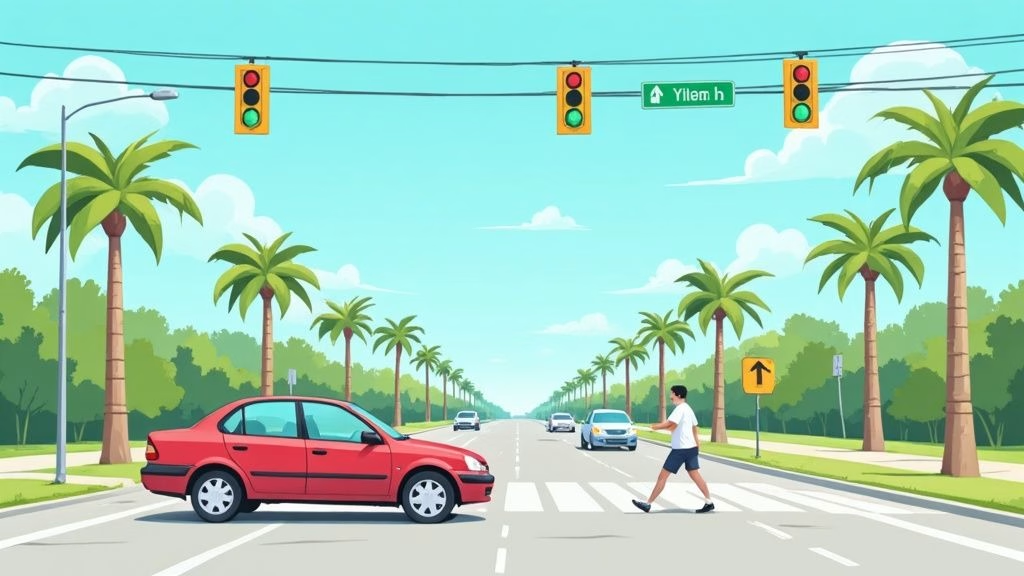
We all know green means “go,” but when you’re turning left, it’s not quite that simple. A left turn yield on green is one of the most common situations on the road, yet it’s a major source of confusion and collisions. This signal gives you permission to turn, but it comes with a big condition: you absolutely must yield the right-of-way to all oncoming traffic and pedestrians first.
It’s a conditional green light, not a free pass.
What “Left Turn Yield on Green” Really Means
That familiar, solid green traffic light is a staple of every intersection, but for drivers making a left, it demands extra caution. Unlike a green arrow, which gives you a protected, clear path to turn, the solid green light puts all the responsibility for a safe turn directly on you. It tells you that you can pull into the intersection, but you don’t own the road.
Think of it like trying to cross a busy hallway. You can’t just step out; you have to wait for a clear gap in the foot traffic so you don’t cause a pile-up. In the same way, a driver must patiently wait for a safe opening between oncoming cars, motorcycles, and bikes before even thinking about completing the turn.
This is the heart of defensive driving at intersections. The rule isn’t just about avoiding a crash—it’s about making sure your turn doesn’t force another driver to slam on their brakes or a pedestrian to jump back onto the curb.
Who Gets the Right-of-Way?
When you see that solid green light and want to turn left, your main job is to yield. This isn’t just about watching out for cars. Florida law is very clear that you must give the right-of-way to several groups who also have a green light.
You are legally required to yield to:
- Oncoming Vehicles: Any car, truck, or van coming straight through the intersection from the opposite direction has the absolute right-of-way. They are not expecting to stop for you.
- Motorcyclists and Bicyclists: These are much smaller and can be harder to spot, especially in your blind spots. They often move faster than they appear, so you have to look twice to make sure the way is clear.
- Pedestrians: Anyone crossing the street you’re turning onto has the right-of-way, whether they are in a marked crosswalk or not. Always scan the crosswalks on the street you’re entering before you hit the gas.
Getting the left turn yield on green right is a non-negotiable skill for driving safely in Florida. It takes patience, sharp awareness, and a total understanding that your turn depends entirely on the safety of everyone else around you. A simple misjudgment can lead to a devastating accident and serious legal trouble.
Protected vs. Permissive Left Turns in Florida
In Florida, not all green lights mean the same thing, especially when you’re making a left turn. The difference between a green arrow and a solid green ball is huge, and understanding it is key to staying safe and avoiding a ticket. It all comes down to one simple question: who has the right-of-way?
The Green Arrow: Your Protected Pass
A protected left turn is easy—it’s signaled by a green arrow. Think of it as your own personal escort through the intersection. When that green arrow is lit, all oncoming traffic has a red light. The coast is clear, and the right-of-way is yours. You can make your turn confidently, knowing the intersection is protected just for you.
The Solid Green Light: A Permissive, Cautious Turn
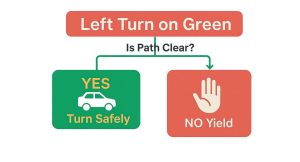
The second type is a permissive left turn, indicated by the standard circular green light. This is the classic “yield on green” scenario that requires your full attention. The green light gives you permission to turn, but only when it’s absolutely safe to do so. The responsibility to judge the situation rests entirely on your shoulders.
You have to look for a safe gap in oncoming traffic—and that includes cars, motorcycles, and cyclists. Just as important, you must also yield to any pedestrians crossing the street you’re turning onto.
This isn’t just good advice; it’s the law. Florida Statute 316.075(1)(a) puts it in black and white: vehicles turning left on a circular green light must yield to other vehicles and pedestrians. The green light doesn’t give you the right-of-way; it gives you the chance to proceed when the way is clear.
Think of it this way before you make that turn:
This simple check is your best defense against causing a collision. If there’s any doubt, you wait.
Florida Left Turn Signals: What They Mean For You
Let’s break down the two main signals side-by-side to make it crystal clear.
| Signal Type | What It Means | Your Action | Who Has Right-of-Way |
|---|---|---|---|
| Green Arrow | Protected Turn: Oncoming traffic has a red light. | Proceed with your left turn. | You have the right-of-way. |
| Solid Green Circle | Permissive Turn: You may turn only when it’s safe. | Yield to all traffic and pedestrians, then proceed when clear. | Oncoming traffic and pedestrians have the right-of-way. |
Knowing the difference isn’t just about passing your driver’s test—it’s about making the right decision every single time you approach an intersection.
Improving Intersections to Keep Drivers Safe
Traffic engineers are always looking for ways to make these turns safer and more efficient. New signal types, like the flashing yellow arrow (another form of a permissive turn), have shown great promise.
One major study found that intersections using flashing yellow arrows saw a 17.73% drop in left-turn crashes. They also helped traffic flow better, cutting driver delays by more than 19 seconds. These are real-world improvements that make a big difference, and you can dive into the comprehensive traffic safety research to see the data for yourself.
One of the most dangerous moments is when a signal switches from a protected green arrow back to a solid green light. That’s the moment the legal responsibility flips back to you. The second that arrow goes dark, your “protected” status is gone, and you’re back to yielding to everyone else.
Who Has the Right-of-Way at the Intersection
When you’re faced with a left turn yield on green, the simplest way to think about it is this: you’re last in line. That solid green light doesn’t give you the green light to go; it’s a permissive signal. It means you can proceed, but only after everyone else with a green light has safely passed.
This goes beyond just looking for a break in traffic. You have a legal responsibility to yield to every other person and vehicle that has the right to be in that intersection. Your turn is only complete and legal once you can do it without making anyone else hit their brakes, slow down, or swerve out of your way.
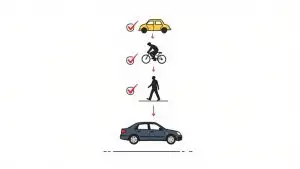
The Official Pecking Order
Before you even begin to nudge your car into the intersection, you need to understand who gets to go first. This isn’t just a suggestion; it’s a fundamental traffic law designed to prevent crashes at one of the most common collision spots on our roads.
Here’s who you must yield to:
- Oncoming Vehicles: Any car, truck, or bus coming straight through the intersection from the opposite direction has the absolute right-of-way. They have a green light, and they aren’t expecting you to cut in front of them.
- Motorcyclists: Motorcycles are much smaller and can be tough to spot. It’s also notoriously difficult to judge their speed and distance accurately. Always take that extra moment to scan specifically for them.
- Bicyclists: Whether they’re in a bike lane or on the main road, cyclists have the right-of-way. Their speed can be surprising, so be sure to give them plenty of room to clear the intersection before you turn.
- Pedestrians: This is a big one. You must yield to anyone in the crosswalk on the street you are turning onto. It’s easy to get fixated on oncoming cars and completely miss a person walking. The consequences of that mistake can be devastating.
The rule of thumb is straightforward: your permission to turn is entirely dependent on the safety of everyone else. If your turn forces another driver, rider, or walker to react, you’ve broken the law and failed to yield.
This idea is a bedrock principle of safe driving. For a more detailed look, it’s worth brushing up on the general right-of-way rules at intersections, as this concept applies in many scenarios.
At the end of the day, patience is your best friend in this situation. Trying to squeeze into a gap that’s too small puts you and vulnerable road users in danger. Waiting a few more seconds is always the smarter, safer call.
Mastering Common Left Turn Scenarios
Knowing the textbook rule for a “left turn yield on green” is one thing, but putting it into practice in the real world—with its constant stream of unpredictable drivers and pedestrians—is another beast entirely. Intersections are fluid, messy places where you have to make split-second decisions.
Let’s walk through some of the most common and dangerous situations you’ll encounter. Getting a feel for these scenarios now will build the muscle memory you need to stay safe on the road.
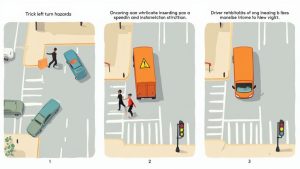
The urge to just go can be powerful, but it’s often the cause of the most devastating mistakes. Left-turn crashes aren’t a minor issue; they are a massive safety problem. In fact, vehicles turning left are involved in a staggering 22.2% of all intersection accidents.
The root cause? Usually, a driver misjudges the speed or distance of an oncoming car and fails to yield properly. This risk skyrockets at intersections with traffic signals, where a whopping 75% of all left-turn accidents happen.
The Oncoming Car That Speeds Up
We’ve all been there. You see a car coming, but it looks far enough away. You figure you have plenty of room to make your turn. But just as you start to pull out, the other driver hits the gas, shrinking that safe gap into a danger zone in seconds.
This is a classic setup for a high-impact T-bone collision.
Your Defensive Play: Never, ever assume an oncoming car will maintain its speed. Always wait until you are 100% sure you can get completely through the intersection with room to spare. If you feel even a tiny bit of doubt, just wait. The next gap is always the safest one.
The Hidden Pedestrian or Cyclist
This one is sneaky. You’re watching traffic, but a big box truck or a van in the oncoming lane is blocking your view of the crosswalk you’re about to turn into. A pedestrian or cyclist could be right there, completely invisible to you. By the time they step out from behind the truck, it’s often too late.
Your Defensive Play: Make it a habit to actively look around and through the gaps of large vehicles. Lean forward if you have to. Your goal is to scan the crosswalk on the far side of the road before you even think about hitting the gas. Those extra two seconds of looking can literally save a life.
If there’s one skill that will keep you safe at an intersection, it’s patience. Tuning out the honking from the impatient driver behind you is a sign of a smart, responsible driver, not a slow one. Your safety is always more important than their rush.
The Yellow Light Trap
The light turns yellow, and a shot of adrenaline hits. Your brain screams, “Go now, or you’ll be stuck here forever!” This is the yellow light trap. It pressures you to rush your turn, often putting you directly in the path of an oncoming driver who is also trying to “beat the red.” It’s a recipe for disaster where both drivers are taking a huge gamble.
Your Defensive Play: Remember what a yellow light actually means: prepare to stop. It’s not an invitation to punch it. If you’re already in the middle of the intersection when the light turns yellow, you have the right to complete your turn once it’s safe. But don’t start your turn on yellow if there’s still traffic coming. Make sure you know when to use turn signals so your intentions are always crystal clear to other drivers.
Getting comfortable with these situations takes time and a conscious commitment to putting safety ahead of speed. For a broader look at road etiquette, you can find a lot of helpful general driving safety tips from reputable sources online.
What Happens If You Get a Left Turn Ticket?
Getting a ticket for failing to yield on a left turn is a bigger deal than most people think. It’s not just a simple mistake; it’s a serious violation that kicks off a chain reaction of consequences that can hit your wallet—and your driving record—hard.
The fine on the ticket is just the first sting. The real financial headache often comes later, in the form of a major jump in your car insurance premiums. Why? Because insurance companies see a failure-to-yield ticket as a bright red flag for risky driving. That means you could be stuck paying higher rates for three to five years, a penalty that can easily add up to hundreds, if not thousands, of dollars.
Points on Your License
Besides the money, a left-turn violation also puts points on your driver’s license. Florida’s point system is designed to track driving offenses, and if you rack up too many points within a certain timeframe, you’ll face a license suspension. This single ticket pushes you that much closer to losing your driving privileges altogether. It’s crucial to understand what kind of offense this is, and you can get the full rundown on what a moving violation and its impact means for your record.
Being Found At-Fault in an Accident
If your illegal left turn causes a crash, the situation gets exponentially worse. You will almost certainly be found at fault, opening you up to massive legal and financial liability for any property damage or injuries that occurred. Legally, this kind of mistake is often seen as a failure to exercise due care, which carries its own serious legal weight.
Research paints a pretty grim picture: driver compliance with yielding rules is shockingly low. Over half of all accidents involving left turns happen because someone failed to yield to oncoming traffic. The danger gets even worse in bad weather or during rush hour, which just goes to show how critical it is to be cautious.
At the end of the day, understanding the left turn yield on green rule isn’t just about avoiding a ticket. It’s about protecting yourself, your finances, and your freedom to drive.
Clearing Your Record with a Driver Improvement Course
Getting a ticket for a left turn yield on green violation is a real headache. But in Florida, that single mistake doesn’t have to stain your driving record or drain your bank account. You have a smart option: electing to take a Basic Driver Improvement (BDI) course.
Think of it as a strategic move. Instead of just paying the fine and accepting the consequences, you’re actively protecting your driving privileges and your wallet.
Completing a state-approved BDI course comes with some major perks. The biggest one? No points are added to your license for the violation. That’s a huge win, because racking up points is a fast track to a suspended license and being labeled a high-risk driver by insurance companies.
By avoiding points, you also dodge the nastiest surprise that comes with a moving violation: a massive spike in your car insurance premiums. One ticket can inflate your rates for years, costing you way more than the price of the fine itself.
More Than Just a Quick Fix
A driver improvement course isn’t just a loophole to get out of a ticket; it’s a genuine investment in your own safety. The whole point is to refresh you on critical traffic laws, including the tricky details of yielding on a green light and navigating other complex intersections.
You’ll brush up on defensive driving techniques that can help you spot and avoid hazards before they become a problem. The goal is to make you a more aware and confident driver long after the violation is a distant memory.
Ready to see how it works? You can learn more about a state-approved Florida driver improvement course online and find a flexible option that fits your life. Choosing to take the course puts you back in the driver’s seat, helping you keep your record clean and your insurance rates from skyrocketing.
Common Questions About Yielding on Green
Even when you know the rules by heart, some real-world intersections can make you second-guess yourself. That split second of hesitation is often all it takes to create a dangerous situation. Let’s clear up some of the most common questions drivers have about making a left turn yield on green.
Can I Pull Into the Intersection to Wait?
Yes, absolutely. In Florida, it’s standard practice to pull into the intersection to wait for a safe gap in traffic. This positions your vehicle to make the turn as soon as there’s a break, which helps keep traffic flowing smoothly.
But there’s a critical safety habit you need to adopt: keep your wheels pointed straight ahead while you wait. Think about it—if someone rear-ends you, straight wheels mean your car gets pushed forward. If your wheels are already turned left, that same impact could shove you directly into oncoming traffic, setting you up for a catastrophic T-bone collision.
What If the Light Turns Red While I Am in the Intersection?
If you’ve already pulled into the intersection on a green or yellow light, you have the right-of-way to complete your turn after the light turns red. Oncoming traffic now has a red light and should be stopping, which gives you the space to clear out.
The key here is not to panic. Take a breath, make sure all oncoming cars have actually stopped (watch for anyone trying to speed through the yellow), and then complete your turn. Legally, you’re just “clearing” the intersection, which is expected.
Do I Yield to an Oncoming Car Also Turning Left?
Nope. This is a common point of confusion. When two cars coming from opposite directions are both making a left turn, neither one has to yield to the other. The standard way to handle this is for both cars to turn in front of each other, passing on each other’s left side. You can both go at the same time.
How Does This Rule Affect Bicyclists and Motorcyclists?
The rule doesn’t change one bit—you must yield to everyone. Bicyclists and motorcyclists have the same rights as any car going straight, but they’re much harder to see and protect. You have to be extra sharp.
It’s also notoriously tricky to judge the speed of an approaching motorcycle. Your brain can play tricks on you. Always play it safe and assume they are closer and moving faster than they look. What seems like a safe gap for a car might not be for a bike. If you have any doubt, just wait.
If a recent ticket has you questioning your knowledge of the rules of the road, BDISchool can get you back on track. Our state-approved Basic Driver Improvement course is the easiest way to keep points off your license and prevent your insurance rates from going up. Enroll today at bdischool.com and put that ticket behind you.