If you're asking is drivers ed required in Florida, you're probably in one of two situations.
Maybe you're a teen who wants a learner's permit as soon as possible, and every friend is giving you a different answer. Or maybe you're an adult who got a ticket and suddenly has to sort out whether you need traffic school, driver's ed, or both.
The confusion is real because Florida uses different course types for different goals. A course for a first-time driver isn't the same thing as a course for a licensed driver who got a citation. Add in family members with different needs, plus language barriers for households that prefer Spanish or Portuguese, and the rules can feel harder than they need to be.
Untangling Florida's Driver Education Rules
Florida doesn't follow the same model as every other state. Across the country, 29 states require driver education for novice teen drivers, but Florida is different. Florida doesn't require a full driver's ed course for initial licensing at age 15 for a learner's permit or age 16 for a restricted license, even though many other states do. That contrast comes from the national summary compiled by ADTSEA and NHTSA.
That single fact clears up a lot of mixed advice.
A parent might hear, "My cousin in another state had to take full driver's ed." That's probably true for that state. It just doesn't automatically apply in Florida. If you want a Florida-specific breakdown of the courses first-time drivers often ask about, this overview of Florida driver's education options helps sort the names and purposes.
What trips people up
Most confusion comes from treating every driving course like it's the same thing. It isn't.
- Teen permit course: This is about qualifying as a new driver.
- Traffic school after a ticket: This is about a violation, points, or a court requirement.
- License reinstatement courses: These apply when a suspension or revocation creates a different legal problem.
Practical rule: In Florida, always start with your goal. Are you trying to get a permit, deal with a ticket, or restore driving privileges?
The simple answer
If you're a teen getting your first permit, a full traditional driver's ed course usually isn't the baseline legal requirement in Florida.
If you're dealing with a ticket, court order, or license issue, a state-approved course may become mandatory very quickly.
That's why "is drivers ed required" doesn't have one universal yes-or-no answer. In Florida, the right answer depends on who you are, what stage you're in, and why you're taking the course.
Florida's Graduated Path to Your Driver's License
Florida handles teen licensing in stages, much like learning to swim. You don't start in the deep end alone. You build skill step by step.

According to Education Week's summary of state driver education rules, Florida's graduated system allows a learner's permit at 15, a restricted license at 16, and a full license at 18. That same summary notes Florida doesn't use a statewide mandatory full driver's ed curriculum for all beginners, and instead relies on specific knowledge-based requirements such as TLSAE.
If you want the state process laid out in one place, this guide to graduated driver licensing in Florida is useful.
Stage one, learner's permit at 15
This is the supervised stage.
A teen can apply for a learner's permit at 15. At this point, they aren't being turned loose to drive however they want. The point is controlled practice, adult supervision, and getting comfortable with traffic rules before moving to the next level.
This is also where many families mix up TLSAE with full driver's ed.
TLSAE is not the same as full driver's ed
Florida may not require a full semester-style driver's ed course for every new teen driver, but that doesn't mean first-time applicants skip education altogether.
TLSAE stands for Traffic Law and Substance Abuse Education. It's a required pre-licensing course for first-time drivers. It focuses on traffic laws, risk awareness, and the effects of alcohol and drugs on driving judgment.
A good way to think about it is this. Full driver's ed teaches broad driving knowledge and habits. TLSAE is the Florida-required entry course that covers legal basics and safety awareness for new drivers.
Later in the process, if a family chooses extra instruction, that can be a smart safety move. It just serves a different purpose from the required beginner course.
Here's a quick visual refresher on the permit-to-license path:
Stage two, restricted license at 16 and 17
At 16, a driver can move into the intermediate stage if they meet the state's conditions.
This is still not full freedom. Florida places restrictions on younger drivers, including a 50% nighttime driving limit during the restricted-license stage, as summarized in the Education Week source above. The reason is simple. New drivers need practice, but they also face added risk in less forgiving conditions.
Stage three, full license at 18
At 18, a driver can qualify for a full license.
By then, the state expects the person to have progressed from supervised learning to restricted independent driving and then to full driving privileges. That's the core of Florida's graduated model.
When a Driving Course Becomes Mandatory in Florida
The short answer to "is drivers ed required" changes when Florida law or a court order attaches a course to your situation.
Some courses are tied to getting started as a first-time driver. Others show up after a ticket, after a suspension, or because a judge orders additional education.
First-time drivers
If you've never had a license before, the required course is the Traffic Law and Substance Abuse Education course, often called TLSAE.
This is the state's entry-level legal requirement for first-time applicants. It isn't the same as a full traditional driver's ed program, and it isn't interchangeable with traffic school for a citation.
If you're comparing beginner requirements, this 5-hour pre-licensing course overview can help you distinguish course types that sound similar but solve different problems.
Violations and court orders
Once someone is already licensed, the course question changes.
A driver who receives a moving violation may need a Basic Driver Improvement (BDI) course. In some cases, a court may require a different level of driver improvement, such as IDI or another state-approved program based on the case.
That system exists for a reason. Education is one of the state's tools for reducing repeat mistakes and pushing drivers back toward safer habits.
In the national discussion of teen and novice driver safety, one risk factor stands out. In 2020, 29% of fatally crashed drivers ages 15 to 20 had been drinking, according to the earlier Education Week summary already cited in this article. That helps explain why Florida and other states keep using course-based interventions when risky behavior appears.

Other moments when a course may be required
A full driver's ed class isn't the only kind of mandatory instruction a Florida driver may face.
- License reinstatement cases: A suspension or revocation can trigger a required improvement course before driving privileges return.
- Teen restrictions: Younger drivers often have to satisfy age-based and supervision-based conditions before moving forward.
- Court-specific outcomes: The exact course can depend on what the judge orders, not just what the driver prefers.
The safest way to avoid a compliance mistake is to match the course to the legal problem. Beginner licensing, point reduction, and reinstatement are separate lanes.
Florida Driving Course Requirements at a Glance
| Driver Profile | Is a Course Required? | Required Course Type |
|---|---|---|
| First-time driver seeking a permit | Yes | TLSAE |
| Licensed driver with a moving violation electing school or ordered by court | Often yes | BDI or another court-approved improvement course |
| Driver dealing with license suspension or revocation | Often yes | State-required reinstatement course such as ADI when applicable |
| Teen moving through licensing stages | Sometimes | Age- and situation-specific requirements, not automatically full driver's ed |
The Benefits of Taking a Course Beyond the Requirements
A course can be worth taking even when Florida doesn't strictly require full driver's ed.
The biggest reason is simple. Minimum legal compliance and actual driving confidence are not the same thing. A person can technically qualify for the next step and still feel shaky in traffic, confused at four-way stops, or nervous merging onto a fast road.
Why extra instruction helps
A strong course gives structure to skills that many families otherwise teach unevenly.
One parent may be great at explaining right-of-way. Another may focus only on "just stay calm and follow the car ahead." A formal program tends to be more consistent. It walks drivers through lane use, safe following distance, scanning habits, judgment at intersections, and the consequences of distracted or impaired driving.
That matters for several groups:
- New teens: They need repetition, not just permission to practice.
- Adults learning later: They often understand the stakes but want a calmer, organized path.
- New Florida residents: They may already know how to drive, but not Florida's habits, signage patterns, or local traffic culture.
- Anxious drivers: They benefit from clear steps instead of rushed family instruction.
It can also support lower costs
Some Florida drivers take an approved course because they want to protect their record after a citation. Others choose one because insurers may recognize defensive-driving education.
The exact effect depends on the insurer and the specific course. The practical takeaway is that education can serve more than one purpose at once. It can improve judgment behind the wheel and also make driving less expensive or less disruptive over time.
A course isn't just a box to check. It's often the moment a nervous driver starts understanding why experienced drivers scan early, leave space, and avoid preventable conflicts.
The long-term value
Drivers rarely regret learning too much.
They regret the first avoidable near-miss, the first confusing stop at a busy intersection, or the ticket they could have prevented if they better understood Florida rules. Voluntary education helps before that happens.
A Guide for Florida's Immigrant and Multilingual Families
For many Florida families, the hardest part isn't willingness to learn. It's accessing the rules in a language that feels natural.
That challenge matters because driving law is full of terms that are easy to misunderstand even in English. A family can know how to drive well and still get stuck on permit steps, course names, testing language, or what a citation notice is asking them to do.

The need for multilingual support is large. Over 27% of Florida households speak Spanish, and the same source notes that immigrant teens can face higher crash risk because they're less familiar with local laws and expectations. That's why accessible language options matter in driver education, as reflected in Florida Virtual School's driver education information.
Where confusion usually starts
Families often run into trouble in four places:
- Course selection: TLSAE, BDI, IDI, ADI, and driver's ed can sound interchangeable when they aren't.
- Testing language: A student may know the rule but miss the question because the wording is unfamiliar.
- Parent guidance: A parent may be trying to help a teen while also learning Florida's process for the first time.
- Deadline stress: Misunderstanding one requirement can delay the next step.
Why language access changes compliance
A multilingual course doesn't just feel more comfortable. It reduces legal mistakes.
When students can read examples, warnings, and answer explanations in a familiar language, they're more likely to understand what the state is asking them to do. That matters for permit preparation, ticket response, and any situation where a completion certificate affects driving status.
For households that want instruction in Spanish, this list of Florida traffic school options in Spanish points to a more accessible path.
Clear language helps families do more than pass a course. It helps them make safer decisions once they're on the road.
A useful way to think about it
Florida driving rules aren't hard because families don't care. They're hard because the system uses specialized terms, separate course categories, and formal requirements. Multilingual instruction closes that gap.
Choosing Your Course Teen Ed vs Adult Traffic School
Many families waste time trying to figure this out.
A teen is getting ready for a permit. A parent gets a moving violation. Someone asks whether one course can cover both needs. Usually, the answer is no.
Different tools for different jobs
A TLSAE course and a BDI course may both involve road safety, but they serve different legal purposes.
TLSAE is for a first-time driver entering the system. It introduces traffic law, substance abuse awareness, and the responsibilities of being a new driver.
BDI is for a driver who already has driving privileges and needs to respond to a citation or satisfy a court-related requirement.
That distinction matters because the state treats the problem differently. One course prepares you to begin. The other responds to something that already went wrong.
The most common family mistake
A family sees "4-hour course" in two places and assumes the courses are interchangeable.
They aren't.
According to the school-district guidance on permit and violation questions, a teen with a permit who gets a violation may need BDI for the violation, but that BDI course does not replace the separate foundational requirement tied to licensing. That clarification appears in the Lake County Schools article on the new teen driver education requirement.
Side-by-side comparison
| Course | Best for | What it does not do |
|---|---|---|
| TLSAE | First-time driver seeking to start the licensing path | It doesn't dismiss a traffic citation |
| BDI | Licensed driver addressing a moving violation or point issue | It doesn't substitute for beginner licensing education |
| IDI or other court-directed course | Driver with a specific court order | It doesn't act as a general permit course |
If your household has two driving problems, you probably need two separate solutions.
A practical example
Say your 15-year-old is preparing for a permit. At the same time, you receive a ticket and want to keep points off your record.
Your teen needs the beginner path. You need the violation path.
Families managing several learners at once often benefit from the same kind of organization that education businesses use. Tools such as tutoring center software are a good reminder that scheduling, progress tracking, and role-specific instruction matter when different people are working toward different outcomes.
How to Comply Today with BDISchool
Once you know which course matches your situation, the next step is simple.
Start by identifying your goal. If you're a first-time driver, choose the beginner course that satisfies the permit requirement. If you got a citation, choose the state-approved traffic school course that matches the court or election option listed for your case. If your license was suspended, confirm the exact reinstatement course before enrolling.
A clean process
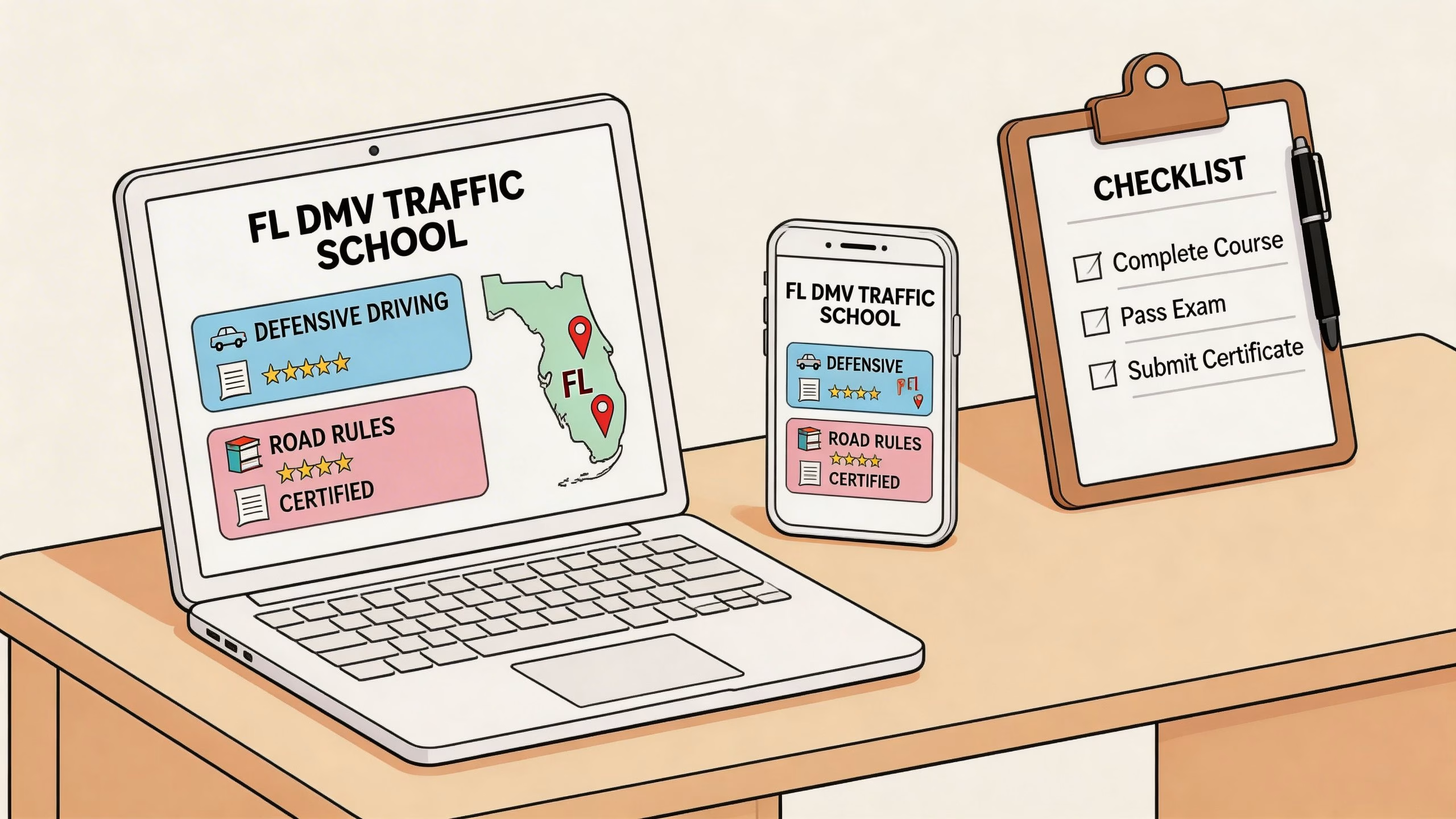
A short checklist often helps:
- Choose the right course. Don't enroll based on the course length alone. Match it to your legal need.
- Register online. Use a device you already have and complete the material on your own schedule.
- Finish and verify reporting. Make sure completion is recorded correctly so there isn't a delay with the state.

What makes the process easier
Online completion works well for busy professionals, parents, and students because it removes the hardest part of traditional classes. You don't need to reorganize your week around a classroom session.
It also helps multilingual households when the right language option is available. That can make the difference between guessing and understanding.
A good final check is to confirm your name, course type, and completion details before you log out. Small errors can create frustrating delays.
If you need a Florida-approved course for a first license, a traffic ticket, or a court requirement, BDISchool offers flexible online options in English, Spanish, and Portuguese, with electronic reporting to the state to help you complete the right requirement without extra paperwork.