Your first time behind the wheel sets the tone for everything that follows. Getting introductory driving lessons from a qualified instructor makes the difference between picking up safe habits and developing dangerous patterns that take years to break.
At DriverEducators.com, we’ve seen firsthand how structured professional instruction builds genuine confidence-not the false kind that leads to risky decisions, but the real competence that comes from mastering skills step by step.
What Happens in Your First Lesson
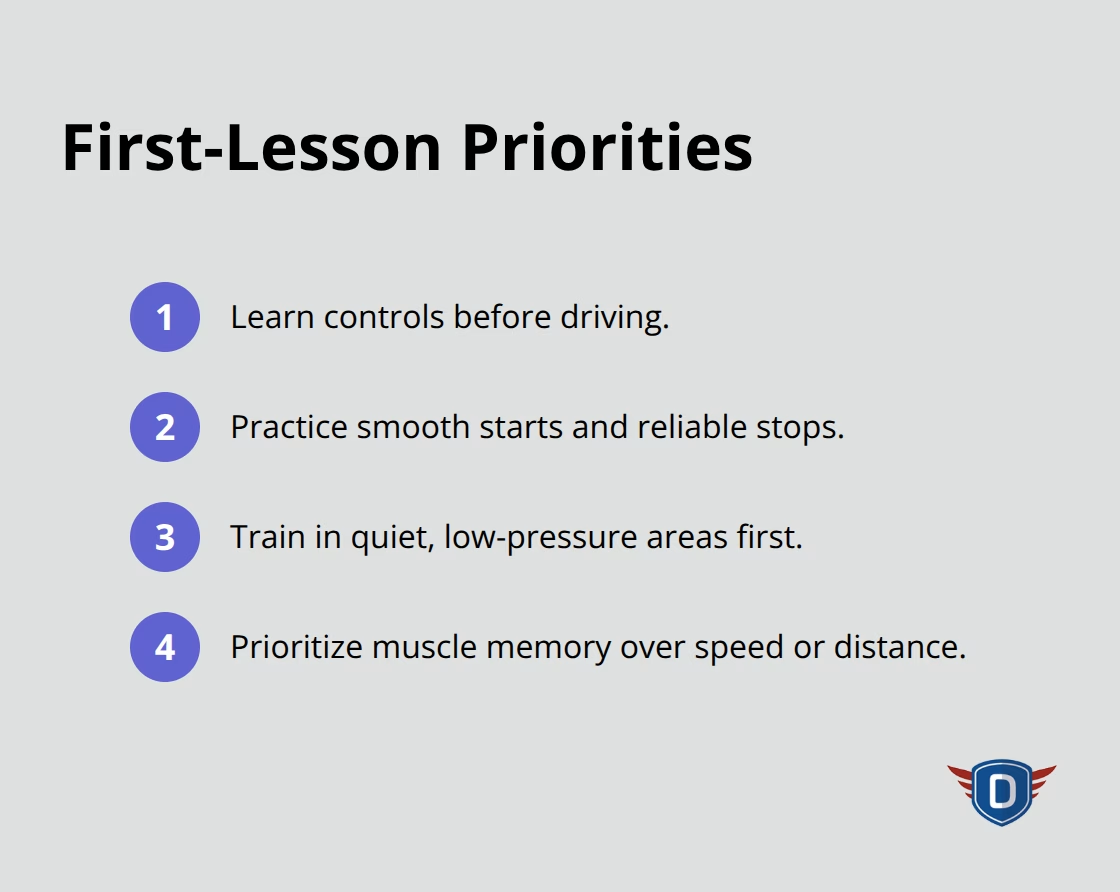
Your first driving lesson starts with the instructor explaining car controls rather than immediately hitting the road. This matters because most new drivers don’t fully understand what their feet and hands actually do. The instructor walks you through the pedals, steering wheel, gears, mirrors, and safety features before you even start the engine. You’ll practice pulling away smoothly, stopping reliably, and basic steering in a controlled environment like an empty parking lot or residential estate. This isn’t about speed or covering distance. It’s about building muscle memory and understanding how the vehicle responds to your inputs.
Where Your Instructor Takes You
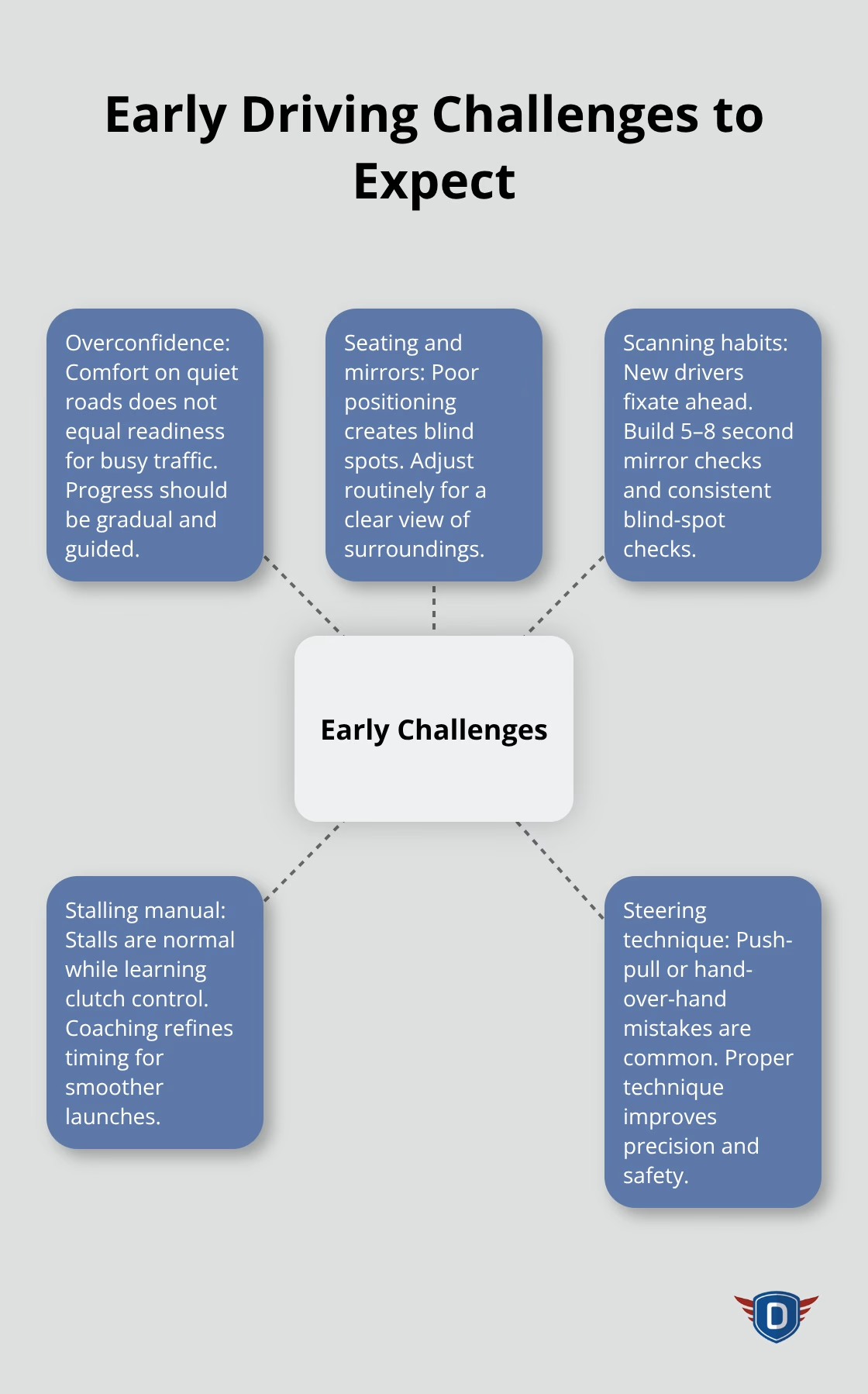
Most instructors start in quiet areas where traffic won’t distract you or create pressure. After you master basics, instruction moves to quiet, less congested roads where you practice more complex maneuvers. Your instructor gradually increases difficulty based on your progress and confidence, not on some predetermined schedule. Stalling the engine happens to almost every new driver learning a manual transmission. Poor steering technique-such as struggling with push-pull or hand-over-hand steering-represents another common early challenge.
What You’ll Feel Along the Way
Many learners feel overwhelmed or even want to quit during these early sessions, but progress comes with consistent practice. Finding an instructor whose teaching style matches yours matters more than finding the cheapest option. If an instructor’s approach doesn’t work for you, switching is a reasonable choice. Clear communication is essential. If instructions aren’t understood, ask your instructor to explain them differently rather than nodding along confused.
Moving Beyond the Basics
Once you master vehicle controls and basic maneuvers in quiet environments, your instructor introduces you to slightly busier roads. This transition tests your ability to apply what you’ve learned while managing new variables like other vehicles and pedestrians. Your confidence grows as you handle each new challenge successfully, and your instructor adjusts the pace to match your readiness. The next phase of your training will focus on the specific mistakes that hold back many new drivers-and how professional instruction helps you avoid them entirely.
Common Mistakes New Drivers Make and How to Avoid Them
Overconfidence Derails Progress Fast
Overconfidence kills more new driver progress than any technical skill gap. You master parking and quiet roads, then assume you’re ready for highway speeds and heavy traffic. This is where things unravel fast. The jump from residential streets to busy intersections exposes gaps in your awareness that felt irrelevant when traffic was light. Your instructor hasn’t failed you-your brain simply hasn’t yet developed the pattern recognition needed for complex traffic situations. Real confidence comes from handling progressively harder scenarios, not from feeling comfortable in easy ones. Most new drivers who cause accidents within their first year weren’t reckless by nature; they were overconfident about their readiness for situations they’d never actually practiced in.
Seating Position and Mirror Angles Matter More Than You Think
Your seating position and mirror setup determine what you can actually see on the road, yet most new drivers adjust these once and never touch them again. Sit too far back and you lose sight of the hood and immediate surroundings. Sit too close and you lose your peripheral view of other vehicles. Your mirrors need specific angles-not pointed at your own car door or at empty sky, but positioned so they show the road behind and beside you with minimal blind spots. Many new drivers discover this the hard way during their first lane change near another vehicle. A proper setup takes five minutes but prevents years of dangerous habits.
Scanning Habits Develop Through Deliberate Practice
Inadequate scanning happens because your eyes haven’t learned where danger lives. Experienced drivers scan mirrors every 5-8 seconds, check blind spots before any lane change, and look well ahead of their vehicle for hazards. New drivers fixate on the road directly in front of them and miss pedestrians stepping into crossings, vehicles merging from side streets, or brake lights lighting up three cars ahead. This isn’t carelessness-it’s a skill that develops through deliberate practice with feedback from an instructor who can point out exactly what you missed and why it mattered. Your instructor trains you to build these scanning habits early so they become automatic rather than an afterthought.
Why Professional Feedback Accelerates Skill Development
An instructor sitting beside you catches mistakes in real time and explains the consequences before they become dangerous patterns. You learn to recognize hazards because someone with thousands of hours of experience shows you where to look and what to look for. This targeted feedback works far better than trial-and-error learning, where you might practice the same mistake dozens of times before recognizing it. The difference between a new driver who develops safe habits and one who develops risky ones often comes down to whether they received quality instruction during these critical early months. Your next phase of training focuses on how structured lessons build the confidence that actually matters-the kind that comes from real competence, not false comfort.
How Structured Lessons Build Real Competence
Progressive Skill Development Creates Lasting Habits
Structured professional instruction works because it forces you through a deliberate progression that your brain actually needs to develop safe driving skills. You don’t jump from parking lots to highways. Instead, you master vehicle control in quiet environments first, then move to roads with light traffic, then gradually handle busier intersections and higher speeds only when your instructor confirms you’re ready. This progression matters because your brain develops pattern recognition through repeated exposure to increasingly complex scenarios.
Research on skill acquisition shows that deliberate practice with immediate feedback produces faster, more durable learning than random practice. When your instructor sits beside you and immediately corrects a scanning mistake or explains why you positioned your car poorly for a turn, that real-time feedback rewires your instincts far more effectively than practicing the same mistake ten times alone.
Real-World Traffic Teaches What Theory Cannot
Real-world traffic exposure in structured lessons teaches your nervous system what safe driving feels like under pressure, not just what it looks like in theory. You practice lane changes when other vehicles are actually present, not in empty parking lots. You handle intersections with real pedestrians and conflicting traffic, not imaginary scenarios. You experience the consequences of poor mirror checks when another vehicle is genuinely in your blind spot, which creates a powerful learning moment that sticks with you far longer than any explanation could.
Why Hours Matter More Than You Think
The difference between a driver who develops safe habits and one who develops risky ones often comes down to how many hours they spent practicing in varied, realistic conditions with professional feedback. Most new drivers who cause accidents within their first year didn’t lack technical ability; they lacked sufficient practice in the complex traffic situations where their technical skills actually matter. Structured lessons compress this learning timeline by ensuring every hour behind the wheel counts toward competence rather than just accumulating random driving time.
Final Thoughts
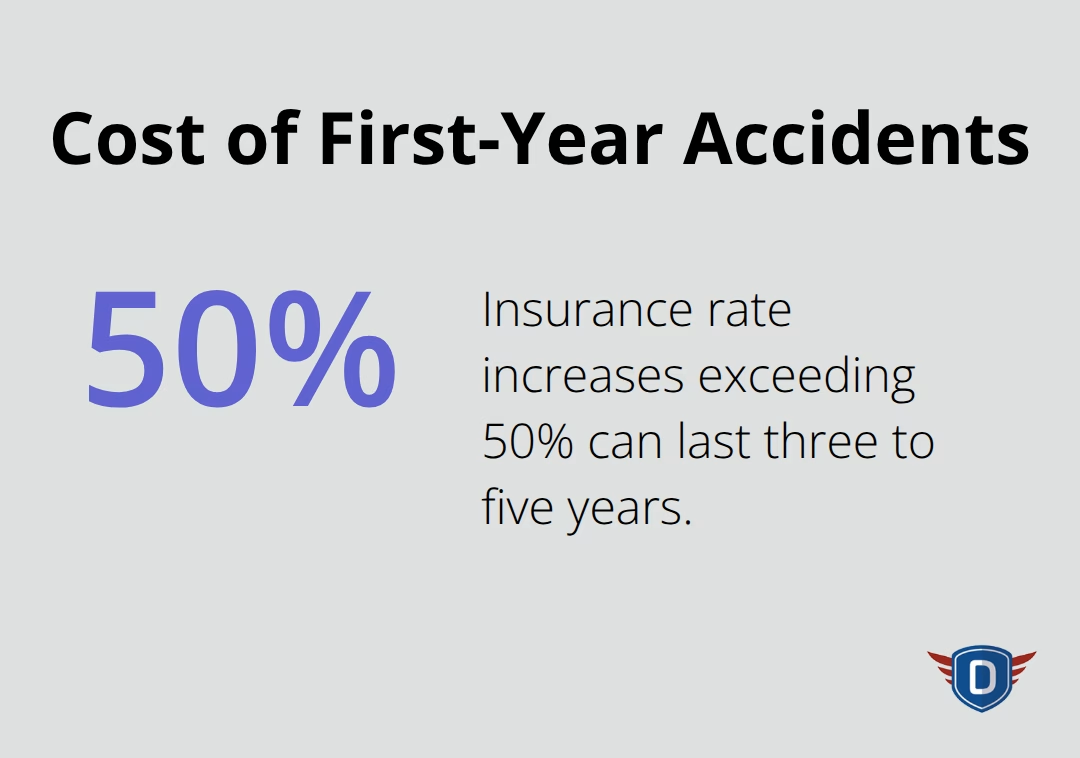
Professional instruction separates drivers who develop safe habits from those who cement dangerous patterns that lead to accidents, violations, and financial damage. New drivers who cause accidents within their first year face insurance rate increases exceeding 50 percent and lasting three to five years, while a single at-fault accident costs far more than a complete course of introductory driving lessons. Quality instruction prevents these costs by building genuine competence rather than false confidence.
At DriverEducators.com, we focus on creating drivers who stay safe for life, not just those who pass a test. Our certified instructors provide personalized guidance that helps you master the skills needed to navigate roads safely and develop lifelong safe driving habits. The investment in quality introductory driving lessons during your early months behind the wheel pays dividends through lower insurance costs, fewer violations, and most importantly, a significantly reduced risk of causing harm to yourself or others.
Your first lessons set the trajectory for your entire driving life. Make them count by choosing professional instruction that prioritizes real competence over quick fixes.