Impaired driving remains one of Florida’s deadliest public health threats, claiming hundreds of lives annually on our roads. We at DriverEducators.com believe that understanding the risks and prevention strategies is essential for every driver.
This guide covers everything you need to know about impaired driving prevention in Florida, from recognizing warning signs to making safer choices behind the wheel.
What Florida’s DUI Data Reveals About Your Risk
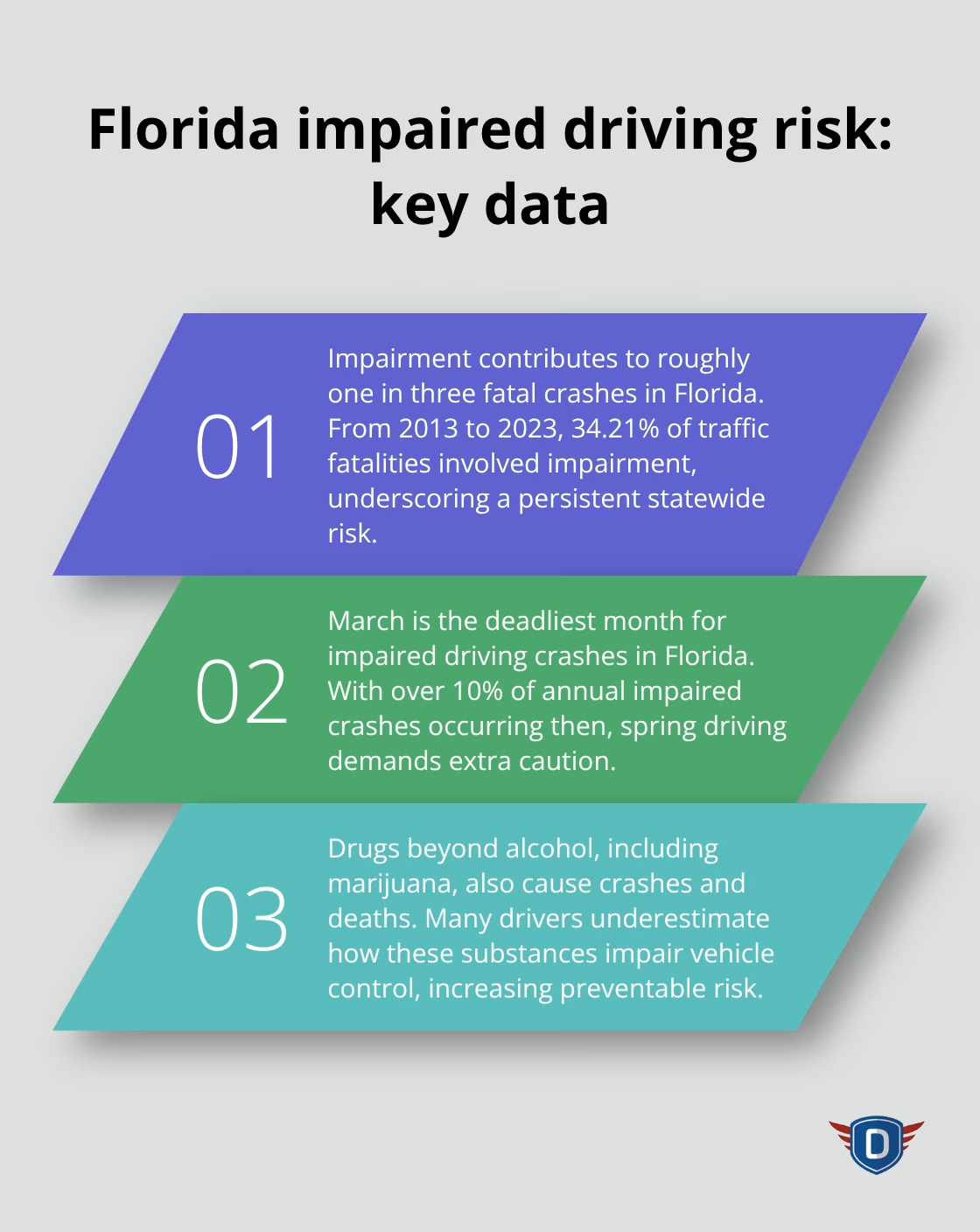
Impaired driving crashes in Florida tell a sobering story backed by hard numbers. Impairment contributes to roughly one in three fatal crashes in Florida, accounting for 34.21% of traffic fatalities between 2013 and 2023. March stands out as the deadliest month, responsible for over 10% of all impaired driving crashes annually, making spring a particularly dangerous season on Florida roads. Beyond alcohol, drugs including marijuana caused crashes and deaths, yet many drivers underestimate how these substances impair their ability to control a vehicle.
The Five Ways Impairment Destroys Your Driving Ability
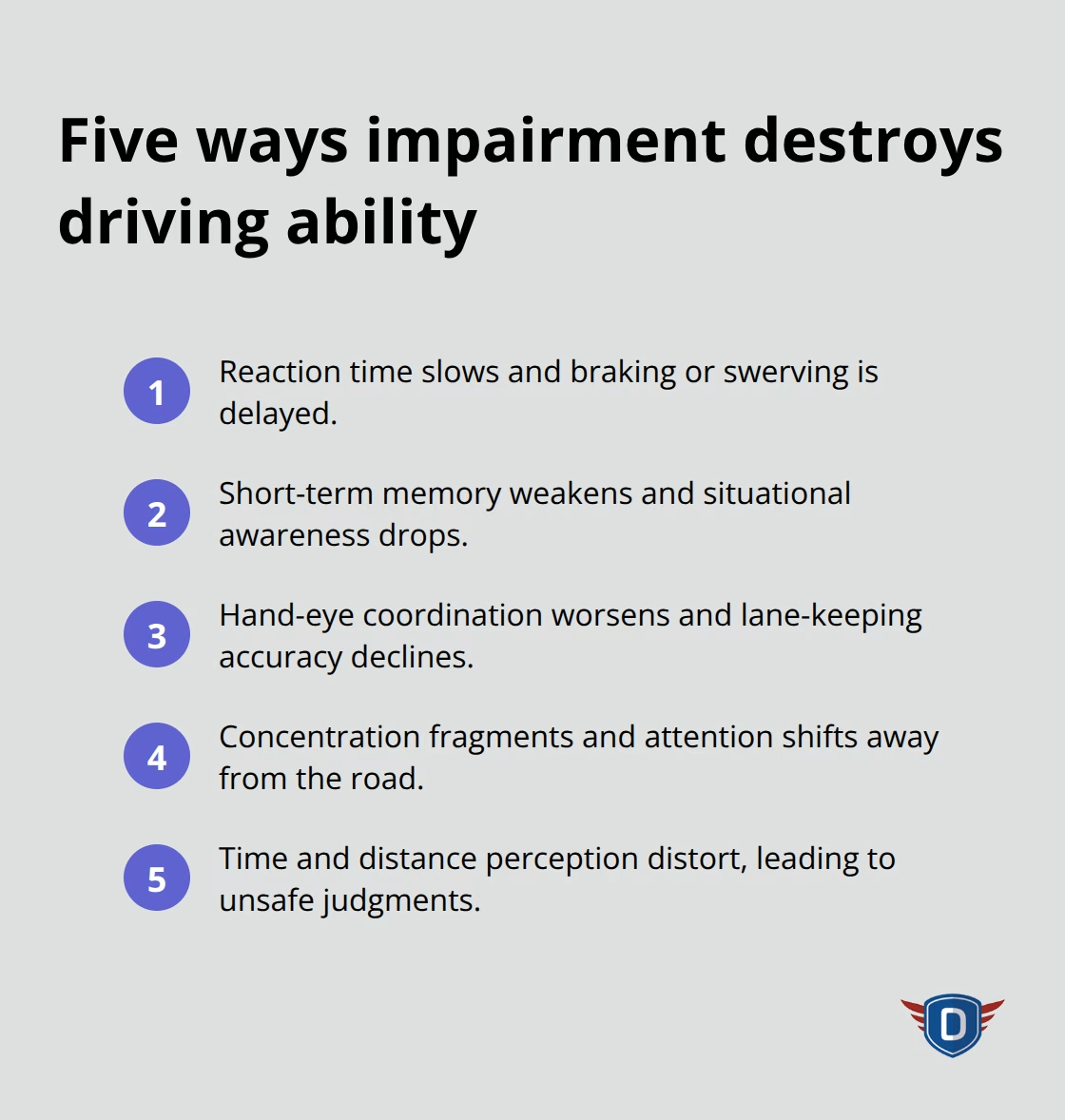
Impairment affects five critical skills you need to drive safely. The first drink slows your reaction time, meaning you need more time to brake or swerve when danger appears. Your short-term memory weakens, so you may forget where you are or why you turned onto a particular road. Hand-eye coordination deteriorates, making it harder to stay in your lane or judge distances accurately. Concentration becomes fragmented, pulling your attention away from the road and toward irrelevant details. Perceiving time and distance becomes nearly impossible, leading you to misjudge how far away an oncoming vehicle actually is or how long it will take to stop.
The Financial and Legal Weight of a DUI Conviction
A single DUI conviction in Florida carries penalties that extend far beyond a court appearance. First-time offenders face minimum fines ranging from $500 to $1,000, but if your blood alcohol level reaches 0.15% or higher, or if a minor was in the vehicle, fines jump to $1,000 to $2,000. Your driver’s license faces a mandatory 180-day revocation at minimum, and if you refused a roadside chemical or field test, the suspension automatically extends to one year. Jail time is possible even for a first offense, with up to 6 months of custody (9 months if your BAL was 0.15% or higher). Most critically, a DUI conviction remains on your Florida driving record for 75 years, affecting insurance rates, employment opportunities, and your ability to rent housing for the rest of your life. Repeat offenses escalate these consequences dramatically, with second offenses within five years triggering license revocations of approximately five years and potential jail sentences of 9 to 12 months with a mandatory minimum of 10 days.
Why Mixing Substances Multiplies the Danger
Mixing alcohol with medications or drugs multiplies impairment effects significantly. Even common cold or allergy medications can amplify alcohol’s impact on your central nervous system, yet most drivers never check medication labels before driving. Marijuana adds another layer of complexity because there is no fixed legal threshold like the 0.08% BAC for alcohol, making detection inconsistent and drivers more likely to rationalize their ability to drive safely. Many drivers fail to understand that a single drink may produce stronger effects when combined with certain medications, creating a false sense of control behind the wheel.
What Happens Next on Florida Roads
Understanding these statistics and impairment mechanisms sets the stage for recognizing when other drivers pose a threat. The next section covers the physical and behavioral indicators that reveal an impaired driver on the road, helping you identify dangerous situations before they escalate into crashes.
Recognizing the Signs of Impaired Driving
Physical Indicators That Reveal an Impaired Driver
Florida roads host an estimated 340 Drug Recognition Experts deployed by law enforcement to identify impaired drivers, yet most crashes occur before police arrive. The responsibility falls on you to recognize the warning signs and report dangerous drivers before they kill someone. Impaired drivers exhibit unmistakable physical behaviors that separate them from distracted or drowsy drivers. Watch for vehicles that weave between lanes without signaling, drift across center lines repeatedly, or brake suddenly without reason. A car traveling 10 miles per hour below the speed limit while swerving signals impairment far more reliably than aggressive speeding. The driver’s head may tilt at odd angles, their shoulders slouch against the door, or they grip the steering wheel with unusual tension. Windows may stay closed despite warm weather-a sign the driver fights to maintain focus on the road ahead. Eyes tell the story too: impaired drivers often fixate on a single point rather than scan the road, their pupils dilate noticeably, and they blink slowly or keep their eyes partially closed. These physical markers stem directly from the five impairment mechanisms discussed earlier: slowed reaction time, weakened memory, poor hand-eye coordination, fragmented concentration, and distorted time and distance perception.
Behavioral Red Flags That Signal Danger
Behavioral patterns provide equally critical clues that separate impaired drivers from normal traffic. An impaired driver stops abruptly at green lights, appears confused about traffic signals, or accelerates without purpose when traffic is light. They may drive with their headlights off after dark, a sign their judgment about visibility has collapsed entirely. Aggressive honking, erratic lane changes, or sudden braking within inches of other vehicles indicate a driver who cannot process information quickly enough to anticipate traffic flow. These actions create immediate danger for everyone sharing the road.
How to Report Suspected Impaired Drivers Safely
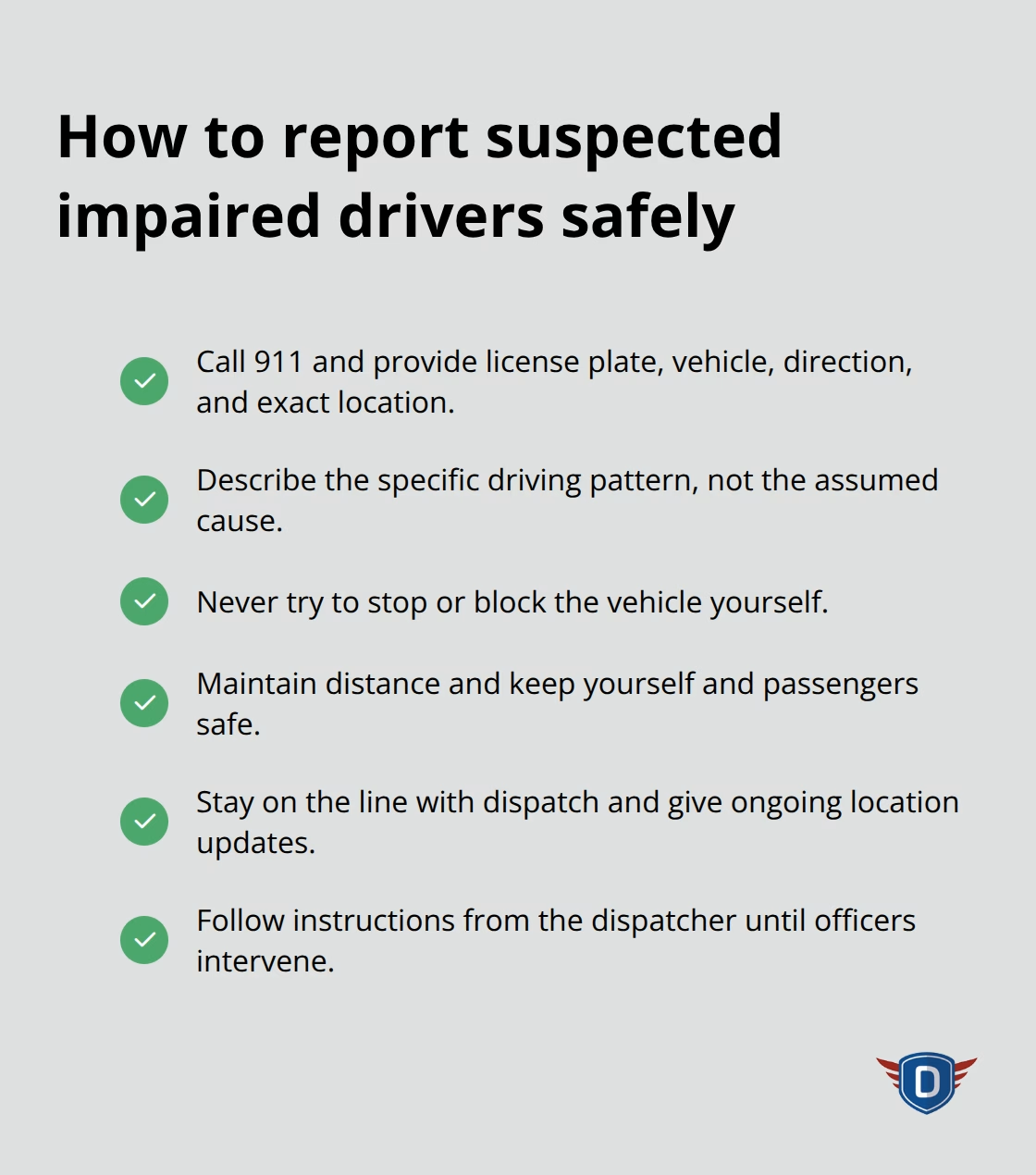
If you witness these behaviors, report the vehicle immediately to local law enforcement by calling 911 with specific details: the license plate number, vehicle description, direction of travel, and exact location. Provide the dispatcher with a clear description of the driving pattern-weaving, near-miss collisions, or extreme speed changes-rather than assumptions about impairment. Law enforcement agencies across Florida actively monitor roadways for exactly this type of report, and your call could prevent a fatal crash. Never attempt to stop the driver yourself or block their path; that action puts you in danger and eliminates the possibility of police intervention. Instead, maintain distance, stay on the line with dispatch, and continue reporting location updates as the vehicle moves. Your quick action and accurate information give officers the best chance to intervene before tragedy strikes on Florida roads.
How to Stop Impaired Driving Before It Starts
Plan Transportation Before the First Drink
The most effective strategy against impaired driving is prevention through planning, not reliance on tests or luck. Before you head out, decide your transportation method with the same care you’d use choosing between hospitals if someone needed emergency surgery. A designated sober driver is the gold standard because it removes all ambiguity: one person commits to not drinking, and everyone else has guaranteed safe passage home. This approach works because it eliminates the moment when an impaired person stands in a parking lot convincing themselves they’re fine to drive.
If a designated driver isn’t available, rideshare services like Uber or Lyft provide immediate alternatives without the social friction of calling a friend at 2 a.m. Florida drivers using rideshare reduce their DUI risk to zero for that trip, yet many still choose to drive after drinking because they underestimate how impaired they actually are. Public transportation offers another practical option in urban areas like Miami, Tampa, and Jacksonville, though service limitations in rural counties make rideshare more reliable statewide. The key difference between prevention and reaction is timing: plan transportation before the first drink, not after the last one.
Account for the True Cost of Impaired Driving
Hotels near bars or entertainment districts cost less than a single DUI conviction’s fines alone, which start at $500 for first-time offenders and escalate to $1,000–$2,000 when blood alcohol levels exceed 0.15% or when a minor is in the vehicle. A DUI conviction remains on your Florida driving record for 75 years, affecting insurance rates, employment opportunities, and your ability to rent housing for the rest of your life. License revocation lasts a minimum of 180 days for a first offense, and jail time is possible even for first-time offenders, with up to 6 months of custody (9 months if your BAL was 0.15% or higher).
Check Medication Labels Before Mixing Alcohol
If you take medications, check the label for warnings about driving before consuming alcohol. Common cold medicines, allergy medications, and prescription drugs interact with alcohol in ways that amplify impairment beyond what either substance causes alone, yet most drivers skip this step entirely. A single drink may produce stronger effects when combined with certain medications, creating a false sense of control behind the wheel.
Understand Why Breathalyzer Tests Don’t Prevent Impaired Driving
Law enforcement uses portable breath tests for roadside screening, though these results aren’t always admissible in court, and officers rely heavily on field sobriety tests like the one-leg stand or horizontal gaze nystagmus to establish impairment before requesting a formal breath or blood test. In Florida, refusing a roadside chemical or field test triggers an automatic one-year license suspension, which means the consequence for refusing is nearly identical to the consequence for failing. This creates a legal trap: cooperating doesn’t protect you, but refusing guarantees a suspension regardless of guilt or innocence.
The real protection comes from never reaching that checkpoint, which circles back to prevention through designated drivers, rideshare, or public transit. Florida maintains a statewide directory of DUI education programs through the Florida Department of Highway Safety and Motor Vehicles, with Level I programs offering minimum 12-hour courses for first-time offenders and Level II programs requiring minimum 21 hours for repeat offenses. These programs exist because conviction rates are high and recidivism prevention is critical. The practical reality is that impaired driving prevention works entirely on your decisions before driving, not on your ability to navigate police encounters afterward. Your choice to arrange transportation in advance eliminates the entire problem, whereas hoping breathalyzer tests will go your way is gambling with your license, finances, and potentially someone’s life.
Final Thoughts
Impaired driving prevention in Florida starts with your personal decisions before you head out and extends to your responsibility as a witness on the road. The statistics are unambiguous: impairment causes one in three fatal crashes in Florida, and a single DUI conviction remains on your record for 75 years, affecting insurance rates, employment, and housing opportunities for the rest of your life. Your choice to designate a sober driver, use rideshare services, or stay overnight near entertainment venues eliminates the entire problem before it starts-and costs far less than fines, license revocation, or jail time.
When you recognize the physical and behavioral signs of impaired driving, report that information to 911 with specific details about the vehicle, location, and driving pattern. Florida law enforcement deploys 340 Drug Recognition Experts across the state, yet prevention remains your responsibility because most impaired driving occurs before police intervention becomes possible. Your quick action and accurate reporting could prevent a fatality on Florida roads and give officers the chance to stop a dangerous driver before a crash happens.
We at DriverEducators.com help Florida drivers build the knowledge and confidence needed to stay safe behind the wheel through Florida-approved traffic school programs that cover impaired driving prevention, defensive driving techniques, and the decision-making skills that protect you and others. Safer roads depend on drivers who understand the risks, plan ahead, and commit to responsible choices every single time they drive.