Impaired driving remains one of Florida’s most serious road safety challenges. Every year, thousands of drivers face DUI charges, license suspensions, and life-altering consequences because of substance abuse behind the wheel.
At DriverEducators.com, we believe impaired driving education in Florida should go beyond legal requirements. Understanding how alcohol and drugs affect your judgment, reaction time, and motor control is the first step toward making safer choices on the road.
How Substance Abuse Changes What Drivers Can Actually Do Behind the Wheel
Alcohol Destroys Your Core Driving Abilities
Alcohol strips away the abilities you need to drive safely. When you drink, your brain processes information slower, your eyes struggle to track moving objects, and your hands react seconds too late to avoid a crash. The National Highway Traffic Safety Administration reports that one person every 45 minutes dies in a drunk-driving crash across the United States-a statistic that reflects how severely alcohol degrades driving performance.
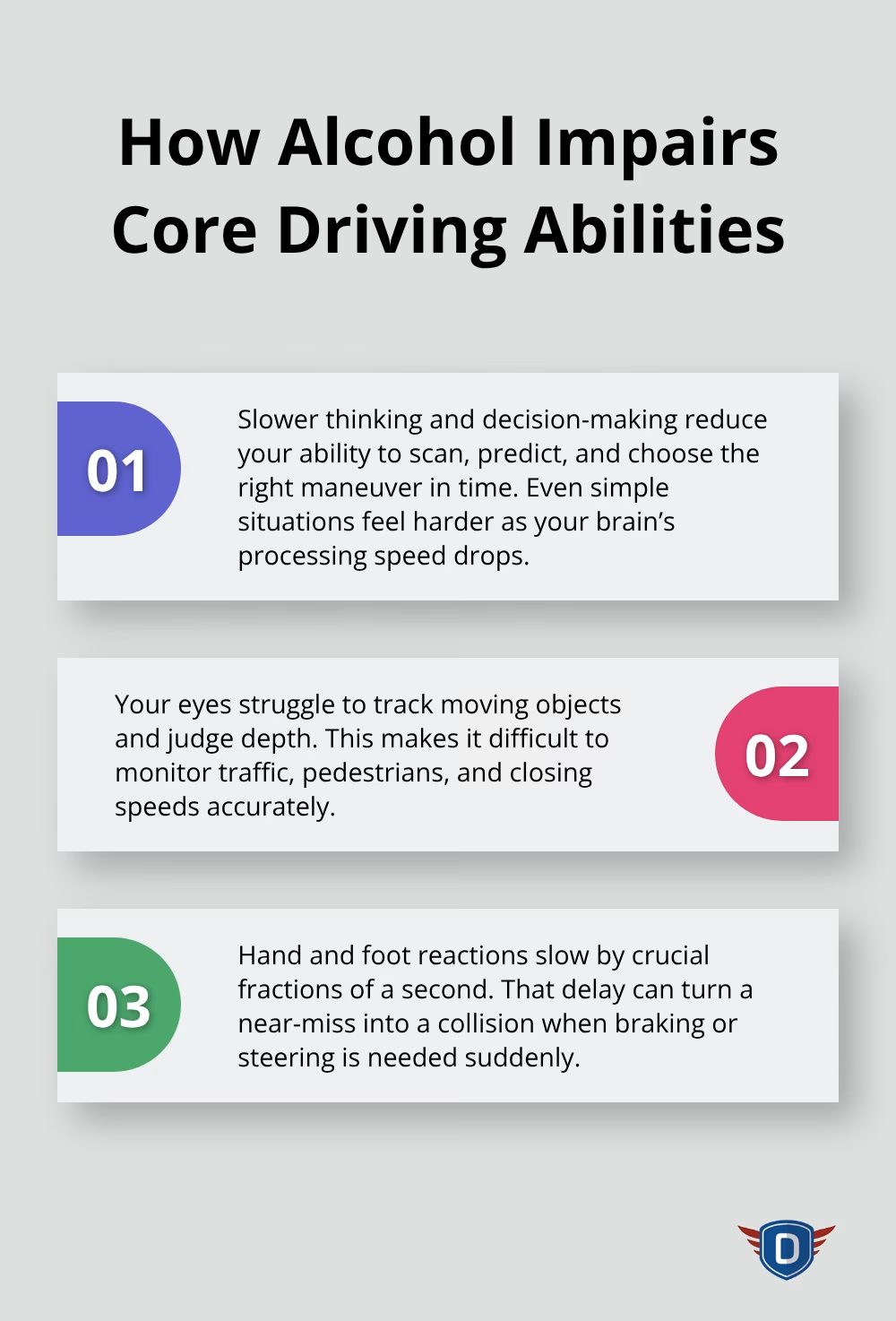
In Florida specifically, alcohol-impaired driving accounted for a significant portion of all traffic fatalities in 2021, according to Florida’s Highway Safety and Motor Vehicles data. Even moderate alcohol consumption reduces your ability to judge distance, speed, and the actions of other vehicles. Your judgment deteriorates first, meaning you may feel fine while your actual driving ability has already declined significantly. This gap between how you feel and how you actually perform makes alcohol so dangerous on the road.
Illegal Drugs Create Reckless Overconfidence
Illegal drugs like methamphetamine or cocaine elevate heart rate and create overconfidence, leading drivers to take reckless risks they would normally avoid. Drug-impaired driving accounted for a significant portion of Florida’s traffic fatalities in 2021 (including both illegal and prescription medications), according to FLHSMV data. These substances impair your judgment while simultaneously making you feel invincible-a combination that produces catastrophic crashes.
Prescription Medications Impair You Without Warning
Prescription medications such as opioids, benzodiazepines, and certain antidepressants cause drowsiness, impaired coordination, and blurred vision that directly impact your ability to steer, brake, and respond to hazards. Many drivers don’t realize that common medications for anxiety, pain management, or sleep disorders can impair driving as severely as alcohol. Before taking any new medication, check the label for warnings about drowsiness or impaired concentration, and ask your pharmacist specifically about driving safety.
The Dangerous Combination: Alcohol Plus Drugs
The combination of alcohol and drugs together significantly increases crash risk and is typically more dangerous than using either substance alone, according to the CDC. When drivers mix substances, the effects compound unpredictably, creating impairment levels far worse than either drug alone would produce. If a medication affects your alertness or coordination, you should not drive until you know how your body responds to it.
Understanding these specific ways that substances degrade your driving performance is the foundation for recognizing why Florida’s traffic school programs place such emphasis on impaired driving prevention. The next section examines the legal consequences that follow when drivers ignore these dangers.
What Happens After a DUI in Florida
License Suspension Takes Effect Immediately
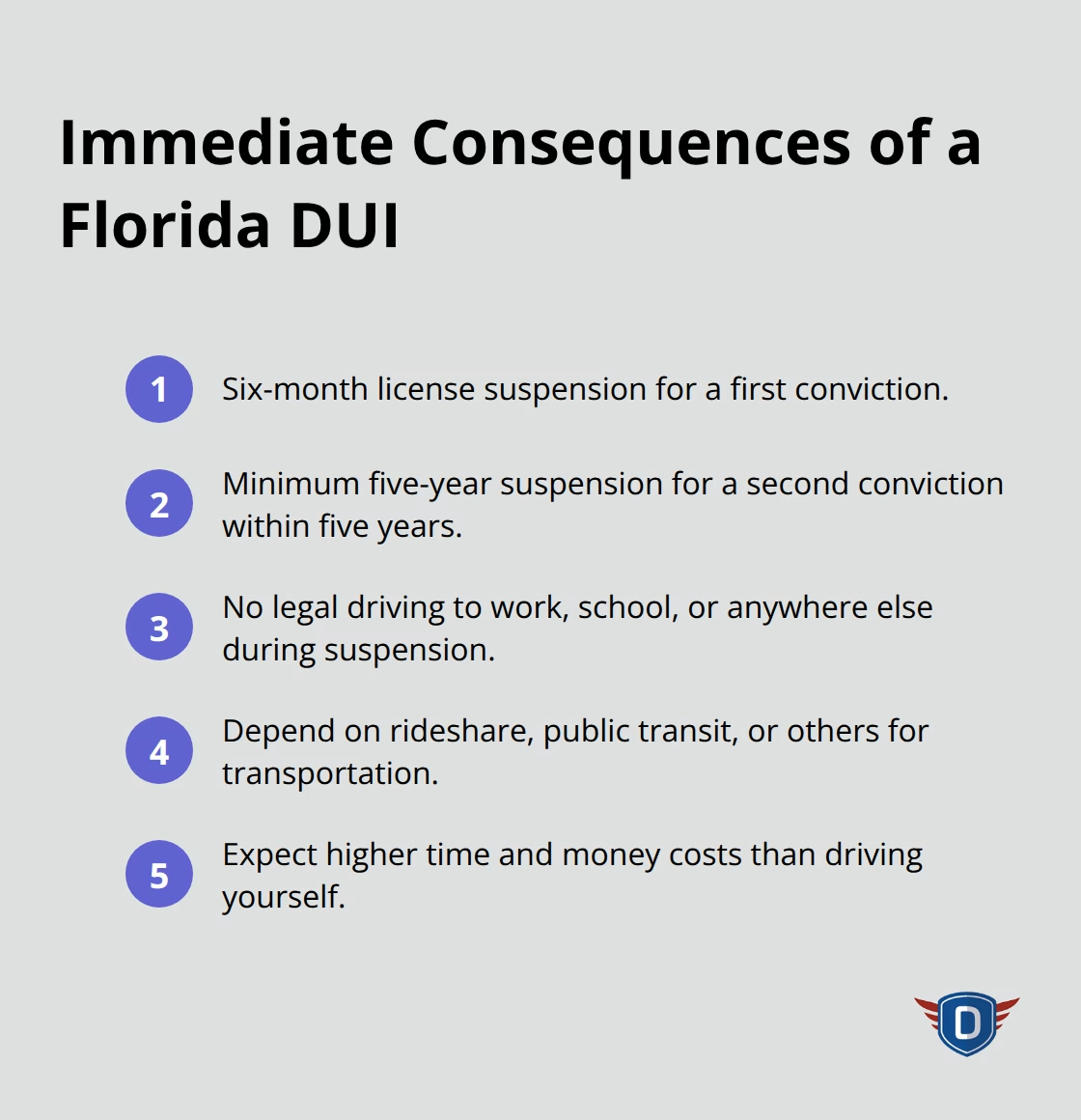
A DUI conviction in Florida triggers immediate license suspension-a first-time conviction results in a mandatory six-month suspension, while a second conviction within five years extends this to a minimum five years. You cannot legally drive to work, school, or anywhere else during suspension, forcing you to rely on rideshare, public transit, or other transportation options that cost significantly more than driving yourself.
Fines and Court Costs Add Up Fast
A first-time DUI conviction carries fines ranging from $500 to $1,000, plus court costs that typically add another $200 to $500. You must also pay for mandatory DUI school, which costs between $150 and $400 depending on the provider. If your BAC exceeded 0.15 or you refused a breath test, you face additional penalties including an ignition interlock device installation fee of $50 to $100, plus monthly monitoring costs of $60 to $100.
Insurance Rates Skyrocket for Years
Your car insurance rates increase dramatically after a DUI-expect your premiums to rise by 50 to 100 percent for at least three years, costing you thousands in extra premiums. A second DUI within five years increases all fines to $1,000 to $2,000, extends license suspension to a minimum of five years, and mandates installation of an ignition interlock device for at least two years.
Your Criminal Record Affects Your Future
A DUI conviction appears on your permanent criminal record, affecting employment opportunities, housing applications, professional licenses, and custody arrangements. If you are required to complete a traffic school course or behavioral rehabilitation program as part of your sentence, completion is non-negotiable-failure to finish results in additional criminal charges and extended license suspension.
Treatment and Recovery Support Help You Move Forward
Florida’s Department of Children and Families funds a community-based network that provides detoxification, treatment, and recovery support for adolescents and adults affected by substance misuse or dependence. Substance abuse treatment is associated with better outcomes, including reduced drug use, lower recidivism, and improved employment and health. These resources exist to help you address the underlying substance abuse that led to your DUI conviction and prevent future impaired driving incidents.
Spotting Impaired Drivers Before They Hit You
Recognize the Warning Signs
Impaired drivers telegraph their danger through specific, observable behaviors that appear minutes before a crash. Weaving between lanes, braking suddenly without reason, driving too slowly, or accelerating erratically are the clearest warning signs that a driver is impaired. According to the National Highway Traffic Safety Administration, impaired drivers typically exhibit at least two of these behaviors: driving in opposing lanes, straddling the center line, appearing to concentrate intensely on driving, or responding slowly to traffic signals.
Create Distance and Position Yourself Safely
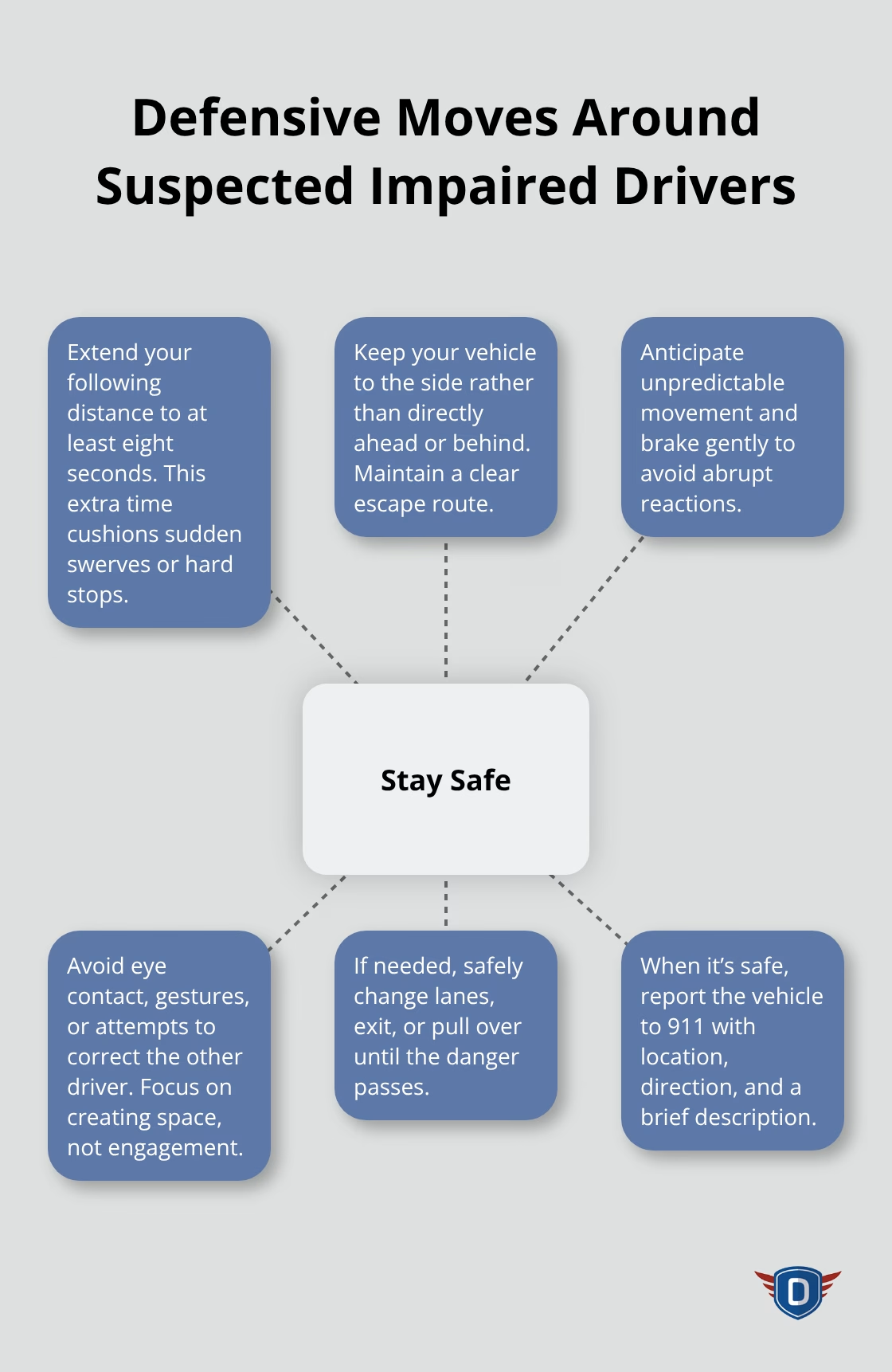
The moment you notice a vehicle exhibiting these patterns, increase your following distance to at least eight seconds behind that car-far longer than the standard three-second rule. This extra buffer gives you time to react if the impaired driver swerves into your lane or stops suddenly. Position your vehicle to the side of the road, not directly ahead or behind a suspicious vehicle, so you have an escape route if that driver loses control.
Avoid Confrontation with Impaired Drivers
Aggressive defensive driving requires you to actively predict impaired behavior rather than simply react to it. Avoid engaging with the impaired driver through eye contact, gestures, or attempts to correct their behavior-impaired drivers have severely compromised judgment and may respond unpredictably or dangerously. Your safety depends on staying out of their path, not on changing their actions.
Report Dangerous Drivers to Law Enforcement
If an impaired driver is heading directly toward you or another vehicle, call 911 immediately with the vehicle’s license plate, color, make, direction of travel, and specific location. Florida law enforcement prioritizes these reports because impaired drivers cause crashes that injure or kill innocent people every single day. The Florida Highway Safety and Motor Vehicles agency tracks these incidents and uses dispatch data to intercept dangerous drivers before they cause fatal collisions. Your call could prevent the next DUI fatality-Florida recorded 874 alcohol-impaired driving fatalities in 2021, accounting for 23.3 percent of all traffic deaths that year.
Why Florida Traffic School Courses Stop Impaired Driving Before It Starts
Florida’s traffic school programs teach drivers the exact knowledge and decision-making skills that prevent crashes and save lives. State law requires that every traffic school curriculum cover substance abuse prevention, the effects of alcohol and drugs on driving performance, and the legal consequences of DUI convictions-this isn’t optional material, it’s mandated by the Florida Department of Highway Safety and Motor Vehicles because impaired driving remains the leading cause of preventable traffic deaths in the state. When you complete impaired driving education in Florida through DriverEducators.com, you learn from a curriculum that meets these strict state requirements while exploring how substances actually degrade your ability to steer, brake, and react.
Real-world scenarios throughout these courses force you to confront the actual consequences of impaired driving rather than just reading statistics. You see how a driver’s judgment fails before they even realize they’re impaired, understand why mixing alcohol with prescription medications creates unpredictable and dangerous effects, and learn to recognize warning signs of impaired drivers on the road. These scenarios stick with you because they’re based on actual crash patterns and real situations you might encounter on Florida roads.
Drivers who finish these courses demonstrate lower recidivism rates, fewer subsequent violations, and better decision-making on the road. When you understand how substances affect your specific driving abilities and you’ve seen the real consequences through course scenarios, you’re far less likely to drive impaired. That shift in behavior-from knowing the law to actually changing how you drive-is what makes Florida’s traffic school programs effective at reducing impaired driving incidents and creating safer roads for everyone.