Every year, over 4,000 pedestrians die in traffic accidents in the United States alone. Many of these deaths are preventable with the right knowledge and habits.
At DriverEducators.com, we’ve created this guide to help you master safety when crossing the road. Whether you’re navigating busy intersections or quiet residential streets, the techniques in this post will keep you safer.
What Actually Causes Pedestrian Accidents
Turning vehicles account for a significant portion of pedestrian crashes, yet most people focus on the wrong hazards. In 2023, pedestrian deaths in the United States were estimated at 9,076, with the largest number of deaths among adults aged 35 to 44. What’s striking is that many of these deaths involve drivers who simply failed to yield at intersections or crosswalks. Drivers turning left or right often misjudge pedestrian speed or fail to check their blind spots, creating a deadly gap between what the driver thinks they see and what’s actually happening.
Pedestrians in the Path of Moving Vehicles
Pedestrians who dart into the road represent another major cause, but this typically occurs when someone hasn’t properly assessed traffic flow or has become distracted. Vehicles backing up in parking lots and driveways pose a third significant threat that most people underestimate. A driver backing out cannot see someone standing directly behind the vehicle, and this happens thousands of times annually with serious consequences. The data shows that pedestrians along roadways-those walking on shoulders or edges without sidewalks-face heightened risk, particularly at night or during poor visibility conditions.
How Distraction Destroys Decision-Making
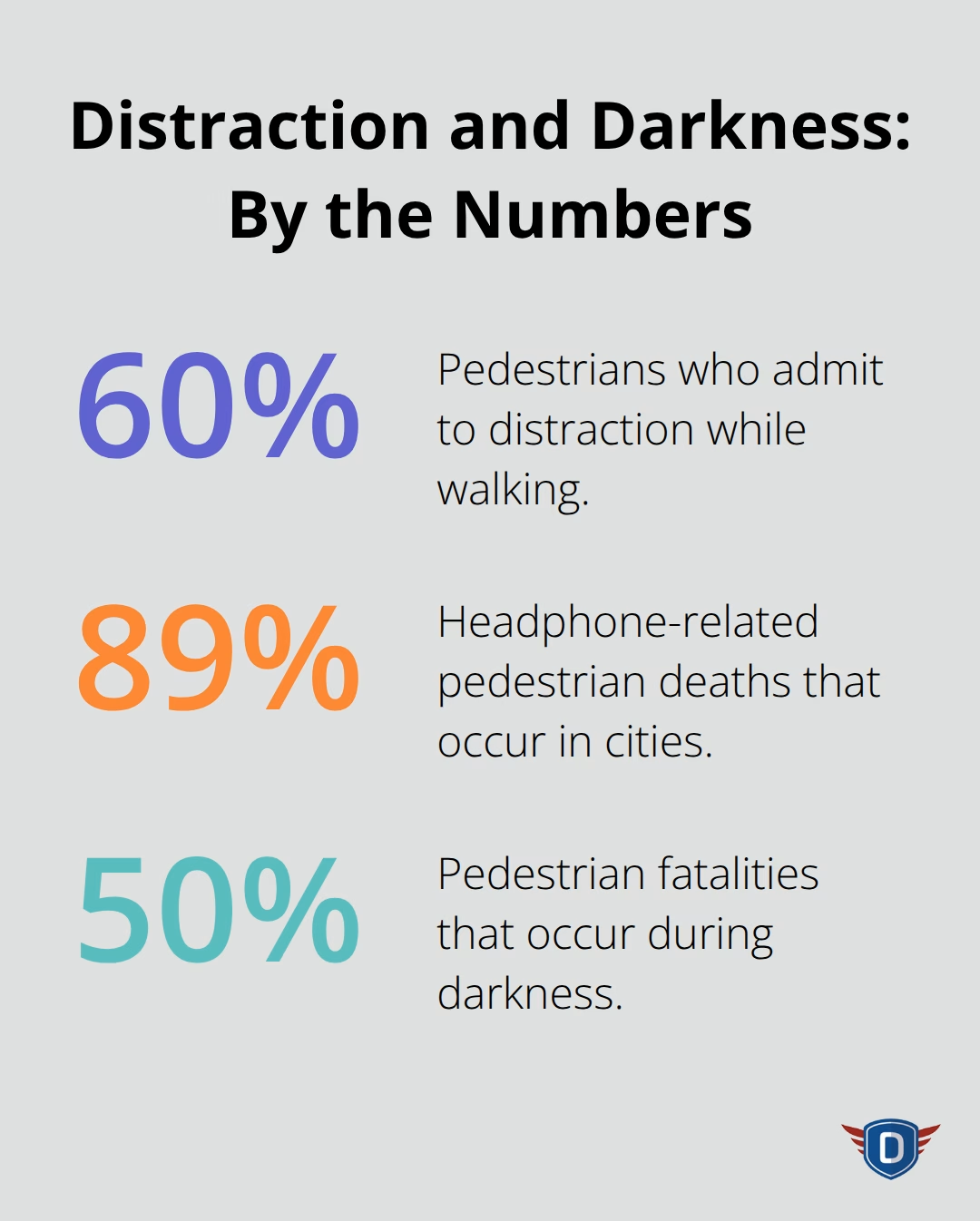
Distracted walking has become a serious problem that rivals distracted driving in its consequences. Research shows that 14.4% of pedestrians were distracted while crossing, and distracted pedestrians tended not to observe traffic while crossing. The same research reveals that distracted walking increases unsafe crossing behaviors. Headphone use adds another layer of danger, particularly in urban areas where trains and vehicles operate; 89 percent of headphone-related pedestrian deaths occur in cities.
Environmental and Physical Risk Factors
Weather and lighting conditions dramatically amplify these risks. At dawn, dusk, or night, visibility drops sharply, and drivers need additional reaction time to spot pedestrians. Wearing bright or reflective clothing becomes non-negotiable during these hours, yet most people wear dark clothing precisely when they should be most visible.
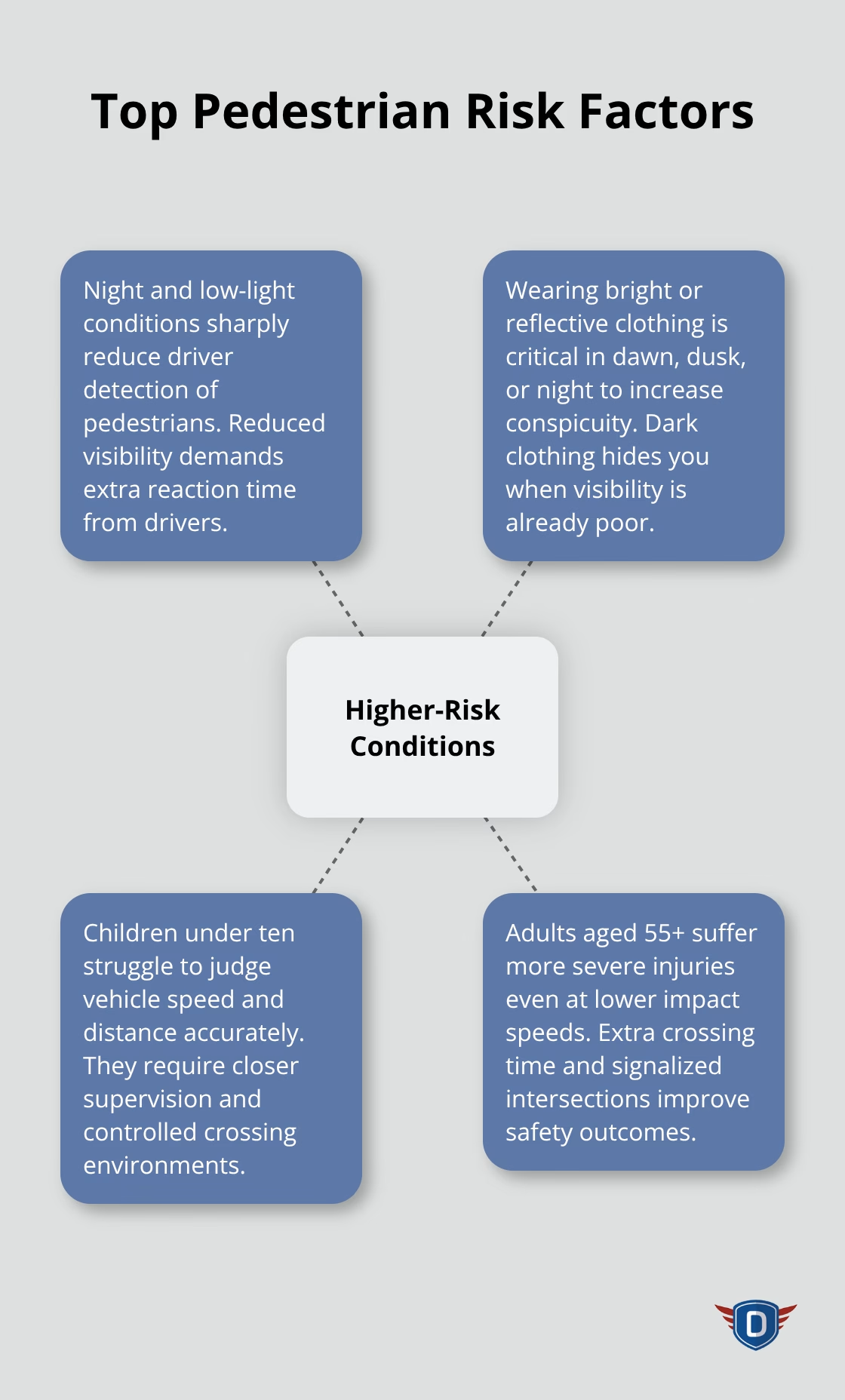
Age introduces its own risk factor-children under ten lack the cognitive ability to judge vehicle speed and distance accurately, while older adults aged 55 and above suffer more severe injuries when struck, even at lower speeds. Understanding these specific hazards allows you to take targeted action when you cross, which we’ll explore in the next section on essential safety techniques.
How to Cross Safely in Real Traffic
Assess Traffic Before You Move
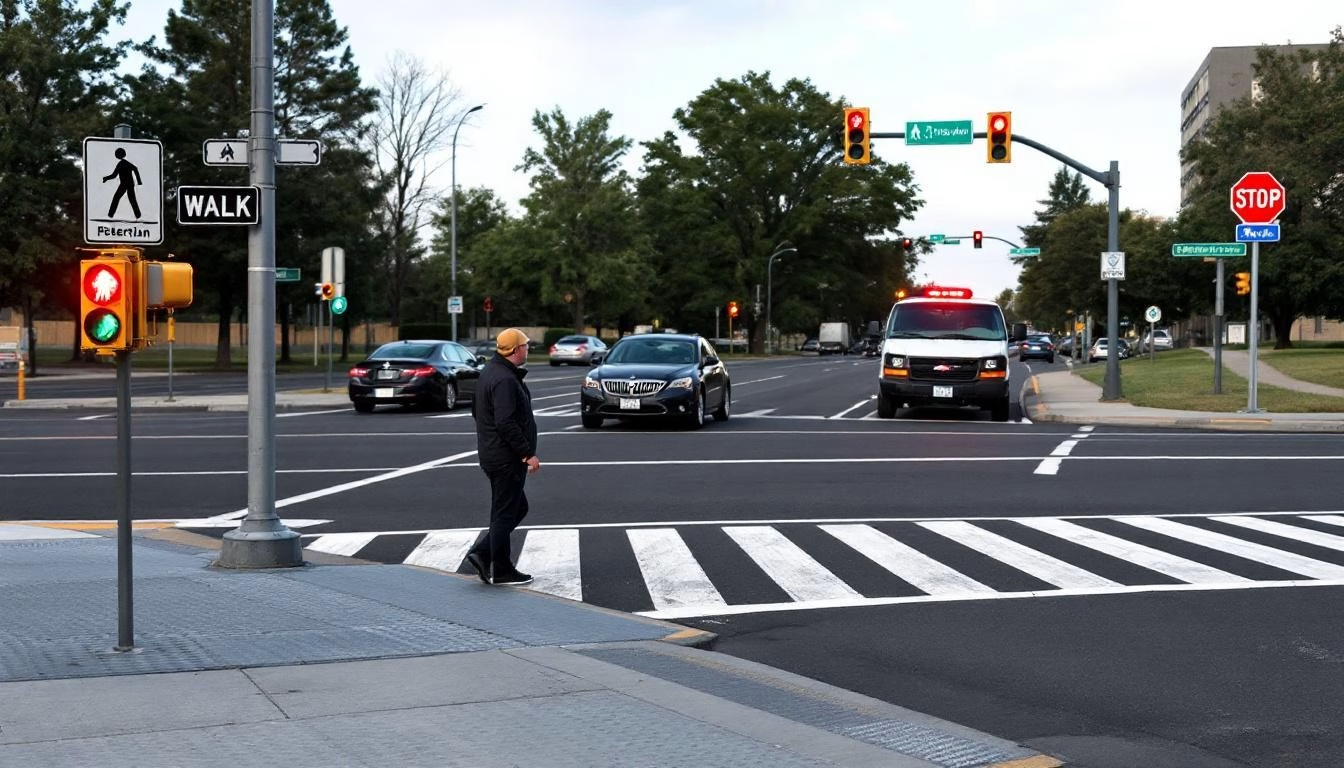
The moment you step toward a crosswalk, your job is to assess what’s actually happening on the road, not what you think should happen. Look left, right, and left again before entering the street, according to the National Safety Council. This three-point check works because it forces you to scan for vehicles approaching from both directions and catches turning vehicles that drivers often miss. Once you’ve looked, make eye contact with drivers whenever possible-this single action dramatically increases the chance they’ve actually seen you.
Don’t assume a stopped vehicle means the driver sees you; wait for a complete stop and clear acknowledgment before stepping into traffic. The National Safety Council emphasizes that pedestrians must actively confirm safety from all directions, not passively wait for a signal to change. At intersections with multiple lanes, understand that vehicles turning left or right create the highest-risk scenarios. A driver focused on oncoming traffic may completely miss a pedestrian in their turning path.

Move with Purpose and Precision
Cross quickly but never run; a steady pace keeps drivers from being surprised by your sudden movements and gives them time to react if needed. If you’re crossing a multi-lane road, use pedestrian islands or medians as pause points so you can reassess traffic before completing the final leg of your crossing. This strategy breaks the crossing into manageable segments and reduces your exposure to turning vehicles.
Stick to Marked Crosswalks and Signals
Designated crosswalks and pedestrian signals exist because they create predictable crossing patterns that drivers expect. Always use them, even if the street appears empty-the National Safety Council reinforces this because hidden hazards like vehicles backing from driveways or cyclists approaching at speed can appear suddenly. Never cross mid-block, a habit that puts you outside driver expectations and removes the protection that marked crossings provide.
When you reach the curb, stop completely before scanning traffic; this pause prevents the dangerous habit of stepping while still assessing. In bad weather or darkness, your visibility drops sharply, so slow your crossing and allow extra time for vehicles to stop.
Position Yourself for Maximum Visibility
Wear bright or reflective clothing during dawn, dusk, or night-dark clothing makes you nearly invisible to drivers, particularly in low-light conditions. Position yourself on the sidewalk or curb with clear sightlines to approaching traffic; never cross from between parked cars where your view is blocked and drivers cannot see you. If no sidewalk exists, face oncoming traffic and stay as far from the roadway as possible, which improves both your visibility and your reaction time to hazards.
The National Safety Council stresses that these positioning tactics are non-negotiable, not optional suggestions for cautious people. Your physical placement on the road determines whether drivers spot you before they commit to a turn or acceleration. These fundamentals form your foundation for safer crossings, but real-world conditions demand that you adapt your approach based on who shares the road with you-particularly distracted drivers and vulnerable pedestrians who require different strategies.
How Distracted Drivers and Weather Change What You Need to Do
Recognize That Distracted Drivers Won’t See You
Distracted drivers represent the most unpredictable hazard you’ll face at any crossing, and your safety depends on recognizing that you cannot rely on them to follow basic rules. According to the American Academy of Orthopaedic Surgeons, 60 percent of pedestrians admit to distraction while walking, but the real problem sits behind the wheel. A driver texting or checking their phone has reaction times comparable to someone driving drunk, yet these drivers operate vehicles every single day on streets where you cross. The solution isn’t hoping they’ll notice you-it’s assuming they won’t.
When you approach a crosswalk, look directly at approaching drivers and make deliberate eye contact before stepping into traffic. If a driver appears focused on their lap or windshield without acknowledging you, wait. Do not cross. A driver who doesn’t see you in the seconds before reaching an intersection won’t see you while crossing, no matter how visible your clothing is.
Wait for Explicit Driver Acknowledgment
This single habit-waiting for explicit driver acknowledgment rather than trusting a green signal-eliminates the majority of distracted-driver collisions. At busy intersections with multiple lanes, distracted drivers become even more dangerous because they may not register that you’re crossing until they’re already committed to a turn. Position yourself where you have the longest sightlines to oncoming traffic and watch for the telltale signs of distraction: a driver whose eyes aren’t on the road, a vehicle that doesn’t slow as it approaches, or a car drifting slightly within its lane. These observations take two seconds and save your life.
Adjust Your Strategy for Night and Rain
Weather and darkness demand completely different crossing strategies than clear daylight, and most pedestrians fail to adjust their approach despite the obvious hazards. At night, your visibility to drivers drops to roughly half of what it is during daylight, yet 50 percent of pedestrian fatalities occur during darkness according to the National Safety Council. Reflective clothing and a flashlight aren’t optional accessories-they’re mandatory equipment for evening or early-morning crossings.
Position yourself under streetlights whenever possible, which forces drivers to see you and gives you better visibility to spot hazards. In rain or fog, slow your crossing speed deliberately; wet pavement reduces vehicle traction and increases stopping distance, meaning a driver who spots you at the last second cannot stop in time. Rain also reduces driver visibility through windshields, so your bright clothing becomes even more critical.
Protect Children and Older Adults in Poor Conditions
For children crossing to or from school during winter months when darkness arrives by 5 p.m., the risk multiplies because drivers expect fewer pedestrians and children often wear dark coats. Insist that children wear a reflective vest or backpack during these months, even if they resist. For older adults aged 55 and above, weather introduces additional complications because reduced mobility means slower crossing speeds and less ability to react if a vehicle approaches unexpectedly. Older pedestrians should plan crossings at intersections with extended walk signals, which the National Safety Council identifies as essential for safe crossing at reduced speeds. Never rush across a street during rain or darkness-the extra five seconds you take to cross safely matters far more than the few seconds you save by hurrying.
Final Thoughts
Road crossing safety requires consistent attention and deliberate action every single time you step toward traffic. The techniques we’ve covered-assessing traffic before you move, using marked crosswalks, positioning yourself for visibility, and refusing to trust distracted drivers-form a complete system that works when you apply it without exception. Pedestrians who follow these practices experience dramatically fewer incidents than those who rely on luck or assume drivers will see them.
Your safety depends on your choices, not on driver behavior or traffic signals alone. A green walk signal does not guarantee a driver will stop, and bright clothing does not force a distracted driver to look up. You must actively confirm that approaching vehicles have seen you and are actually stopping before you step into traffic-this shift from passive waiting to active verification separates pedestrians who get hit from those who stay safe. These same hazards exist on quiet residential streets and during midday crossings, so you cannot lower your guard based on location or time of day.
We at DriverEducators.com recognize that safe behavior extends beyond pedestrians to everyone on the road, which is why our driver education programs teach how to recognize pedestrians and yield appropriately. Your commitment to safety when crossing the road protects you today and contributes to a culture where all road users respect each other’s presence and right to travel safely.