Road accidents claim over 42,000 lives annually in the United States, yet most are preventable through proper technique and awareness. We at DriverEducators.com believe that solid road safety tips form the foundation of every driver’s responsibility.
This guide covers defensive driving strategies, hazard recognition, and vehicle maintenance-the three pillars that keep you and your passengers protected on every journey.
Defensive Driving Techniques
The Three-Second Rule: Your Safety Buffer
Defensive driving starts with understanding distance. Maintain at least one car length for every 10 mph of speed, which translates to roughly a three-second gap between your vehicle and the one ahead. This buffer gives you the time you need to recognize a hazard and respond safely. In rain or poor visibility, extend this to six seconds. This cushion can mean the difference between a minor incident and a collision that sends you to the hospital.
Scan Ahead and Check Your Mirrors Constantly
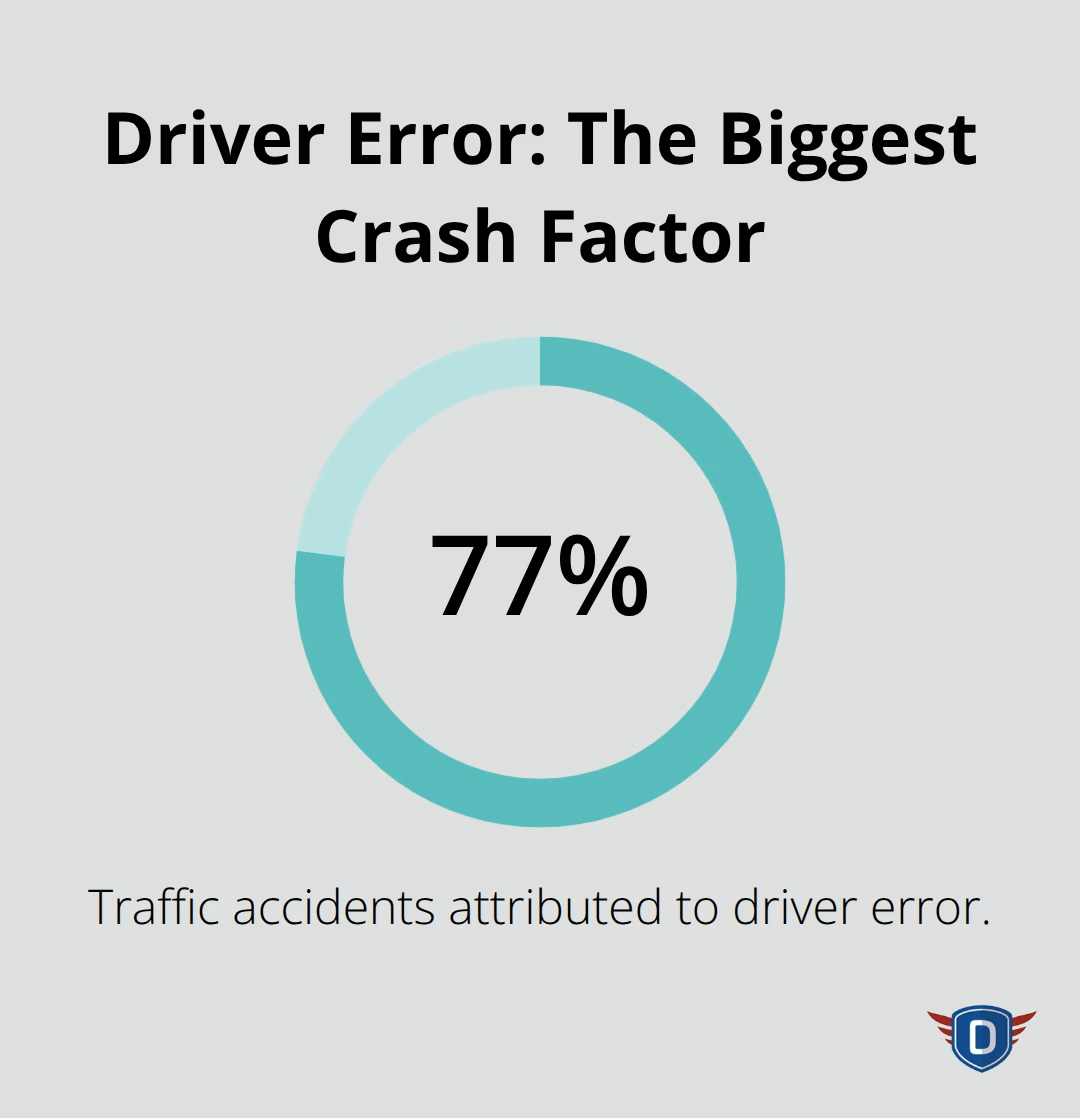
You must look at least 20-30 seconds down the road to spot hazards before they become problems. Constantly shift your gaze between the road ahead, your mirrors, and your blind spots. Check your side mirrors every 5-8 seconds and your rearview mirror frequently, particularly before lane changes or turns. At least 77 percent of traffic accidents are the result of driver error, making constant awareness your best defense.
Position your seat and mirrors correctly before driving so you eliminate blind spots where vehicles can hide. A smart driving position with hands at nine and three o’clock improves your ability to steer and react quickly when hazards appear.
Read the Road and Anticipate What Happens Next
Anticipate hazards by reading the road like a story. If you see brake lights flashing three cars ahead, slow down now rather than react later. Watch for pedestrians stepping off curbs, cyclists swerving, and drivers drifting between lanes. Road conditions matter too-wet pavement, gravel, or potholes demand slower speeds and wider reaction margins.
Weather and road surface changes require immediate adjustments to your speed and following distance. Wet roads reduce tire grip, and gravel patches can cause your vehicle to slide. Potholes threaten your control and can damage tires, so slow down when you spot them. These environmental factors compound the risk of collision, making your anticipation skills essential.
Defensive driving isn’t about being paranoid; it’s about being prepared for what others might do wrong. The next section explores the specific hazards you’ll encounter on every drive and how to navigate them safely.
Common Road Hazards and How to Avoid Them
Distracted Driving Kills Thousands Every Year
Distracted driving kills over 3,200 people annually in the United States, according to the National Highway Traffic Safety Administration. Texting while driving takes your eyes off the road for five seconds, which at 55 mph means you travel the length of a football field completely blind. This statistic alone should terrify every driver, yet many still believe they can safely check a message at a stoplight or glance at their phone while cruising. The reality is brutal: you cannot drive safely unless the driving task has your full attention.
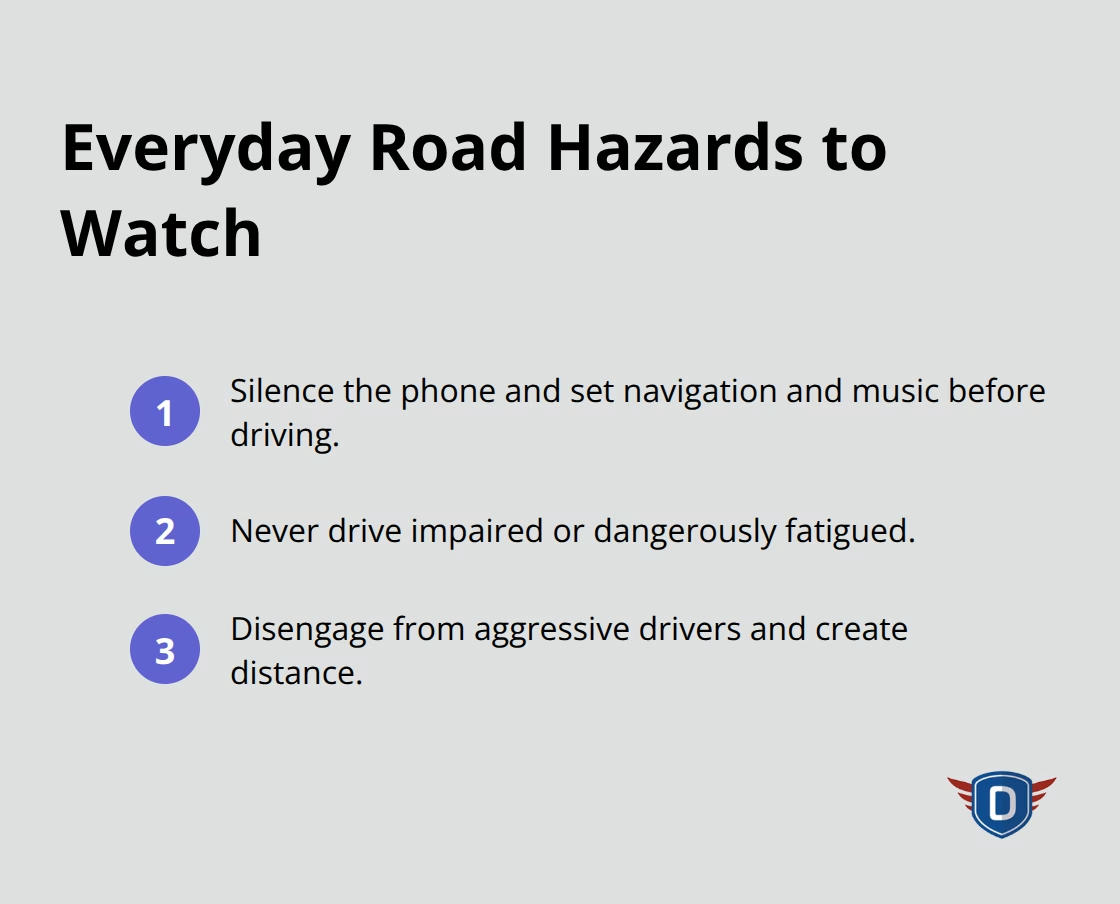
Setting up your navigation and music playlists before you start driving eliminates the temptation to fiddle with your phone. Keep your device out of reach, in the glove compartment or trunk, so the option to check it never crosses your mind. Hands-free devices help, but they still divide your mental attention, so use them sparingly.
Impaired Driving and Fatigue Impair Your Judgment
Alcohol, illegal drugs, and even prescription medications that cause drowsiness all impair your reaction time and judgment. The general legal blood alcohol content limit is 0.08 percent, but research shows impairment begins well below that threshold. Drowsy driving significantly increases crash risk, especially between midnight and 6 a.m. and in the late afternoon when your body naturally crashes.
If you feel your eyelids heavy or catch yourself drifting over lane lines, pull over immediately at a safe location. Coffee helps temporarily, but only genuine sleep solves fatigue. Never drive when you’re impaired or exhausted-the consequences extend far beyond your own safety.
Aggressive Drivers Demand a Strategic Response
Aggressive drivers and road rage situations demand a completely different strategy: you must remove yourself from the conflict. Never match their speed, make eye contact, or respond to their gestures. If an aggressive driver tailgates you, brake gently and let them pass rather than engage in a dangerous game of speed and intimidation.
If they follow you or escalate, drive to a police station or busy public location instead of pulling over on a deserted road. Your ego means nothing compared to your safety and the safety of your passengers. These confrontations escalate quickly, and your best weapon is avoidance and distance.
Vehicle maintenance and the safety systems built into your car form your final line of defense when hazards strike.
Vehicle Maintenance and Safety Systems
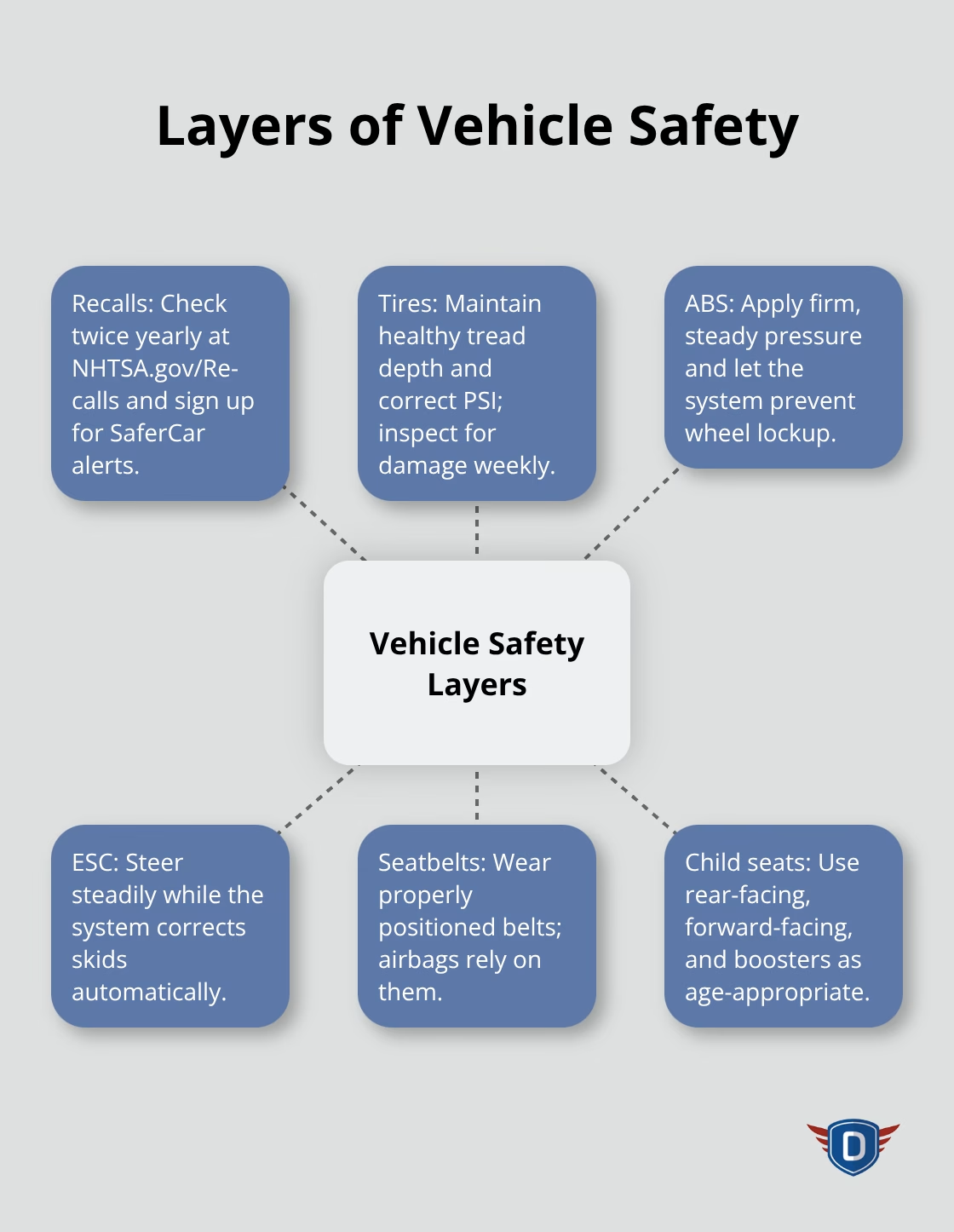
Your car’s maintenance directly determines whether safety systems work when you need them most. Tires with insufficient tread cannot grip wet pavement, brakes that lack pressure cannot stop quickly, and battery-powered safety features fail without proper electrical systems. The National Highway Traffic Safety Administration recommends checking for safety recalls at least twice yearly by visiting NHTSA.gov/Recalls with your vehicle identification number or license plate, then signing up for alerts through the SaferCar app. Many drivers ignore recalls for months or years, leaving themselves vulnerable to failures that manufacturers already know about. Contact your dealer immediately for free recall repairs-this costs nothing and eliminates known hazards.
Tire Maintenance Prevents Blowouts and Loss of Control
Tire maintenance matters equally to recall checks. A new car tire typically has a tread depth of 10/32 or 11/32 inches, though 6/32 of an inch provides better wet-weather grip. The penny test works: insert a penny into the tread with Lincoln’s head upside down; if you see the top of his head, your tread is too shallow. Check tire pressure monthly and after temperature swings, since cold weather deflates tires by roughly one pound per square inch for every 10-degree drop.
Overinflated tires wear faster in the center, while underinflated tires wear on the edges and produce dangerous heat. Your vehicle’s door jamb or fuel door lists the correct PSI for your specific car-follow that number, not the maximum pressure printed on the tire sidewall. Potholes and road debris threaten tire integrity constantly, so inspect your tires weekly for bulges, cuts, or objects embedded in the rubber.
Anti-Lock Brakes and Stability Control Require Your Trust
Your vehicle’s safety systems only protect you if they function properly. Anti-lock braking systems prevent wheel lockup during hard stops on slick surfaces, but many drivers panic and pump the brake instead of holding steady pressure-trust the system to do its job. Electronic stability control corrects skids by applying brakes to individual wheels and reducing engine power; this system activates automatically and requires you to maintain steady steering input without overreacting.
Seatbelts Form Your Foundation of Protection
Airbags deploy only when seatbelts are fastened, making seatbelts the foundation of your entire safety strategy. The shoulder belt must cross your chest diagonally, never behind your back or under your arm, while the lap belt sits low across your hips. Twisted or improperly positioned belts fail to protect you and can cause internal injuries during crashes.
Child Safety Seats Protect Young Passengers
Children under 13 belong in the back seat, which statistically offers better protection than front seats. Rear-facing car seats work best for infants and toddlers, forward-facing seats suit older toddlers, and booster seats bridge the gap until your child reaches adult size. The National Highway Traffic Safety Administration provides installation instructions and can direct you to certified inspection stations where technicians verify proper installation free of charge. Many car seats install incorrectly, reducing their effectiveness dramatically, so professional verification matters far more than guessing.
Final Thoughts
Safe driving becomes a habit only through consistent practice and commitment. The road safety tips you’ve learned throughout this guide-maintaining proper following distance, scanning ahead, checking your mirrors, avoiding distractions, and keeping your vehicle maintained-work together as layers of defense against preventable crashes. Each time you drive, you reinforce either safe behaviors or dangerous ones, and these habits compound over years into the kind of driver who arrives safely without conscious effort.
Knowledge alone doesn’t create safe drivers; practice and reinforcement do. We at DriverEducators.com offer Florida-approved courses that help you master these techniques and develop the mindset of a responsible driver through real-life scenarios and certified instruction. Whether you’re building your foundation as a new driver or refreshing your skills as an experienced one, DriverEducators.com provides comprehensive driver education that covers defensive driving, distraction prevention, impaired driving awareness, and vehicle safety systems.
Your commitment to safe driving protects more than just yourself-it protects everyone sharing the road with you. Every time you avoid a distraction, maintain proper distance, or check your mirrors, you reduce the risk of a crash that could injure or kill someone else.